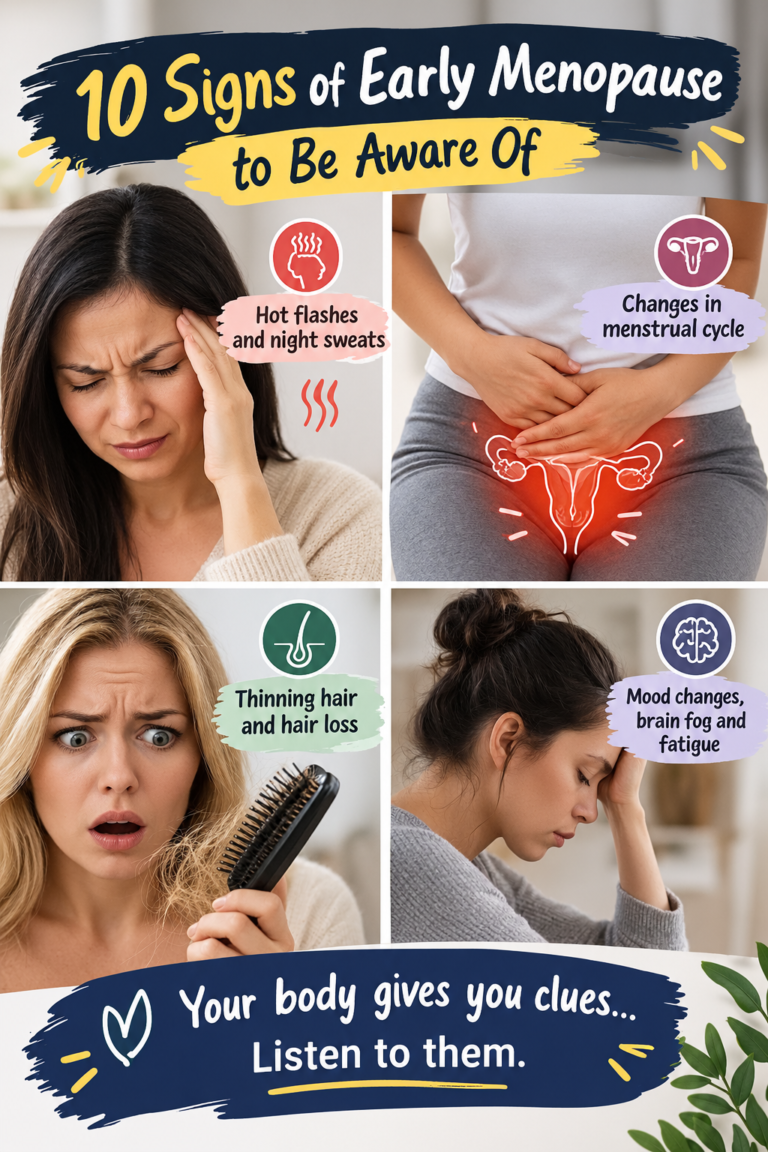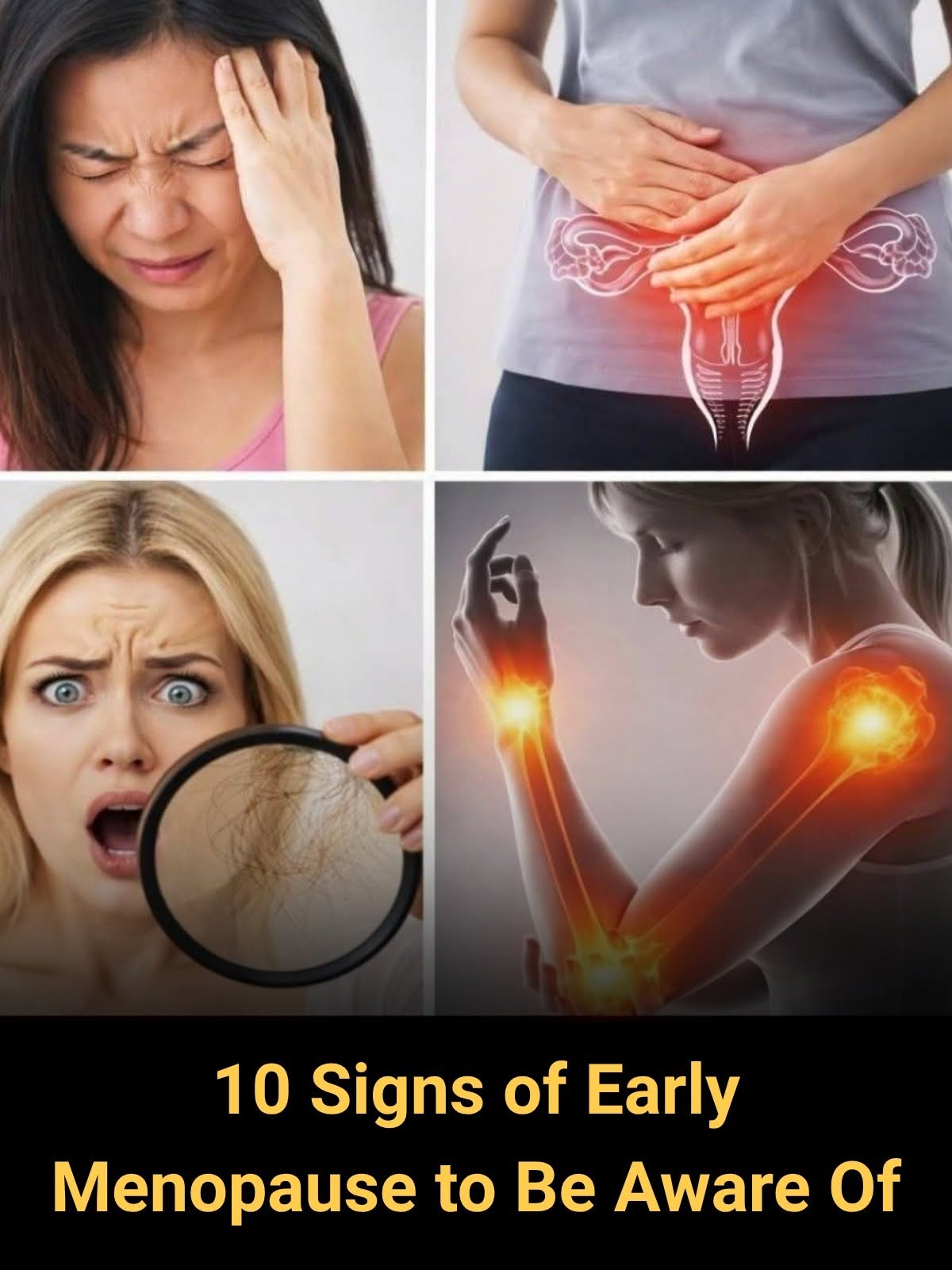
Early Menopause: 10 Signs Every Woman Should Be Aware Of can help you recognize changes that deserve a conversation with a healthcare professional, especially when they appear before age 45.
Most women reach menopause between ages 45 and 55. Menopause itself means that you have gone 12 consecutive months without a menstrual period. When menopause happens before age 45, healthcare professionals usually describe it as early menopause. When ovarian function declines before age 40, clinicians may use the term primary ovarian insufficiency, or POI, rather than simply calling it premature menopause because ovarian activity can sometimes continue intermittently.
The signs can resemble the symptoms of ordinary perimenopause: irregular periods, hot flashes, night sweats, sleep problems, vaginal dryness, mood changes, reduced sex drive, and difficulties with concentration. However, experiencing one or two symptoms does not confirm early menopause. Pregnancy, thyroid disorders, medications, stress, significant weight changes, and other medical conditions can cause similar changes.
That is why noticing a pattern matters more than trying to diagnose yourself from a symptom list.
I remember talking with someone in her early 40s who assumed her changing periods and sleepless nights simply came from work stress. She kept pushing through because menopause seemed like something that should happen much later. Eventually, the hot flashes became impossible to ignore, and she brought the changes up during a routine medical visit. The conversation gave her something she had been missing: context. Her symptoms were real, but they needed proper evaluation instead of guesses. That experience stayed with me because it showed how easily people can dismiss hormonal changes when they arrive earlier than expected. Paying attention can make a real difference.
Menstrual and Temperature Changes Often Appear First
1. Irregular, Skipped, Heavier, or Lighter Periods
Changes in menstrual patterns are among the most important Early Menopause: 10 Signs Every Woman Should Be Aware Of.
Periods may start arriving closer together or farther apart. Flow can become noticeably heavier or lighter. You may also skip one or more cycles.
ACOG explains that during perimenopause, the ovaries make less estrogen and do not necessarily release an egg every month. As a result, periods can become shorter or longer, the interval between periods can change, and bleeding may become heavier or lighter.
However, irregular periods have many possible causes.
Pregnancy remains an obvious consideration for anyone who could become pregnant. Thyroid disease, polycystic ovary syndrome, significant stress, weight changes, excessive exercise, medications, uterine fibroids, and other conditions can also alter menstrual cycles.
Therefore, irregular bleeding should not automatically get labeled as early menopause.
ACOG considers the absence of periods for three months or longer in someone who previously menstruated a reason for medical evaluation when pregnancy, breastfeeding, and menopause do not already explain it.
Bleeding between periods or after sex also deserves medical attention because those patterns do not simply count as ordinary perimenopausal changes.
If you are younger than 45 and your cycle changes substantially, make an appointment rather than waiting indefinitely.
A clinician can review pregnancy possibility, medications, symptoms, family history, and other potential causes before deciding whether hormone testing or further evaluation makes sense.
2. Hot Flashes and Night Sweats
Hot flashes can feel like a sudden wave of warmth across the face, neck, chest, or upper body.
You may flush, sweat, feel your heart pound, or experience chills afterward.
When these episodes happen during sleep, people usually call them night sweats.
Both belong among Early Menopause: 10 Signs Every Woman Should Be Aware Of because declining or fluctuating ovarian hormones can affect the body’s temperature-regulation systems.
The NHS lists hot flushes and night sweats among the common symptoms of early or premature menopause.
The National Institute on Aging also describes hot flashes as a common symptom of the menopausal transition and notes that nighttime episodes can interfere with sleep.
Still, not every night sweat points to menopause.
Infections, thyroid conditions, medications, anxiety, alcohol use, sleep disorders, and other medical issues may produce similar symptoms.
The timing and pattern provide useful clues.
If hot flashes appear alongside changing periods, vaginal dryness, sleep disruption, or other menopausal symptoms before age 45, mention the combination to your healthcare professional.
Also seek evaluation when night sweats become severe, unexplained, or accompany symptoms such as fever, unexplained weight loss, or persistent illness.
You do not need to wait until symptoms become unbearable before asking for help.
Treatment options exist, and early menopause deserves attention not only because of symptom burden but also because earlier loss of estrogen can affect longer-term health.
Sleep, Mood, and Cognitive Changes Can Be Easy to Miss
3. Trouble Falling Asleep or Staying Asleep
Sleep problems often get blamed on stress, screens, caffeine, or a busy schedule.
Those factors certainly matter. However, disturbed sleep also belongs among Early Menopause: 10 Signs Every Woman Should Be Aware Of.
The NHS lists difficulty sleeping as a symptom of early and premature menopause, while the National Institute on Aging includes sleep problems among common changes during the menopausal transition.
Night sweats may wake you repeatedly.
However, some people develop insomnia even without obvious nighttime heat episodes.
You may struggle to fall asleep, awaken repeatedly, or wake too early and find it difficult to return to sleep.
Then, poor sleep can amplify other problems.
Fatigue can increase irritability. Concentration may become harder. Anxiety can feel stronger. Ordinary stress becomes more difficult to manage.
Because sleep problems have so many possible causes, clinicians usually look at the full picture.
Sleep apnea, restless legs syndrome, anxiety, depression, thyroid disease, medication effects, alcohol, caffeine, and environmental factors can all contribute.
Therefore, a new pattern of insomnia before age 45 deserves consideration when it appears alongside changes in periods or other hormonal symptoms.
Keeping a brief symptom diary can help.
Record your menstrual dates, hot flashes, nighttime awakenings, mood changes, and medications for several weeks.
That information can give your healthcare professional a clearer timeline than trying to remember everything during an appointment.
4. Mood Changes, Anxiety, or Low Mood
Hormonal changes can affect emotional well-being, although menopause never provides the only possible explanation for anxiety or depression.
The NHS lists low mood and anxiety among common symptoms of early or premature menopause.
The Menopause Society has also reported that depression can be a significant concern for women experiencing early menopause, particularly when symptoms, fertility concerns, or inadequate emotional support add additional stress.
You might notice that you feel unusually irritable, tearful, anxious, emotionally sensitive, or less resilient than usual.
However, life circumstances matter greatly.
Work pressure, caregiving responsibilities, sleep deprivation, relationship problems, grief, previous mental health conditions, and physical illness can all affect mood.
Therefore, do not assume hormones explain everything.
Instead, pay attention to meaningful change.
If you have never struggled with anxiety but suddenly begin experiencing frequent episodes while your periods are also becoming irregular, that combination deserves discussion.
Likewise, persistent sadness, loss of interest, severe anxiety, or thoughts of self-harm require professional support regardless of whether menopause contributes.
Mental health symptoms deserve the same seriousness as physical symptoms.
Early menopause can also create emotional challenges related to fertility and identity, particularly when it arrives unexpectedly.
The Menopause Society notes that women experiencing premature menopause may struggle with fertility concerns and emotional distress in addition to physical symptoms.
5. Brain Fog, Forgetfulness, or Trouble Concentrating
You walk into a room and forget why.
You lose your train of thought during a conversation.
You reread the same paragraph several times.
These experiences can become frustrating, especially when they seem to appear suddenly.
Problems with memory and concentration belong among Early Menopause: 10 Signs Every Woman Should Be Aware Of because they can occur during the menopausal transition.
The NHS lists memory and concentration difficulties among symptoms of early or premature menopause.
The National Institute on Aging similarly notes that forgetfulness and difficulty concentrating can occur during menopause.
Poor sleep can make these problems even worse.
Therefore, someone who experiences night sweats, fragmented sleep, and daytime fatigue may notice more cognitive difficulty even if hormonal changes do not directly cause every episode.
Again, brain fog is not specific to menopause.
Stress, depression, anxiety, thyroid disorders, anemia, medication effects, vitamin deficiencies, sleep disorders, and other conditions can produce similar symptoms.
Persistent or rapidly worsening cognitive changes need medical evaluation.
However, mild concentration problems that develop alongside other menopausal symptoms can form part of the overall picture.
Keep track of when symptoms appear and whether they correlate with poor sleep or hot flashes.
That information may help your clinician determine what requires investigation.
Sexual and Genitourinary Changes Also Matter
6. Vaginal Dryness, Burning, or Discomfort
Lower estrogen levels can affect vaginal and vulvar tissues.
As a result, vaginal dryness is another of the Early Menopause: 10 Signs Every Woman Should Be Aware Of.
The NHS lists vaginal dryness among common symptoms of early or premature menopause.
ACOG describes low-estrogen states as capable of producing vaginal tissue changes, dryness, burning, irritation, and inflammation.
Some people notice dryness only during sexual activity.
Others experience burning, irritation, or general discomfort throughout the day.
These symptoms can also contribute to pain during sex.
However, infections, dermatologic conditions, medications, breastfeeding, certain cancer treatments, and other causes can produce vaginal dryness too.
Therefore, persistent symptoms deserve a proper evaluation.
Do not assume you simply have to tolerate them.
Treatment options may include vaginal moisturizers, lubricants, prescription local estrogen, other hormonal therapies, or nonhormonal treatments depending on your medical history and the cause.
If dryness comes with unusual discharge, odor, significant itching, sores, bleeding, or pain, seek medical care rather than treating the problem as menopause without evaluation.
7. Reduced Sex Drive or Pain During Sex
Changes in sexual desire can happen during early menopause.
The NHS includes reduced sex drive among symptoms of early or premature menopause.
Lower estrogen can contribute indirectly by causing vaginal dryness or discomfort.
Poor sleep, mood changes, relationship stress, medications, medical conditions, and body-image concerns can also affect desire.
Therefore, libido changes rarely have a single explanation.
Some people notice a substantial decline in interest in sex, while others notice little change.
The National Institute on Aging points out that sexual desire during the menopausal transition can increase or decrease.
Pain during sex deserves particular attention.
ACOG notes that women with primary ovarian insufficiency can experience vaginal dryness and dyspareunia, the medical term for painful intercourse.
Do not ignore persistent pain or simply assume aging causes it.
A clinician can check for low-estrogen tissue changes, pelvic-floor problems, infections, dermatologic conditions, and other causes.
Effective treatments exist.
Open communication with a healthcare professional can also make it easier to find an option that fits your comfort level and health history.
Physical Changes and Long-Term Health Need Attention Too
8. Palpitations or Feeling Your Heart Race
Some women notice episodes of pounding, fluttering, or a racing heartbeat during the menopausal transition.
The NHS notes that hot flashes can sometimes accompany palpitations or anxiety.
That means palpitations can appear among Early Menopause: 10 Signs Every Woman Should Be Aware Of, particularly when they happen during hot flashes.
However, palpitations should never automatically get blamed on hormones.
Abnormal heart rhythms, thyroid disease, anemia, caffeine, medications, dehydration, anxiety, and other problems can also cause them.
Seek urgent medical care if palpitations occur with chest pain, severe shortness of breath, fainting, or near-fainting.
For recurring but less severe episodes, mention them to your healthcare professional.
A clinician may review medications, check thyroid function or blood counts, and consider an electrocardiogram or other testing depending on the circumstances.
9. Joint Aches or Muscle Discomfort
Menopause can involve more than hot flashes and menstrual changes.
The National Institute on Aging includes joint and muscle discomfort among symptoms that some women experience during the menopausal transition.
You may notice stiffness after sitting, new aches, or discomfort that seems harder to explain than before.
Still, joint pain has countless possible causes.
Arthritis, injuries, autoimmune conditions, overuse, poor sleep, and other medical problems can all produce similar symptoms.
Therefore, joint aches alone do not provide meaningful evidence of early menopause.
Instead, think about the broader pattern.
If muscle or joint discomfort appears alongside irregular periods, hot flashes, sleep changes, or vaginal symptoms before age 45, mention all of those changes together at your appointment.
Persistent swelling, redness, significant weakness, or severe pain deserves evaluation for other conditions.
10. Difficulty Conceiving or Unexpected Fertility Changes
Changes in ovarian function can affect fertility before periods stop completely.
That makes fertility problems an important final item among Early Menopause: 10 Signs Every Woman Should Be Aware Of.
Primary ovarian insufficiency involves reduced or unpredictable ovarian function before age 40. ACOG emphasizes that ovarian activity can remain intermittent, which is one reason specialists prefer the term POI rather than assuming ovarian function has completely ended.
Therefore, pregnancy may still occur in some people with POI.
However, declining ovarian function can make conception more difficult.
If you are younger than 40 and experience irregular or absent periods alongside infertility, hot flashes, or other estrogen-related symptoms, seek evaluation.
This matters not only for fertility planning.
Early loss of ovarian hormones can influence long-term health.
The Menopause Society notes that premature and early menopause are associated with increased risks involving cardiovascular disease, osteoporosis, and other health outcomes.
Therefore, diagnosis can lead to conversations about bone health, cardiovascular risk, symptom management, contraception, fertility, and whether hormone therapy makes sense.
Frequently Asked Questions
What age counts as early menopause?
Menopause occurring before age 45 generally counts as early menopause. Menopause or loss of normal ovarian function before age 40 may be described as premature menopause or, more accurately in many cases, primary ovarian insufficiency.
What is usually the first sign of early menopause?
Changes in menstrual cycles often appear early. Periods may become less predictable, farther apart, closer together, heavier, lighter, or occasionally absent.
Can you have early menopause symptoms while still getting periods?
Yes. Symptoms such as hot flashes, night sweats, vaginal dryness, and disrupted sleep can occur while menstrual periods still happen. ACOG notes that some symptoms of primary ovarian insufficiency may even appear before cycle irregularity.
How do doctors diagnose early menopause?
Diagnosis depends on age, symptoms, menstrual history, medications, pregnancy possibility, and other health factors. Clinicians may use blood tests and other evaluations to rule out alternative causes and assess ovarian function. Because missed periods and menopausal symptoms have multiple causes, professional evaluation matters.
Why is early menopause important beyond the symptoms?
Earlier loss of ovarian hormones can affect fertility and is associated with longer-term health concerns, including bone and cardiovascular health. The Menopause Society recommends evaluation and ongoing management for women who experience premature menopause.
Conclusion
Early Menopause: 10 Signs Every Woman Should Be Aware Of includes irregular periods, hot flashes, night sweats, insomnia, mood changes, brain fog, vaginal dryness, reduced sexual desire, palpitations, joint discomfort, and fertility changes.
However, no single symptom proves that early menopause has started.
Many of these changes overlap with pregnancy, thyroid disorders, anemia, medications, stress, sleep disorders, reproductive conditions, and other medical problems.
That is why age and pattern matter.
If you develop menopausal symptoms before age 45, schedule a medical evaluation. If you are younger than 40 and periods become irregular or disappear, ask specifically about primary ovarian insufficiency and other possible causes.
Early recognition can matter for more than symptom relief.
Premature and early menopause can affect fertility, bone health, cardiovascular health, and emotional well-being.
Fortunately, treatment and monitoring options exist.
You do not have to wait until symptoms become severe before bringing them up. Keep track of cycle changes, hot flashes, sleep, mood, vaginal symptoms, and other patterns, then share that information with a qualified healthcare professional.
Understanding Early Menopause: 10 Signs Every Woman Should Be Aware Of is not about assuming every hormonal change means menopause.
It is about recognizing when your body has changed enough to deserve a closer look.