There is something special about biting into a warm, freshly glazed donut that melts in your mouth. These Easy Homemade Glazed Donuts deliver a light, fluffy texture with a sweet vanilla glaze that creates the perfect finish. While many people assume making donuts at home is difficult, the process is surprisingly simple when broken into manageable steps. With a few pantry staples, a little patience, and proper frying technique, you can create bakery-quality donuts right in your own kitchen.
A few years ago, I wanted to recreate the classic glazed donuts I remembered enjoying on weekend mornings. Instead of heading out to buy a dozen, I decided to try making them from scratch. The first batch taught me the importance of dough texture, rising time, and oil temperature. Although they were not perfect, the flavor was incredible. After several attempts and small adjustments, the donuts became lighter, fluffier, and beautifully glazed. Now this recipe has become a favorite for family gatherings, holiday breakfasts, and special weekend treats because everyone loves the fresh flavor and soft texture.
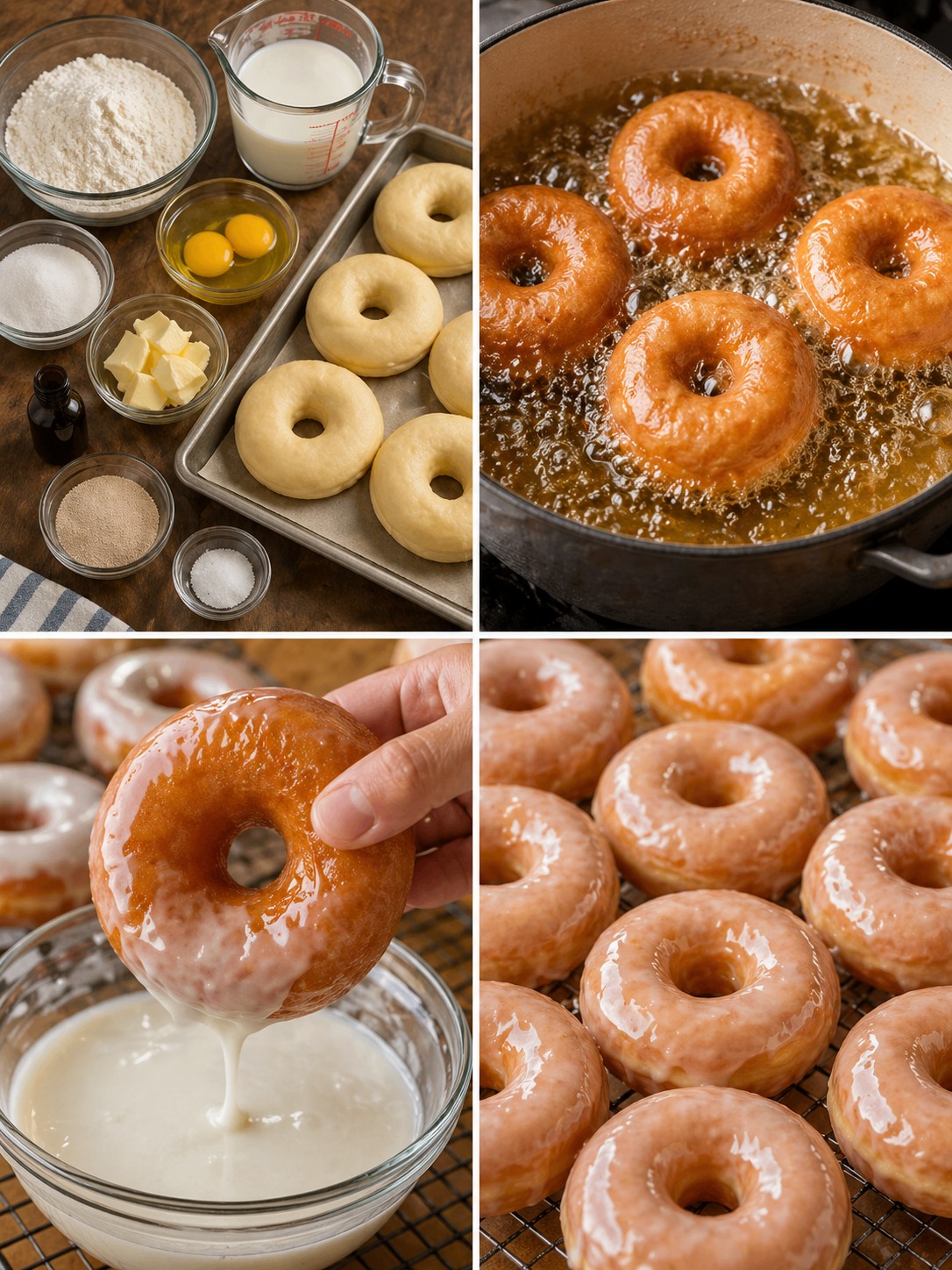
Equipment
- Mixing bowl
- Rolling Pin
- Donut cutter
- Heavy pot
- Thermometer
- Wire rack
Ingredients
- 1 cup whole milk, warmed
- 2 1/4 teaspoons instant yeast
- 1/4 cup granulated sugar
- 2 large eggs
- 1/4 cup unsalted butter, softened
- 4 cups all-purpose flour
- 1 teaspoon salt
- vegetable oil for frying
- 2 cups powdered sugar
- 1/4 cup whole milk
- 1 teaspoon vanilla extract
Instructions
- Combine warm milk, yeast, and sugar. Let stand until foamy.
- Mix in eggs and butter.
- Add flour and salt. Mix into a soft dough.
- Knead dough until smooth and elastic.
- Place in greased bowl and let rise until doubled.
- Roll dough, cut donut shapes, and proof again.
- Fry donuts in 350°F oil until golden brown.
- Whisk glaze ingredients together until smooth.
- Dip warm donuts into glaze and allow to set.
Notes
Nutrition
Why These Easy Homemade Glazed Donuts Work So Well
Soft and Fluffy Yeast Dough
The foundation of great donuts starts with a properly developed yeast dough. Warm milk activates the yeast and encourages a strong rise. Meanwhile, eggs enrich the dough and help create a tender crumb.
As the dough rises, air pockets develop throughout the mixture. Consequently, the finished donuts become light and airy instead of dense and heavy. Furthermore, allowing enough proofing time creates a better structure and more consistent texture.
Because the dough contains a balanced amount of sugar and fat, it remains easy to handle while still producing a rich flavor. As a result, even beginner bakers can achieve excellent results.
Classic Sweet Glaze
The glaze may seem simple, yet it plays a major role in the final product. A combination of powdered sugar, milk, and vanilla creates a smooth coating that complements the fried dough perfectly.
When the donuts are still slightly warm, the glaze adheres evenly across the surface. Therefore, every bite delivers sweetness without becoming overwhelming. In addition, the glaze sets into a thin, shiny layer that gives homemade donuts their classic appearance.
The balance between sweetness and texture makes these donuts appealing to both children and adults. Because the glaze is easy to customize, you can also add different extracts or flavors if desired.
Ingredients You Need for Success
Dough Ingredients
For the donut dough, gather:
- 1 cup whole milk, warmed to 105–110°F
- 2 1/4 teaspoons instant yeast
- 1/4 cup granulated sugar
- 2 large eggs, room temperature
- 1/4 cup unsalted butter, softened
- 4 cups all-purpose flour
- 1 teaspoon salt
- Vegetable oil for frying
Each ingredient contributes to the final texture. The milk provides moisture, while the yeast creates lift. Likewise, the eggs add richness, and the butter improves tenderness.
Using room-temperature ingredients helps the dough come together more easily. Therefore, plan ahead and remove refrigerated items before beginning.
Glaze Ingredients
For the glaze, you will need:
- 2 cups powdered sugar
- 1/4 cup whole milk
- 1 teaspoon vanilla extract
This simple combination creates a smooth and glossy coating. However, if you prefer a thinner glaze, add a small amount of extra milk. On the other hand, if you want a thicker coating, add more powdered sugar gradually.
Because the glaze comes together quickly, prepare it while the donuts cool slightly after frying.
Step-by-Step Method for Perfect Donuts
Mixing and Rising the Dough
Begin by combining the warm milk, yeast, and sugar in a large bowl. Allow the mixture to rest for several minutes until slightly foamy.
Next, add the eggs and softened butter. Stir until combined. Then gradually add the flour and salt. Continue mixing until a soft dough forms.
Transfer the dough to a lightly floured surface and knead for approximately eight minutes. The dough should become smooth and elastic.
Place the dough into a lightly greased bowl. Cover it with a clean towel and let it rise in a warm area for about 1 to 1½ hours. During this time, the dough should double in size.
After the first rise, gently punch down the dough. Roll it to about half an inch thick. Cut donut shapes using a donut cutter or two round cutters.
Arrange the cut donuts on parchment-lined baking sheets. Cover loosely and allow them to rise again for 30 to 45 minutes.
Frying and Glazing
Heat vegetable oil in a heavy pot to 350°F.
Carefully place a few donuts into the hot oil without overcrowding the pot. Fry for about one minute per side or until golden brown.
Remove the donuts using a slotted spoon and place them on a wire rack lined with paper towels.
Meanwhile, whisk together the powdered sugar, milk, and vanilla extract until smooth.
While the donuts remain slightly warm, dip each one into the glaze. Lift and allow excess glaze to drip away before returning the donuts to the rack.
As the glaze sets, it forms the signature shiny coating that makes these donuts irresistible.
Tips, Variations, and Storage
Expert Tips for Best Results
Several small details can dramatically improve homemade donuts.
- Always use fresh yeast.
- Keep the milk within the recommended temperature range.
- Avoid adding too much flour.
- Monitor oil temperature carefully.
- Allow sufficient proofing time.
If the oil becomes too hot, the outside browns too quickly while the inside remains undercooked. Conversely, oil that is too cool causes greasy donuts.
Using a thermometer helps maintain consistent frying conditions. Therefore, it is one of the most valuable tools for donut making.
Flavor Variations and Storage
Although classic glazed donuts are wonderful, you can create countless variations.
Try adding:
- Maple extract to the glaze
- Almond extract
- Cinnamon sugar coating
- Chocolate glaze
- Lemon glaze
These simple changes create entirely new flavor experiences while preserving the same fluffy texture.
For storage, place cooled donuts in an airtight container. They remain best on the day they are made, but they can stay fresh for up to two days at room temperature.
If you need longer storage, freeze unglazed donuts for up to two months. Then thaw and glaze before serving.
Frequently Asked Questions
Can I make the dough ahead of time?
Yes. After kneading, place the dough in the refrigerator overnight. The next day, allow it to come to room temperature before shaping and proofing.
Why are my donuts dense?
Dense donuts usually result from insufficient proofing, expired yeast, or adding too much flour.
Can I bake these donuts instead of frying them?
Yes, although the texture will be different. Bake at 375°F for approximately 10–12 minutes until lightly golden.
How do I know when the oil is ready?
Use a thermometer and maintain 350°F. Consistent temperature is essential for even cooking.
Can I freeze glazed donuts?
You can, but unglazed donuts freeze better. Add the glaze after thawing for the best texture and appearance.
Conclusion
Easy Homemade Glazed Donuts are a rewarding treat that combines simple ingredients with classic flavor. The soft yeast dough, golden exterior, and sweet vanilla glaze create a bakery-style result that feels special every time. Although making donuts from scratch requires a little patience, the process is straightforward and beginner-friendly. Once you experience the taste of fresh homemade glazed donuts, they may become your new favorite weekend baking project.
More Blog
- Drinking Water on an Empty Stomach — What Science Actually Supports (No Hype, Just Facts)
- Waking Up Between 3 and 5 AM? It Might Be Your Soul Trying to Talk to You
- What a “Bleach” Patch on Your Underwear Really Means — And Why It’s Actually a Good Sign
- This Drink May Weaken Your Bones From The Inside — But Everyone Drinks It Anyway