Crispy Honey-Glazed Halloumi Bites are a delicious combination of golden pan-fried cheese, sweet honey, fresh lemon juice, and fragrant herbs. With a beautifully caramelized exterior and a warm, tender center, these irresistible cheese bites make an excellent appetizer, snack, or addition to a Mediterranean-inspired meal.
If you enjoy recipes that combine sweet and salty flavors, this simple dish deserves a place in your recipe collection. The natural saltiness of halloumi pairs beautifully with honey, while fresh lemon juice adds brightness and helps balance the richness of the cheese.
Best of all, you do not need a deep fryer, complicated breading, or a long list of ingredients. A hot skillet and a few simple seasonings are enough to create a restaurant-style appetizer in your own kitchen.
Whether you are preparing a casual snack, hosting a dinner party, or assembling a Mediterranean sharing platter, these golden cheese bites are a delicious choice.
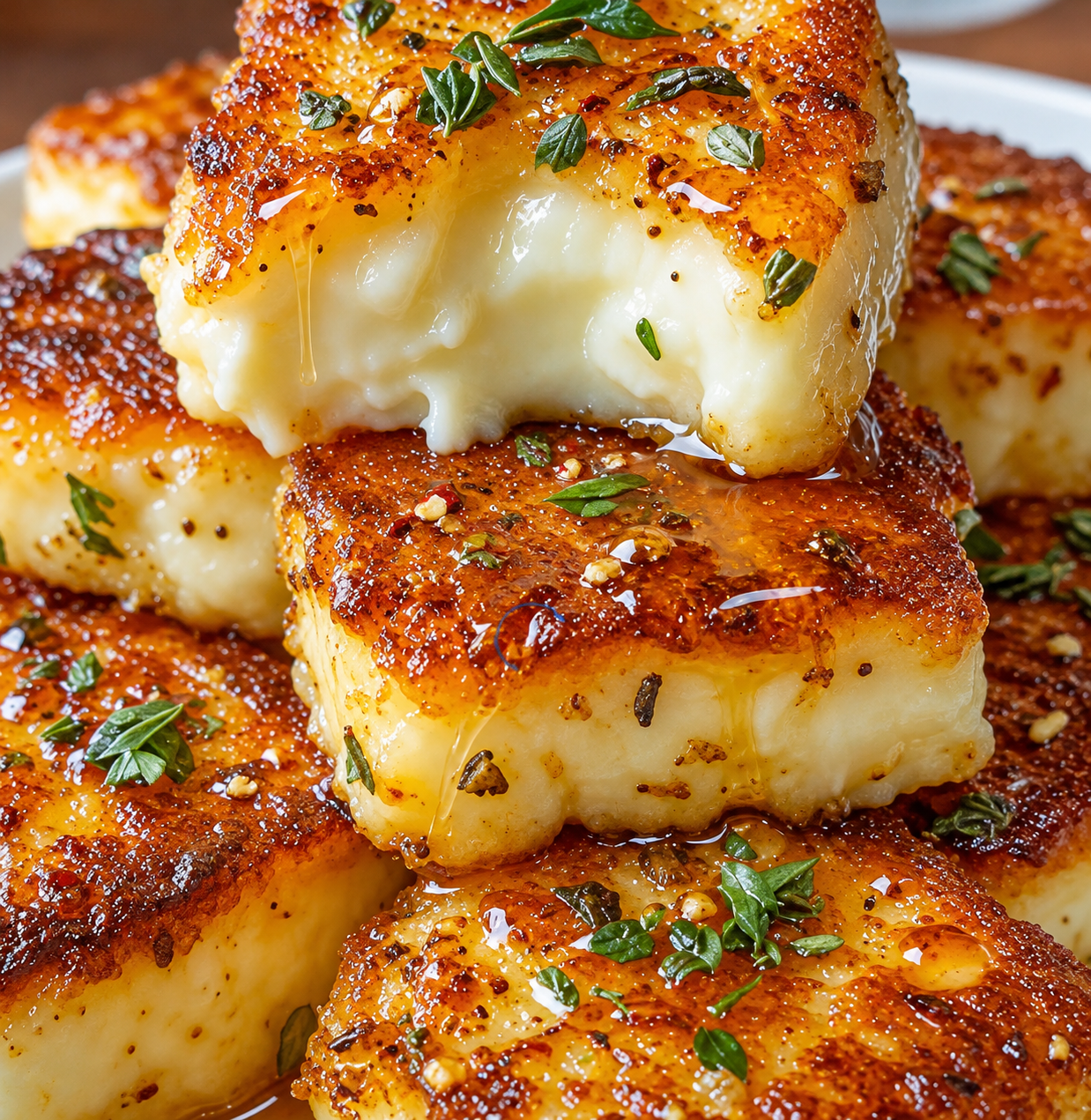
Crispy Honey-Glazed Halloumi Bites
Ingredients
Equipment
Method
- Cut the halloumi into 1.5-inch squares or rectangular slices approximately 3/4-inch thick. Pat each piece thoroughly dry with paper towels.
- If desired, lightly dredge each cheese square in all-purpose flour and shake off any excess.
- Heat olive oil or unsalted butter in a large nonstick or cast-iron skillet over medium-high heat.
- Arrange the cheese squares in a single layer without overcrowding the skillet. Fry undisturbed for 2 to 3 minutes until a deep golden-brown crust forms.
- Carefully flip each piece and cook for another 1.5 to 2 minutes until golden on both sides and warm and tender inside.
- Transfer the hot cheese to a serving plate. Immediately drizzle with fresh lemon juice and slightly warmed honey.
- Scatter with chopped oregano or thyme, freshly cracked black pepper, and optional crushed red pepper flakes. Serve immediately.
Notes
Why You Will Love Crispy Honey-Glazed Halloumi Bites
The Perfect Combination of Sweet and Salty
One of the most appealing things about this recipe is the balance between contrasting flavors.
Halloumi has a naturally salty and slightly tangy taste that becomes even more satisfying when the cheese is pan-fried.
The golden exterior develops a rich, savory flavor as it comes into contact with the hot skillet.
Adding warm honey introduces a gentle sweetness that complements the saltiness of the cheese without overwhelming its natural flavor.
Fresh lemon juice provides acidity, helping balance the richness of both the cheese and the honey.
Fresh oregano or thyme adds a fragrant herbal finish, while cracked black pepper brings a subtle warmth.
If you enjoy a little heat, crushed red pepper flakes transform the glaze into a delicious hot-honey topping.
Each bite combines a golden crust, tender cheese, sweet honey, fresh herbs, and a refreshing touch of citrus.
A Quick Appetizer With Minimal Preparation
These halloumi bites are ideal when you want something impressive without spending much time in the kitchen.
Unlike traditional fried cheese appetizers that require multiple coatings of flour, eggs, and breadcrumbs, halloumi can be cooked directly in a skillet.
Its firm texture allows it to maintain its shape when exposed to heat.
A light flour coating is entirely optional, making the preparation even easier.
The cheese only needs a few minutes of cooking on each side. Once the exterior is golden, you can transfer the pieces directly to a serving plate and add the glaze.
There is no need to prepare a separate sauce in another saucepan. Slightly warmed honey, fresh lemon juice, and chopped herbs create an easy finishing combination.
The simple preparation also makes this recipe convenient when entertaining. Have the ingredients ready in advance and cook the cheese shortly before your guests are ready to eat.
Choosing the Best Ingredients
Halloumi and Alternative Frying Cheeses
Halloumi is particularly well suited to pan-frying because of its firm texture and relatively high melting point.
Originally associated with Cyprus, this cheese is known for maintaining its shape when grilled or fried. It develops a golden crust while becoming warm and tender inside.
For this recipe, cut the cheese into thick squares or rectangular slices. Pieces approximately three-quarters of an inch thick provide a satisfying balance between the browned exterior and the soft interior.
Avoid cutting the cheese too thinly, as thinner slices may become overly firm after cooking.
If halloumi is unavailable, you can experiment with other suitable frying cheeses.
Kefalograviera and kasseri are commonly associated with Greek fried cheese preparations, including saganaki. A light coating of flour can help these cheeses develop a golden crust and maintain their shape during cooking.
Firm queso panela is another possible alternative, although its flavor and texture differ from halloumi.
Ordinary mozzarella and other cheeses that melt easily are less suitable for this particular method unless the recipe is adapted to include a protective coating.
For the most reliable results, choose a firm cheese specifically suited to grilling or frying.
Honey, Lemon, and Fresh Herbs
The finishing ingredients are just as important as the cheese itself.
Honey adds sweetness and creates the beautiful glossy appearance that makes these halloumi bites so inviting.
A mild honey allows the flavor of the cheese and herbs to remain noticeable. However, you can also use a more fragrant honey if you enjoy its distinctive taste.
Warm the honey slightly before serving so it becomes easier to drizzle.
Fresh lemon juice adds a bright, refreshing flavor. It also helps cut through the natural richness of the cheese.
Fresh oregano provides a Mediterranean-inspired flavor, while thyme offers a slightly more delicate herbal note.
Either herb works well in this recipe. You can also use a combination of the two if desired.
Freshly cracked black pepper adds a subtle savory kick without making the appetizer particularly spicy.
For a sweet and spicy variation, sprinkle crushed red pepper flakes over the finished cheese.
Because halloumi is naturally salty, additional salt is generally unnecessary.
Taste the finished bites before adding any extra seasoning.
How to Make Perfect Pan-Fried Halloumi
Preparing the Cheese for a Golden Crust
The first step toward achieving beautifully browned halloumi is removing excess surface moisture.
Halloumi is often packaged in liquid, which can leave the surface quite wet.
If the cheese goes directly into a hot skillet while wet, the moisture can create steam and interfere with browning.
Cut the cheese into evenly sized squares or rectangles, then pat each piece thoroughly with paper towels.
Take a moment to dry both sides and the edges of the cheese.
For a slightly thicker crust, lightly dredge the pieces in all-purpose flour.
Shake off any excess flour before cooking. A thin coating is enough to create an attractive exterior without covering the natural flavor of the cheese.
If you prefer to keep the recipe flour-free, simply omit this optional step.
Heat olive oil in a large nonstick or cast-iron skillet over medium-high heat.
The oil should become hot and shimmering before you add the cheese, but it should not be smoking.
A properly heated skillet encourages immediate browning and helps prevent the cheese from sticking.
If using unsalted butter instead of olive oil, monitor the heat carefully to prevent the butter from burning.
Searing, Flipping, and Adding the Honey Glaze
Arrange the prepared cheese squares in the hot skillet in a single layer.
Leave a little space between each piece. Overcrowding the skillet can reduce its temperature and make it more difficult to achieve an evenly golden crust.
If necessary, cook the cheese in two batches.
Allow the first side to cook undisturbed for two to three minutes.
Avoid moving the pieces repeatedly, as direct contact with the hot skillet helps develop the golden exterior.
Once the bottom is deeply browned, carefully flip each piece using a spatula or kitchen tongs.
Cook the second side for another one and a half to two minutes.
The cheese should be beautifully golden on both sides and warm throughout.
Halloumi naturally maintains a firmer, springier texture than softer melting cheeses. Its center becomes tender when heated but does not normally produce the same flowing cheese pull as mozzarella.
Transfer the cooked pieces to a serving plate.
Immediately drizzle them with fresh lemon juice and slightly warmed honey.
Scatter chopped oregano or thyme over the top, followed by freshly cracked black pepper and optional crushed red pepper flakes.
Adding the honey after frying is important because honey can burn when exposed to high skillet temperatures.
Serve the finished bites immediately for the best contrast between the golden crust and the warm interior.
Serving Suggestions, Storage, and Flavor Variations
Delicious Ways to Serve Halloumi Bites
These honey-glazed halloumi bites are delicious on their own, especially when served warm as an appetizer.
Arrange them on a small serving platter and provide cocktail picks so guests can easily enjoy individual pieces.
They are also a wonderful addition to a Mediterranean-inspired sharing board.
Pair them with olives, hummus, cucumber slices, cherry tomatoes, roasted red peppers, and warm pita bread.
The combination of fresh vegetables, creamy dips, and warm fried cheese creates an appealing variety of flavors and textures.
For a light lunch, serve the halloumi over a salad made with arugula, cucumbers, tomatoes, and a simple lemon dressing.
The warm cheese provides a satisfying contrast to the cool vegetables.
You can also serve it alongside grilled chicken, roasted vegetables, couscous, or rice.
Another delicious option is to tuck the cooked halloumi into warm flatbread with lettuce, tomatoes, and a spoonful of yogurt sauce.
For entertaining, consider serving extra honey and lemon wedges on the side. This allows guests to adjust the sweetness and brightness of their portions.
If you are preparing a large batch, cook the cheese in separate batches and serve each batch as soon as possible.
Freshly cooked halloumi has the most enjoyable texture.
Storage Tips and Creative Flavor Variations
Although these cheese bites are best enjoyed immediately, leftovers can be stored in the refrigerator.
Allow the cooked cheese to cool and transfer it to an airtight container.
Refrigerate for up to three days.
Keep in mind that halloumi becomes firmer as it cools, so the texture will not be exactly the same after storage.
For the best reheating results, warm the pieces briefly in a lightly oiled skillet over medium heat.
If the cheese has already been glazed, use gentle heat to prevent the honey from burning.
Add a fresh drizzle of honey and lemon juice after reheating if desired.
You can also prepare the ingredients in advance by cutting the cheese, chopping the herbs, and measuring the honey and lemon juice.
Store the prepared cheese in the refrigerator and pat it dry again immediately before cooking.
There are several easy ways to customize the flavor.
For spicy hot-honey halloumi, increase the amount of crushed red pepper flakes or use your favorite hot honey.
For a savory version, omit the honey and finish the cheese with lemon juice, minced garlic, and fresh herbs.
For an aromatic variation, add a little finely grated lemon zest just before serving.
A sprinkle of toasted sesame seeds can introduce an additional nutty flavor and delicate crunch.
You can also experiment with fresh mint or parsley instead of oregano or thyme.
Each variation offers a different flavor while preserving the simple pan-fried cheese technique.
Ingredients
Cheese and Coating
- 16 oz (450 g) halloumi cheese, cut into 1½-inch squares or rectangular slices approximately ¾-inch thick
- 2 tablespoons all-purpose flour, optional
- 2 tablespoons olive oil or unsalted butter
Honey Glaze and Garnish
- 2 tablespoons honey, slightly warmed
- 1 tablespoon fresh lemon juice
- 1 tablespoon fresh oregano or thyme leaves, roughly chopped, plus extra for garnish
- ¼ teaspoon crushed red pepper flakes, optional
- Freshly cracked black pepper, to taste
Instructions
- Cut the halloumi into thick squares or rectangular slices approximately three-quarters of an inch thick.
- Pat the cheese thoroughly dry with paper towels to remove excess surface moisture.
- If desired, lightly dredge each piece in all-purpose flour. Shake off any excess.
- Heat the olive oil or unsalted butter in a large nonstick or cast-iron skillet over medium-high heat.
- Once the oil is shimmering, arrange the cheese pieces in a single layer without overcrowding the skillet.
- Cook undisturbed for two to three minutes, until a deep golden-brown crust forms underneath.
- Carefully flip each piece and cook for another one and a half to two minutes, until the second side is golden and the center is warm and tender.
- Transfer the cooked cheese to a serving plate.
- Immediately drizzle with fresh lemon juice and slightly warmed honey.
- Sprinkle with chopped oregano or thyme, freshly cracked black pepper, and optional crushed red pepper flakes.
- Serve immediately while the cheese is warm and the exterior is golden and crisp.
Frequently Asked Questions
Why Does Halloumi Not Melt Like Other Cheeses?
Halloumi is made using a process that gives it a relatively high melting point.
This allows it to maintain its shape when heated, making it particularly suitable for grilling and pan-frying.
Its center becomes warm and tender, while the exterior develops a beautiful golden crust.
Do I Need to Coat Halloumi in Flour?
No. Halloumi can be pan-fried directly without any flour coating.
However, a light dusting of flour can create a thicker crust and may be especially helpful when using softer alternative frying cheeses.
For a flour-free version, simply pat the cheese dry and fry it directly in olive oil.
Can I Make These Halloumi Bites in an Air Fryer?
Yes. As an optional alternative to pan-frying, lightly coat the halloumi pieces with oil and arrange them in a single layer in the air fryer basket.
Air-fry at approximately 375°F until golden, checking frequently and turning as needed. The exact cooking time depends on the size of the cheese pieces and the air fryer model.
Add the honey, lemon juice, and fresh herbs after cooking.
Why Is My Halloumi Rubbery?
Halloumi naturally has a slightly springy texture, but overcooking can make it excessively firm.
Cook it only until golden on both sides and warmed through.
Serving immediately after cooking also helps preserve its tender texture.
Avoid repeatedly reheating the same portions, as this may make the cheese firmer.
Can I Substitute Another Cheese for Halloumi?
Yes. Kefalograviera, kasseri, and firm queso panela are possible alternatives.
Keep in mind that each cheese behaves differently when heated.
A light flour coating can help softer frying cheeses maintain their shape and create an attractive crust.
For the most predictable results, use halloumi or another cheese specifically intended for grilling or frying.
Conclusion
Crispy Honey-Glazed Halloumi Bites are a simple yet impressive appetizer that brings together savory golden cheese, sweet honey, bright lemon juice, and fragrant fresh herbs.
With minimal preparation and just a few minutes of cooking, this recipe is perfect for casual snacks, dinner parties, Mediterranean-inspired meals, and sharing platters.
The secret is to dry the cheese thoroughly, use a properly heated skillet, and allow each side to develop a beautiful golden crust before flipping.
Finish the hot cheese with honey and fresh herbs, then serve immediately for the most enjoyable texture.
Whether you prefer the classic sweet-and-salty combination or a spicy hot-honey variation, these delicious halloumi bites are an easy way to turn simple ingredients into an unforgettable appetizer.