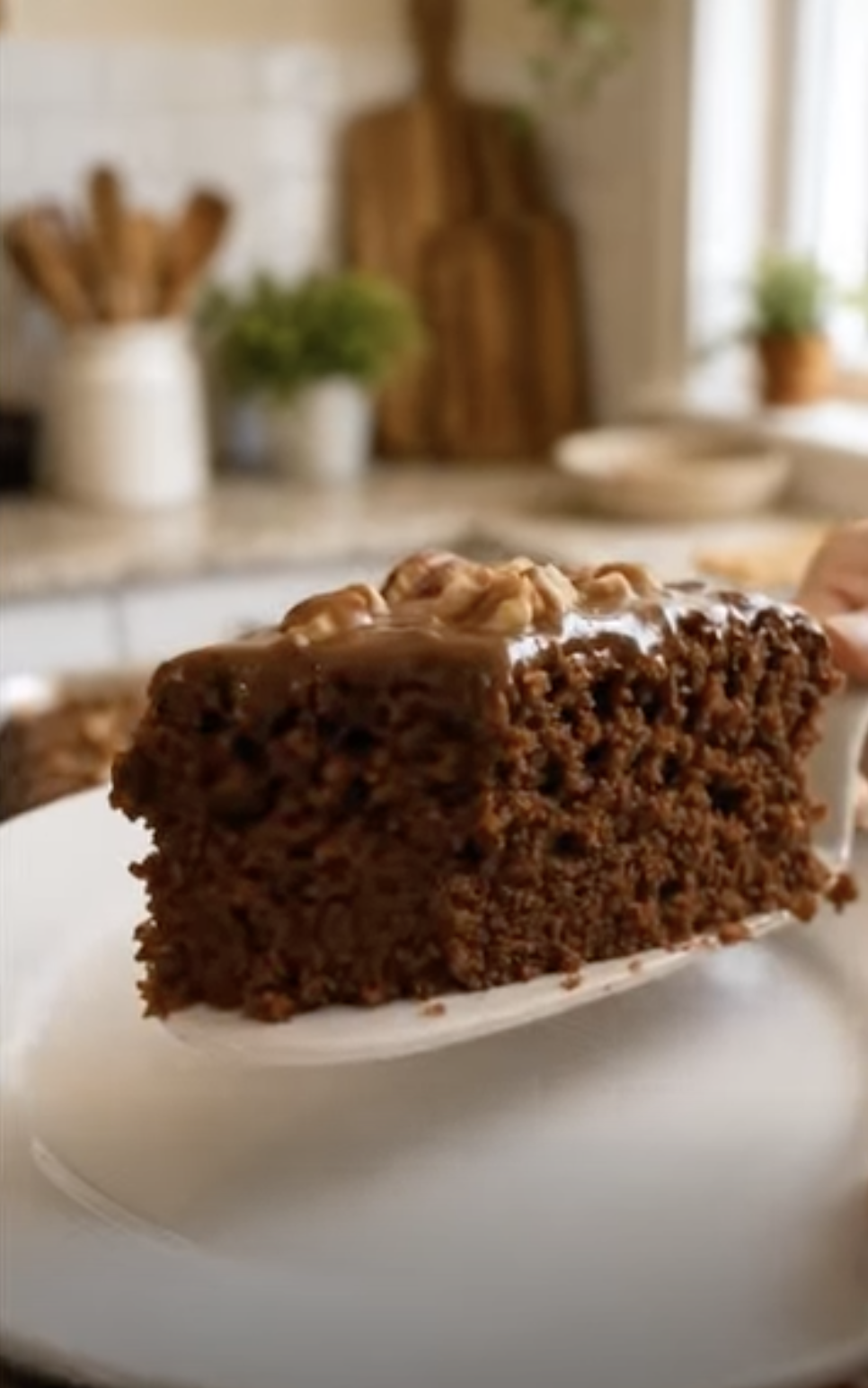
Classic Texas Sheet Cake is the kind of dessert that earns a permanent place in any reliable baking collection. It has a thin, ultra-moist chocolate cake base, a warm fudgy frosting, and plenty of chopped pecans scattered throughout the topping. Because it bakes in a large rimmed pan, it also makes enough servings for parties, potlucks, holidays, family reunions, and casual get-togethers.
This Classic Texas Sheet Cake comes together quickly because both the cake and frosting use simple saucepan methods. The chocolate mixture for the batter starts with butter, water, and cocoa powder, while the frosting begins with melted butter, cocoa, and milk. That warm-on-warm method gives the dessert its signature texture.
Unlike a thick layer cake, this dessert stays low and tender. The thinner cake layer bakes quickly, while the rich frosting adds plenty of sweetness and chocolate flavor. Chopped pecans bring crunch and keep each square from tasting one-dimensional.
The most important part comes at the end. You pour the warm frosting over the warm cake shortly after it leaves the oven. That step allows the topping to settle into the surface while staying soft, glossy, and fudgy.
I first made a Texas-style sheet cake when I needed a dessert that could feed a room without requiring layers, piping bags, or complicated decorating. I expected something simple, but the contrast between the thin chocolate cake and warm frosting surprised me. The topping settled into the surface instead of sitting stiffly on top, and the pecans added just enough crunch. I cut it into small squares and watched the pan empty faster than almost anything else on the table. Since then, I have appreciated this style of cake for exactly what it does best: dependable chocolate flavor, easy serving, and a generous amount of dessert with very little fuss.
Why Classic Texas Sheet Cake Works So Well
The Thin Chocolate Cake Stays Moist and Tender
Classic Texas Sheet Cake gets its characteristic texture from a batter that combines a hot cocoa mixture with flour, sugar, buttermilk, eggs, baking soda, and vanilla.
Start by whisking together two cups all-purpose flour, two cups granulated sugar, and one-half teaspoon salt in a large mixing bowl.
Mixing the dry ingredients first helps distribute the sugar and salt evenly.
Next, place one cup unsalted butter, one cup water, and one-quarter cup unsweetened cocoa powder in a saucepan.
Heat the mixture over medium heat.
Stir frequently until the butter melts completely and the chocolate mixture reaches a gentle boil.
Once it begins bubbling, remove it from the heat.
Pour the hot mixture directly over the flour, sugar, and salt.
Stir until the dry ingredients absorb the liquid.
The heat helps dissolve some of the sugar and creates a smooth chocolate base.
In a separate bowl, whisk together one-half cup buttermilk, two large eggs, one teaspoon baking soda, and one teaspoon vanilla extract.
Then add this mixture to the chocolate batter.
Stir only until smooth.
Avoid excessive mixing because you want the cake to stay tender.
The buttermilk plays an important role in Classic Texas Sheet Cake.
It adds moisture, slight tang, and richness.
Meanwhile, the baking soda helps the cake rise enough to stay soft without becoming thick like a traditional layer cake.
The final batter should pour easily into the pan.
Spread it evenly so the center and edges bake at a similar rate.
Because the cake is thin, even distribution matters more than it might in a deeper baking pan.
Ingredients
Equipment
Method
- Preheat the oven to 350°F (175°C). Grease a 10-by-15-inch jelly-roll pan or rimmed sheet pan.
- In a large mixing bowl, whisk together the all-purpose flour, granulated sugar, and salt.
- Add 1 cup butter, the water, and 1/4 cup cocoa powder to a saucepan. Heat over medium heat, stirring frequently, until the butter melts and the mixture reaches a gentle boil.
- Pour the hot chocolate mixture over the flour mixture and stir until combined.
- In a separate bowl, whisk together the buttermilk, eggs, baking soda, and 1 teaspoon vanilla extract.
- Add the buttermilk mixture to the chocolate batter and stir just until smooth.
- Pour the batter into the prepared sheet pan and spread it into an even layer.
- Bake for 18 to 22 minutes, or until a toothpick inserted into the center comes out clean or with a few moist crumbs.
- While the cake bakes, melt 1/2 cup butter in a saucepan over medium-low heat. Stir in 1/4 cup cocoa powder and the milk, then bring the mixture just to a gentle simmer.
- Remove the frosting mixture from the heat. Whisk in 1 teaspoon vanilla extract and the powdered sugar until smooth.
- Stir the chopped pecans into the warm frosting.
- Pour the warm frosting over the cake shortly after it comes out of the oven. Spread quickly and evenly to the edges.
- Allow the cake and frosting to cool for at least 30 to 45 minutes before slicing into squares.
Notes
Warm Cocoa Frosting Creates the Signature Fudgy Finish
The frosting makes Classic Texas Sheet Cake instantly recognizable.
It does not resemble a fluffy buttercream.
Instead, it forms a soft, fudgy chocolate layer that settles over the warm cake.
While the cake bakes, add one-half cup unsalted butter to a saucepan.
Melt it over medium-low heat.
Then stir in one-quarter cup unsweetened cocoa powder and six tablespoons milk.
Bring the mixture just to a gentle simmer.
You do not need to boil it aggressively.
Once the butter, cocoa, and milk look smooth, remove the saucepan from the heat.
Add one teaspoon vanilla extract.
Then gradually whisk in three and one-half cups powdered sugar.
Continue whisking until the frosting looks smooth and free from large lumps.
Finally, stir in one cup chopped pecans.
The warm frosting should remain pourable.
That consistency matters because you need to spread it across the cake quickly.
When Classic Texas Sheet Cake comes out of the oven, give it only a brief moment to settle.
Then pour the warm frosting over the warm surface.
Use an offset spatula or the back of a spoon to move it gently toward the edges.
The warmth from both the cake and frosting helps the topping settle into a smooth layer.
As it cools, the frosting firms slightly while keeping a soft, melt-in-your-mouth texture.
The pecans provide contrast.
Without them, the cake tastes rich and soft from top to bottom.
With them, each bite gets a little crunch.
That combination makes the dessert especially satisfying.
How to Make Classic Texas Sheet Cake Step by Step
Prepare the Batter and Bake It Evenly
Preheat the oven to 350°F.
Grease a 10-by-15-inch jelly-roll pan or another similarly sized rimmed sheet pan.
Make sure you coat the corners and edges well because Classic Texas Sheet Cake reaches almost every part of the pan.
Next, whisk the flour, granulated sugar, and salt together.
Set that bowl aside while you prepare the hot chocolate mixture.
Combine the butter, water, and cocoa in a saucepan.
Heat over medium heat until the butter melts and the mixture comes to a gentle boil.
Stir frequently so the cocoa dissolves smoothly.
Pour the hot mixture over the dry ingredients.
Stir until combined.
In a second bowl, whisk the buttermilk, eggs, baking soda, and vanilla.
Then add those ingredients to the chocolate mixture.
Stir just until the batter becomes smooth.
Pour the batter into the prepared pan.
Use a spatula to spread it into an even layer.
Push the batter carefully into the corners.
Then place the pan in the center of the oven.
Bake for 18 to 22 minutes.
Because Classic Texas Sheet Cake is relatively thin, it can go from perfectly moist to overbaked faster than a deep cake.
Begin checking near the lower end of the baking window.
Insert a toothpick into the center.
It should come out clean or with a few moist crumbs.
Avoid waiting for the edges to become hard or dry.
Once the cake passes the toothpick test, remove it from the oven.
Keep it in the pan.
You will frost it there while it remains warm.
Frost the Cake Before It Completely Cools
Timing gives Classic Texas Sheet Cake its signature finish.
You should prepare the frosting while the cake bakes so both components stay warm at the right moment.
Once the cake comes out of the oven, the frosting should already be smooth and pourable.
If it thickens while waiting, place it over very low heat briefly and stir.
Do not bring it back to a hard boil.
Pour the frosting over the warm cake.
Start in the center and move outward.
Then use an offset spatula to guide the topping toward the corners.
Work quickly because the frosting begins setting as it cools.
However, avoid pressing hard against the cake.
The surface remains tender while warm, so aggressive spreading can pull up crumbs.
The frosting should create a relatively thin but rich layer over the cake.
Once spread, leave the pan undisturbed.
Let Classic Texas Sheet Cake cool for at least 30 to 45 minutes before slicing.
During this resting period, the frosting sets enough to cut cleanly.
The cake underneath also finishes settling into its soft, moist texture.
If you cut too soon, the frosting may slide or cling heavily to the knife.
Once cooled, cut the sheet cake into squares.
For 20 servings, make larger pieces.
For 24 servings, cut slightly smaller portions.
Because the cake is rich, modest squares usually satisfy easily.
You can serve it directly from the pan.
That makes it especially convenient for casual gatherings.
Tips for the Best Texture and Flavor
Avoid Overbaking the Chocolate Cake
The fastest way to lose the best qualities of Classic Texas Sheet Cake is to bake it too long.
The cake should stay soft and moist.
Because it spreads across a shallow pan, the center cooks quickly.
Check at 18 minutes.
If the toothpick shows wet batter, continue baking.
Then check again after a few minutes.
A toothpick with several moist crumbs usually indicates the cake is ready.
You do not need to wait until the toothpick looks completely dry.
Another useful sign comes from the edges.
They should look set and may begin pulling away from the pan slightly.
However, they should not appear hard or crusty.
Use the correct pan size whenever possible.
A larger pan creates a thinner cake that may bake faster.
A smaller pan produces a thicker cake that requires more time.
Therefore, baking time can change significantly when you substitute pans.
Classic Texas Sheet Cake also benefits from accurate flour measurements.
Too much flour can make the cake dense or dry.
For the most consistent result, spoon flour into the measuring cup and level the top rather than packing it down.
The same principle applies to cocoa.
Measure it carefully so the chocolate flavor stays balanced.
After adding the buttermilk and eggs, stir gently.
Once the batter looks smooth, stop.
Overmixing can develop too much gluten and reduce tenderness.
Finally, use fresh baking soda.
Because the recipe relies on baking soda for lift, an old leavener can leave the cake flatter and heavier than intended.
Keep the Frosting Smooth, Glossy, and Pourable
Classic Texas Sheet Cake frosting should spread easily when warm.
If the powdered sugar forms lumps, sift it before adding it to the saucepan.
You can also whisk gradually rather than adding the entire amount at once.
The milk helps control consistency.
If your frosting becomes too thick before you pour it over the cake, add a very small splash of milk.
Then whisk until smooth.
If it looks unusually thin, let it stand briefly off the heat.
The powdered sugar thickens the frosting as it cools.
Do not overcook it.
A gentle simmer before adding the powdered sugar provides enough heat.
Long boiling can change the texture and make the final topping less tender.
The pecans should be chopped into small pieces.
Large chunks make spreading more difficult and can pull across the cake surface.
For more nutty flavor, toast the pecans lightly before adding them.
Let them cool slightly before stirring them into the frosting.
Toasting is optional, but it deepens their flavor.
You can also reserve a small handful of pecans and sprinkle them over the top after spreading the frosting.
That gives Classic Texas Sheet Cake a more decorative finish while still keeping the classic texture.
Once frosted, leave the cake at room temperature until the topping sets.
Avoid covering it immediately.
Trapped steam can create condensation and make the surface sticky.
After it has cooled fully, you can cover the pan for storage.
Serving Ideas, Variations, and Storage
Customize Classic Texas Sheet Cake Without Losing Its Character
Classic Texas Sheet Cake already has a strong identity, so the best variations stay relatively simple.
One easy option involves changing the nuts.
Walnuts can replace pecans when you prefer their slightly more bitter, earthy flavor.
You can also leave the nuts out entirely.
The frosting will still taste rich and fudgy.
For a stronger chocolate flavor, add a small amount of instant espresso powder to the cake batter.
Coffee intensifies chocolate without making the dessert taste strongly of coffee when used in moderation.
Another option involves adding a pinch of cinnamon.
That gives the cake a warm background note.
However, keep it subtle.
You want chocolate to remain the dominant flavor.
You can also top individual slices with vanilla ice cream.
The cold creaminess contrasts beautifully with the soft chocolate cake.
Whipped cream works too.
For a festive presentation, add fresh berries beside each piece.
Strawberries and raspberries both pair well with the rich cocoa flavor.
Still, Classic Texas Sheet Cake does not need elaborate toppings.
Its appeal comes from the simple combination of moist cake, warm fudgy frosting, and crunchy pecans.
If you change too many elements at once, you can lose that balance.
For gatherings, serve the cake directly from the pan.
For a more polished dessert table, cut the cake into neat squares and arrange them on a platter.
The frosting keeps each square visually appealing without additional decorating.
Store and Serve the Cake Properly
Classic Texas Sheet Cake stores well, which makes it practical for entertaining.
Once the cake and frosting have cooled completely, cover the pan tightly.
You can keep the cake at room temperature for a short period in a cool kitchen.
For longer storage, place it in the refrigerator.
However, refrigeration can firm the frosting and cake slightly.
Let chilled slices sit at room temperature before serving if you want the softest texture.
For individual storage, transfer squares to an airtight container.
Place parchment paper between layers if you need to stack them.
That keeps the frosting from sticking excessively.
Classic Texas Sheet Cake also works well as a make-ahead dessert.
Bake and frost it the day before serving.
Once cooled, cover it securely.
The flavor often tastes even more settled the next day.
If you freeze the cake, cut it into portions first.
Wrap individual squares well and place them in a freezer-safe container.
Thaw them at room temperature or overnight in the refrigerator.
Because the frosting remains relatively dense, it usually holds up well.
For parties, cut the cake shortly before serving.
Use a sharp knife and wipe it between cuts for cleaner squares.
Since the cake is rich, smaller servings work well.
That makes one pan enough for a generous crowd.
Frequently Asked Questions
Why do you pour the frosting over Classic Texas Sheet Cake while it is warm?
The warm frosting spreads easily and settles into the warm cake surface. This creates the soft, fudgy topping that gives Texas sheet cake its signature texture.
Can I make Classic Texas Sheet Cake without pecans?
Yes. Simply leave the pecans out of the frosting. The cake will still have the same rich chocolate flavor and fudgy finish.
Can I use regular milk instead of buttermilk?
Buttermilk gives the cake tenderness and a slight tang. You can use a substitute if needed, but the original ingredient gives Classic Texas Sheet Cake its best texture.
How do I know when Texas sheet cake is done?
Insert a toothpick into the center after about 18 minutes. It should come out clean or with a few moist crumbs. Avoid baking until the cake looks dry.
Can I make Classic Texas Sheet Cake a day ahead?
Yes. Bake and frost the cake, let it cool completely, then cover it tightly. It works very well as a make-ahead dessert for gatherings.
Conclusion
Classic Texas Sheet Cake proves that a dessert does not need layers, elaborate decorating, or complicated techniques to feel special.
The cake begins with a simple mixture of flour, sugar, and salt.
Then a hot combination of butter, water, and cocoa creates the rich chocolate base.
Buttermilk, eggs, baking soda, and vanilla complete the batter and give the cake a tender texture.
Because the batter spreads into a large shallow pan, Classic Texas Sheet Cake bakes quickly.
That thin profile also gives the dessert its distinctive balance.
You get enough cake to stay soft and moist, but the fudgy frosting remains a major part of every bite.
The frosting follows the same straightforward approach.
Butter, cocoa, milk, vanilla, powdered sugar, and chopped pecans create a warm topping that you pour directly over the cake.
This warm-on-warm method gives Classic Texas Sheet Cake its famous melt-in-your-mouth finish.
For the best result, avoid overbaking the cake, prepare the frosting before the cake finishes, and spread the topping quickly while everything remains warm.
Then let the cake cool before slicing.
You can keep the traditional pecan topping, replace the nuts, or leave them out.
You can also serve the cake with berries, whipped cream, or ice cream.
Still, the original version needs very little extra.
Its strength comes from rich chocolate flavor, a moist crumb, a fudgy topping, and simple ingredients.
Whether you make it for a birthday, potluck, holiday, family reunion, school event, church supper, or weekend dessert, Classic Texas Sheet Cake offers an easy way to feed a crowd without sacrificing the rich chocolate experience everyone expects from a great homemade cake.