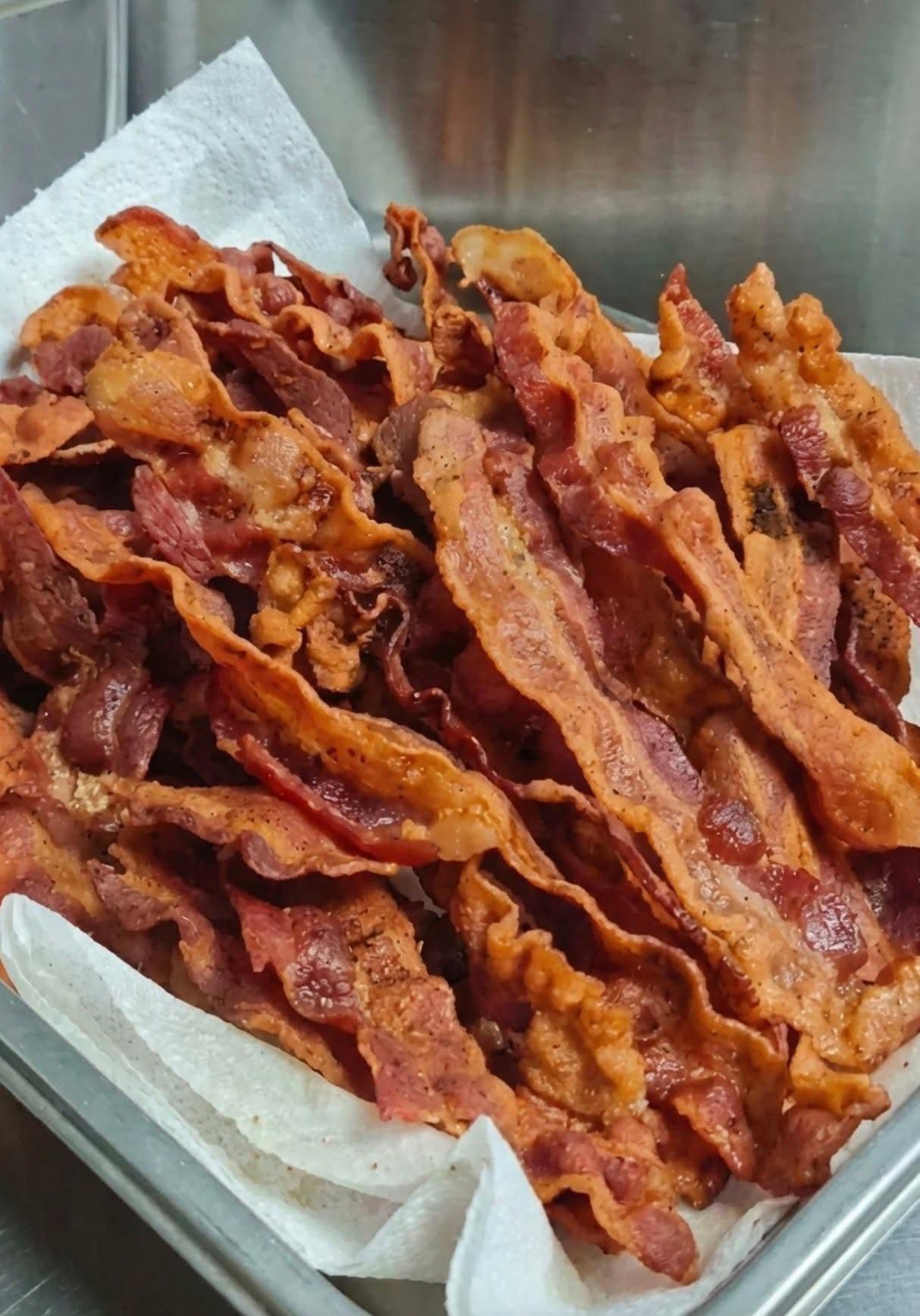
Few foods inspire as much enthusiasm as bacon.
The unmistakable aroma drifting through the kitchen, the satisfying crunch of a perfectly crisp slice, and the rich, smoky flavor make bacon one of the most beloved breakfast staples in the world. Whether served alongside eggs, layered into sandwiches, crumbled over salads, or wrapped around vegetables and seafood, bacon has a unique ability to elevate almost any meal.
While frying bacon in a skillet remains a traditional method, many home cooks have discovered a simpler and more reliable approach: cooking bacon in the oven.
Oven-baked bacon delivers consistent results, requires minimal attention, creates less mess, and makes it easy to prepare large batches all at once. Once you’ve mastered this method, you may never return to stovetop frying again.
If you’ve ever struggled with unevenly cooked strips, grease splatters covering your stovetop, or the challenge of cooking enough bacon for a family breakfast, baking bacon in the oven might become your new favorite kitchen technique.
Why Oven-Baked Bacon Is Better
Many people are surprised to learn that professional kitchens frequently use ovens rather than skillets to prepare bacon.
There are several reasons why this method works so well.
Even Cooking
When bacon cooks in a frying pan, certain areas receive more direct heat than others. This can result in uneven cooking, with some sections becoming overcooked while others remain underdone.
In the oven, heat surrounds the bacon more evenly. Every slice receives consistent exposure to hot air, producing uniform browning and crispness.
Less Mess
Anyone who has fried bacon on the stovetop knows how quickly grease can splatter across nearby surfaces.
Oven cooking keeps most of the grease contained within the baking sheet, making cleanup much easier.
Hands-Free Cooking
Unlike stovetop bacon, which often requires constant attention and flipping, oven bacon cooks largely unattended.
Simply place the tray in the oven and let the heat do the work.
Perfect for Large Batches
Cooking bacon for a crowd can be frustrating when using a frying pan.
An oven allows you to cook an entire package—or even several packages—simultaneously.
This makes it ideal for:
- Family breakfasts
- Holiday brunches
- Meal preparation
- Entertaining guests
Consistent Results
Perhaps the biggest advantage is consistency.
Once you determine your preferred cooking time and texture, you’ll achieve nearly identical results every time.
Choosing the Right Bacon
Not all bacon is created equal.
The type you choose affects both flavor and texture.
Regular-Cut Bacon
Regular-cut bacon cooks more quickly and tends to become crispier.
It’s ideal for:
- Sandwiches
- Salads
- Crumbling over dishes
- Extra-crispy bacon lovers
Thick-Cut Bacon
Thick-cut bacon offers a meatier texture and richer bite.
Many people prefer it because it maintains a slight chewiness while still developing crispy edges.
It’s excellent for:
- Breakfast platters
- Burgers
- Gourmet sandwiches
- Serving as a stand-alone side
Smoked Bacon
Traditional smoked bacon adds depth and complexity.
Different woods create unique flavor profiles, including:
- Hickory
- Applewood
- Maple
- Cherry
- Mesquite
Experimenting with various smoked varieties can transform ordinary breakfasts into memorable meals.
Essential Equipment
One reason this method is so popular is its simplicity.
You only need a few basic kitchen tools.
Baking Sheet
A sturdy rimmed baking sheet helps contain the rendered fat during cooking.
Aluminum Foil or Parchment Paper
Lining the baking sheet dramatically simplifies cleanup.
After cooking, simply discard the liner.
Wire Rack (Optional)
A wire rack elevates the bacon above the rendered fat.
This allows hot air to circulate underneath the strips, creating extra-crispy results.
Tongs
Tongs make transferring hot bacon safe and easy.
Paper Towels
Paper towels absorb excess grease after cooking.
Step-by-Step Guide to Perfect Oven Bacon
Step 1: Prepare the Baking Sheet
Line your baking sheet with aluminum foil or parchment paper.
This simple step saves significant cleanup time later.
If using a wire rack, place it on top of the lined sheet.
Step 2: Arrange the Bacon
Lay the bacon strips in a single layer.
The slices can touch slightly, but avoid substantial overlap.
Proper spacing ensures even cooking.
If cooking multiple packages, use additional baking sheets rather than overcrowding one pan.
Step 3: Start with a Cold Oven
Many experienced cooks swear by this technique.
Place the bacon into a cold oven before turning on the heat.
This gradual temperature increase allows the fat to render slowly, producing crispier bacon and reducing curling.
Set the oven to:
400°F (205°C)
Then allow the bacon to heat along with the oven.
Step 4: Bake Until Golden and Crisp
Cooking time varies depending on thickness.
Typical cooking times include:
| Bacon Type | Cooking Time |
|---|---|
| Regular-Cut | 15–20 minutes |
| Thick-Cut | 20–25 minutes |
| Extra Crispy | 22–28 minutes |
Every oven behaves differently, so begin checking a few minutes before the estimated completion time.
Step 5: Remove and Drain
Once the bacon reaches your desired level of crispness, carefully remove it using tongs.
Transfer the slices to a paper towel-lined plate.
Allow them to cool briefly before serving.
The bacon will continue to crisp slightly as it cools.
Common Mistakes to Avoid
Even a simple recipe can go wrong if certain mistakes occur.
Overcrowding the Pan
Too many slices packed together can trap steam and prevent crisping.
Always leave some space between strips.
Forgetting to Check Near the End
Bacon can move quickly from perfectly crisp to burned.
Pay close attention during the final few minutes.
Using Excessive Heat
Higher temperatures may seem faster, but they often lead to uneven cooking and burned edges.
Skipping the Paper Towels
Removing excess grease improves texture and enhances crispness.
Creative Flavor Variations
One of the joys of oven bacon is the ability to customize flavors.
Brown Sugar Bacon
Lightly sprinkle brown sugar over the bacon before baking.
The sugar caramelizes into a sweet, crispy coating.
Maple Bacon
Brush each slice with pure maple syrup before cooking.
The result is sweet, smoky perfection.
Pepper Bacon
Freshly cracked black pepper adds bold flavor and subtle heat.
Spicy Bacon
Try:
- Cayenne pepper
- Crushed red pepper flakes
- Chipotle powder
- Hot honey
Smoked Paprika Bacon
Smoked paprika enhances the bacon’s natural smokiness while adding beautiful color.
What to Do with Bacon Grease
Many home cooks consider bacon grease a culinary treasure.
Rather than discarding it, consider saving it.
How to Store It
Allow the grease to cool slightly.
Strain through a fine mesh sieve into a clean container.
Store in the refrigerator.
Uses for Bacon Fat
Bacon grease can add incredible flavor to:
- Roasted vegetables
- Fried potatoes
- Cornbread
- Soups
- Green beans
- Scrambled eggs
- Biscuits
- Gravy
A small amount can dramatically enhance savory dishes.
Serving Ideas
Bacon’s versatility is one reason it remains so popular.
Breakfast Favorites
Serve alongside:
- Eggs
- Pancakes
- Waffles
- French toast
- Hash browns
Sandwiches
Add bacon to:
- BLTs
- Burgers
- Breakfast sandwiches
- Club sandwiches
- Grilled cheese
Salads
Crumbled bacon adds crunch and flavor to:
- Caesar salads
- Cobb salads
- Spinach salads
Pasta Dishes
Bacon works beautifully in:
- Carbonara
- Mac and cheese
- Alfredo-based dishes
Appetizers
Wrap bacon around:
- Asparagus
- Jalapeño poppers
- Shrimp
- Dates
The results are always crowd-pleasers.
Meal Prep Benefits
Oven bacon is excellent for meal preparation.
Cook an entire package at once and store leftovers in the refrigerator.
Properly stored bacon remains fresh for several days.
Reheat briefly in:
- Microwave
- Air fryer
- Oven
- Skillet
Many people enjoy preparing a week’s worth of breakfast bacon in a single batch.
Frequently Asked Questions
Should bacon be flipped?
Not usually.
The oven’s circulating heat cooks both sides effectively.
Is a wire rack necessary?
No.
A rack creates slightly crispier bacon, but excellent results are possible directly on the baking sheet.
Can bacon be cooked from frozen?
Yes.
Separate the slices as much as possible and add several extra minutes of cooking time.
Which is better: foil or parchment paper?
Both work well.
Foil simplifies grease collection, while parchment prevents sticking.
Why does bacon curl?
Rapid temperature changes cause uneven contraction.
Starting with a cold oven minimizes curling.
Final Thoughts
Cooking bacon in the oven is one of those simple kitchen techniques that can completely transform your cooking routine.
It requires less effort, creates less mess, produces more consistent results, and allows you to prepare large quantities with ease.
Whether you prefer your bacon lightly crisp, deeply caramelized, thick-cut, or extra crunchy, the oven method provides reliable control and exceptional flavor.
The next time you’re craving bacon, skip the frying pan.
Line a baking sheet, arrange the slices, place them in a cold oven, and let the heat work its magic.
The result is beautifully crisp, perfectly cooked bacon every single time—and a kitchen that’s far cleaner when breakfast is over.