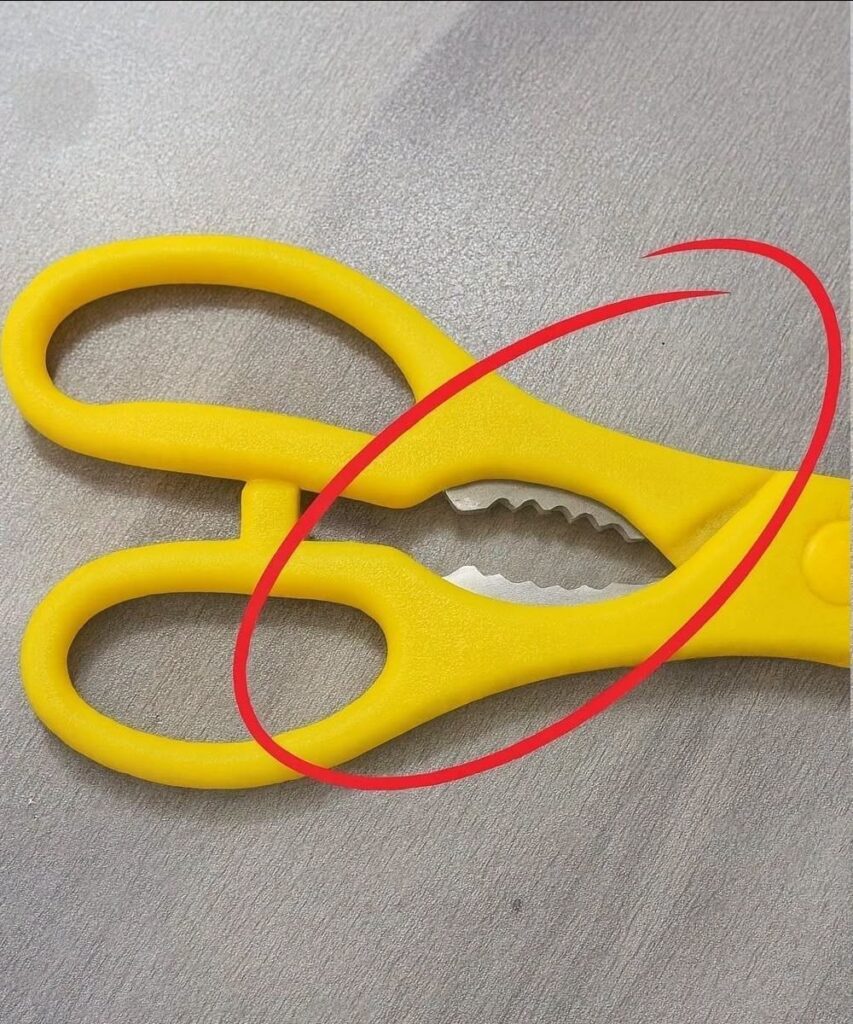
Have you ever picked up your kitchen scissors and noticed the strange, jagged section tucked between the handles near the pivot? It’s one of those little design features most of us glance at for years without ever giving it a second thought. Some people assume it’s decorative. Others think it’s simply part of the manufacturing process. A surprising number of people have never even noticed it.
Yet that small serrated notch is one of the most practical features built into a good pair of kitchen shears.
I discovered this almost by accident while helping my grandmother prepare dinner one Sunday afternoon. She reached for the kitchen scissors, not to cut vegetables or herbs, but to loosen the lid on a stubborn jar of homemade jam. Instead of searching for a rubber grip or asking someone stronger to help, she placed the lid inside that little toothed opening, gave the scissors a gentle twist, and the lid loosened instantly.
I remember asking, “You’ve been able to do that all this time?”
She smiled and replied, “These scissors have been smarter than most people give them credit for.”
That moment completely changed how I looked at one of the simplest tools in the kitchen.
Today, many kitchen gadgets promise to save space or replace multiple utensils. Ironically, one of the best multitools has probably been sitting in your utensil drawer for years. Once you understand what that serrated notch was designed to do, you’ll begin reaching for your kitchen scissors far more often than you ever imagined.
Why Kitchen Scissors Are More Than Just Scissors
Unlike ordinary office scissors, quality kitchen shears are engineered to handle a wide variety of food preparation tasks. Manufacturers understand that kitchens can quickly become cluttered with specialized gadgets, so they often incorporate multiple functions into a single tool.
Besides cutting herbs, trimming meat, slicing pizza, opening food packaging, and snipping kitchen twine, many kitchen shears include hidden features such as:
- Bottle openers
- Herb strippers
- Nutcrackers
- Bone notches
- Jar lid grippers
- Screw-cap openers
That serrated notch near the hinge is perhaps the most overlooked of them all.
Its clever design uses opposing ridges that lock around round objects. When the handles close slightly, they create exceptional gripping power without requiring tremendous hand strength.
Rather than relying entirely on muscle, the notch uses leverage.
That’s why it works so well for people who struggle with arthritis, weak grip strength, or sore wrists.
What Is That Serrated Notch Actually Called?
Manufacturers use several different names depending on the brand.
You might see it described as:
- Grip notch
- Jar opener
- Bone cracker
- Nutcracker section
- Multi-grip notch
- Serrated gripper
Regardless of the name, the purpose remains the same.
Instead of cutting something with the blades, this feature securely grips round or slippery objects so you can twist, crack, or stabilize them.
Think of it as a miniature pair of locking jaws built directly into your scissors.
How the Design Works
The engineering behind the notch is surprisingly simple.
When you partially close the handles, the serrated teeth interlock.
Objects placed inside become trapped between the ridges.
Instead of slipping like smooth metal surfaces would, the grooves bite gently into the object’s surface.
That added friction provides remarkable control while reducing the amount of force required from your hands.
It’s one of those designs that’s brilliantly simple once you understand it.
The First Hidden Use: Opening Stubborn Jars
Perhaps the most common use is loosening difficult lids.
We’ve all wrestled with jars that refuse to budge.
Pasta sauce.
Jam.
Pickles.
Baby food.
Spice jars.
Instead of wrapping a towel around the lid or banging it on the counter, try using the notch.
Here’s how:
- Place the lid inside the serrated notch.
- Close the handles gently until the ridges grip firmly.
- Hold the jar securely.
- Twist slowly.
The extra leverage often breaks the seal immediately.
For people with arthritis, this can make opening small jars dramatically easier.
It isn’t magic.
It’s simply better physics.
Why It Works Better Than Bare Hands
Smooth metal lids become slippery because your fingers have very little traction.
The serrated notch changes that completely.
Each tiny ridge increases friction.
Combined with the longer handles acting as levers, you generate more turning force while using less effort.
That’s why many cooks discover they can finally open jars that previously required another person’s help.
A Small Tool That Solves Big Frustrations
One reason professional chefs appreciate multipurpose tools is efficiency.
Instead of filling drawers with separate gadgets, they rely on equipment capable of performing multiple jobs well.
Kitchen scissors embody that philosophy perfectly.
A single pair can replace:
- A package opener
- A herb cutter
- A nutcracker
- A small jar opener
- A poultry shear
- A seafood cracker
Once you begin noticing these hidden capabilities, you’ll likely find yourself reaching for your kitchen shears more often than any other utensil in the drawer.
Choosing the Right Kitchen Shears
Not every pair includes this feature.
High-quality kitchen shears usually have:
- Thick stainless-steel blades
- Strong central pivot screw
- Comfortable ergonomic handles
- Serrated grip notch near the hinge
- Dishwasher-safe construction
- Optional blade separation for easier cleaning
Very inexpensive scissors often omit the notch entirely or use weaker materials that aren’t suitable for gripping hard objects.
If your kitchen scissors include those small interlocking teeth, you’ve already got a versatile multitool waiting to be used.
Five Everyday Ways to Use the Hidden Notch
Once you understand what the serrated notch is designed to do, you’ll start spotting opportunities to use it throughout your daily cooking routine. While the blades handle cutting tasks, the notch excels whenever you need extra grip or leverage. Here are some of its most practical uses.
1. Crack Nuts Without a Separate Nutcracker
During the holidays or while preparing homemade desserts, it’s common to need walnuts, pecans, hazelnuts, or almonds. If you don’t own a dedicated nutcracker, your kitchen shears may already have you covered.
Place the nut inside the serrated notch instead of between the blades. Apply slow, steady pressure until the shell cracks. Rather than squeezing as hard as possible, rotate the nut slightly after each crack. This helps separate the shell without crushing the edible portion inside.
This method works particularly well with medium-sized nuts and often provides better control than inexpensive handheld nutcrackers.
2. Crack Crab Legs and Lobster Shells
Seafood lovers know that breaking shells without damaging the delicate meat inside can be frustrating.
The grip notch offers much more control than a heavy seafood mallet.
Position the shell inside the notch and squeeze gently until you hear a small crack. Once the shell splits, you can pull it apart with your fingers or continue using the scissors to trim away sharp edges.
Many cooks use this technique for:
- Crab legs
- Lobster claws
- Large shrimp shells
- Crawfish
- Langoustines
Since the pressure is gradual rather than forceful, you’re less likely to shatter the shell into tiny fragments that end up in your meal.
3. Break Small Poultry Bones
Many premium kitchen shears are specifically designed for poultry preparation.
When trimming chicken wings or dividing smaller sections of poultry, the serrated notch helps grip bones securely before applying pressure.
This feature is intended only for heavy-duty poultry shears.
Never attempt to cut thick bones using lightweight household scissors, as doing so can damage the blades or even cause them to break.
If your scissors are marketed as poultry shears, however, this notch becomes an invaluable helper during meal preparation.
4. Open Difficult Food Packaging
Modern food packaging often seems tougher than the food itself.
Vacuum-sealed meat.
Heavy plastic pouches.
Frozen vegetable bags.
Plastic clamshell containers.
Instead of wrestling with slippery plastic, grip one corner inside the serrated notch first. Once the material is stabilized, use the blades to make a clean cut.
This reduces slipping and makes opening stubborn packaging both faster and safer.
Many people also use this technique when opening:
- Coffee bags
- Rice packages
- Cheese wrappers
- Frozen food packaging
- Snack bags
- Plastic bottle seals
5. Grip Small Bottle Caps
Besides jars, the notch works surprisingly well on smaller bottle caps.
Examples include:
- Glass beverage bottles
- Sauce bottles
- Spice containers
- Medicine bottles with screw tops
- Cooking extracts
The textured ridges prevent your grip from slipping, especially if your hands are wet or oily from cooking.
Safety Tips Everyone Should Know
Although this hidden feature is incredibly useful, it’s important to use it correctly.
A few simple precautions can help your scissors last for years.
Always Use Kitchen Shears for Food Tasks
Kitchen scissors are designed specifically for food preparation.
Avoid using them on:
- Electrical wire
- Plastic zip ties
- Metal objects
- Thick cardboard
- Paint cans
- Heavy-duty household repairs
Using them for non-food purposes quickly dulls the blades and may damage the gripping notch.
Clean the Serrated Area Thoroughly
Food particles can become trapped inside the tiny grooves.
After handling:
- Raw poultry
- Seafood
- Nuts
- Sticky sauces
- Fruit juice
wash the notch carefully with warm water and dish soap.
A small kitchen brush or old toothbrush works well for cleaning between the ridges.
Proper cleaning prevents bacteria from collecting in areas that are easy to overlook.
Inspect the Pivot Screw
The center screw keeps both blades aligned.
If it becomes loose, the scissors lose much of their cutting and gripping power.
Occasionally check that:
- The blades close evenly.
- The handles don’t wobble.
- The notch aligns properly.
- There are no cracks around the hinge.
A properly maintained pair of kitchen shears can last for decades.
Does Every Pair of Kitchen Scissors Include This Feature?
Not always.
Many inexpensive scissors are manufactured solely for cutting.
Higher-quality kitchen shears often include the multipurpose notch because they are intended to replace several individual kitchen tools.
When shopping for new shears, look for:
- Thick stainless-steel construction
- Comfortable non-slip handles
- Detachable blades for cleaning
- Serrated grip notch near the pivot
- Heavy-duty hinge assembly
Well-made kitchen shears may cost a little more initially, but their versatility often makes them one of the hardest-working tools in the kitchen.
Hidden Features You May Not Have Noticed
Depending on the manufacturer, your scissors might include additional surprises.
Some premium models feature:
- Herb stripping holes for removing rosemary or thyme leaves
- Bottle openers
- Flathead screwdriver tips
- Fish scale scrapers
- Wire cutters (on utility shears only)
- Blade separators for dishwasher cleaning
It’s worth taking a closer look at your scissors—you may discover functions you never realized were there.
Frequently Asked Questions
Can I use the serrated notch on every type of jar?
The notch works best on small and medium-sized lids, such as spice jars, jam jars, baby food jars, and pasta sauce containers. Very large pickle jars or tightly vacuum-sealed containers may still require a dedicated jar opener because they need more leverage than kitchen scissors can safely provide.
Will using the notch damage my scissors?
Not if you use it for its intended purpose. Quality kitchen shears are designed to grip jar lids, crack nuts, and handle light food-preparation tasks. Problems usually occur when people use kitchen scissors to cut wire, pry open paint cans, or crack extremely hard objects like coconut shells. Staying within the tool’s intended use will help keep it in excellent condition.
Can I crack lobster shells and crab legs safely?
Yes, provided your scissors are sturdy kitchen shears. Place the shell inside the notch and apply gentle, controlled pressure until it cracks. Avoid squeezing too forcefully, as excessive pressure can shatter the shell into small fragments that may end up in the food.
Why do some scissors have this feature while others don’t?
Premium kitchen shears are designed as multi-purpose tools, so manufacturers often include extra features like grip notches, bottle openers, or herb strippers. Budget scissors are typically designed only for cutting and may omit these additional functions to reduce manufacturing costs.
How should I clean the serrated notch?
Food particles can become trapped between the teeth, especially after handling raw poultry, seafood, or sticky ingredients.
For proper cleaning:
- Wash immediately after use with warm, soapy water.
- Use a small brush or old toothbrush to clean the grooves.
- Dry thoroughly before storing.
- Occasionally apply a tiny drop of food-safe mineral oil to the pivot if recommended by the manufacturer.
Proper cleaning helps prevent bacteria buildup and keeps the scissors operating smoothly.
Common Mistakes to Avoid
Many people damage perfectly good kitchen shears simply because they assume they can replace every heavy-duty tool in the house.
Avoid these common mistakes:
Using Them as Household Utility Scissors
Kitchen shears are made for food—not construction projects.
Avoid cutting:
- Electrical wire
- Metal hangers
- Thick plastic
- Zip ties
- Sheet metal
- Cardboard boxes
Doing so quickly dulls the blades and may misalign the hinge.
Applying Too Much Force
The serrated notch provides leverage, not unlimited strength.
If an object requires excessive force, stop and use the proper tool instead.
Trying to crack extremely hard shells or oversized bones can bend the blades or loosen the pivot screw.
Forgetting to Dry Them
Even stainless steel benefits from proper care.
Leaving scissors wet after washing can eventually lead to:
- Water spots
- Corrosion around the pivot
- Stiff movement
- Reduced cutting performance
A quick wipe with a towel only takes a few seconds and greatly extends the life of your scissors.
A Few More Hidden Kitchen Tricks
Once you become familiar with your kitchen shears, you’ll likely discover even more ways they simplify everyday cooking.
Many home cooks use them to:
- Trim fresh herbs directly into soups and salads.
- Cut bacon into bite-sized pieces before cooking.
- Slice pizza without scratching non-stick pans.
- Snip green onions over finished dishes.
- Open frozen vegetable bags cleanly.
- Divide sandwiches and wraps neatly.
- Trim pie crusts before baking.
- Cut parchment paper to fit baking trays.
- Snip dried fruit into oatmeal or baked goods.
Professional chefs often keep kitchen shears within arm’s reach because they’re faster and more versatile than reaching for a knife for many small jobs.
Why This Tiny Feature Deserves More Attention
It’s fascinating how many everyday tools include clever design elements that most of us never notice.
The serrated notch isn’t flashy.
It doesn’t come with buttons or moving parts.
It simply works.
For decades, manufacturers have quietly included this feature because experienced cooks appreciate its practicality. It eliminates the need for several extra gadgets while making common kitchen tasks easier and safer.
Whether you’re loosening a stubborn jar lid, cracking walnuts for holiday baking, opening seafood, or stabilizing slippery packaging, that small row of teeth proves that thoughtful design often hides in the simplest places.
Final Thoughts
Sometimes the most useful kitchen tool isn’t the newest gadget on the market—it’s the one you’ve owned for years without fully understanding.
That little serrated notch between your kitchen scissor handles is a perfect example. At first glance, it seems insignificant. Yet once you learn its purpose, it becomes one of the most versatile features in your entire utensil drawer.
It grips where your fingers slip.
It adds leverage where your hands struggle.
It replaces several specialized tools while taking up no extra space.
Most importantly, it reminds us that good design isn’t always obvious. The best kitchen tools often solve everyday problems quietly, without demanding attention.
So the next time you’re preparing dinner, take a closer look at your kitchen scissors.
Instead of seeing an ordinary pair of shears, you’ll recognize a thoughtfully engineered multitool that’s been waiting to make cooking just a little easier.
Sometimes the smartest feature in your kitchen has been hiding in plain sight all along.