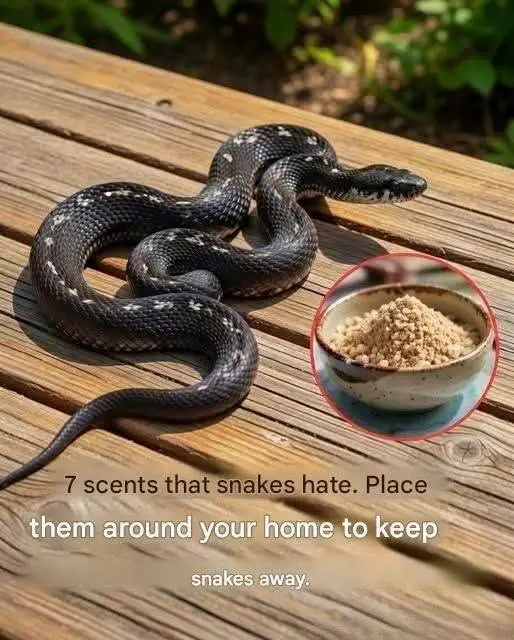
Few things can startle a homeowner faster than spotting a snake in the yard, near the garage, or curled beneath a flower bed. Even though most snakes are harmless and play an important role in nature, their unexpected appearance often leaves people searching for fast and effective ways to keep them away.
One of the most common questions homeowners ask is whether certain smells can repel snakes. You’ll find countless recommendations online, from cinnamon oil and garlic to vinegar, sulfur, cedar oil, and even mothballs. While some people swear by these remedies, scientific evidence tells a much more balanced story.
The reality is that snakes are attracted to places that provide food, shelter, water, and protection—not because a particular smell invites them. Likewise, most scents alone won’t convince a determined snake to leave an ideal habitat.
Understanding how snakes navigate their surroundings and what truly attracts them is the key to creating a property that is naturally less appealing. Instead of relying on myths or temporary solutions, homeowners can use practical landscaping, routine maintenance, and common-sense prevention methods that deliver far better long-term results.
Whether you’ve recently encountered a snake or simply want to reduce the chances of seeing one around your home, this guide explains what actually works, what doesn’t, and how you can keep your property safer while respecting local wildlife.
How Snakes Detect Their Surroundings
Unlike humans, snakes don’t depend primarily on their noses to identify scents. Instead, they use one of nature’s most fascinating sensory systems.
When you watch a snake repeatedly flick its tongue, it isn’t displaying aggression or curiosity. It’s collecting tiny chemical particles floating in the air or resting on nearby surfaces.
Those particles are delivered to a specialized sensory structure called the Jacobson’s organ, located inside the roof of the snake’s mouth.
This remarkable organ allows snakes to create a detailed chemical picture of their surroundings.
By analyzing these microscopic particles, snakes can detect:
- Nearby prey
- Potential predators
- Other snakes
- Water sources
- Safe hiding places
- Possible mates
This highly specialized system explains why snakes can hunt successfully even in complete darkness.
How the Process Works
| Step | What Happens |
|---|---|
| Tongue Flick | The snake collects tiny chemical particles. |
| Particle Collection | Molecules stick to the moist forked tongue. |
| Transfer | The tongue touches the Jacobson’s organ. |
| Analysis | The brain interprets the chemical information. |
Because their sensory system is so advanced, it’s understandable why many people assume strong odors should drive snakes away.
Unfortunately, the science isn’t quite that simple.
Do Strong Smells Actually Repel Snakes?
The short answer is:
Sometimes—but usually only temporarily.
Unlike insect repellents specifically designed to interfere with insects’ senses, no household smell has been proven to consistently repel every snake species.
Some odors may irritate certain snakes.
Others may simply encourage a snake to move somewhere nearby.
Very few provide dependable long-term protection.
If a snake has easy access to food and shelter, an unpleasant smell alone rarely convinces it to abandon an otherwise perfect habitat.
That’s why wildlife experts consistently recommend focusing on habitat management instead of relying solely on scent-based products.
Common Snake Repellents: Separating Facts From Myths
1. Cinnamon Oil
Cinnamon essential oil is frequently recommended as a natural snake repellent.
Its strong aroma may temporarily discourage certain snakes from entering treated areas.
However:
- Rain quickly washes it away.
- Sunlight reduces effectiveness.
- Frequent reapplication becomes expensive.
Current research suggests limited effectiveness under specific conditions, but not enough evidence exists to consider it a dependable long-term solution.
Verdict: Mildly effective for short periods.
2. Clove Oil
Clove oil contains eugenol, a naturally occurring compound with a powerful aroma.
Some wildlife studies suggest concentrated clove oil may temporarily encourage snakes to move away from treated areas.
However, results vary greatly depending on:
- Snake species
- Concentration
- Weather
- Application method
It’s not a permanent barrier.
Verdict: May work briefly but requires repeated applications.
3. Sulfur
For generations, powdered sulfur has been marketed as a snake deterrent.
Although some snakes appear to avoid freshly applied sulfur, scientific testing has produced inconsistent results.
Sulfur also has disadvantages:
- Irritates skin
- Can damage plants
- Washes away easily
- Requires repeated use
Many experts no longer recommend it as a primary control method.
Verdict: Limited effectiveness with notable drawbacks.
4. White Vinegar
Many online articles suggest pouring vinegar around ponds, patios, or foundations.
Despite its strong smell, there is very little evidence showing vinegar consistently repels snakes.
Its odor fades rapidly outdoors.
Repeated use may also affect soil quality around sensitive plants.
Verdict: Unproven.
5. Garlic and Onions
Some homeowners plant garlic around flower beds believing it discourages snakes.
Although garlic contains sulfur compounds with a noticeable smell, no reliable scientific research demonstrates that garlic plantings create an effective snake barrier.
They certainly won’t hurt the garden—but don’t expect dramatic results.
Verdict: More folklore than fact.
6. Cedar Oil
Cedar oil has become popular because it naturally repels certain insects.
Whether it affects snakes remains uncertain.
Some anecdotal reports suggest temporary avoidance, but consistent scientific support remains limited.
Like other essential oils, weather quickly reduces its effectiveness.
Verdict: Possibly helpful as part of a broader strategy, but not a standalone solution.
7. Mothballs
This is perhaps the most widespread snake myth.
Many people scatter mothballs around sheds and foundations believing they’ll keep snakes away.
In reality:
- Mothballs are pesticides.
- They are designed for enclosed spaces.
- Outdoor use is often illegal.
- They can poison pets, wildlife, and children.
- They contaminate soil and groundwater.
Most importantly:
There is no convincing evidence they effectively repel snakes.
Verdict: Avoid using mothballs outdoors.
Why Habitat Matters More Than Smell
Every animal chooses places that meet its basic needs.
Snakes are no different.
A property becomes attractive when it offers:
- Plenty of rodents
- Frogs or lizards
- Thick vegetation
- Rock piles
- Firewood stacks
- Moist hiding places
- Easy shelter
Even the strongest-smelling oils cannot compete with a yard full of food and safe hiding spots.
Removing those attractions produces much better results than any homemade repellent ever could.
Proven Ways to Keep Snakes Away
Fortunately, protecting your property doesn’t require harsh chemicals.
Simple maintenance goes a long way.
Keep Grass Short
Tall grass provides excellent cover.
Regular mowing removes hiding places and makes snakes feel exposed.
Remove Yard Debris
Clean up:
- Fallen branches
- Leaf piles
- Old lumber
- Construction materials
- Brush piles
These locations provide cool shelter during hot weather.
Store Firewood Correctly
Instead of stacking wood against your house:
- Elevate it off the ground.
- Keep it dry.
- Leave several feet between the stack and your home.
This discourages both rodents and snakes.
Control Rodents
One mouse quickly becomes several.
Since rodents are among the favorite foods of many snake species, reducing rodent populations naturally reduces snake activity.
Store pet food securely.
Seal trash containers.
Remove spilled bird seed.
Inspect garages and sheds for nesting rodents.
Seal Entry Points
Check your home for:
- Foundation cracks
- Gaps beneath doors
- Utility openings
- Broken vents
- Damaged weather stripping
Small openings are often large enough for surprisingly slender snakes.
Installing door sweeps and repairing gaps helps prevent unwanted visitors.
Eliminate Standing Water
Moist environments attract insects, frogs, and rodents.
Fix:
- Leaking faucets
- Broken sprinklers
- Standing puddles
- Poor drainage
A drier yard is generally less attractive to wildlife.
Landscape Wisely
Maintain open visibility around your home’s foundation.
Gravel borders, trimmed shrubs, and well-maintained flower beds leave fewer places for snakes to hide.
Regular yard maintenance remains one of the most effective long-term prevention strategies.
Final Thoughts
Natural snake repellents continue to circulate online because everyone hopes for a quick, simple solution. While certain strong-smelling substances may temporarily discourage some snakes, none offers guaranteed or lasting protection.
Instead of relying on scents alone, focus on creating a property that simply doesn’t provide what snakes are looking for. A clean yard, trimmed vegetation, secure storage, rodent control, and sealed entry points are far more effective than essential oils or household chemicals.
Remember that snakes are an important part of healthy ecosystems. Most species are harmless, help control rodent populations, and prefer to avoid human contact whenever possible. If you encounter one, give it space and allow it to move away naturally. If you’re unsure whether it’s venomous or it has entered your home, contact local wildlife professionals for assistance.
By understanding snake behavior and taking practical preventive steps, you can enjoy greater peace of mind while keeping both your family and local wildlife safe.
Frequently Asked Questions
Do snakes really hate certain smells?
Some strong odors may temporarily discourage certain species, but no smell has been proven to reliably repel all snakes.
What attracts snakes to my yard?
Food sources, shelter, moisture, and hiding places are the biggest attractions.
Are essential oils an effective snake repellent?
Essential oils like cinnamon, clove, or cedar may provide temporary results but require frequent reapplication and should not be relied upon as the only solution.
Should I use mothballs outdoors?
No. Mothballs are pesticides, can be harmful to people, pets, and wildlife, and are not recommended for snake control.
What’s the best way to keep snakes away naturally?
Maintain a clean yard, mow grass regularly, remove debris, control rodents, eliminate hiding places, and seal gaps around your home. These methods provide the most reliable long-term prevention.