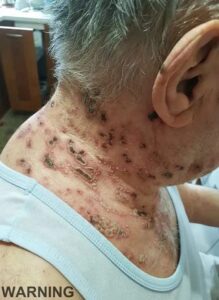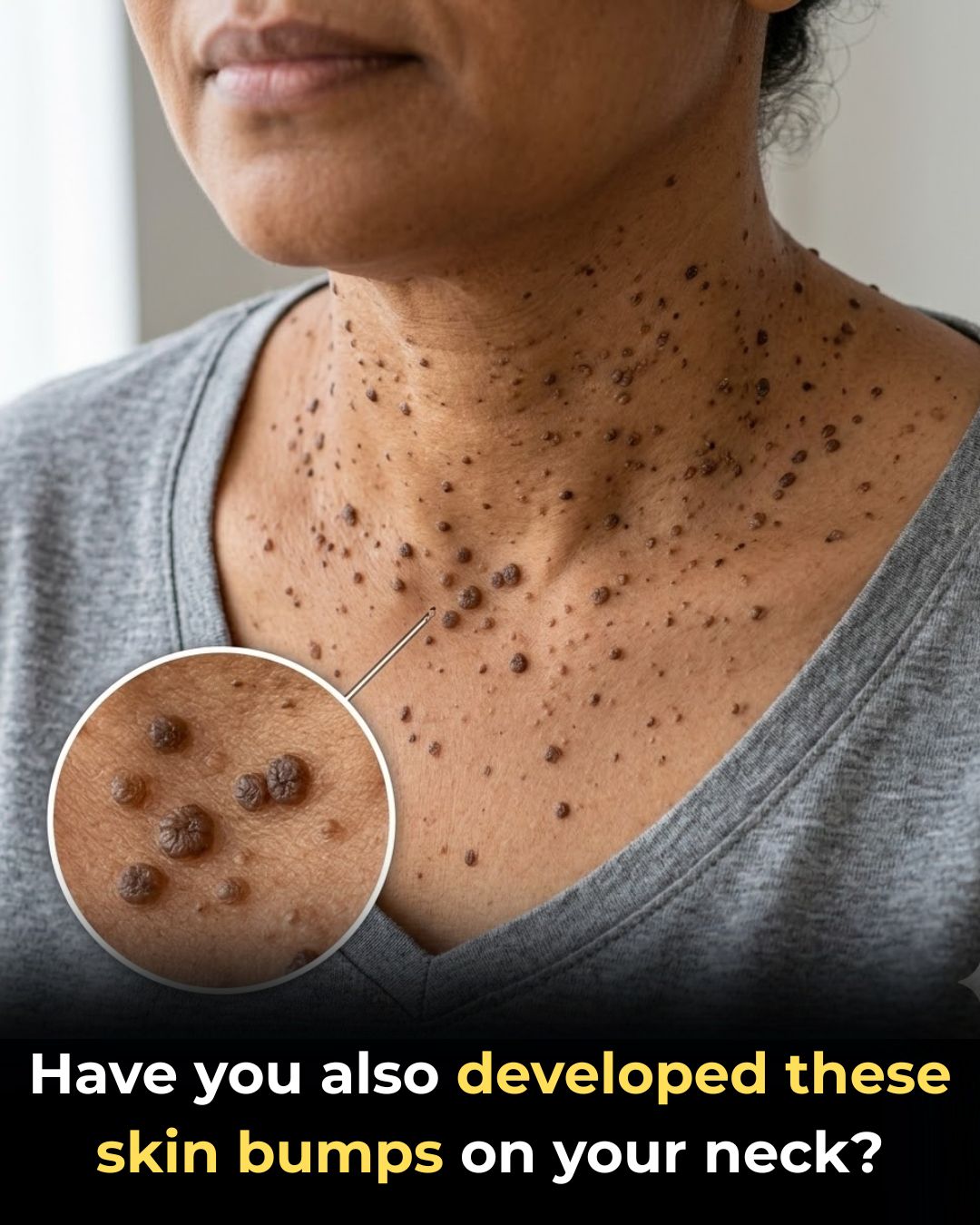
Noticing small bumps, dark spots, or rough growths on your neck can feel concerning at first. Many people suddenly discover tiny raised bumps while looking in the mirror, applying lotion, or putting on jewelry. Fortunately, most neck growths are completely harmless and become more common with age.
The neck is one of the body’s most overlooked areas, yet it experiences constant friction, sun exposure, sweating, and skin aging. As a result, various benign skin growths often appear there over time. Understanding what these bumps might be can help reduce unnecessary worry while also helping you recognize when medical attention may be important.
A woman once noticed several tiny brown bumps developing along the sides of her neck during her forties. At first, she worried they were signs of a serious skin condition. However, after visiting a dermatologist, she learned they were harmless seborrheic keratoses — extremely common age-related skin growths. Once she understood what they were, her anxiety disappeared completely. Instead of fearing the bumps, she simply viewed them as another normal part of skin aging.
The Most Common Causes of Neck Bumps
Skin Tags: The Most Common Culprit
One of the most common causes of small neck bumps is skin tags, medically known as acrochordons.
Skin tags are:
- Soft
- Flesh-colored or slightly darker
- Small hanging growths
- Usually painless
They commonly appear where skin rubs against skin or clothing, especially:
- Neck
- Underarms
- Groin
- Eyelids
Friction plays a major role in their development. Tight collars, necklaces, skin folds, and repeated rubbing may contribute to their formation.
Skin tags also become more common with:
- Aging
- Weight gain
- Pregnancy
- Insulin resistance
- Genetics
Although they may look unusual, skin tags are harmless and non-cancerous.
Some people choose to remove them for cosmetic reasons or because they become irritated by clothing or jewelry.
Dermatologists can safely remove skin tags through:
- Snipping
- Freezing
- Cauterization
- Laser treatment
However, many people simply leave them alone without any medical concerns.
Seborrheic Keratoses: “Stuck-On” Growths
Another extremely common skin growth is seborrheic keratosis.
These growths often look:
- Waxy
- Rough
- Slightly raised
- Brown, black, or tan
- “Stuck onto” the skin
Seborrheic keratoses frequently appear on:
- Neck
- Chest
- Back
- Face
Unlike skin tags, they usually have a flatter surface with a textured or crusty appearance.
Although the exact cause remains unclear, genetics and aging strongly contribute to their development.
These growths are completely benign and not contagious.
However, because seborrheic keratoses sometimes resemble skin cancer visually, any rapidly changing or unusual lesion should be evaluated by a healthcare professional.
Other Possible Causes of Neck Bumps
Keratosis Pilaris (“Chicken Skin”)
Keratosis pilaris is another harmless skin condition that causes tiny rough bumps.
This condition occurs when keratin, a natural skin protein, builds up and blocks hair follicles.
The bumps often feel:
- Rough
- Dry
- Sandpaper-like
- Slightly red or flesh-colored
Keratosis pilaris commonly affects:
- Upper arms
- Thighs
- Cheeks
- Neck
People with dry skin or eczema tend to develop it more frequently.
Although harmless, the rough texture can feel bothersome cosmetically.
Moisturizing products containing:
- Urea
- Lactic acid
- Salicylic acid
- Glycolic acid
often improve the appearance gradually.
Because keratosis pilaris is chronic, symptoms may improve and worsen over time depending on weather, skin dryness, and irritation.
Warts Caused by HPV
Some neck bumps may actually be warts caused by certain strains of the human papillomavirus (HPV).
Warts often appear:
- Rough
- Raised
- Cauliflower-like
- Slightly thickened
Flat warts sometimes appear in clusters on the neck or face.
Unlike skin tags or seborrheic keratoses, warts are contagious and can spread through direct skin contact.
Minor cuts, shaving irritation, or skin friction may allow the virus to enter the skin more easily.
Although usually harmless, warts can spread or multiply over time if untreated.
Treatment options may include:
- Salicylic acid
- Cryotherapy (freezing)
- Laser treatment
- Prescription medications
When Neck Bumps Could Be More Serious
Warning Signs That Need Medical Evaluation
Most neck bumps are benign, but certain changes deserve medical attention.
You should consult a dermatologist if you notice:
- Rapid growth
- Bleeding
- Persistent itching
- Pain
- Crusting
- Color changes
- Irregular borders
- Non-healing sores
The neck receives significant sun exposure throughout life, which increases skin cancer risk over time.
Because many people forget to regularly examine the neck area, abnormal lesions sometimes go unnoticed longer than growths elsewhere on the body.
Types of Skin Cancer That May Appear on the Neck
Several forms of skin cancer may develop on the neck, especially after years of sun exposure.
Basal cell carcinoma often appears as:
- Pearly bumps
- Shiny nodules
- Non-healing sores
Squamous cell carcinoma may look like:
- Scaly red patches
- Rough crusted areas
- Persistent sores
Melanoma, the most dangerous form of skin cancer, may appear as:
- Dark irregular spots
- Uneven borders
- Multiple colors
- Rapidly changing moles
Early detection dramatically improves treatment outcomes, which is why any suspicious growth should be examined professionally.
Why Skin Changes Become More Common With Age
Aging Skin Naturally Changes Over Time
As people age, the skin undergoes gradual structural changes that make growths more likely.
These changes include:
- Slower cell turnover
- Sun damage accumulation
- Reduced collagen
- Increased skin friction
- Hormonal shifts
Years of ultraviolet exposure also contribute significantly to many benign skin growths.
The neck is especially vulnerable because sunscreen is often forgotten there.
Over time, cumulative sun exposure increases:
- Age spots
- Seborrheic keratoses
- Skin texture changes
- Cancer risk
While these changes may feel frustrating cosmetically, many are simply part of normal skin aging.
Genetics Also Play a Major Role
Family history strongly influences how skin ages and what types of growths develop.
If parents or grandparents developed:
- Skin tags
- Seborrheic keratoses
- Warts
- Age spots
future generations often experience similar patterns.
Skin type, ethnicity, hormonal factors, and environmental exposure all interact together to shape skin health over time.
Caring for Neck Skin and Preventing Irritation
Daily Habits That Support Healthy Skin
Simple skincare habits can help reduce irritation and support healthier skin overall.
Helpful strategies include:
- Wearing sunscreen daily
- Moisturizing regularly
- Avoiding harsh scrubbing
- Keeping the neck clean and dry
- Reducing friction from tight clothing
Gentle skincare products often work better than aggressive treatments, especially for sensitive neck skin.
Avoid attempting to cut or remove bumps at home because infection and scarring may occur.
Why Professional Evaluation Matters
Even though most neck bumps are harmless, professional evaluation provides reassurance and helps rule out serious conditions.
Dermatologists can often identify benign growths quickly through simple visual examination.
If necessary, they may perform:
- Skin biopsies
- Cryotherapy
- Minor removals
- Laser procedures
Early assessment helps prevent unnecessary anxiety while also improving outcomes if treatment is needed.
Frequently Asked Questions
Are neck skin bumps usually dangerous?
No. Most neck bumps are benign and related to aging, friction, or genetics.
What are skin tags?
Skin tags are soft, harmless growths commonly found in areas where skin rubs together.
Can seborrheic keratoses turn into cancer?
Seborrheic keratoses themselves are benign, but suspicious changes should still be evaluated.
Are neck warts contagious?
Yes. HPV-related warts can spread through skin contact.
When should neck bumps be checked by a doctor?
Rapid growth, bleeding, color changes, pain, or non-healing lesions should be examined professionally.
Conclusion
Developing small bumps or growths on the neck is extremely common, especially with aging and long-term sun exposure. Most of these growths — including skin tags, seborrheic keratoses, and keratosis pilaris — are harmless and non-contagious.
At the same time, the neck is an area that deserves regular attention because skin cancer can occasionally develop there as well.
Understanding the difference between common benign growths and warning signs of concerning skin changes helps people care for their skin with greater confidence and awareness.
Your skin constantly reflects your body’s history, genetics, environment, and aging process. Paying attention kindly — without panic — is one of the best ways to support long-term skin health.
More Home Remedies
- California Mom Issues Urgent Fireworks Warning After Teen Suffers Devastating Hand Injuries
- This Is the Silent Disease That Can Strike Without Warning
- The Midnight Ache: Understanding Nighttime Leg Cramps and How to Find Relief
- My 8-Year-Old Has Been Experiencing This for Two Months—Understanding Hives in Children