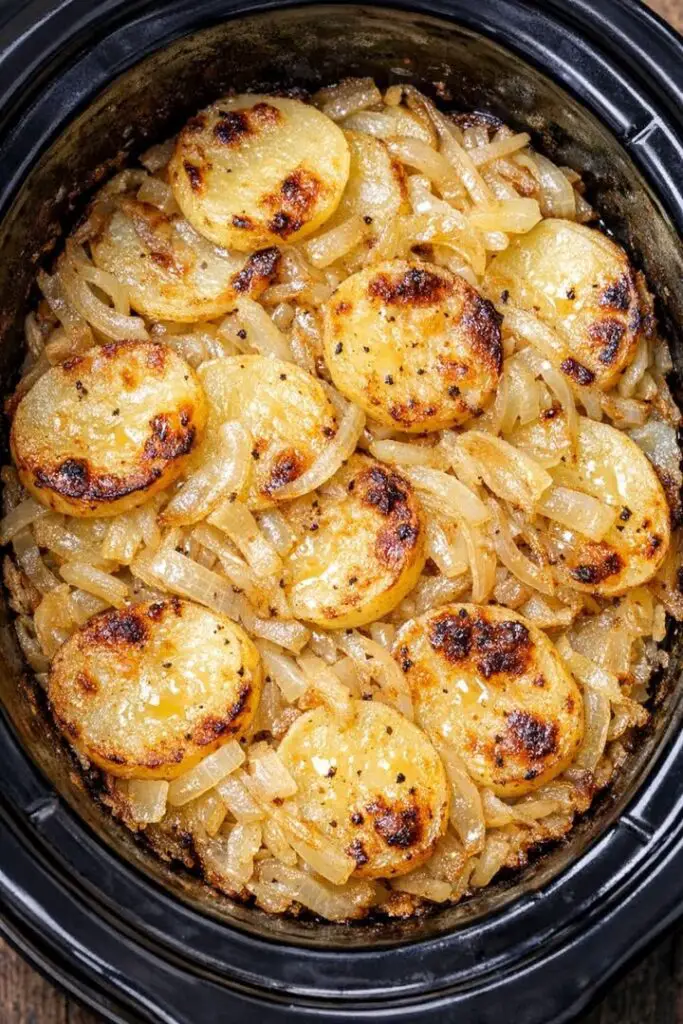
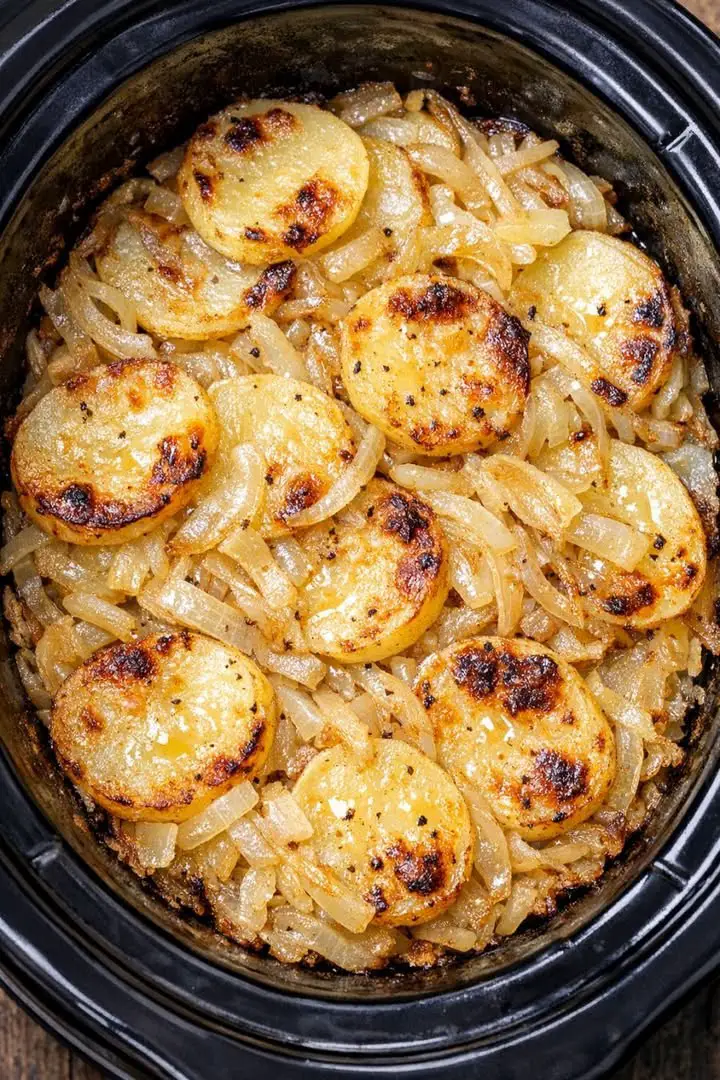
Some recipes survive generation after generation because they turn the simplest ingredients into something deeply comforting. This Slow Cooker 4-Ingredient Depression Era Potato and Onion Bake is exactly that kind of dish. Thin layers of potatoes and onions slowly cook together with butter and flour until they become tender, rich, and almost impossibly cozy.
Although the ingredient list stays humble, the flavor develops beautifully as everything cooks low and slow. The onions soften into sweet caramelized layers while the potatoes absorb buttery flavor and turn creamy around the edges. Meanwhile, the flour combines with the butter and vegetable juices to create silky coating that feels almost like gravy without requiring milk or cream.
Growing up, recipes like this appeared regularly at family tables because they stretched affordable pantry staples into filling meals everyone could share. My great-aunt especially relied on dishes like this during hard times because potatoes and onions stayed inexpensive while still feeding a crowd. Even years later, the smell of buttery onions cooking slowly still feels nostalgic and comforting. It reminds me of Sunday suppers, tiny farmhouse kitchens, and recipes built more on practicality and warmth than fancy ingredients.
Ingredients
Equipment
Method
- Grease the inside of the slow cooker with butter.
- Peel and thinly slice the potatoes and onions.
- Mix together flour, salt, and black pepper.
- Layer potatoes on the bottom of the slow cooker.
- Add onions, sprinkle flour mixture, and dot with butter.
- Repeat layers until all ingredients are used, finishing with potatoes on top.
- Cover and cook on HIGH for 3 1/2 to 4 hours or LOW for 6 to 7 hours.
- Leave the lid slightly ajar for 15 to 20 minutes before serving for crispier edges.
Notes
Why This Potato and Onion Bake Works So Well
Simple Ingredients Create Rich Flavor
One reason this casserole tastes so comforting is because slow cooking allows the potatoes and onions to develop deep flavor naturally.
As the onions cook, they soften and release sweetness that spreads throughout the dish. Meanwhile, the butter melts into the flour, creating rich silky coating that clings to every layer.
The potatoes absorb all those savory buttery juices while slowly becoming soft and tender.
Although there is no cheese or cream in the traditional version, the final texture still feels rich and satisfying because the starches naturally thicken during cooking.
Perfect for Stretching Ingredients
During the Depression, recipes like this helped families create filling meals from inexpensive staples.
Potatoes provided hearty texture while onions added flavor and depth without increasing cost very much.
Even today, this recipe works wonderfully for feeding families affordably while still feeling warm and homemade.
The slow cooker also makes preparation especially easy because the layers quietly cook while you focus on other parts of the day.
Best of all, leftovers reheat beautifully and often taste even richer the next day.
How to Make the Best Potato and Onion Bake
Slicing the Vegetables Evenly
Thin evenly sliced potatoes and onions cook much more consistently than thick uneven pieces.
Using a mandoline creates especially uniform slices, although a sharp knife works perfectly well too.
Keeping the slices around 1/8 inch thick helps everything soften evenly while still maintaining layered texture.
The onions should stay similar in thickness to the potatoes so both ingredients become tender at the same rate.
Dry potatoes can discolor if left exposed too long, so covering them lightly with a towel while preparing the onions helps keep them fresh.
Layering for the Best Texture
Layering the potatoes like shingles helps create even cooking and beautiful texture throughout the dish.
Sprinkling the flour mixture lightly between layers allows the butter and vegetable juices to thicken gradually as everything cooks.
Small dots of butter spread across each layer melt slowly downward while flavoring the entire casserole.
Finishing with potatoes on top encourages those deeply golden browned spots that make the bake especially delicious.
Allowing the lid to sit slightly ajar near the end of cooking also helps excess moisture evaporate while encouraging more caramelization on top.
Delicious Variations and Serving Ideas
Easy Traditional Variations
Although the original recipe intentionally stays very simple, a few small additions create delicious variations while preserving the old-fashioned spirit.
A splash of evaporated milk or whole milk creates slightly creamier texture without changing the recipe too dramatically.
Paprika adds subtle smoky warmth that pairs beautifully with caramelized onions and butter.
Some families also add black pepper more generously for slightly sharper flavor.
Extra potatoes and onions can stretch the dish further for larger gatherings while still remaining inexpensive and filling.
Best Main Dishes to Serve
This potato and onion bake pairs wonderfully with simple proteins because the potatoes already feel rich and hearty.
Roast chicken, pork chops, meatloaf, sausages, or baked ham all work beautifully alongside the buttery layers.
Tangy side dishes like pickles, sauerkraut, or vinegar slaw balance the richness especially well.
Steamed green beans, broccoli, or simple salads also add freshness and color to the plate.
Leftovers served beside scrambled eggs make surprisingly comforting breakfasts the next morning.
Storage, Reheating, and Helpful Tips
Storing Leftovers Properly
Allow the potato bake to cool slightly before transferring leftovers into airtight containers.
Stored properly, the potatoes stay good in the refrigerator for about 3 to 4 days.
The flavors continue blending overnight, often making leftovers taste even richer the following day.
Because the potatoes absorb moisture over time, leftovers become slightly firmer but still remain tender and flavorful.
Reheating Without Drying Out
Reheating gently in the oven helps restore the best texture while keeping the edges crisp.
Microwaving works fine for quick meals, although the top loses some crispness.
Adding a tiny splash of milk or butter before reheating can help refresh moisture if needed.
To recrisp the top layer, reheating uncovered in the oven or toaster oven works especially well.
Frequently Asked Questions
What potatoes work best for this recipe?
Russet potatoes create fluffier texture while Yukon Gold potatoes stay creamier and richer.
Can I prepare this ahead of time?
Yes. Slice the onions and measure ingredients ahead, although potatoes are best sliced closer to cooking time.
Why use flour in the layers?
The flour combines with butter and vegetable juices to create silky coating as the casserole cooks.
Can I add cheese?
Yes, although traditional Depression-era versions usually stayed very simple without cheese.
How do I know when it is done?
The potatoes should feel very tender when pierced with a fork and the top should look lightly browned.
Conclusion
This Slow Cooker 4-Ingredient Depression Era Potato and Onion Bake proves that humble pantry ingredients can still create deeply comforting meals full of warmth and flavor. Tender potatoes, sweet caramelized onions, butter, and simple seasoning slowly transform into rich layered casserole that feels nostalgic, practical, and wonderfully satisfying.
Whether served alongside Sunday supper or enjoyed as cozy comfort food during busy workweeks, this recipe continues the tradition of stretching simple ingredients into memorable homemade meals. It is affordable, hearty, timeless, and exactly the kind of old-fashioned recipe families keep passing down for generations.