The story shocked millions around the world.
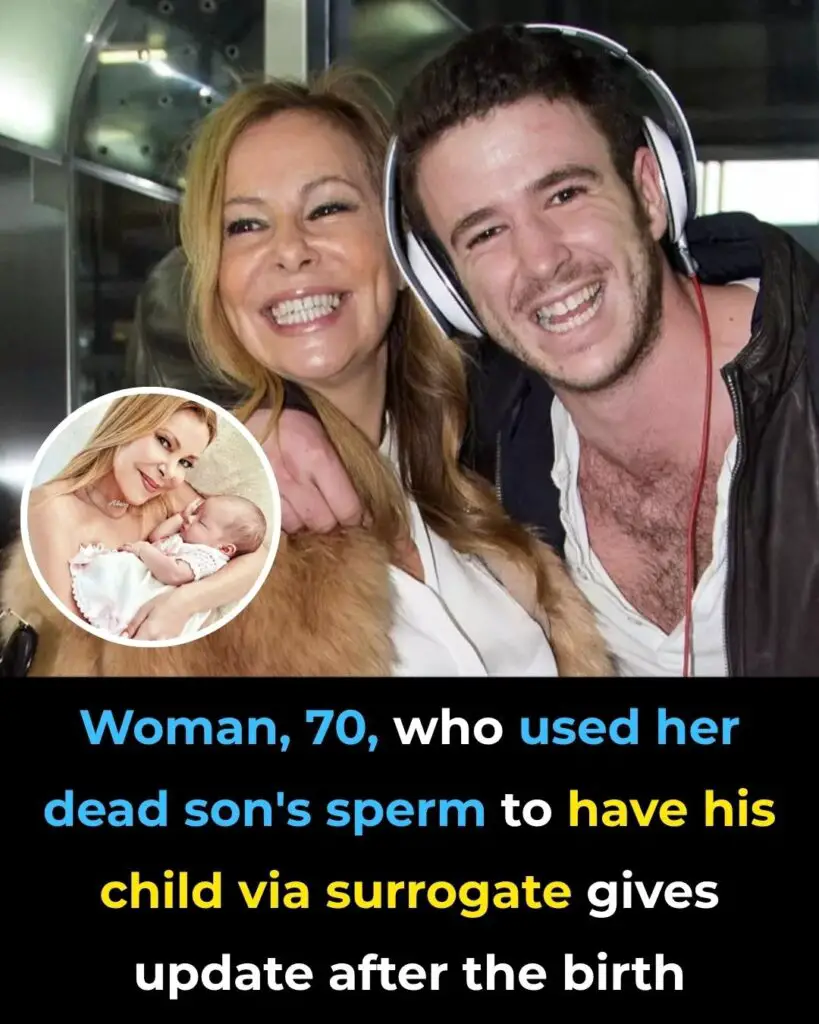
When Spanish actress and television personality Ana Obregón appeared leaving a Miami hospital with a newborn baby in 2023, many people assumed she had somehow become a mother again at nearly 70 years old.
But the truth was far more emotional — and far more controversial.
The child was not biologically her daughter.
She was her granddaughter.
According to Ana, the baby was conceived using frozen sperm from her only son, Aless Lequio, who died from cancer at just 27 years old. Through surrogacy in the United States, Ana says she fulfilled what she believed was her son’s dream of becoming a father one day.
Now, years later, she is sharing what life truly looks like raising a toddler at 70.
A Loss That Changed Everything
Aless Lequio’s Battle With Cancer
Ana’s son, Aless Lequio, was diagnosed with Ewing sarcoma, a rare and aggressive bone cancer, in his twenties.
For two years, he underwent treatment while his family publicly supported him through the devastating illness.
Before treatment began, Aless reportedly chose to preserve his sperm.
After his death in 2020, Ana later decided to use it through surrogacy.
A Decision Rooted in Grief
Ana has repeatedly described the birth of the child as a source of emotional survival after losing her son.
In interviews, she explained that grief left her feeling emotionally destroyed for years.
According to her, the child brought light back into her life after unimaginable loss.
The Birth That Sparked Worldwide Debate
Why the Story Became International News
Spain has strict restrictions surrounding surrogacy.
Because of this, Ana traveled to the United States, where surrogacy is legal in several states.
After the baby was born in Miami, Ana legally adopted the child.
Later, she publicly revealed that the baby was genetically her granddaughter.
Public Reactions Were Intense
The story triggered fierce public debate.
Critics raised concerns about:
- Surrogacy ethics
- Late-age parenting
- The child’s future
- Consent questions involving posthumous reproduction
Supporters, however, viewed the story through the lens of grief, family love, and honoring a deceased son’s wishes.
The discussion quickly spread across television, newspapers, and social media worldwide.
Life Today at Age 70
“My House Is Full of Toys”
Ana says daily life now revolves around toddler chaos.
In recent interviews, she described her home as filled with:
- Toys
- Stuffed animals
- Children’s games
- Constant activity
She explained that while parenting at 70 is physically exhausting, it also gives her renewed purpose.
The Physical Challenges Are Real
Ana has also spoken honestly about aging.
She admitted that:
- Carrying a growing toddler hurts her back
- She tires more easily
- Parenting now feels physically harder than it did decades ago
Still, she says the emotional joy outweighs the difficulties.
The Emotional Side of the Story
Grief Does Not Disappear
One of the most emotional parts of Ana’s interviews is her honesty about losing a child.
She openly says that the pain never truly goes away.
According to her, becoming a grandmother-mother did not erase grief.
Instead, it gave her a reason to continue living through it.
She Says Her Granddaughter Reminds Her of Aless
Ana has repeatedly shared that she sees pieces of her son in the little girl’s personality.
She describes the child as affectionate, joyful, and emotionally warm.
For her, those similarities feel deeply healing.
Ethical Questions Continue
Critics Raise Difficult Concerns
Many people continue debating the ethics surrounding the situation.
Questions often include:
- Should posthumous reproduction be allowed?
- Can elderly individuals realistically raise young children long-term?
- Was the deceased son’s consent fully clear?
- Does commercial surrogacy exploit women?
These debates remain highly emotional and deeply personal.
Supporters Emphasize Compassion
Others believe the story represents:
- Love after tragedy
- A family honoring memory
- Personal reproductive freedom
- The human need for connection after loss
Public opinion remains divided.
A Growing Conversation Around Late-Life Parenthood
More Older Adults Are Pursuing Parenthood
Ana’s story is part of a larger global trend involving:
- Surrogacy
- Fertility technology
- Later-age parenting
Advances in reproductive medicine have created possibilities that previous generations never imagined.
Society Is Still Catching Up
Laws, ethics, and public attitudes continue evolving.
Cases like this force difficult conversations about:
- Family structure
- Aging
- Reproductive rights
- Medical ethics
There are no simple answers.
Frequently Asked Questions
Who is Ana Obregón?
Ana Obregón is a Spanish actress, television presenter, and public figure.
Was the baby biologically hers?
No. Ana later revealed the child was biologically her granddaughter, conceived using her deceased son’s frozen sperm and an egg donor.
Why did she go to the United States?
Spain restricts surrogacy arrangements, so the procedure was completed in the United States where surrogacy laws are different.
How old was Ana when the child was born?
She was approximately 68 when the baby was born and is now around 70 years old.
Why has the story been controversial?
The case sparked debate over surrogacy ethics, posthumous reproduction, parenting at advanced age, and reproductive rights.
Final Thoughts
Ana Obregón’s story continues to divide public opinion because it touches some of the most emotional questions imaginable — grief, motherhood, loss, aging, and the desire to keep a loved one’s memory alive.
Some people see controversy.
Others see heartbreak transformed into hope.
But nearly everyone agrees on one thing:
It is a story impossible to ignore.