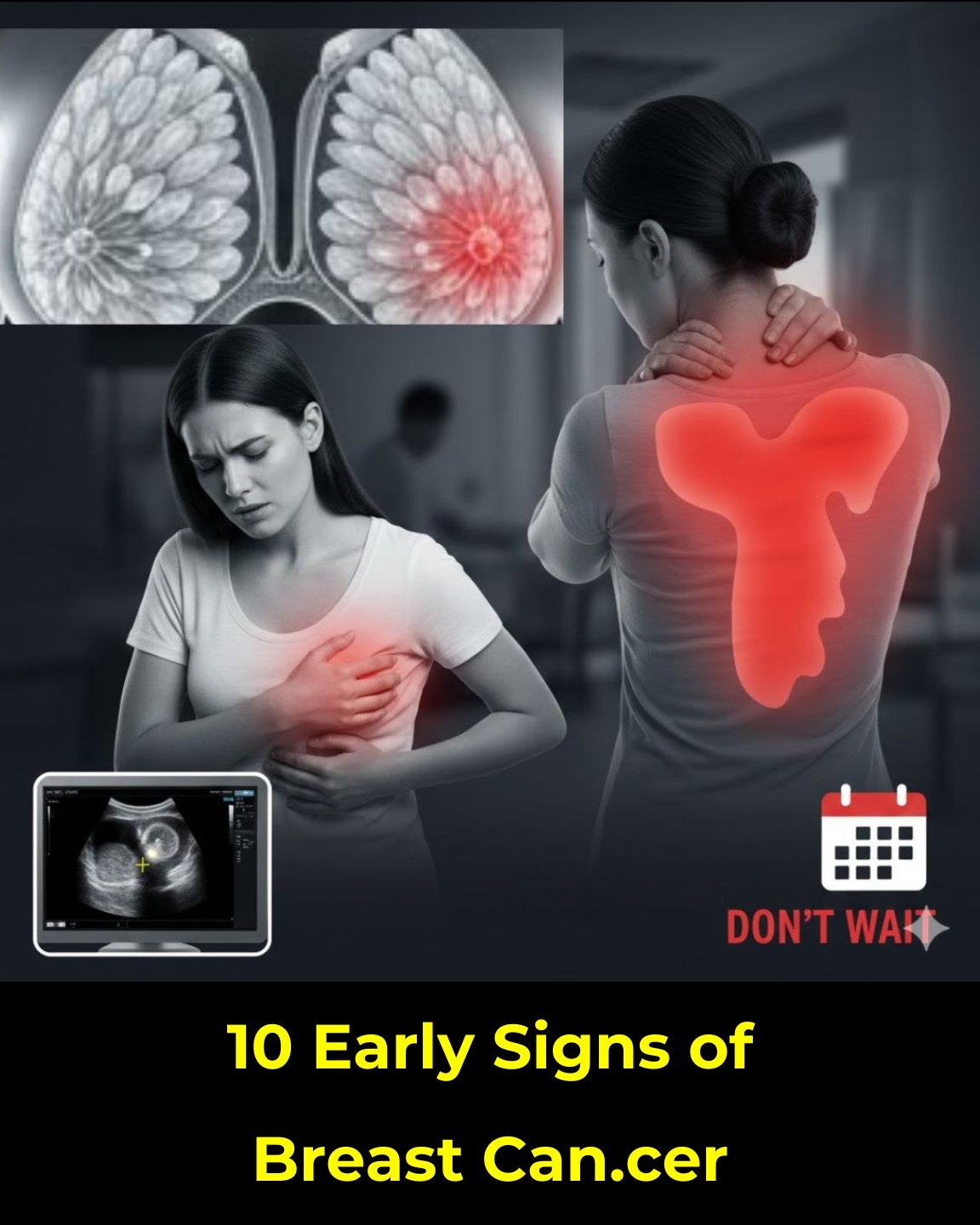
10 Early Signs of Breast Cancer is a topic that every woman—and even men—should understand clearly. Early detection can dramatically improve outcomes, and knowing what changes to watch for empowers you to act quickly and confidently.
Many people assume breast cancer always starts with a lump, but the reality is more complex. Symptoms can be subtle, easily overlooked, or mistaken for harmless conditions. That’s why learning these early warning signs matters more than ever.
I remember a close friend mentioning a slight change in her skin texture—nothing painful, nothing dramatic. She almost ignored it. Thankfully, she didn’t. That small decision led to early detection, simple treatment, and a full recovery. That experience changed how I view body awareness forever.
Understanding What Your Body Is Telling You
Why Early Detection Matters
Breast cancer survival rates are significantly higher when the condition is found early. The earlier it is diagnosed, the more treatment options are available and the less invasive those treatments often are.
Small changes can be the first signals your body sends. Paying attention is not fear—it’s smart self-care.
Not All Symptoms Are Obvious
While lumps are the most recognized sign, many early indicators have nothing to do with a noticeable mass. Skin changes, discomfort, or subtle visual differences can also be important clues.
The 10 Early Signs of Breast Cancer
1. A New Lump or Thickened Area
This is the most well-known sign. However, not all lumps feel the same. Some may be hard and irregular, while others can feel soft.
2. Changes in Breast Size or Shape
If one breast suddenly looks different from the other without a clear reason, it’s worth checking.
3. Skin Dimpling or Puckering
Skin that looks like an orange peel texture can signal underlying tissue changes.
4. Nipple Changes
Look for inversion, redness, flaking, or unusual positioning.
5. Unusual Nipple Discharge
Clear, bloody, or spontaneous discharge (without squeezing) should never be ignored.
6. Persistent Redness or Rash
A rash that doesn’t heal or spreads across the breast can be a warning sign.
7. Ongoing Pain in One Area
Pain alone is not always a concern, but persistent, localized discomfort deserves attention.
8. Swelling Without a Lump
You may notice swelling or heaviness even if no lump is present.
9. Visible Veins Becoming Prominent
Sudden changes in vein appearance can indicate increased blood flow to abnormal tissue.
10. General Symptoms Like Fatigue or Weight Loss
When combined with other changes, these may point to something deeper.
These signs are also outlined in detail in the reference guide and , emphasizing the importance of recognizing patterns—not just isolated symptoms.
Common Misconceptions About Breast Cancer
“If There’s No Lump, I’m Fine”
This is one of the biggest myths. Many cases begin without a noticeable lump.
“It Only Happens to Older Women”
While risk increases with age, younger individuals can also develop breast cancer.
What to Do If You Notice Changes
Don’t Panic—But Don’t Ignore It
Most breast changes are not cancer. However, it’s always safer to get checked.
Track Your Symptoms
Note how long the symptom lasts, whether it changes, and if other symptoms appear.
Consult a Healthcare Provider
If something feels off for more than two weeks, schedule a medical evaluation.
Building Healthy Awareness Habits
Know What’s Normal for You
Every body is different. Regular self-awareness helps you detect changes early.
Perform Regular Self-Checks
Monthly check-ins help you stay familiar with your body.
Keep Up With Screenings
Follow recommended guidelines for mammograms and clinical exams.
Frequently Asked Questions
Does every lump mean cancer?
No. Most lumps are benign, but they should still be evaluated.
Can men get breast cancer?
Yes, though it’s rare.
Is pain a reliable symptom?
Not always, but persistent pain should be checked.
How often should I check myself?
Monthly awareness is generally recommended.
When should I see a doctor?
If a symptom lasts more than two weeks or worsens over time.
Conclusion
10 Early Signs of Breast Cancer is not just a list—it’s knowledge that can protect your health and potentially save your life. Awareness doesn’t mean living in fear; it means staying informed and proactive.
Your body often gives subtle signals before something becomes serious. The key is to listen, act early, and never hesitate to seek professional advice.
Because when it comes to your health, noticing the small things can make the biggest difference.
More Home Remedies
- Wrinkled Fingers After Water Exposure: What Your Skin May Be Telling You
- Skin Rash With Breathing Trouble? It Could Be a Life-Threatening Allergic Reaction
- I Thought It Was a Piece of Trash on the Bathroom Floor—Until It Moved
- If You Are Getting White Pimples on Your Lips or Intimate Area, Here’s What They Could Mean