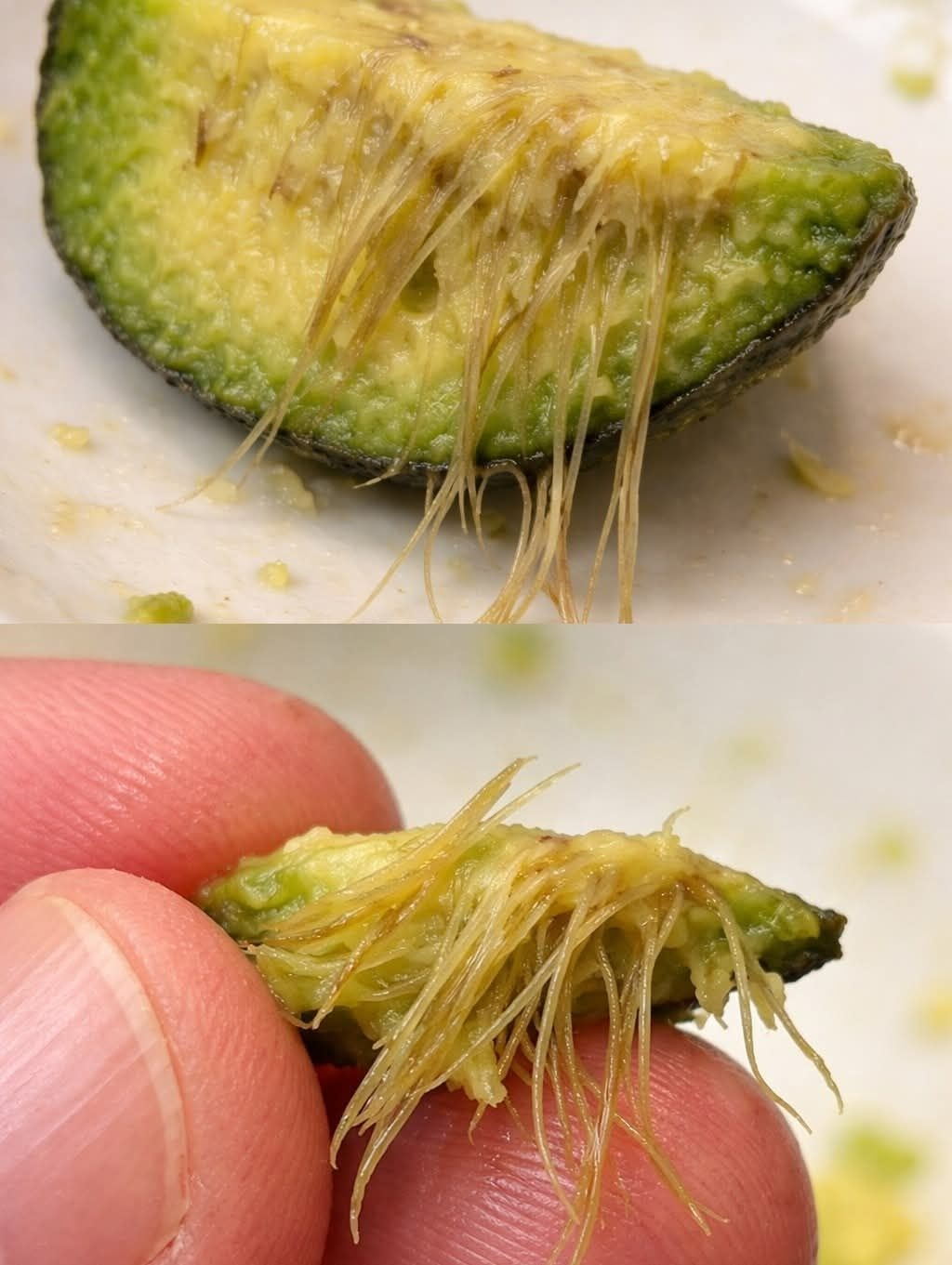
If you’ve ever sliced open an avocado and noticed long, fibrous strands running through the flesh, you may have wondered whether something was wrong. The fruit might look perfectly ripe from the outside, yet the interior shows these unusual “strings.” For many people, encountering them can be disappointing, especially if you were expecting the smooth, creamy texture avocados are famous for. Before you panic, it’s important to know that these strings are entirely natural and usually harmless. Understanding why they appear, what they mean for your avocado’s texture and flavor, and how to manage them can make your avocado experience much more enjoyable.
Understanding the Strings: Vascular Bundles
The fibrous strands in some avocados are called vascular bundles. These are the plant’s equivalent of veins or arteries, responsible for transporting water, nutrients, and sugars throughout the fruit as it develops on the tree. Just like celery has strings that run through its stalks, avocados have these fine strands embedded in the flesh. The vascular bundles are usually subtle, but sometimes they become more pronounced, resulting in the stringy appearance many people notice.
The blackish or brownish threads you see aren’t harmful, and they do not indicate spoilage or disease. They are simply part of the avocado’s internal structure. In smaller or younger avocados, these bundles are usually less noticeable. In larger, more mature fruits, especially certain varieties, the strands may be more prominent.
Why Some Avocados Are More Stringy
There are several factors that contribute to why some avocados develop more pronounced strings:
- Early Picking
Avocados that are harvested before they are fully mature can have more noticeable fibers. Immature fruit hasn’t fully developed its creamy texture, and the vascular bundles remain more rigid and visible. - Variety Differences
Different avocado cultivars have varying textures. For example, Hass avocados, the most commonly sold variety in the U.S., typically have a creamy, smooth texture with fewer visible strings. On the other hand, varieties like Fuerte or Reed may naturally exhibit more fibrous flesh. - Environmental Factors
Soil nutrients, water availability, and tree stress can all influence avocado texture. Trees that experience inconsistent watering or poor soil conditions may produce fruit with more pronounced fibers. - Ripeness
Overripe or aging avocados can sometimes develop more visible fibers as the flesh loses its uniformity and begins to break down. Conversely, very firm, underripe avocados may also show noticeable strings.
Nutritional Perspective: Fiber and Health Benefits
Those strings may look unappealing, but they actually contribute to the avocado’s fiber content. Fiber is essential for healthy digestion, helping to regulate bowel movements and promote gut health. Even the fibrous strands in avocados contain soluble and insoluble fiber that can benefit your digestive system.
Avocados are also rich in monounsaturated fats, vitamins like C, E, K, and B-6, folate, and potassium. The presence of vascular bundles doesn’t reduce these nutrients. In fact, the strands are part of the natural structure of the fruit and do not compromise its nutritional value. Antioxidants found throughout the avocado, including the fibers, help protect your cells from oxidative stress and inflammation.
Textural Impact on Culinary Use
Stringy avocados can alter the texture of dishes. In guacamole, for instance, the fibrous strands can make the dip slightly less creamy. Smooth-textured varieties, like Hass, are often preferred for purees, smoothies, and spreads. However, there are ways to work with stringy avocados:
- Mash Thoroughly: Use a fork or a food processor to break down fibers. This results in a smoother consistency.
- Blend for Smoothies: Smoothies mask the texture, making even stringy avocados creamy.
- Incorporate in Salads: Cut into cubes, the fibrous strands are barely noticeable, adding an interesting texture to the salad.
If desired, you can also carefully remove the larger strands by gently scraping them away with a knife, though this step is optional.
Selecting and Storing Avocados
Choosing the right avocado at the store can minimize stringiness:
- Look for Variety: Hass avocados are less fibrous than some other types.
- Check Ripeness: Gently squeeze the avocado. It should yield slightly under pressure but not feel mushy.
- Avoid Bruises: Dark spots can indicate overripe areas where fibers may become more pronounced.
Proper storage is equally important. Keep avocados at room temperature until ripe. Once they yield to gentle pressure, store them in the refrigerator to slow down ripening. Avoid leaving avocados in overly hot or humid areas, which can cause uneven ripening and fiber prominence.
How to Prepare Avocados
Even stringy avocados can be prepared easily for any dish:
- Cut and Remove the Pit: Slice around the seed, twist, and remove the pit carefully.
- Scoop or Peel: Use a spoon to scoop out the flesh or peel the skin off.
- Mash or Blend: Depending on the recipe, mash with a fork or blend in a food processor.
- Remove Fibers (Optional): For a perfectly smooth texture, scrape out the thicker strands before mashing.
This simple method ensures that even fibrous avocados can be used in creamy dishes like guacamole, avocado toast, or desserts.
Common Misconceptions
Many people assume that stringy avocados are bad or spoiled, but this is not true. The strings do not indicate poor quality or safety issues. Some believe that strings are a result of improper handling or over-ripening, but as we’ve seen, variety and growth conditions play a much larger role. Strings do not affect flavor significantly and are perfectly safe to consume.
Avocado Varieties and Their Characteristics
Avocado texture varies widely depending on the cultivar:
- Hass: Creamy, less fibrous, rich flavor, ideal for spreads and purees.
- Fuerte: Smooth yet slightly fibrous, larger in size.
- Bacon: Mild flavor, medium fibrous content, good for slicing.
- Zutano: Light texture, can be more watery and fibrous.
- Reed: Large, round, with slightly more fibers, excellent for salads.
Knowing which variety you’re buying can help set expectations about texture and stringiness.
Health Benefits Beyond Fiber
Avocados are a nutritional powerhouse:
- Heart Health: Rich in monounsaturated fats that support cardiovascular health.
- Anti-Inflammatory Properties: Contain phytochemicals and antioxidants that help reduce inflammation.
- Skin and Hair Benefits: Healthy fats nourish skin and hair.
- Digestive Health: Fiber supports gut regularity and promotes healthy digestion.
Even if stringy, avocados maintain all of these benefits. The vascular bundles do not diminish the fruit’s overall nutritional impact.
Culinary Creativity with Avocados
Stringy avocados can still shine in the kitchen:
- Smoothies: Blend with bananas, spinach, and almond milk for a creamy drink.
- Spreads: Mash with a bit of olive oil, salt, and lemon juice for toast.
- Salads: Cube and add to grain bowls or leafy salads.
- Desserts: Use in mousses, puddings, or ice cream for a creamy texture.
With a little care, stringy avocados can be as versatile as their smoother counterparts.
Environmental and Farming Considerations
The way avocados are grown affects their texture:
- Water and Soil: Trees under stress or irregular watering can produce more fibrous fruits.
- Organic vs. Conventional: Organic avocados are grown without synthetic fertilizers, which can affect nutrient distribution and fiber content.
- Sustainable Practices: Supporting sustainable farming helps ensure high-quality fruit with consistent texture.
Choosing well-grown avocados can reduce stringiness naturally.
Conclusion
Encountering strings in your avocado is normal, natural, and not a cause for concern. These vascular bundles are simply part of the fruit’s structure and contribute to its fiber content without affecting safety or nutritional value. Understanding why they appear, selecting the right variety, and preparing the fruit properly ensures you can enjoy avocados in all their creamy, healthy glory. Whether you’re mashing for guacamole, blending into smoothies, or slicing for salads, stringy avocados are just another variation of this beloved fruit—safe, nutritious, and delicious.
More Home Remedies
- California Mom Issues Urgent Fireworks Warning After Teen Suffers Devastating Hand Injuries
- This Is the Silent Disease That Can Strike Without Warning
- The Midnight Ache: Understanding Nighttime Leg Cramps and How to Find Relief
- My 8-Year-Old Has Been Experiencing This for Two Months—Understanding Hives in Children