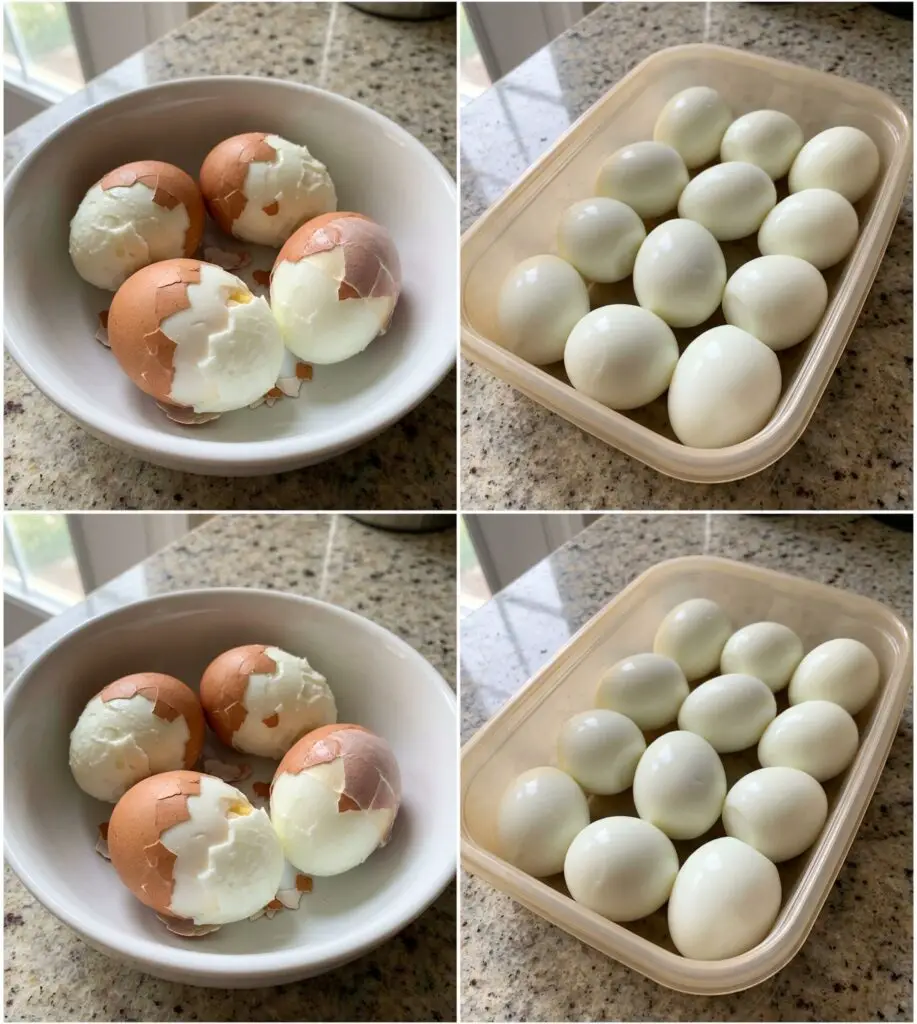
If you have ever struggled with a hard-boiled egg that tears apart as you peel it, you know how frustrating it can be. Instead of a smooth, glossy surface, you end up with craters and chunks missing from the white. Fortunately, chefs and food scientists agree that the secret does not lie in peeling technique alone. It starts with how you cook and cool your eggs.
With a few small adjustments, you can achieve clean, beautiful eggs every time.
🥚 The 3-Step Chef’s Method
1. Start with Slightly Older Eggs (Yes, Really!)
It sounds counterintuitive, but older eggs peel better than very fresh ones.
Why It Works
Fresh eggs have a lower pH level. Because of this, the egg white bonds tightly to the inner shell membrane. As eggs age, carbon dioxide escapes through the shell, which increases the pH. This subtle shift loosens the bond between the egg white and the membrane.
As a result, the shell separates more easily.
The Sweet Spot
Use eggs that are about 7–10 days old. They are still perfectly safe and fresh for cooking, yet much easier to peel than eggs straight from the farm.
2. Steam Instead of Boil (The Game-Changer)
Many people automatically drop eggs into boiling water. However, steaming produces far more reliable results.
Why Steaming Works Better
When you steam eggs, the high, consistent heat quickly sets the egg white. This rapid cooking helps separate the membrane from the shell more effectively than gradual boiling.
Additionally, steaming reduces the chances of the shells cracking from bouncing around in boiling water.
How to Steam Eggs Properly
- Bring about 1 inch of water to a boil in a pot.
- Place eggs in a steamer basket above the water.
- Cover with a lid.
- Steam for 12 minutes for fully hard-cooked yolks.
If you prefer slightly softer centers, reduce the time by one minute.
Steaming delivers consistent results batch after batch.
3. Shock in Ice Water Immediately
Cooking does not stop when you remove eggs from heat. Therefore, cooling quickly is essential.
Why the Ice Bath Matters
Plunging eggs into ice water immediately stops the cooking process. More importantly, rapid cooling causes the egg white to contract slightly. That contraction pulls it away from the shell membrane, making peeling dramatically easier.
How to Cool Them
- Prepare a large bowl of ice water while the eggs cook.
- Transfer eggs directly from the steamer into the ice bath.
- Let them sit for at least 10–15 minutes.
Do not skip this step. It makes a noticeable difference.
🥄 Bonus Peeling Tips for Perfect Results
Even with proper cooking, technique still matters. These small tricks help ensure smooth eggs.
Crack and Roll
Gently tap the egg on the counter to crack the shell. Then roll it lightly under your palm to create multiple small cracks. This loosens the shell evenly.
Peel Under Running Water
Peeling under cool running water helps separate the shell from the membrane. The water slips between the layers and lifts stubborn pieces away.
Start at the Wider End
The wider end of the egg contains a small air pocket. Begin peeling there. It usually offers an easier starting point.
🧪 Why This Method Works So Well
This technique succeeds because it addresses three scientific factors:
- pH level affects how tightly the egg white sticks to the membrane.
- Heat intensity influences how quickly the proteins set.
- Rapid cooling contracts the egg white away from the shell.
By controlling all three, you remove the guesswork.
⏱ Timing Guide for Steamed Eggs
For convenience, here is a quick timing reference:
- 6–7 minutes: Soft center
- 9–10 minutes: Medium center
- 12 minutes: Fully hard-boiled
Always follow with an ice bath.
🌟 The Takeaway
Perfectly peeled hard-boiled eggs are not luck—they are science and technique combined. Choose slightly older eggs, steam them instead of boiling, and cool them quickly in ice water. These simple adjustments transform your results.
Whether you are preparing deviled eggs, egg salad, or meal-prep snacks, smooth, pristine eggs elevate the final presentation.
Next time you cook eggs, try the chef’s method. You may never go back to boiling again.