
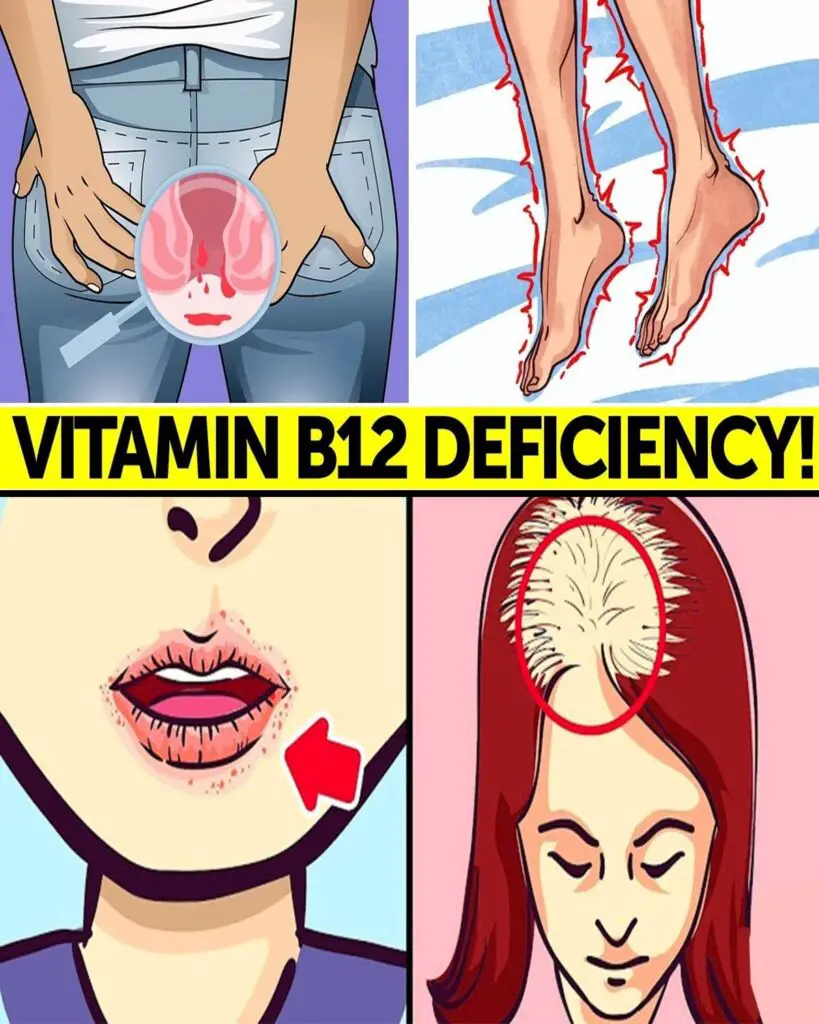
Vitamin B12 plays a critical role in nerve health, red blood cell production, and DNA synthesis. However, your body cannot produce it on its own. You must get it from animal-based foods such as meat, fish, eggs, and dairy—or from supplements if your diet lacks those sources.
Because B12 deficiency develops gradually, the warning signs often appear subtle at first. Many people overlook them or mistake them for stress, aging, or unrelated health issues. Unfortunately, untreated deficiency can lead to serious and sometimes irreversible nerve damage.
Here are eight unusual but important signs your body may be running low on vitamin B12.
🚩 1. Pins and Needles or Numbness in Hands and Feet
One of the earliest and most common warning signs is a tingling sensation in the hands, feet, or legs. Many people describe it as “pins and needles,” burning, or mild numbness.
Why It Happens
Vitamin B12 protects the myelin sheath, which insulates and supports your nerves. When B12 levels drop, nerve signaling becomes impaired. As a result, you may experience peripheral nerve symptoms.
Often Mistaken For
This symptom is frequently confused with carpal tunnel syndrome, diabetic nerve issues, or simply getting older. However, if the sensation persists or spreads, it deserves medical attention.
🚩 2. Unexplained Balance Problems or Clumsiness
If you suddenly feel unsteady or notice you trip more often, low B12 could be involved.
Why It Happens
Vitamin B12 deficiency can affect the spinal cord and parts of the brain responsible for coordination. Consequently, your sense of balance and spatial awareness may weaken.
Red Flag
You might feel especially unstable when walking in the dark or on uneven surfaces. In advanced cases, it can resemble serious neurological disorders.
🚩 3. Glossitis — A Smooth, Red, Painful Tongue
Your mouth can reveal surprising clues about your health.
What It Looks Like
Glossitis appears as a swollen, smooth, shiny tongue that looks bright red or beefy in color. You may also feel soreness or a burning sensation.
Why It Happens
B12 supports healthy cell production. When levels fall, cells in the mouth regenerate improperly, leading to inflammation and tenderness.
Some people also experience mouth ulcers, cracked lips, or a persistent metallic taste.
🚩 4. Extreme Fatigue and Weakness
Everyone feels tired occasionally. However, unexplained and persistent exhaustion may signal a deeper issue.
Why It Happens
Vitamin B12 is essential for producing red blood cells. Without enough B12, your body cannot create sufficient healthy cells to carry oxygen efficiently. This leads to a type of anemia.
What It Feels Like
You may feel drained even after a full night’s sleep. Simple tasks can feel overwhelming. Additionally, shortness of breath and heart palpitations may accompany fatigue in more advanced cases.
🚩 5. Pale or Slightly Yellow Skin
Changes in skin tone can be subtle but meaningful.
Why It Happens
When red blood cell production decreases, the skin may appear pale. In some cases, the breakdown of fragile red blood cells causes a mild yellow tint due to increased bilirubin levels.
What to Watch For
If your complexion looks unusually washed out or slightly yellow without explanation, it may be time for a blood test.
🚩 6. Memory Problems or Brain Fog
Low B12 doesn’t just affect the body—it can also impact the mind.
Early Cognitive Changes
You might notice forgetfulness, difficulty concentrating, or trouble finding words. Tasks that once felt simple may require extra effort.
Why It Happens
Vitamin B12 plays a key role in brain function and nerve communication. When levels drop, mental clarity can decline. Although these symptoms sometimes resemble early dementia, they may be reversible if treated promptly.
🚩 7. Mood Changes, Irritability, or Depression
Emotional shifts can also signal a deficiency.
The Brain-Chemistry Link
Vitamin B12 influences the production of neurotransmitters such as serotonin and dopamine. These chemicals regulate mood and emotional balance.
What You Might Notice
You may feel unusually irritable, anxious, or depressed. Some people report increased mood swings or unexplained sadness.
Although mental health conditions have many causes, checking B12 levels can rule out an underlying nutritional factor.
🚩 8. Vision Changes
Although less common, vision problems can occur in severe deficiency.
Why It Happens
Low B12 can damage the optic nerve, which transmits visual information from the eye to the brain.
Possible Symptoms
You may experience blurred or double vision, light sensitivity, or shadowy areas in your field of vision. These symptoms require immediate medical evaluation.
Who Is Most at Risk?
Certain groups face a higher risk of vitamin B12 deficiency:
- Vegetarians and vegans
- Adults over 50
- People with digestive disorders (such as Crohn’s disease or celiac disease)
- Individuals who have had gastric surgery
- Those taking certain medications that reduce stomach acid
Because B12 absorption depends on stomach acid and intrinsic factor, digestive health plays a major role.
When Should You See a Doctor?
If you experience multiple symptoms listed above—especially numbness, balance issues, or cognitive changes—you should speak with a healthcare provider. A simple blood test can measure your B12 levels.
Early detection matters. While many symptoms reverse with supplementation, prolonged nerve damage can become permanent.
How to Boost Your Vitamin B12 Levels
If your levels are low, your doctor may recommend:
- Oral B12 supplements
- High-dose tablets
- Sublingual (under-the-tongue) forms
- Injections in severe cases
Dietary sources include:
- Beef and liver
- Salmon and tuna
- Eggs
- Milk and cheese
- Fortified cereals
For individuals who avoid animal products, fortified foods or supplements are especially important.
The Bottom Line
Vitamin B12 deficiency often hides behind vague or unusual symptoms. Tingling hands, memory lapses, mood changes, or a sore tongue might not seem connected at first. However, together they can form a clear warning pattern.
Because your body cannot make vitamin B12, you must supply it consistently through diet or supplements. Therefore, do not ignore persistent red flags. A simple test and timely treatment can prevent long-term complications and restore your energy, clarity, and nerve health.
If something feels off, listen to your body. It may be asking for more B12.