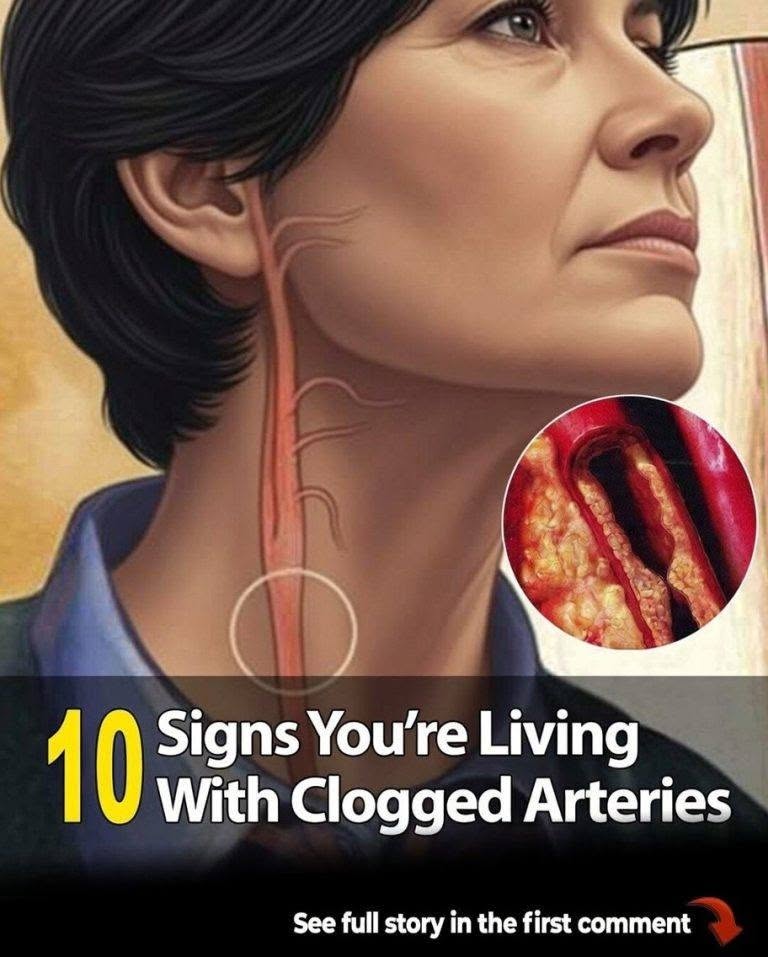
10 Indicators of Blocked Arteries You Shouldn’t Ignore can help you recognize symptoms that deserve medical attention, but there is an important fact to understand first: atherosclerosis often causes no symptoms until an artery becomes significantly narrowed or a serious complication develops.
Atherosclerosis happens when plaque builds up in artery walls. Depending on which arteries become affected, reduced blood flow can contribute to coronary artery disease, peripheral artery disease, stroke, or other cardiovascular problems. The National Heart, Lung, and Blood Institute notes that symptoms vary according to the arteries involved, and some people remain symptom-free.
Therefore, symptoms alone cannot tell you whether an artery is blocked. Other conditions can cause many of the same problems. A healthcare professional may need your medical history, physical examination, blood tests, an electrocardiogram, an ankle-brachial index, imaging, or other tests to identify the cause.
Emergency symptoms require a different response. New or severe chest pressure, major difficulty breathing, fainting with chest discomfort, or sudden stroke symptoms such as facial drooping, arm weakness, speech difficulty, balance loss, or sudden vision changes require immediate emergency care.
I once heard someone dismiss recurring calf pain because it disappeared whenever they stopped walking. Since the discomfort vanished after a few minutes, they assumed aging or sore muscles caused it. Eventually, a medical evaluation identified circulation problems that needed treatment. That experience changed how I think about cardiovascular warning signs. Symptoms do not always arrive dramatically. Sometimes the pattern matters more than the intensity. Chest pressure during exertion, recurring leg cramps while walking, or a foot wound that refuses to heal can provide important information. Paying attention does not mean assuming the worst. Instead, it means recognizing persistent changes and getting appropriate medical advice.
Heart-Related Indicators of Reduced Blood Flow
1. Chest Pressure, Tightness, or Pain
Chest discomfort is one of the most important 10 Indicators of Blocked Arteries You Shouldn’t Ignore, particularly when physical activity or emotional stress triggers it.
When coronary arteries cannot supply enough oxygen-rich blood to the heart muscle, a person may develop angina. The sensation does not always feel like sharp pain. Instead, people may describe pressure, squeezing, tightness, heaviness, fullness, burning, or an uncomfortable weight across the chest.
Furthermore, discomfort can spread beyond the chest.
The American Heart Association lists chest pain or discomfort among symptoms of acute coronary syndrome and also identifies discomfort in the arms or shoulders, jaw, neck or back pain, shortness of breath, lightheadedness, nausea, vomiting, sweating, and palpitations as possible symptoms.
Do not try to diagnose a new episode of significant chest discomfort at home.
If chest pressure appears suddenly, becomes severe, occurs at rest, lasts more than a few minutes, or accompanies shortness of breath, sweating, nausea, faintness, or pain elsewhere in the upper body, seek emergency medical assistance.
Importantly, heart attacks do not always produce dramatic crushing pain.
Symptoms can vary between individuals. Therefore, an unfamiliar pattern deserves attention even when it does not resemble the classic movie portrayal of a heart attack.
If recurring chest discomfort consistently appears during activity and improves with rest, arrange prompt medical evaluation.
The cause may not involve blocked arteries. Acid reflux, muscle problems, lung conditions, anxiety, and other disorders can produce chest symptoms too.
However, because cardiovascular causes can become life-threatening, medical professionals should determine the cause.
2. Shortness of Breath or Unusual Exercise Intolerance
Shortness of breath deserves a place among the 10 Indicators of Blocked Arteries You Shouldn’t Ignore, especially when it represents a clear change from your normal abilities.
Perhaps you previously climbed two flights of stairs comfortably but now need to stop halfway. Maybe an ordinary walk suddenly leaves you unusually winded.
Reduced blood supply to the heart can contribute to breathlessness, and the American Heart Association includes shortness of breath among symptoms associated with acute coronary syndrome.
However, shortness of breath has many possible causes.
Asthma, infections, anemia, lung disease, heart failure, poor conditioning, medication effects, and numerous other conditions can produce similar symptoms. Therefore, breathlessness does not prove that you have clogged arteries.
The pattern provides useful information.
Pay particular attention when shortness of breath appears with chest pressure, nausea, sweating, lightheadedness, or pain in the jaw, back, shoulder, or arm.
Likewise, seek medical evaluation when unexplained breathlessness continues worsening or begins interfering with routine activities.
Sudden severe difficulty breathing requires urgent medical attention.
Do not rely on whether chest pain accompanies it. Cardiovascular emergencies can present differently from one person to another.
Tracking when symptoms occur can also help your clinician. For example, note whether breathlessness occurs during activity, while lying down, after meals, or at rest.
Specific observations give healthcare professionals more useful information than simply saying that you occasionally feel winded.
Symptoms That Can Appear Beyond the Chest
3. Pain in the Arm, Shoulder, Jaw, Neck, or Back
Heart-related discomfort does not always stay in the chest.
Consequently, unexplained discomfort in the arm, shoulder, jaw, neck, or back belongs among the 10 Indicators of Blocked Arteries You Shouldn’t Ignore.
The American Heart Association identifies jaw, neck, or back pain and discomfort or pain in an arm or shoulder among possible acute coronary syndrome symptoms.
These symptoms become especially concerning when they appear with exertion or alongside chest discomfort, breathlessness, sweating, nausea, or lightheadedness.
However, location alone cannot diagnose heart disease.
Shoulder injuries, arthritis, pinched nerves, dental problems, muscle strains, and many other conditions can cause pain in these areas.
Instead, notice the circumstances.
If jaw discomfort repeatedly starts during a brisk walk and disappears after rest, for example, that pattern deserves medical attention even if your jaw itself appears normal.
Likewise, sudden upper-body discomfort accompanied by chest pressure or shortness of breath warrants urgent evaluation.
Do not delay emergency care because the discomfort feels mild or occurs outside the chest.
The safest approach involves recognizing symptom combinations rather than searching for one perfect warning sign.
Cardiovascular disease can present in different ways, and a clinician must consider symptoms together with age, cholesterol levels, blood pressure, diabetes, smoking history, family history, and other risk factors.
Therefore, persistent or recurring unexplained symptoms deserve evaluation even when they seem manageable.
4. Unusual Fatigue, Weakness, Nausea, or Sweating
Fatigue alone usually does not mean that arteries have become blocked.
Still, a sudden or unexplained change in energy can accompany cardiovascular problems, particularly when other symptoms appear at the same time.
The American Heart Association notes that women experiencing acute coronary syndrome may have unusual tiredness and weakness in addition to other possible symptoms. Nausea, vomiting, sweating, and lightheadedness can also occur during acute coronary events.
Therefore, unexplained exhaustion belongs among the 10 Indicators of Blocked Arteries You Shouldn’t Ignore when it forms part of a larger pattern.
For example, suddenly feeling overwhelmingly weak while experiencing chest pressure, nausea, or breathlessness deserves much more concern than ordinary tiredness after a poor night’s sleep.
At the same time, avoid assuming every period of fatigue signals heart disease.
Sleep deprivation, anemia, thyroid disorders, infections, depression, medication effects, stress, nutritional deficiencies, and many other conditions can cause persistent fatigue.
Medical evaluation can help distinguish among those possibilities.
The most useful approach involves noticing change.
Has your stamina dropped significantly? Do routine chores suddenly require breaks? Does weakness consistently appear with exertion? Are other cardiovascular symptoms present?
If so, discuss the pattern with a healthcare professional.
Meanwhile, sudden severe weakness associated with chest discomfort, shortness of breath, faintness, sweating, or nausea may require emergency evaluation.
Recognizing these subtler symptoms does not mean panicking whenever you feel tired. Instead, it means respecting meaningful changes in your normal physical capacity.
Leg and Foot Signs of Peripheral Artery Disease
5. Leg Cramping or Aching While Walking
Blocked arteries can affect far more than the heart.
Peripheral artery disease, commonly called PAD, develops when arteries supplying the limbs become narrowed. Therefore, leg symptoms provide several of the 10 Indicators of Blocked Arteries You Shouldn’t Ignore.
One classic symptom is intermittent claudication.
The National Heart, Lung, and Blood Institute describes this as pain, aching, heaviness, or cramping that develops during walking or stair climbing and improves after rest. The discomfort commonly affects the calf, although it can occur in the thigh, buttock, or foot.
The repeatable pattern matters.
For example, you may walk approximately the same distance before your calf begins aching. After standing still for several minutes, the discomfort disappears. Then it returns when you start walking again.
That pattern deserves medical attention.
However, not everyone with PAD experiences classic claudication. NHLBI reports that many people have atypical symptoms, while some report no symptoms at all.
Furthermore, leg pain can come from arthritis, spinal problems, muscle injuries, vein disorders, or nerve compression.
Healthcare professionals can help distinguish those conditions.
The ankle-brachial index, or ABI, commonly serves as an initial test for PAD. It compares blood pressure measurements in the ankle and arm to help identify reduced circulation.
Therefore, recurring exertional leg discomfort should not automatically get dismissed as aging.
Bring it to your clinician’s attention, particularly if you smoke, have diabetes, or have other cardiovascular risk factors.
6. A Foot or Leg That Feels Colder, Numb, or Weak
Changes in temperature, sensation, or strength can also indicate reduced circulation to a limb.
NHLBI lists a foot that feels colder than the other, leg weakness or numbness, pins-and-needles sensations, and skin discoloration among possible PAD symptoms.
Consequently, these changes belong among the 10 Indicators of Blocked Arteries You Shouldn’t Ignore.
However, context matters again.
Cold feet can occur for harmless reasons. Nerve disorders can cause numbness. Meanwhile, diabetes, spinal conditions, injuries, and other health problems can also affect sensation and strength.
A noticeable difference between two limbs may deserve greater attention.
For example, one foot repeatedly feeling much colder than the other can suggest a circulation problem that warrants evaluation.
Sudden changes require particular caution.
NHLBI identifies acute limb ischemia as a medical emergency. Warning signs can include inability to feel or move the foot, pain or pins-and-needles sensations while resting, or one foot becoming noticeably paler or colder than the other.
Acute limb ischemia means blood flow has suddenly dropped dramatically.
Therefore, do not wait for a routine appointment if a leg or foot suddenly becomes severely painful, cold, pale, numb, or difficult to move.
Seek emergency medical care.
For gradual changes, schedule a medical evaluation and explain exactly what you notice, when symptoms started, and whether activity makes them worse.
7. Foot or Leg Wounds That Heal Slowly
A small blister or cut normally progresses through healing.
However, poor arterial circulation can deprive tissues of the oxygen and nutrients required for normal repair.
As a result, sores on the toes, feet, or legs that heal very slowly or fail to heal represent another of the 10 Indicators of Blocked Arteries You Shouldn’t Ignore.
NHLBI identifies slow-healing or nonhealing sores among possible PAD symptoms. It also warns that these wounds can become infected.
People with diabetes should take foot wounds particularly seriously because diabetes can affect both circulation and sensation.
Reduced sensation may allow an injury to worsen before a person notices it.
Therefore, inspect persistent wounds rather than simply covering them indefinitely.
Seek medical care if a sore fails to improve, becomes increasingly painful, develops swelling or redness, drains pus, or accompanies fever or chills.
Furthermore, do not attempt aggressive home treatment on a deep, discolored, or worsening wound.
A healthcare professional can evaluate circulation, infection risk, and other factors affecting healing.
Poor circulation is not the only possible cause. Pressure injuries, infection, diabetes, venous disease, and other problems can also delay healing.
Nevertheless, persistent foot and leg sores deserve medical assessment because the consequences can become serious.
NHLBI warns that severe PAD can lead to tissue damage, infection, and, in advanced cases, limb loss.
Early attention provides the opportunity to address the underlying cause before complications progress.
Neurological and Other Important Warning Signs
8. Sudden Facial Drooping, Arm Weakness, or Speech Difficulty
Atherosclerosis can affect arteries supplying the brain and contribute to ischemic stroke risk.
Therefore, sudden neurological changes rank among the most urgent 10 Indicators of Blocked Arteries You Shouldn’t Ignore.
The American Stroke Association recommends remembering B.E. F.A.S.T.: balance loss, eye or vision changes, face drooping, arm weakness, speech difficulty, and time to call emergency services.
Symptoms often begin suddenly.
One side of the face may droop or feel numb. One arm may become weak. Speech may sound slurred, confused, or unusually difficult.
Do not wait to see whether the person improves.
Likewise, do not drive the person to the hospital yourself when emergency medical services are available.
Call your local emergency number immediately.
Even symptoms that disappear can indicate a transient ischemic attack, or TIA. The American Stroke Association considers a TIA a medical emergency because it can precede a full stroke.
Time matters because certain stroke treatments work best when healthcare teams can begin them rapidly.
Note when the symptoms first appeared because medical professionals will need that information.
Most importantly, never attempt to diagnose a stroke based on age.
Stroke can occur in adults of different ages, and immediate treatment can affect survival and long-term disability.
Sudden neurological symptoms always deserve emergency attention.
9. Sudden Vision Changes, Dizziness, or Loss of Balance
Vision and balance changes can also signal a neurological emergency.
The American Stroke Association includes sudden vision changes and sudden loss of balance or coordination among its B.E. F.A.S.T. stroke warning signs.
Someone may suddenly experience blurred vision, double vision, or loss of sight in one or both eyes.
Alternatively, a person may become unexpectedly dizzy, stumble, or lose coordination.
These symptoms belong among the 10 Indicators of Blocked Arteries You Shouldn’t Ignore, but they require careful interpretation.
Many nonvascular conditions cause dizziness. Inner-ear problems, dehydration, medication side effects, low blood pressure, migraine, and numerous other disorders can produce similar sensations.
However, sudden dizziness becomes much more concerning when it accompanies weakness, numbness, speech difficulty, facial drooping, severe imbalance, or vision loss.
In that situation, call emergency services immediately.
Likewise, sudden unexplained vision loss requires urgent evaluation.
Do not dismiss symptoms simply because they improve.
The American Stroke Association advises emergency evaluation for possible TIA or stroke symptoms even when they disappear.
The goal is not to make every episode of dizziness frightening.
Instead, recognize the difference between a familiar, previously evaluated symptom and a sudden neurological change that has no obvious explanation.
When in doubt about abrupt stroke-like symptoms, treat the situation as an emergency.
10. Skin Color, Hair Growth, or Nail-Growth Changes in the Legs
Some circulation changes develop gradually and may seem cosmetic at first.
PAD can cause one leg or foot to become pale, discolored, or bluish. NHLBI also notes that leg hair and toenail growth may decrease when blood flow becomes impaired.
For that reason, persistent changes in a leg or foot complete these 10 Indicators of Blocked Arteries You Shouldn’t Ignore.
These findings rarely diagnose PAD by themselves.
Hair naturally becomes thinner with age. Nail changes can result from fungal infections, injuries, skin conditions, or other health issues. Skin color can also change for many reasons.
Therefore, look at the complete pattern.
Reduced hair growth becomes more meaningful when it accompanies exertional leg cramps, a consistently cold foot, weak pulses, numbness, or slow-healing wounds.
A healthcare professional can examine the legs, assess pulses, and determine whether vascular testing makes sense. NHLBI notes that clinicians may check leg pulses, look for pale skin or sores, listen for abnormal blood-flow sounds, and use an ABI to investigate suspected PAD.
Most importantly, do not wait for visible changes before thinking about cardiovascular health.
Atherosclerosis can remain silent.
Managing blood pressure, cholesterol, diabetes, tobacco exposure, physical activity, and other cardiovascular risk factors with appropriate medical guidance can matter even when you feel perfectly well.
Frequently Asked Questions
Can you have blocked arteries without symptoms?
Yes. Atherosclerosis and PAD can exist without obvious symptoms. NHLBI notes that some people with PAD report no symptoms, while others have atypical symptoms rather than classic walking-related leg pain.
How do doctors check for blocked arteries?
Testing depends on the suspected location and your symptoms. Clinicians may use a physical examination, blood tests, electrocardiography, stress testing, ultrasound, CT imaging, angiography, or other studies. For suspected PAD, the ankle-brachial index commonly serves as an initial diagnostic test.
Does leg pain always mean peripheral artery disease?
No. Arthritis, muscle injuries, nerve compression, and vein problems can also cause leg discomfort. PAD pain often develops during walking or exercise and improves with rest, although not everyone follows that classic pattern.
Which symptoms require emergency care?
Seek emergency help for new or severe chest discomfort, especially with shortness of breath, sweating, nausea, or upper-body pain. Also call emergency services immediately for sudden facial drooping, arm weakness, speech difficulty, major balance loss, or sudden vision changes.
Can lifestyle changes completely clear blocked arteries?
Lifestyle changes can play an important role in cardiovascular risk reduction, but people should not rely on diet or supplements to treat suspected arterial disease without medical care. Treatment depends on disease severity and may include lifestyle changes, medications, procedures, or surgery. A healthcare professional can recommend an appropriate plan after diagnosis.
Conclusion
The 10 Indicators of Blocked Arteries You Shouldn’t Ignore range from familiar heart-related symptoms to less obvious changes in the legs and feet.
Chest pressure, shortness of breath, and upper-body discomfort can accompany reduced blood flow to the heart. Meanwhile, recurring calf cramps during walking, a colder foot, numbness, and slow-healing wounds can occur with peripheral artery disease.
Sudden neurological symptoms require even faster action.
Facial drooping, arm weakness, speech difficulty, abrupt vision changes, and severe balance problems can signal stroke. Call emergency services immediately when these symptoms appear, even if they later improve.
Still, none of these symptoms can diagnose blocked arteries by itself.
Many other medical conditions cause similar problems, while atherosclerosis can sometimes progress without noticeable symptoms. Therefore, appropriate screening and medical evaluation matter as much as symptom recognition.
Pay attention to new patterns. Do not dismiss recurring symptoms simply because they disappear with rest. Furthermore, discuss cardiovascular risk factors with your healthcare professional before symptoms appear.
Recognizing the 10 Indicators of Blocked Arteries You Shouldn’t Ignore should lead to informed action rather than fear.
When symptoms develop gradually, arrange appropriate medical evaluation. When possible heart attack, stroke, or acute loss of circulation symptoms appear suddenly, seek emergency medical care immediately.