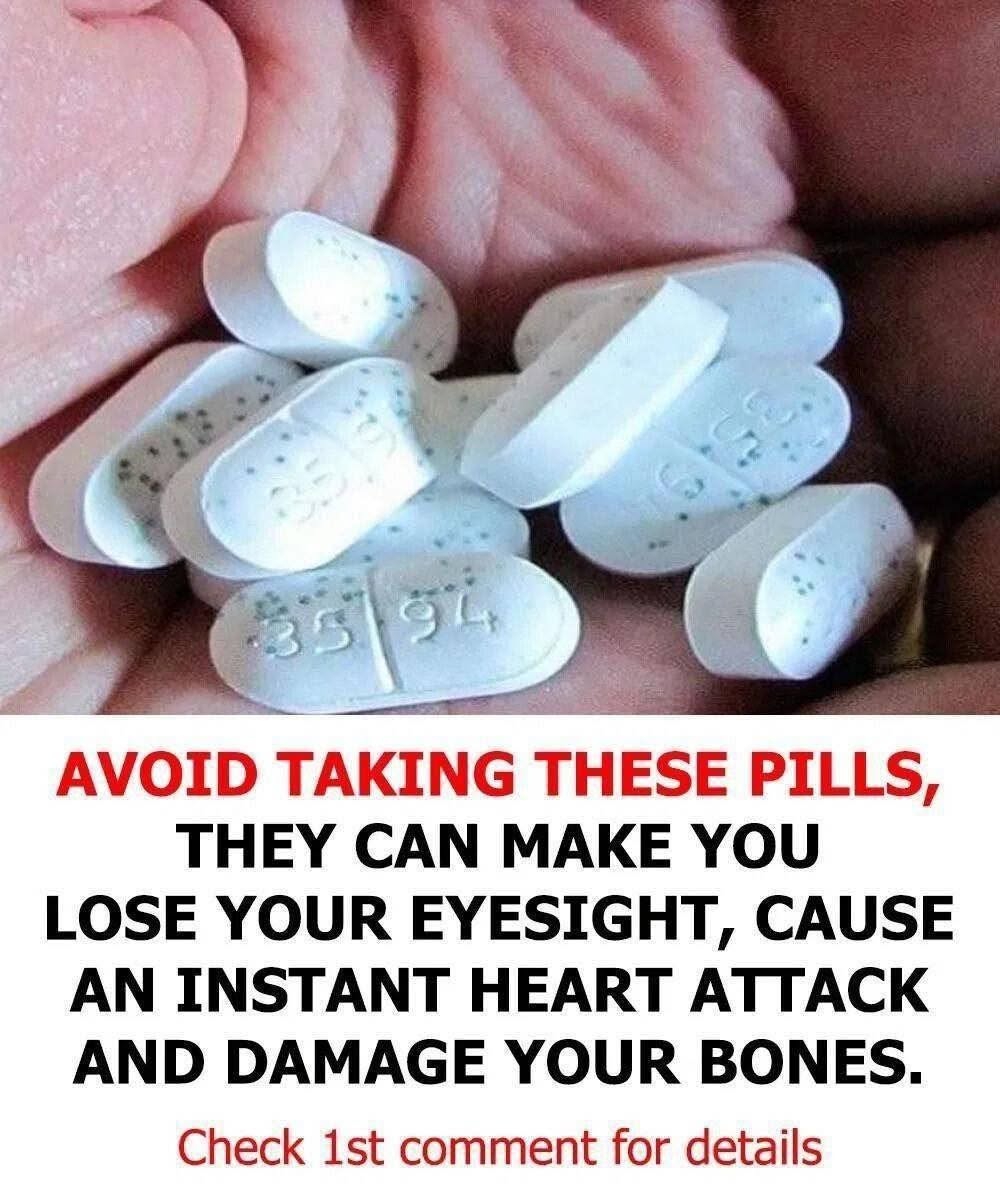
Urgent Health Alert: Pills Linked to Blood Clots, Heart Attack & Stroke Risks is a headline that deserves careful explanation rather than panic. Some medicines really do carry warnings about blood clots, heart attack, stroke, or other cardiovascular complications. However, that does not mean that all pills carry these risks, nor does it mean everyone taking an affected medicine should immediately stop treatment.
The actual risk depends on the specific drug, dose, treatment duration, medical condition being treated, age, smoking status, cardiovascular history, and other individual factors. Current FDA and European Medicines Agency information, for example, includes cardiovascular and thrombosis warnings for certain Janus kinase, or JAK, inhibitors. Estrogen-containing contraceptives also carry a known blood-clot risk, while nonsteroidal anti-inflammatory drugs, or NSAIDs, can increase the risk of heart attack and stroke.
Therefore, the safest response to an alarming headline is not to throw medication away. Instead, identify the drug involved, read its current safety information, understand the warning signs that require urgent care, and discuss personal risk with a qualified healthcare professional.
I once watched someone become frightened after reading an online warning about a medicine they had taken for years. The headline made it sound as though one more dose could cause a medical emergency. They nearly stopped the prescription immediately, but instead they called their clinician. The discussion revealed that the warning applied differently depending on dose, medical history, and individual risk factors. Their treatment plan ultimately changed, but it changed safely and deliberately. That experience showed me why medication warnings require context. Safety information matters enormously, yet fear can become dangerous when it pushes people to make abrupt treatment decisions without understanding what the warning actually means.
What an Urgent Medication Safety Warning Really Means
Safety Warnings Do Not Mean a Medicine Is Dangerous for Everyone
When regulators identify a serious medication risk, they can strengthen labeling, issue safety communications, restrict use, request additional studies, or take other regulatory action.
These warnings often reflect a balance between two realities.
First, a drug may provide important benefits for people with serious or chronic conditions.
Second, researchers may discover that certain patients face a higher likelihood of particular adverse events.
JAK inhibitors provide a useful example. FDA concluded from a large randomized safety trial that tofacitinib, marketed as Xeljanz and Xeljanz XR, carried an increased risk of serious heart-related events such as heart attack or stroke, along with blood clots, cancer, and death, compared with tumor necrosis factor blockers in the studied rheumatoid arthritis population. FDA subsequently required stronger warnings for several JAK inhibitors used for chronic inflammatory conditions.
The issue remains current. In July 2026, the European Medicines Agency’s Pharmacovigilance Risk Assessment Committee announced strengthened warnings for the JAK inhibitor ritlecitinib, sold as Litfulo, because serious risks associated with other JAK inhibitors—including cardiovascular problems and blood clots—were considered relevant to that medicine as well.
Meanwhile, the current 2026 U.S. prescribing information for upadacitinib, or Rinvoq, contains a boxed warning covering major adverse cardiovascular events and thrombosis, among other serious risks.
These warnings matter.
However, they do not prove that every person who takes a JAK inhibitor will experience a clot, heart attack, or stroke.
Instead, clinicians weigh the benefit of controlling diseases such as rheumatoid arthritis, ulcerative colitis, Crohn’s disease, atopic dermatitis, and other inflammatory disorders against the patient’s individual risks.
That is why Urgent Health Alert: Pills Linked to Blood Clots, Heart Attack & Stroke Risks needs more nuance than a viral post can provide.
Never Stop a Prescription Solely Because of an Online Headline
A medication warning should prompt informed discussion, not abrupt self-treatment.
Stopping certain medicines suddenly can cause the condition being treated to flare or create other complications. Therefore, contact the prescribing clinician or pharmacist when a safety warning concerns a medicine you use.
Ask whether the warning applies to your particular drug and dose.
Also discuss your medical history.
Factors such as previous blood clots, heart disease, stroke, smoking, age, high blood pressure, high cholesterol, diabetes, cancer, prolonged immobility, recent surgery, and family history can change cardiovascular or clotting risk.
Current FDA information for tofacitinib specifically tells patients to inform their healthcare professional about previous heart attack, other heart problems, stroke, blood clots, and smoking history.
The same principle applies more broadly.
A warning that changes prescribing decisions for one patient may not produce the same decision for another.
Furthermore, risk must be compared with benefit.
A person whose inflammatory disease remains uncontrolled may face substantial health consequences without effective treatment. A person who needs contraception also faces the health risks associated with unintended pregnancy, while pregnancy and the postpartum period themselves affect clotting risk.
Therefore, medication decisions rarely reduce to “safe” versus “unsafe.”
Instead, clinicians consider which available option creates the best benefit-risk balance for the individual.
Still, emergency symptoms require immediate action regardless of which medication you take.
If you develop symptoms that could indicate a heart attack, stroke, pulmonary embolism, or another serious clotting event, seek emergency care rather than waiting for a routine medication appointment.
Three Medication Categories That Deserve Extra Cardiovascular Awareness
JAK Inhibitors and Estrogen-Containing Contraceptives
The Urgent Health Alert: Pills Linked to Blood Clots, Heart Attack & Stroke Risks discussion often combines unrelated medications into one frightening category. It helps to separate them.
JAK inhibitors treat several inflammatory and immune-mediated disorders.
FDA strengthened warnings for certain JAK inhibitors after finding increased risks of serious cardiovascular events, blood clots, cancer, and death in a large safety trial involving tofacitinib compared with TNF inhibitors. Current labeling for medicines such as upadacitinib continues to include prominent warnings about major adverse cardiovascular events and thrombosis.
The EMA has likewise applied risk-minimization measures to JAK inhibitors and continued updating warnings as evidence evolves.
Another category involves combined hormonal contraceptives.
These products usually contain an estrogen plus a progestin. The clotting risk associated with estrogen-containing contraception has been recognized for decades.
The World Health Organization’s December 2025 oral contraceptive guidance states that serious risks associated with oral contraceptive pills are rare but may include blood clots, stroke, and heart attack. It also notes that progestin-only pills do not carry the same estrogen-related risks.
FDA materials similarly recognize an increased risk of venous thromboembolism with combined hormonal contraceptives.
However, context remains essential.
The absolute risk for many healthy users remains low, and clot risk also changes during pregnancy and the postpartum period. Additionally, age, smoking, obesity, personal clot history, migraine patterns, cardiovascular disease, and other medical factors can affect whether an estrogen-containing contraceptive is appropriate.
Therefore, do not stop birth-control pills based only on a generalized warning.
Instead, discuss your risk factors and alternatives with a clinician.
NSAID Pain Relievers Can Carry Heart Attack and Stroke Warnings
Many people think of over-the-counter pain medicines as inherently mild because they can buy them without a prescription.
However, NSAIDs deserve respect.
This broad category includes medicines such as ibuprofen and naproxen, along with prescription NSAIDs including diclofenac and others.
FDA-approved NSAID medication guides warn that these medicines can increase the risk of heart attack or stroke and that the risk may occur early during treatment and may increase with higher doses or longer use.
That does not mean someone taking an occasional NSAID will inevitably have a cardiovascular event.
Instead, risk varies.
Someone with established cardiovascular disease or multiple cardiovascular risk factors may need different pain-management advice from a healthy person taking a short course.
Likewise, combining multiple products that contain NSAIDs can unintentionally increase exposure.
This issue remains relevant in current FDA safety work. In May 2026, FDA warned consumers about an illegally marketed herbal tea product that contained hidden piroxicam, an NSAID, and specifically noted cardiovascular risks including heart attack and stroke.
The lesson extends beyond prescription bottles.
“Natural,” “herbal,” or nonprescription does not automatically mean cardiovascular risk-free.
Before combining pain medicines, check the active ingredients. Many cold, flu, menstrual, arthritis, and combination pain products can contain overlapping drug classes.
Furthermore, people who take anticoagulants, antiplatelet drugs, blood-pressure medicines, or other prescriptions should ask a healthcare professional about possible interactions.
When you need repeated NSAID treatment for chronic pain, discuss the lowest effective dose, treatment duration, and possible alternatives with your clinician.
Blood Clot, Heart Attack, and Stroke Warning Signs
Symptoms of Dangerous Blood Clots and Heart Problems
Understanding Urgent Health Alert: Pills Linked to Blood Clots, Heart Attack & Stroke Risks becomes useful only when you know which symptoms require immediate attention.
A deep vein thrombosis, or DVT, usually forms in a deep vein, commonly in the leg.
Possible warning signs can include new swelling, pain, tenderness, warmth, or discoloration in one leg. However, not every clot produces obvious symptoms.
A clot can become especially dangerous if part of it travels to the lungs and causes a pulmonary embolism.
Seek emergency medical care for sudden unexplained shortness of breath, chest pain that may worsen with breathing, coughing up blood, fainting, a rapid heartbeat, or severe unexplained breathing difficulty.
Likewise, heart attack symptoms can include chest pressure, squeezing, heaviness, or pain, although presentations vary.
Discomfort may spread into the arm, shoulder, jaw, neck, or back. Other symptoms can include breathlessness, nausea, sweating, or lightheadedness.
Do not wait for symptoms to become unbearable.
Someone can experience a serious cardiovascular event without the dramatic chest-clutching presentation commonly shown in movies.
Medication use represents only one potential factor.
Blood clots and heart attacks can occur for many reasons unrelated to medicines. Therefore, emergency symptoms require treatment first and investigation afterward.
Do not attempt to decide at home whether a medicine caused the event.
Call emergency services and tell healthcare professionals which medications, supplements, and nonprescription products you use.
Keeping an updated medication list on your phone can make that information easier to provide during an emergency.
Stroke Symptoms Require Immediate Emergency Care
A stroke occurs when blood supply to part of the brain becomes blocked or when a blood vessel in the brain ruptures.
An ischemic stroke involves an obstruction, often from a clot.
Stroke treatment is extremely time-sensitive.
The World Health Organization states that suspected stroke requires emergency treatment and immediate brain imaging. For eligible ischemic strokes, clot-dissolving treatment should begin as soon as possible within the appropriate treatment window, while some patients may qualify for mechanical thrombectomy.
Therefore, recognize sudden neurological changes.
Watch for facial drooping, weakness or numbness on one side, difficulty speaking, confusion, sudden vision changes, severe loss of balance, or an abrupt severe headache.
Call emergency services immediately.
Do not wait for symptoms to disappear.
A transient ischemic attack can produce stroke-like symptoms that resolve, yet it still warrants urgent medical evaluation because it may signal an elevated risk of a subsequent stroke.
Likewise, do not let the suspected cause delay treatment.
Whether symptoms follow medication use, uncontrolled blood pressure, atrial fibrillation, carotid disease, or another cause does not change the first priority.
The first priority is rapid emergency assessment.
That distinction matters because alarming medication stories sometimes encourage people to focus so strongly on identifying the responsible pill that they overlook the medical emergency occurring in front of them.
Symptoms come first.
Causation comes later.
How to Use Medication Safety Information Without Panicking
Review Your Personal Risk Factors With a Professional
The most useful response to Urgent Health Alert: Pills Linked to Blood Clots, Heart Attack & Stroke Risks involves reviewing your own medications and risk factors.
Start with a complete medication list.
Include prescriptions, over-the-counter pain relievers, hormonal medications, supplements, and herbal products.
Then, identify the exact names and active ingredients.
Terms such as “arthritis pill,” “birth-control pill,” or “pain medicine” are too broad because individual products can have very different safety profiles.
Next, review your cardiovascular and clotting history.
Tell your healthcare professional about previous DVT, pulmonary embolism, heart attack, stroke, clotting disorders, heart disease, high blood pressure, high cholesterol, diabetes, cancer, smoking, recent major surgery, prolonged immobility, or close relatives with unexplained blood clots.
For medicines with established cardiovascular warnings, those details can influence treatment decisions.
Current FDA patient information for tofacitinib, for example, specifically highlights smoking history, previous cardiovascular events, and past blood clots as relevant information to discuss before treatment.
Likewise, combined hormonal contraceptive suitability depends partly on individual cardiovascular and thrombotic risk factors.
Finally, ask practical questions.
Why do I need this medicine?
Does my medical history make the warning more relevant?
Are there safer alternatives for someone with my risk profile?
What symptoms should make me stop what I am doing and seek emergency care?
Do I need monitoring?
These questions turn frightening safety information into useful health decisions.
Separate Current Regulatory Information From Viral Claims
Medication warnings spread quickly online.
Unfortunately, headlines often remove the details that make safety information meaningful.
One post may say that “a common pill causes blood clots,” while failing to identify the drug, population studied, absolute risk, dose, treatment duration, or comparison group.
Another may present an old warning as breaking news.
Therefore, always check the date and source.
Current official drug labels and regulator communications provide a stronger starting point than screenshots or reposted videos.
For example, current 2026 FDA labeling for upadacitinib still carries boxed warnings for major cardiovascular events and thrombosis.
Meanwhile, the EMA issued a July 10, 2026 communication strengthening JAK inhibitor-related warnings for Litfulo.
WHO’s December 23, 2025 oral-contraceptive fact sheet provides current context on the rare but recognized risks of blood clots, stroke, and heart attack with oral contraceptive pills while distinguishing estrogen-related risk from progestin-only pills.
That type of specificity matters.
It tells you which medication class the warning concerns and how clinicians should interpret it.
Avoid claims that instruct everyone to stop a medicine immediately, promise to “flush” a drug from the body, or recommend supplements as substitutes for prescribed treatment.
Those messages can create additional risk.
Reliable medication safety advice acknowledges benefits, risks, individual differences, and the need for appropriate clinical guidance.
Frequently Asked Questions
Which pills are linked with blood clots, heart attack, or stroke?
Several different drug classes can carry cardiovascular or clot-related warnings. Examples include certain JAK inhibitors, estrogen-containing hormonal contraceptives, and NSAIDs, although the type and magnitude of risk differ substantially between them.
Should I stop taking a medicine if it has a blood-clot warning?
Do not abruptly stop a prescribed medication solely because you read an online warning unless emergency medical professionals instruct you otherwise. Contact your prescriber or pharmacist to discuss how the warning applies to your situation. However, seek emergency care immediately if you develop symptoms of a serious clot, heart attack, or stroke.
Do all birth-control pills cause dangerous blood clots?
No. Risk differs by contraceptive type and individual medical history. WHO notes that serious clot, stroke, and heart-attack risks associated with oral contraceptives are very rare and that progestin-only pills do not carry the same estrogen-related risks as combined pills.
Can common pain relievers increase heart attack or stroke risk?
NSAIDs can. FDA-approved medication guides warn that NSAIDs can increase the risk of serious cardiovascular thrombotic events, including heart attack and stroke, and that risk may increase with dose and duration.
What symptoms mean I should seek emergency help?
Seek emergency care for severe or new chest pressure, sudden unexplained breathing difficulty, coughing up blood, fainting, sudden one-sided weakness, facial drooping, speech difficulty, major vision changes, or severe sudden loss of balance. WHO treats suspected stroke as a medical emergency requiring rapid evaluation and treatment.
Conclusion
Urgent Health Alert: Pills Linked to Blood Clots, Heart Attack & Stroke Risks describes a real medication-safety issue, but the most important message involves context.
Certain JAK inhibitors carry serious warnings related to major cardiovascular events and thrombosis. FDA continues to require prominent warnings for relevant medicines, while the EMA strengthened related JAK inhibitor safety information again in July 2026.
Estrogen-containing contraceptives also have a recognized blood-clot risk, although WHO describes serious events such as clots, stroke, and heart attack as very rare and distinguishes progestin-only pills from estrogen-containing products.
Meanwhile, NSAIDs—including familiar pain relievers—can increase cardiovascular risk, particularly depending on dose, duration, and individual circumstances.
These facts deserve attention, not panic.
Never assume that every pill carries the same danger. Likewise, never assume that “over the counter” or “natural” automatically means risk-free.
Know what you take. Keep an updated medication list. Review cardiovascular and clotting risk factors with your healthcare professional. Follow current prescribing instructions, and do not abruptly discontinue necessary treatment based only on an online headline.
Most importantly, recognize emergencies.
Sudden severe chest symptoms, unexplained difficulty breathing, signs of pulmonary embolism, or stroke symptoms require immediate medical care.
Information provides the greatest protection when it leads to timely, appropriate action. That is the most useful lesson behind Urgent Health Alert: Pills Linked to Blood Clots, Heart Attack & Stroke Risks.