The Ultimate Guide to Baking the Perfect Potato will completely change the way you approach this simple dish. While baked potatoes seem easy, achieving that perfect balance of crispy skin and soft, fluffy interior requires the right technique. Once you learn the method, you will never settle for soggy or uneven potatoes again.
A perfectly baked potato delivers contrast in every bite. The outside crackles slightly when you cut into it, while the inside feels light and airy. It becomes the ideal base for butter, sour cream, cheese, or any topping you love. Best of all, you only need a few ingredients and a reliable process.
For years, I struggled to get baked potatoes right. I tried wrapping them in foil, cranking up the heat, and guessing the timing. Nothing worked. Then a friend showed me a simple method that changed everything. That night, the potatoes came out golden, crisp, and perfectly cooked inside. Since then, I have followed the same steps every time, and the results never fail.
Understanding Why Technique Matters
The Science Behind Crispy Skin
Crispy potato skin forms when moisture escapes during baking. If you trap that moisture, the skin becomes soft instead of crisp. That is why skipping foil is essential. When you leave the potato exposed, heat circulates evenly, allowing the exterior to dry and crisp up.
In addition, oil plays a key role. Rubbing the potato with a small amount of oil helps conduct heat while encouraging browning. Salt adds flavor and enhances the texture, giving the skin a slightly crunchy finish.
What Creates a Fluffy Interior
The inside of a potato turns fluffy when the starch breaks down properly. This happens best at a steady temperature. If the oven runs too hot, the outside cooks too quickly, leaving the center underdone.
On the other hand, a moderate temperature allows the heat to penetrate evenly. As a result, the starch granules expand and create that soft, airy texture everyone loves.
Choosing and Preparing the Right Potatoes
Picking the Best Type
Not all potatoes bake the same way. For the best results, choose russet potatoes. They contain more starch and less moisture than other varieties. Because of this, they produce a fluffier interior.
Avoid waxy potatoes like red or gold varieties. These hold their shape well but tend to become dense when baked. If you want that classic baked potato texture, russets are the way to go.
Proper Preparation Steps
Start by washing each potato thoroughly under running water. Scrub off any dirt, then dry completely with a towel. Dry skin helps achieve crispiness during baking.
Next, use a fork to pierce the potato several times. This step allows steam to escape, preventing pressure buildup. It also helps the potato cook more evenly.
Finally, rub each potato with a thin layer of oil and sprinkle generously with salt. This simple step transforms the final texture and flavor.
Step-by-Step Baking Method
Setting Up for Success
Preheat your oven to 400°F (200°C). This temperature creates the perfect balance between crisp skin and tender interior.
Place the potatoes directly on the oven rack or on a baking sheet. Make sure there is space between them so air can circulate freely. Crowding the oven can lead to uneven cooking.
Baking to Perfection
Bake the potatoes for 50 to 60 minutes, depending on their size. Halfway through, you can rotate them to ensure even cooking.
To check doneness, insert a fork or knife into the center. It should slide in easily without resistance. The skin should feel firm and slightly crisp.
Once done, remove the potatoes from the oven and let them rest for a few minutes. Then, slice them open immediately to release steam and keep the interior fluffy.
Tips, Variations, and Serving Ideas
Expert Tips for Consistent Results
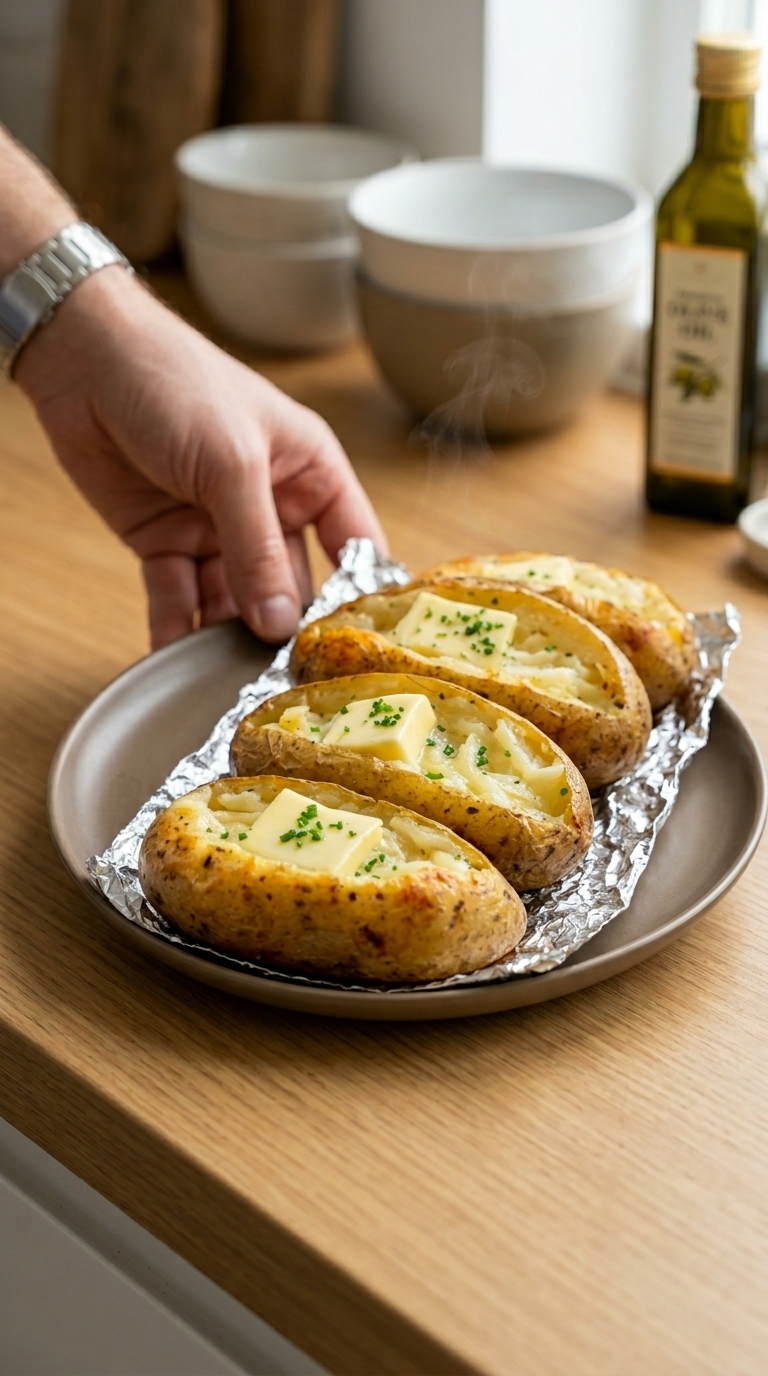
Always avoid wrapping potatoes in foil unless you want soft skin. Foil traps moisture and prevents crisping.
If you prefer extra crispy skin, bake the potatoes directly on the oven rack. This allows heat to reach all sides evenly.
For added flavor, you can rub the potatoes with garlic-infused oil or sprinkle herbs along with the salt. These small touches make a noticeable difference.
Delicious Ways to Serve
Baked potatoes are incredibly versatile. You can keep them simple with butter and salt, or load them with toppings like sour cream, shredded cheese, bacon bits, and chives.
They also pair well with hearty meals such as grilled meats or roasted vegetables. Alternatively, turn them into a full meal by adding chili or sautéed vegetables on top.
For a lighter option, try topping your potato with Greek yogurt and fresh herbs. This adds creaminess without heaviness.
Frequently Asked Questions
Should I wrap potatoes in foil?
No, wrapping in foil traps moisture and prevents the skin from becoming crispy.
How long should I bake potatoes?
Bake them for 50 to 60 minutes at 400°F, depending on their size.
Can I bake potatoes at a higher temperature?
You can, but it may cause uneven cooking. A moderate temperature works best.
Why do I need to pierce the potatoes?
Piercing allows steam to escape, which prevents pressure buildup and helps even cooking.
How do I store leftover baked potatoes?
Store them in the refrigerator for up to 3 days. Reheat in the oven for best texture.
Ingredients
Equipment
Method
- Preheat oven to 400°F (200°C).
- Wash and dry potatoes thoroughly.
- Pierce each potato with a fork several times.
- Rub potatoes with olive oil and sprinkle with salt.
- Place potatoes on oven rack or baking sheet.
- Bake for 50–60 minutes until tender.
- Slice open and serve immediately.
Notes
Conclusion
The Ultimate Guide to Baking the Perfect Potato shows that great results come from simple techniques done right. By choosing the right potato, preparing it properly, and baking it at the correct temperature, you can achieve crispy skin and a fluffy interior every time.
Once you master this method, baked potatoes will become one of the most reliable and satisfying dishes in your kitchen. Whether you enjoy them as a side or a main meal, they offer endless possibilities and consistent comfort.