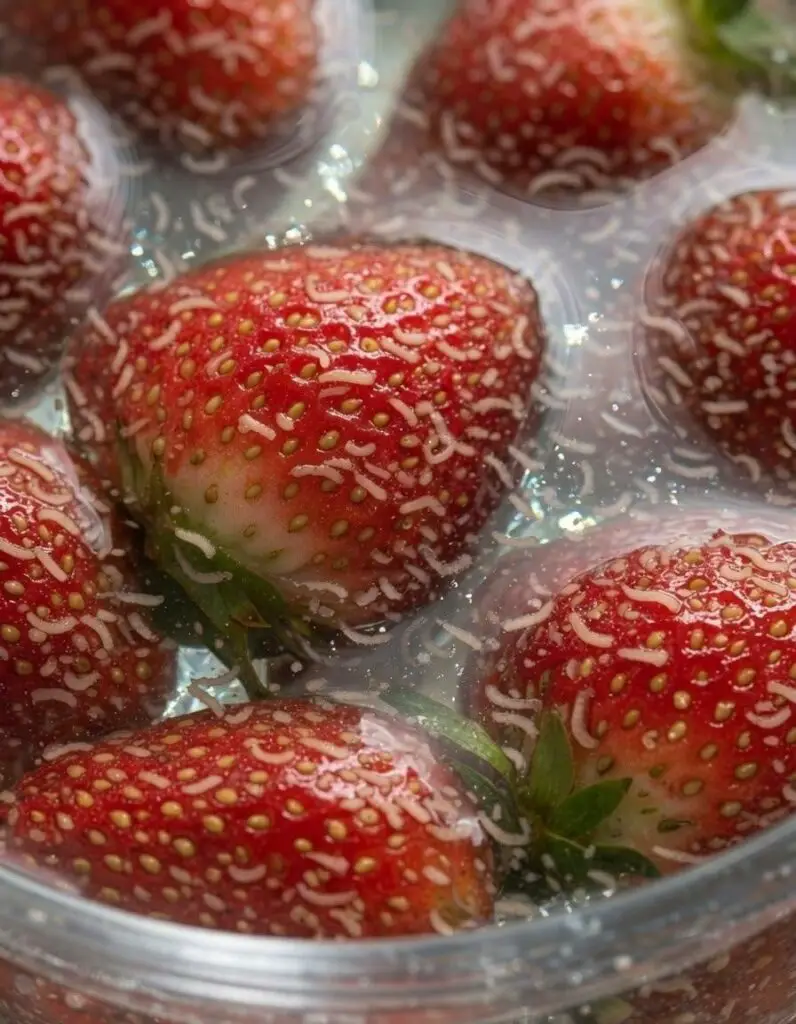
Fresh strawberries are one of summer’s greatest pleasures. Their bright red color, sweet aroma, and juicy flavor make them a favorite for everything from breakfast smoothies to homemade desserts. So, it’s understandable why many people feel shocked after seeing viral videos showing tiny white larvae emerging from strawberries soaked in salt water.
If you’ve recently watched one of these videos—or experienced it yourself—you may have wondered whether strawberries are still safe to eat. Fortunately, the answer is usually much less alarming than social media makes it seem.
The tiny white creatures occasionally found inside strawberries are typically the larvae of a small fruit fly. While discovering them can certainly be unpleasant, food safety experts explain that they are generally not dangerous to human health. Better yet, there are simple steps you can take to inspect, clean, and enjoy your berries with confidence.
Let’s explore what’s really happening, why the popular salt-water trick works, and how you can keep fresh strawberries at their very best.
Why Tiny Larvae Sometimes Appear Inside Strawberries
Finding movement inside a strawberry can be surprising, but it helps to understand how it happens.
Meet the Spotted Wing Drosophila
The insect most commonly responsible is called the spotted wing drosophila (SWD), a small fruit fly that has become a challenge for berry growers around the world.
Unlike ordinary fruit flies that prefer overripe or decaying fruit, spotted wing drosophila females have a specialized egg-laying structure that allows them to pierce healthy, ripening fruit while it’s still growing on the plant.
This means strawberries, raspberries, blueberries, cherries, and blackberries can occasionally contain tiny larvae before harvest.
Adult spotted wing drosophila are:
- Very small (about 2–3 mm long)
- Light brown or tan
- Characterized by bright red eyes
- Males have distinctive dark spots near the tips of their wings
How the Larvae Develop
After eggs are deposited beneath the strawberry’s skin, they hatch within a short period.
The larvae remain hidden inside the soft fruit where they feed as they grow.
Because they’re almost transparent and only 1–3 millimeters long, they’re nearly impossible to notice while the berry looks perfectly normal from the outside.
Warm temperatures and humid conditions allow this life cycle to progress quickly, especially during peak strawberry season.
Fortunately, commercial growers use many pest-management techniques to reduce infestations, although no growing method can eliminate them entirely.
Why the Salt Water Test Makes Larvae Leave the Fruit
One reason videos of strawberries soaked in salt water attract so much attention is that they reveal something that normally remains hidden.
The process isn’t magic—it’s simple biology.
The Science Behind the Salt Water Soak
When strawberries are submerged in salt water, the surrounding environment changes dramatically.
Salt creates a process known as osmosis, where water naturally moves across membranes to balance differences in concentration.
For the tiny larvae living inside the berry, this sudden change becomes stressful. In response, many crawl out of the fruit and into the surrounding water, where they become visible.
This doesn’t mean every strawberry contains larvae, nor does it guarantee that every larva will emerge. It simply makes hidden insects easier to detect if they happen to be present.
Because strawberries have soft flesh and thin skin, they’re one of the fruits where this effect is easiest to observe.
Are the Larvae Dangerous?
Fortunately, food safety experts offer reassuring news.
The larvae occasionally found in strawberries are not parasites that infect humans.
They are simply immature fruit flies feeding on the fruit itself.
What Happens If Someone Eats One?
Although the idea is certainly unpleasant, accidentally eating one of these tiny larvae is generally not considered harmful.
They:
- Do not live inside the human body.
- Do not cause parasitic infections.
- Are digested like other natural proteins.
- Are not known to transmit diseases to people through strawberries.
The biggest concern is usually psychological rather than medical.
Most people understandably lose their appetite after seeing them, but discovering larvae doesn’t automatically mean the fruit is unsafe.
When Should Strawberries Be Thrown Away?
Instead of focusing only on larvae, pay attention to the overall condition of the fruit.
Discard strawberries if they have:
- Visible mold
- A sour or fermented smell
- Mushy texture
- Excessive leaking juice
- Large areas of decay
These are signs of spoilage and indicate the berries are no longer suitable for eating.
How to Clean Strawberries Properly
Cleaning strawberries is simple and only takes a few minutes.
Method 1: Salt Water Soak
Many people prefer using salt water because it may encourage hidden larvae to leave the fruit.
You’ll need:
- Cool water
- Table salt
- Large bowl
Instructions:
- Mix about 1 tablespoon of salt per cup of cool water.
- Place the strawberries into the solution.
- Allow them to soak for 10–15 minutes.
- Remove the berries.
- Rinse thoroughly under cool running water.
- Dry gently with paper towels or a clean kitchen towel.
This method also helps loosen dirt and small insects from the fruit’s surface.
Method 2: Vinegar Wash
Many home cooks prefer vinegar because it may help reduce bacteria and mold spores on the outside of the berries.
To prepare:
- Mix 1 part white vinegar with 3 parts water.
- Soak strawberries for 5–10 minutes.
- Rinse thoroughly under cool water.
- Dry completely before serving.
The vinegar smell disappears after rinsing.
Smart Tips for Buying and Storing Strawberries
A few simple habits can help keep strawberries fresher longer.
| Tip | Why It Helps |
|---|---|
| Buy firm, bright-red berries | Fresher fruit has a longer shelf life. |
| Avoid crushed containers | Damaged berries spoil much faster. |
| Refrigerate immediately | Cold temperatures slow insect development and mold growth. |
| Keep berries dry | Excess moisture encourages spoilage. |
| Wash only before eating | Washing too early shortens freshness. |
| Remove damaged berries | One moldy berry can quickly affect the others nearby. |
With proper storage, strawberries typically remain fresh for several days while maintaining their flavor and texture.
Frequently Asked Questions
Does every strawberry contain larvae?
No. The vast majority of strawberries you buy will not contain visible larvae. The presence of spotted wing drosophila varies depending on the growing season, weather conditions, pest management practices, and where the berries were grown. Viral videos often make the issue seem far more common than it actually is.
Are organic strawberries more likely to have larvae?
Organic strawberries may have a slightly greater chance because organic farming limits the use of certain synthetic pesticides. However, organic growers still use many effective pest management strategies to protect their crops. Whether you buy organic or conventionally grown berries, washing them before eating is always recommended.
Should I throw away strawberries if I find larvae?
This is a personal decision. Food safety experts generally agree that the larvae are not harmful to humans. If the strawberries are otherwise fresh, firm, and free of mold, they are not considered unsafe because of the larvae alone. However, if the sight makes you uncomfortable, there’s nothing wrong with discarding them or using the fruit in cooked recipes instead.
Does cooking eliminate the problem?
Yes. Heating strawberries while making jam, pie filling, sauces, or baked desserts will kill any insects or larvae that may be present. If you’re uncomfortable eating fresh berries after seeing viral videos, cooking them is an excellent alternative.
What is the best way to keep strawberries fresh?
Store strawberries unwashed in the refrigerator in their original ventilated container or another breathable container. Remove any damaged berries promptly, and wash only the amount you plan to eat. This helps prevent mold and extends freshness.
A Final Thought
Fresh strawberries are one of nature’s sweetest gifts. Like all fresh produce, they come directly from farms and fields where they grow as part of a living ecosystem. Occasionally, that means encountering tiny insects that naturally interact with the fruit before it reaches your kitchen.
While discovering larvae can certainly be surprising, it’s important to remember that this is generally a matter of nature rather than a food safety emergency. The tiny larvae associated with spotted wing drosophila are not parasites, and accidentally consuming one is not considered harmful.
Instead of letting social media videos discourage you from enjoying one of summer’s healthiest fruits, use the experience as an opportunity to practice good food preparation habits. Buying fresh berries, storing them properly, washing them carefully, and using a simple salt-water or vinegar rinse if you prefer can help you enjoy strawberries with greater confidence.
Most importantly, don’t let one unsettling video rob you of the nutritional benefits that strawberries provide. Rich in vitamin C, antioxidants, fiber, and natural sweetness, they remain an excellent addition to a balanced diet.
The next time you bring home a basket of bright, red strawberries, remember that a few extra minutes of careful cleaning can offer peace of mind. Then slice them into yogurt, blend them into smoothies, bake them into desserts, or simply enjoy them fresh—knowing you’ve prepared them thoughtfully and safely.
Nature isn’t always perfect, but with a little knowledge and care, you can continue enjoying all the goodness it has to offer.