There’s nothing quite like pulling a tray of golden, flaky puff pastry from the oven. Whether you’re baking fruit turnovers, savory appetizers, or a homemade pie, puff pastry has a magical way of turning simple ingredients into something extraordinary.
But every now and then, something unexpected catches your eye.
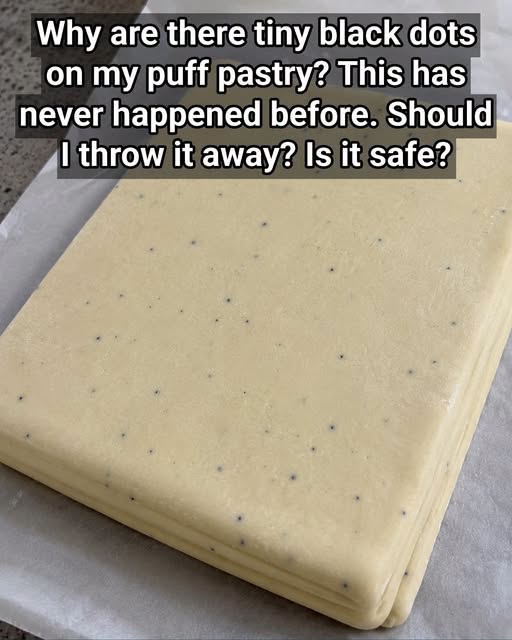
Tiny black dots scattered across the surface.
If you’ve ever paused and wondered whether your pastry has spoiled or if it’s still safe to eat, you’re certainly not alone. Many home bakers notice these dark specks for the first time and immediately assume something has gone wrong.
Fortunately, in most cases, there’s absolutely nothing to worry about.
Understanding why these little spots appear can help you bake with more confidence while also teaching you how to recognize the important difference between normal baking chemistry and signs of actual spoilage.
Why Puff Pastry Develops Black Specks
Those tiny black or dark brown dots are usually a completely natural result of the baking process.
Puff pastry is made by repeatedly folding butter between thin layers of dough, creating hundreds of delicate layers. This process, known as lamination, is what gives puff pastry its famous light and flaky texture.
As the pastry bakes in a hot oven, several natural reactions occur at the same time.
The Maillard Reaction
One of the biggest reasons for the appearance of dark specks is something called the Maillard reaction.
This natural chemical reaction occurs whenever proteins and sugars are exposed to high temperatures. It’s responsible for many of the delicious flavors and golden colors found in baked bread, roasted coffee, grilled steak, and perfectly browned pastries.
Tiny flour particles or milk solids from butter may brown faster than the surrounding dough, leaving behind small dark freckles on the finished pastry.
Rather than being a defect, these spots are actually evidence that the pastry has baked properly.
Butter Plays an Important Role
Butter isn’t made entirely of fat.
It also contains milk proteins and natural sugars that caramelize when exposed to temperatures above about 300°F (150°C).
Since puff pastry is packed with layers of butter, it’s perfectly normal for some microscopic butter solids to brown more deeply than others.
Professional bakers see this every day.
The Lamination Process Creates Tiny Surface Specks
Authentic puff pastry is created by folding and rolling dough many times.
During this process:
- Minute particles of flour remain on the surface.
- Tiny pieces of butter become exposed.
- Some layers remain slightly uneven.
When baked at temperatures around 400°F (200°C), these tiny exposed particles darken before the rest of the pastry finishes baking.
The result is a beautifully flaky crust with occasional caramelized freckles.
Many artisan bakeries actually consider these tiny specks a sign that real butter and proper baking techniques were used.
Are the Black Dots Safe to Eat?
In almost every situation, yes.
If the pastry:
- smells fresh and buttery,
- feels crisp,
- has a normal golden appearance,
- and the dots are flat and baked into the surface,
then those tiny black spots are simply browned flour or butter particles.
They don’t affect taste.
They don’t affect texture.
And they certainly don’t make the pastry unsafe.
In fact, many people never notice them until someone points them out.
The rich buttery flavor you enjoy in puff pastry actually comes from the same browning reactions responsible for creating those tiny specks.
Why High Oven Temperatures Matter
Puff pastry depends on intense heat to rise correctly.
When the cold butter inside the dough suddenly heats up, it releases steam.
That steam separates the hundreds of thin layers of dough, creating the crisp, airy texture that makes puff pastry so unique.
Without a very hot oven, the butter simply melts before enough steam forms, leaving the pastry flat and greasy.
Because these temperatures are so high, it’s completely normal for microscopic flour particles and butter solids to brown more quickly than the rest of the pastry.
Those tiny dark dots are simply part of that natural process.
Why Homemade and Store-Bought Puff Pastry Both Develop Specks
Some people assume only homemade pastry develops these freckles.
Actually, both homemade and frozen store-bought puff pastry can show the same tiny spots after baking.
The reason is simple.
Both rely on:
- butter,
- flour,
- high baking temperatures,
- and the same lamination process.
Different brands may produce slightly more or fewer specks depending on their butter content and manufacturing process, but the science remains exactly the same.
If your pastry looks golden, flaky, and smells delicious, there’s usually nothing to worry about.
When Black Dots Are Normal—and When They’re Not
Although tiny black specks on baked puff pastry are almost always harmless, it’s still important to recognize the difference between normal browning and signs of spoilage. A quick inspection before and after baking can help you decide whether your pastry is perfectly safe to enjoy or should be discarded.
Normal Black Specks vs. Signs of Spoilage
Not every dark mark on puff pastry means the same thing. Here’s how to tell the difference.
| What You Notice | Most Likely Cause | Is It Safe? |
|---|---|---|
| Tiny flat brown or black specks after baking | Caramelized flour or butter solids | Yes |
| Even golden crust with scattered dark freckles | Normal high-heat browning | Yes |
| Green, blue, or fuzzy patches | Mold growth | No |
| Sour or unpleasant odor | Spoilage | No |
| Sticky texture before baking | Improper storage | No |
| Dark spots on raw dough | Possible mold or oxidation | Usually best to discard |
The biggest clue is whether the spots appeared after baking or were already present on the raw dough.
Inspecting Raw Puff Pastry
Before placing your pastry into the oven, take a quick look.
Fresh puff pastry should have:
- A pale cream or light yellow color
- A smooth surface
- A fresh buttery smell
- A soft but cool texture
It should not have:
- Black or green patches
- Fuzzy spots
- Sticky areas
- Sour or musty odors
If any of these warning signs are present, the safest option is to throw the pastry away.
Why Proper Storage Matters
Many puff pastry problems happen long before baking begins.
Keep It Frozen Until Needed
Frozen puff pastry stays at its best when stored consistently below freezing.
Avoid repeatedly thawing and refreezing the dough, as this can damage both texture and quality.
Thaw Slowly
Always thaw puff pastry inside the refrigerator rather than on the kitchen counter.
Slow thawing keeps the butter firm and prevents excess moisture from developing inside the dough.
Use It Promptly
Once thawed, puff pastry should be used within the time recommended on the package.
Waiting too long increases the chance of spoilage.
Baking Tips for Better Results
If you’d like beautiful golden puff pastry every time, a few simple habits make a big difference.
Brush Away Excess Flour
Extra flour left on the surface browns more quickly than the pastry itself.
Before baking, gently brush off any loose flour using a pastry brush.
Keep Butter Cold
The colder the butter remains before baking, the flakier your pastry will become.
If the dough starts feeling soft while you’re working, return it to the refrigerator for 15–20 minutes.
Bake in a Fully Preheated Oven
Puff pastry needs immediate high heat.
Always allow your oven to reach the correct temperature before placing the pastry inside.
Frequently Asked Questions
Can I eat puff pastry with tiny black dots?
Yes. If the pastry smells fresh and the spots are baked into the crust, they’re usually harmless caramelized flour or butter particles.
Why do some pastries have more black specks than others?
Different brands use different butter formulas, while baking temperature and loose flour on the surface also affect browning.
Does an egg wash prevent black dots?
An egg wash won’t eliminate them completely, but it helps create a smoother, more evenly browned surface.
Can homemade puff pastry develop these freckles?
Absolutely. Homemade puff pastry often shows them even more because it contains real butter and natural ingredients.
Should I remove the spots before serving?
There’s no need. They won’t affect flavor, texture, or safety.
Coming Up Next
Now that you know how to distinguish harmless caramelized specks from genuine spoilage, it’s time to learn the professional techniques that produce bakery-quality puff pastry every time. In the next section, we’ll cover expert baking tips, common mistakes to avoid, and simple tricks that create beautifully flaky, golden pastries with confidence.
Bake Like a Pro—Simple Secrets for Perfect Puff Pastry Every Time
Now that you know those tiny black dots are usually nothing more than harmless caramelized flour or butter, you can focus on what really matters—creating beautifully flaky, golden pastries every time you bake.
Professional bakers don’t expect every pastry to look identical. Instead, they understand that great baking is about technique, quality ingredients, and knowing how dough behaves under heat.
Fortunately, many of their best tips are surprisingly simple.
Start with Cold Dough
One of the biggest secrets to successful puff pastry is temperature.
Puff pastry depends on cold butter trapped between hundreds of thin layers of dough. If the butter melts before the pastry reaches the oven, those layers won’t separate properly.
Instead of light, flaky pastry, you’ll end up with a dense, greasy crust.
Keep Everything Chilled
For the best results:
- Thaw frozen pastry in the refrigerator.
- Handle the dough as little as possible.
- If it becomes soft, chill it again for 15–20 minutes.
- Bake immediately after shaping.
Cold butter creates steam, and steam creates those beautiful flaky layers everyone loves.
Don’t Skip the Egg Wash
An egg wash gives puff pastry its beautiful bakery-style finish.
Simply whisk together:
- 1 egg
- 1 tablespoon of water or milk
Lightly brush it over the surface before baking.
The result is:
- Rich golden color
- Even browning
- Beautiful shine
- A professional appearance
It also helps disguise tiny flour specks that may darken during baking.
Avoid These Common Puff Pastry Mistakes
Even experienced home bakers occasionally make small mistakes that affect the final result.
Rolling the Dough Too Thin
Puff pastry already contains hundreds of layers.
Rolling it too aggressively compresses those layers, reducing its ability to puff.
Instead, roll only enough to fit your recipe.
Opening the Oven Too Early
It can be tempting to check your pastries every few minutes.
Unfortunately, opening the oven door allows heat to escape.
Without steady high heat, the steam inside the pastry can’t properly lift the layers.
Whenever possible, wait until the pastry has risen before checking on it.
Using a Dull Knife
A dull knife presses the edges together instead of cutting cleanly.
Always use a sharp knife or pizza cutter for neat edges that allow the pastry to expand freely.
Creative Ways to Use Puff Pastry
Once you’ve mastered the basics, puff pastry becomes one of the most versatile ingredients in your kitchen.
Some popular ideas include:
Sweet Favorites
- Apple turnovers
- Chocolate-filled pastries
- Fruit tarts
- Cinnamon twists
- Cream-filled pastries
Savory Classics
- Cheese straws
- Sausage rolls
- Spinach and feta parcels
- Chicken pot pie
- Mini quiches
Because puff pastry bakes quickly, it’s perfect for both everyday meals and special occasions.
Frequently Asked Questions
Why does my puff pastry sometimes rise unevenly?
Uneven thickness, warm butter, or an oven with hot spots can all cause uneven rising. Rotating the baking tray halfway through baking often helps.
Can I refreeze thawed puff pastry?
If the dough has remained refrigerated and hasn’t been left at room temperature for long, many manufacturers allow refreezing. Always follow the package instructions.
Why is my pastry greasy?
Greasy pastry usually means the butter became too warm before baking or the oven wasn’t hot enough.
Should I prick puff pastry with a fork?
Only if you want certain areas to stay flat, such as the center of a tart. Otherwise, avoid piercing the dough so it can rise fully.
How can I make puff pastry even flakier?
Keep the dough cold, avoid overhandling it, bake in a fully preheated oven, and use real butter whenever possible.
Final Thoughts
Tiny black dots on puff pastry often cause unnecessary worry, especially for newer bakers. In reality, these little specks are usually a completely natural result of high-temperature baking, created when tiny flour particles or butter solids caramelize in the oven.
Knowing the difference between harmless browning and genuine spoilage allows you to bake with confidence instead of second-guessing every pastry you make.
The next time you notice a few tiny freckles on your golden crust, remember that they’re often a sign of authentic baking—not a problem. Trust your senses, enjoy the wonderful aroma of fresh pastry, and let those little caramelized spots remind you that some of the best homemade treats aren’t perfectly flawless—they’re perfectly delicious.