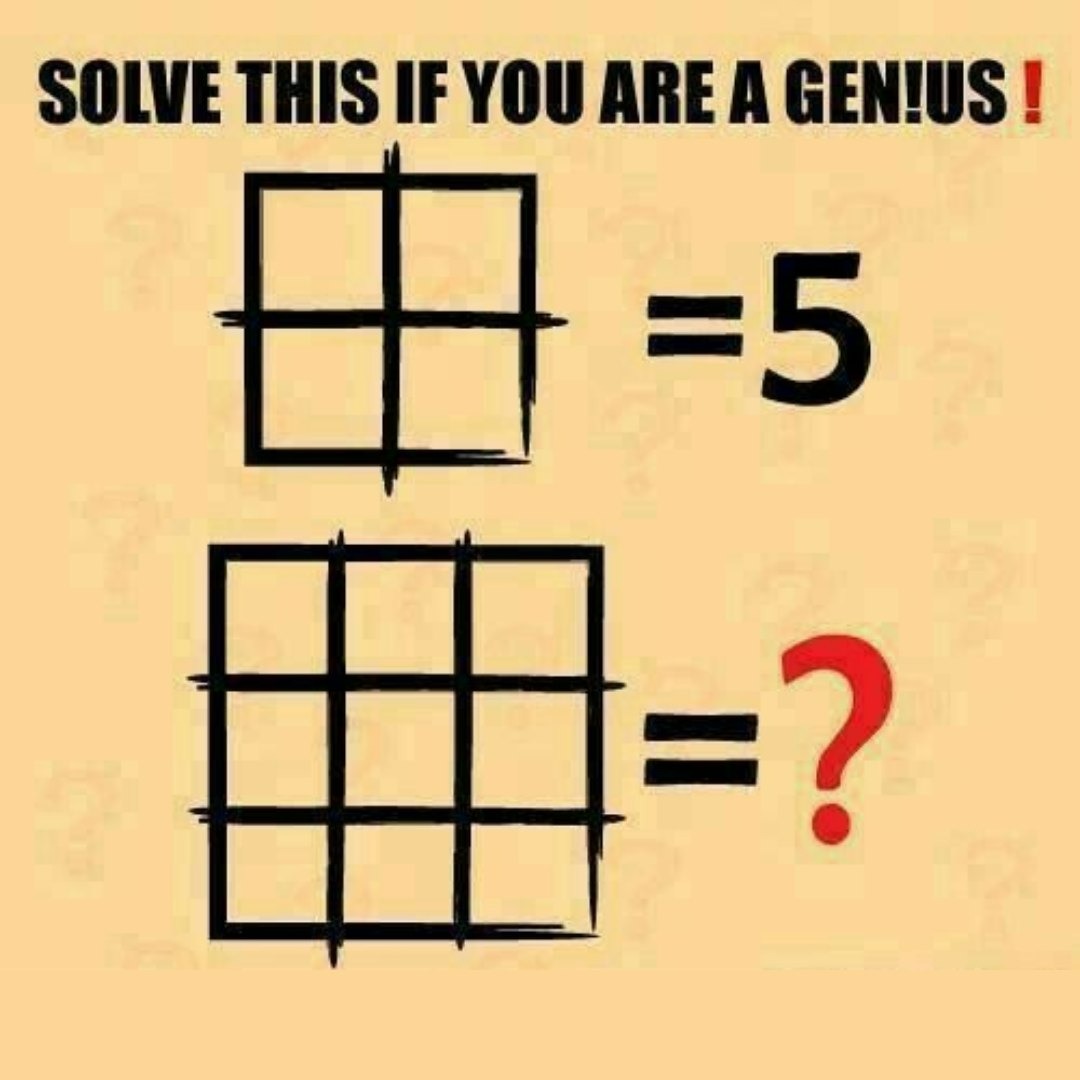
If you’ve ever tried a visual brain teaser like this, you already know how tricky it can be. This guide on The Puzzle of Counting Squares That Challenges Everyone will walk you through the logic step by step so you don’t miss any hidden shapes. At first glance, the answer seems obvious—but once you look closer, you realize there’s more than meets the eye.
I remember the first time I saw a puzzle like this. I confidently gave an answer within seconds, only to find out I had missed half the squares. That moment stuck with me because it showed how quickly our brains jump to conclusions. Since then, I’ve learned to slow down, scan carefully, and enjoy the process rather than rushing to an answer.
Understanding the Puzzle
Why This Puzzle Is Tricky
These puzzles trick your brain by hiding squares within larger squares. Most people immediately count only the smallest visible ones. However, that’s just the beginning.
Larger squares form when smaller ones combine. Because of this, you must look beyond the obvious. Your brain naturally prefers simple patterns, so it often overlooks complex combinations.
The Example Given
In the image, the top grid equals 5. That comes from:
- 4 small squares
- 1 large square
This simple example teaches you the rule: count every possible square, not just the obvious ones.
Breaking Down the Bigger Grid
Step 1: Count the Small Squares
The second grid is a 3×3 layout. That means:
- 9 small squares (1×1)
These are the easiest to see and where most people start.
Step 2: Count Medium Squares
Now combine smaller squares:
- 4 squares of size 2×2
These are often missed because they blend into the grid.
Finding the Hidden Squares
Step 3: Count the Largest Square
Finally, look at the entire grid:
- 1 large square (3×3)
This is the outer boundary of the grid.
Step 4: Add Everything Together
Now sum them up:
- 9 (small)
- 4 (medium)
- 1 (large)
👉 Total = 14 squares
Why People Get It Wrong
Common Mistakes
Many people stop after counting the small squares. Others miss the medium ones because they overlap visually.
Additionally, rushing leads to errors. Your brain assumes patterns instead of verifying them.
How to Avoid Errors
Take your time and follow a system:
- Count by size
- Double-check each layer
- Scan again before finalizing
This approach ensures accuracy every time.
Frequently Asked Questions
Why does the first grid equal 5?
Because it includes 4 small squares and 1 large square.
Is there a formula for this?
Yes, but visual counting is often easier for small grids.
What is the answer to this puzzle?
The correct answer is 14 squares.
Why do people guess wrong?
They usually miss the larger or overlapping squares.
Can bigger grids be solved the same way?
Yes, just continue counting layer by layer.
Conclusion
The Puzzle of Counting Squares That Challenges Everyone shows how easily our brains overlook hidden details. While the answer is 14, the real lesson is about observation and patience.
When you slow down and follow a method, even the trickiest puzzles become simple. Sometimes, the challenge isn’t the puzzle—it’s how we choose to look at it.
More DIY Natural Home Fragrance
- If You Recognize This Scene, You Probably Grew Up in a Different Era
- Which Shoes Match This Dress Best? Your Choice May Reveal More About You Than You Think
- Why Do Some Hotel Beds Have a Hole at the Foot? The Surprisingly Clever Reason
- How To Clean the Hob Burners In A Few Simple Steps for a Spotless Kitchen