The Best White Bread from Scratch
The Best White Bread from Scratch is the kind of recipe that transforms a simple kitchen into a place filled with warmth and comfort. From the moment the dough begins to rise, there’s a quiet satisfaction in knowing something special is taking shape. Fresh homemade bread carries a softness and aroma that no store-bought loaf can truly match, and this recipe is designed to deliver exactly that experience.
What makes The Best White Bread from Scratch truly stand out is its balance of texture and flavor. The crumb is light and airy, yet strong enough for sandwiches. The crust is golden and slightly crisp, while the inside stays soft and tender. Every slice melts gently when toasted, making it perfect for breakfast, lunch, or even a simple late-night snack.
Even though bread baking may seem intimidating at first, this process is surprisingly approachable. With just a few basic ingredients and careful attention to rising and kneading, anyone can achieve bakery-style results at home. The key is patience and consistency, allowing the dough to develop naturally over time.
I still remember the first time I attempted homemade bread. I followed a recipe but rushed the rising stage because I was impatient. The loaf came out dense and heavy, nothing like the soft bread I had imagined. Still, I didn’t give up. On my next try, I slowed everything down and trusted the process. I watched the dough double in size, shaped it gently, and let it rise again. When I pulled that golden loaf from the oven, it felt like a small victory. The crust crackled softly, and the inside was light and fluffy. That moment turned The Best White Bread from Scratch into something I now bake regularly, especially when I want something comforting and real.
Building the Foundation of Perfect Bread Dough
Activating yeast and creating structure
The foundation of The Best White Bread from Scratch begins with yeast. When combined with warm water and sugar, yeast becomes active and starts feeding, producing carbon dioxide. This gas is what makes the dough rise and creates that soft, airy structure inside the bread. If the water is too hot, the yeast can die, and if it’s too cold, it won’t activate properly. This balance is essential for consistent results every time.
extYeastactivityightarrowextCO2ightarrowextdoughrise
This simple chain reaction explains why temperature control is one of the most important steps in bread making.
Mixing ingredients into smooth dough
Once the yeast is active, flour, salt, butter, and sugar come together to form dough. At this stage, mixing slowly is important because it allows ingredients to combine evenly. The dough should feel soft but slightly tacky, not overly sticky or dry. This balance ensures The Best White Bread from Scratch develops the right texture during kneading and baking. Proper hydration also helps gluten form, which gives the bread its structure.
Kneading and Gluten Development
Creating elasticity through kneading
Kneading is where transformation begins. As the dough is worked, gluten strands form and strengthen, giving the bread its structure and elasticity. The more the dough is kneaded, the smoother and stretchier it becomes. This elasticity traps gas produced by yeast, allowing the bread to rise properly. When done correctly, the dough becomes soft, springy, and easy to shape.
Knowing when dough is ready
A well-kneaded dough for The Best White Bread from Scratch will feel smooth and slightly elastic. One simple way to test it is the “windowpane test,” where a small piece of dough stretches thin without tearing. This indicates that the gluten network is strong enough to support rising and baking. Over-kneading is rare at home, but under-kneading can lead to dense bread, so balance is key.
Rising, Shaping, and Oven Preparation
First rise and dough expansion
The first rise is where patience becomes important. As the dough rests, yeast continues to produce gas, causing it to double in size. This stage develops flavor and texture, making The Best White Bread from Scratch soft and light. Covering the dough helps retain moisture and warmth, creating an ideal environment for fermentation.
Shaping and second proofing
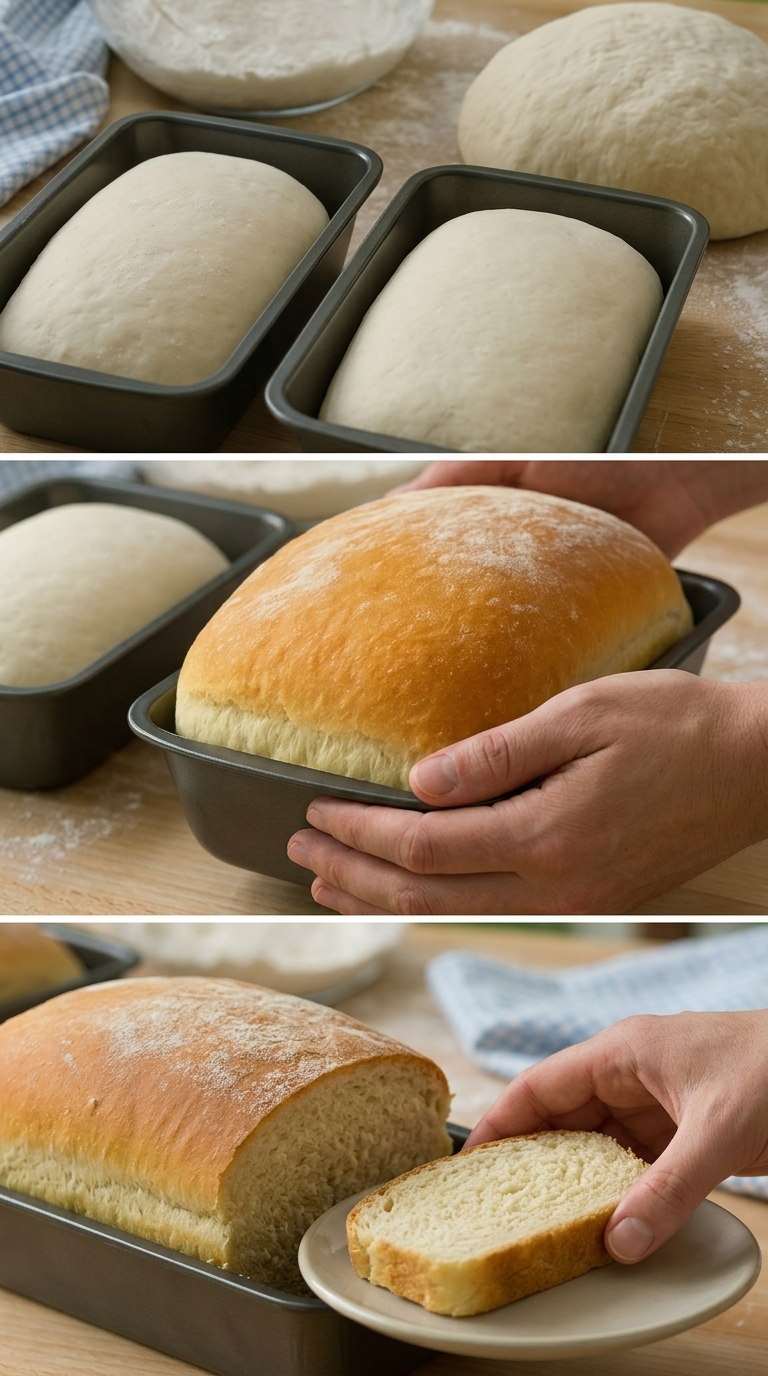
After the first rise, the dough is gently shaped into a loaf. This step must be handled carefully to avoid losing air pockets. Once shaped, the dough rests again for a second rise. This final proofing gives the bread its final height and structure. When the dough looks slightly puffed and springs back slowly when touched, it is ready for baking.
Baking and Finishing the Perfect Loaf
Oven heat and crust formation
When placed in a hot oven, the dough experiences rapid expansion. This is the final push that creates a light interior and golden crust. The heat sets the structure while caramelizing the outer layer, giving The Best White Bread from Scratch its signature color and aroma. Steam inside the dough helps create softness, while the crust forms outside.
Cooling and texture setting
Cooling is just as important as baking. As the bread rests, moisture redistributes inside the loaf, stabilizing texture. Cutting too early can make the bread gummy, so allowing it to cool ensures clean slices and proper structure. Once cooled, the loaf becomes easier to handle and slice evenly.
Frequently Asked Questions
Why didn’t my bread rise properly?
The yeast may have been inactive or the water temperature was incorrect.
Can I use instant yeast instead of active dry yeast?
Yes, but you may need slightly less rising time.
Why is my bread dense?
Insufficient kneading or under-proofing usually causes dense texture.
How do I know when bread is fully baked?
It should sound hollow when tapped on the bottom.
Can I freeze homemade bread?
Yes, it freezes well when wrapped tightly and stored properly.
Ingredients
Equipment
Method
- Activate yeast in warm water with sugar until foamy.
- Add melted butter, salt, and flour gradually to form dough.
- Knead dough until smooth and elastic.
- Place dough in greased bowl, cover, and let rise until doubled.
- Punch down dough and shape into a loaf.
- Place in loaf pan and allow second rise.
- Bake at 350°F (175°C) until golden brown.
- Cool completely before slicing.
Notes
Conclusion
The Best White Bread from Scratch is more than just a recipe—it’s a rewarding process that brings simple ingredients to life. With proper yeast activation, careful kneading, and patient rising, you can create a soft, fluffy loaf that rivals any bakery. Each step builds flavor and texture, resulting in bread that feels comforting and fresh. Once you master it, this recipe becomes a reliable staple you’ll return to again and again.