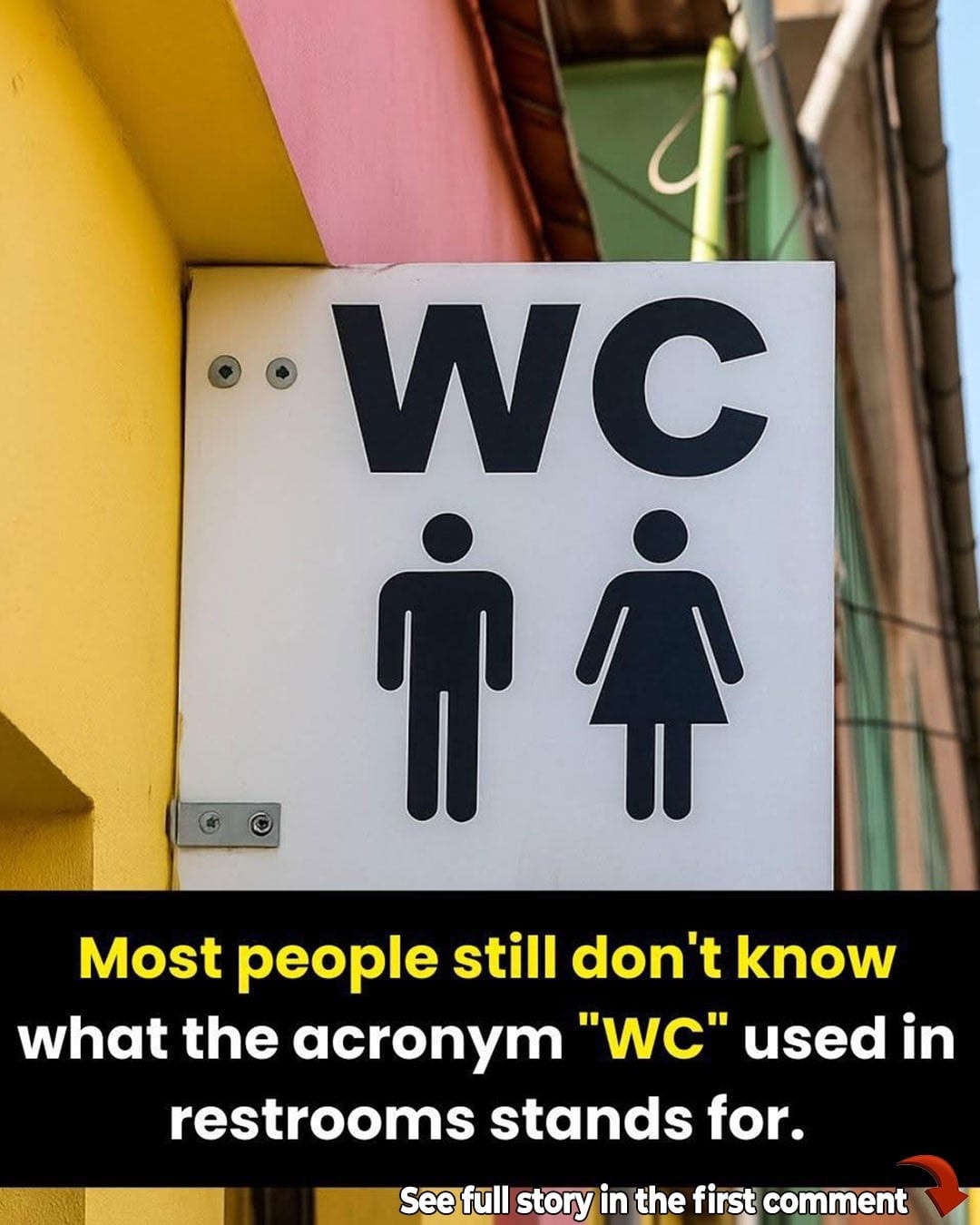
You’ve probably seen those two letters hundreds of times while traveling, shopping, or walking through older buildings:
WC
Most people instantly recognize it as meaning “bathroom” or “toilet.” Yet surprisingly, many people go years without ever asking what the letters actually stand for.
And when they finally learn the answer, it suddenly makes perfect sense.
The abbreviation “WC” stands for Water Closet.
Simple. Old-fashioned. Surprisingly logical.
But the story behind those two little letters opens a fascinating window into the history of plumbing, language, and modern life.
What Exactly Is a “Water Closet”?
A Term Born During the Rise of Indoor Plumbing
Long before modern bathrooms became standard in homes, most people used outdoor toilets called outhouses.
Bathing often happened separately using:
- Wash basins
- Buckets
- Tubs
- Public bathhouses
Toilets were rarely part of the main living space.
When indoor plumbing became more common during the 19th century, homes began adding small enclosed rooms specifically designed for the new flush toilet systems.
Because these rooms were tiny and closet-like — and because they used water to flush waste — they became known as water closets.
The name was practical and literal.
Why the Term Sounded Modern at the Time
Today “water closet” sounds antique.
But during the Victorian era, it represented innovation and luxury.
Indoor plumbing dramatically improved:
- Hygiene
- Privacy
- Convenience
- Public health
Having a water closet inside your home once signaled modern living and higher social status.
Why “WC” Still Appears Around the World
It Became an International Symbol
Even though many English-speaking countries stopped saying “water closet” in daily conversation, the abbreviation survived.
Today, WC remains common in:
- Europe
- Airports
- Hotels
- Train stations
- Tourist destinations
- Older buildings
One reason is simple:
The abbreviation works across many languages.
Unlike words like “bathroom,” “restroom,” or “toilet,” the letters WC are short, neutral, and internationally recognizable.
Travelers Learn It Quickly
Anyone who has traveled internationally has likely noticed how often WC appears on public signs.
It became a universal shortcut for:
- Toilet facilities
- Public washrooms
- Restroom areas
Even people who don’t speak English often understand it instantly.
Why Different Countries Use Different Bathroom Terms
“Bathroom” Is Mostly North American
In the United States and Canada, people commonly say:
- Bathroom
- Restroom
- Washroom
Interestingly, many public bathrooms do not actually contain baths.
The term became more polite and socially comfortable over time.
Other Countries Prefer “Toilet”
In the UK and many other regions, people often simply say:
- Toilet
- Loo
- Lavatory
These terms are more direct and practical.
Language Reflects Culture
Bathroom terminology varies because language evolves differently across societies.
Some cultures prefer euphemisms.
Others prefer directness.
Neither is right or wrong.
They simply reflect different communication styles and historical habits.
The Fascinating History of Early Toilets
Indoor Toilets Were Once Revolutionary
Before modern sewer systems existed, waste disposal was a major challenge.
Cities struggled with:
- Disease outbreaks
- Poor sanitation
- Contaminated water
- Overcrowding
The invention and spread of indoor flush toilets helped transform public health worldwide.
Water Closets Helped Change Cities Forever
The rise of water closets contributed to:
- Cleaner urban living
- Longer life expectancy
- Reduced infectious disease
- Better hygiene standards
Something as ordinary as a toilet quietly became one of humanity’s most important inventions.
Why Some Old Buildings Still Use “WC”
Tradition Often Stays Longer Than Language
Many older hotels, train stations, and historic buildings continue using WC because the signage has simply remained standard for decades.
In some places, replacing it would actually confuse international visitors more than help them.
It Feels Universal
WC avoids language barriers.
That’s why it still works so effectively in international settings where travelers may speak dozens of different languages.
Common Questions About “WC”
Does WC Mean Bathroom or Toilet?
Technically, WC refers specifically to the room containing a toilet.
It does not necessarily mean there is:
- A shower
- A bathtub
- A changing area
Though in practice, many people use it broadly to mean restroom facilities.
Is “Water Closet” Still Used in Conversation?
Rarely in everyday speech.
However, you may still see the term in:
- Architecture plans
- Real estate listings
- Building codes
- Older homes
Why Don’t Americans Use WC More Often?
North American English gradually shifted toward terms like:
- Bathroom
- Restroom
- Washroom
Over time, “water closet” began sounding old-fashioned in everyday conversation.
Small Everyday Mysteries Like This Fascinate People
There’s something strangely satisfying about finally learning the meaning behind symbols we see constantly but rarely question.
It’s similar to discovering:
- Why keyboards use QWERTY
- Why phones say “dial”
- Why mailboxes use certain symbols
- Why restroom icons look the way they do
Tiny details quietly carry pieces of history with them.
Final Thoughts
The next time you see the letters WC on a restroom sign, you’ll know they represent more than just a bathroom.
They’re a small surviving piece of history from a time when indoor plumbing changed the world.
What once sounded modern and innovative slowly became a universal symbol understood by travelers across generations and cultures.
Two simple letters.
One surprisingly fascinating story.
More Home Remedies
- Wrinkled Fingers After Water Exposure: What Your Skin May Be Telling You
- Skin Rash With Breathing Trouble? It Could Be a Life-Threatening Allergic Reaction
- I Thought It Was a Piece of Trash on the Bathroom Floor—Until It Moved
- If You Are Getting White Pimples on Your Lips or Intimate Area, Here’s What They Could Mean