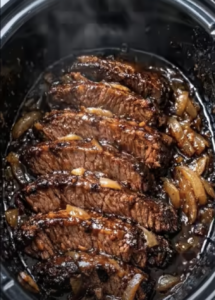
Slow-Cooked Tender Osso Buco & Bone is a hearty, comforting dish featuring fall-apart tender beef or veal shanks, aromatic vegetables, and a rich tomato-based gravy. Slow braising transforms this flavorful cut of meat into a satisfying dinner that practically melts in your mouth.
This traditional Italian-inspired recipe combines bone-in shanks with carrots, onions, celery, garlic, beef broth, tomatoes, herbs, and a touch of butter. As the meat cooks slowly, the connective tissue softens, the vegetables develop rich flavor, and the sauce becomes wonderfully savory.
The bone also contributes to the dish’s distinctive character. Each shank contains marrow, which adds richness to the surrounding sauce.
Unlike quick-cooking cuts of beef, shanks benefit from low temperatures and extended cooking. Therefore, this recipe uses a gentle four-hour braise to achieve a tender texture.
Although the cooking time is long, the preparation is surprisingly straightforward. You only need about 20 minutes of hands-on work before the oven handles most of the cooking.
Serve Slow-Cooked Tender Osso Buco & Bone over fluffy long-grain rice, then spoon the rich tomato gravy and tender vegetables over each portion.
I first became interested in making osso buco after enjoying a slow-braised beef dish at a family dinner. The meat was so tender that it separated easily with a fork, and the sauce had a deep, comforting flavor. I wanted to recreate that experience at home without complicated techniques. After experimenting with beef shanks, carrots, tomatoes, and herbs, I discovered how much difference a slow braise could make. The kitchen filled with the aroma of rosemary, garlic, and simmering broth. When I finally served the shanks over rice, the rich gravy soaked into every bite. It quickly became one of my favorite meals for relaxed weekend dinners.
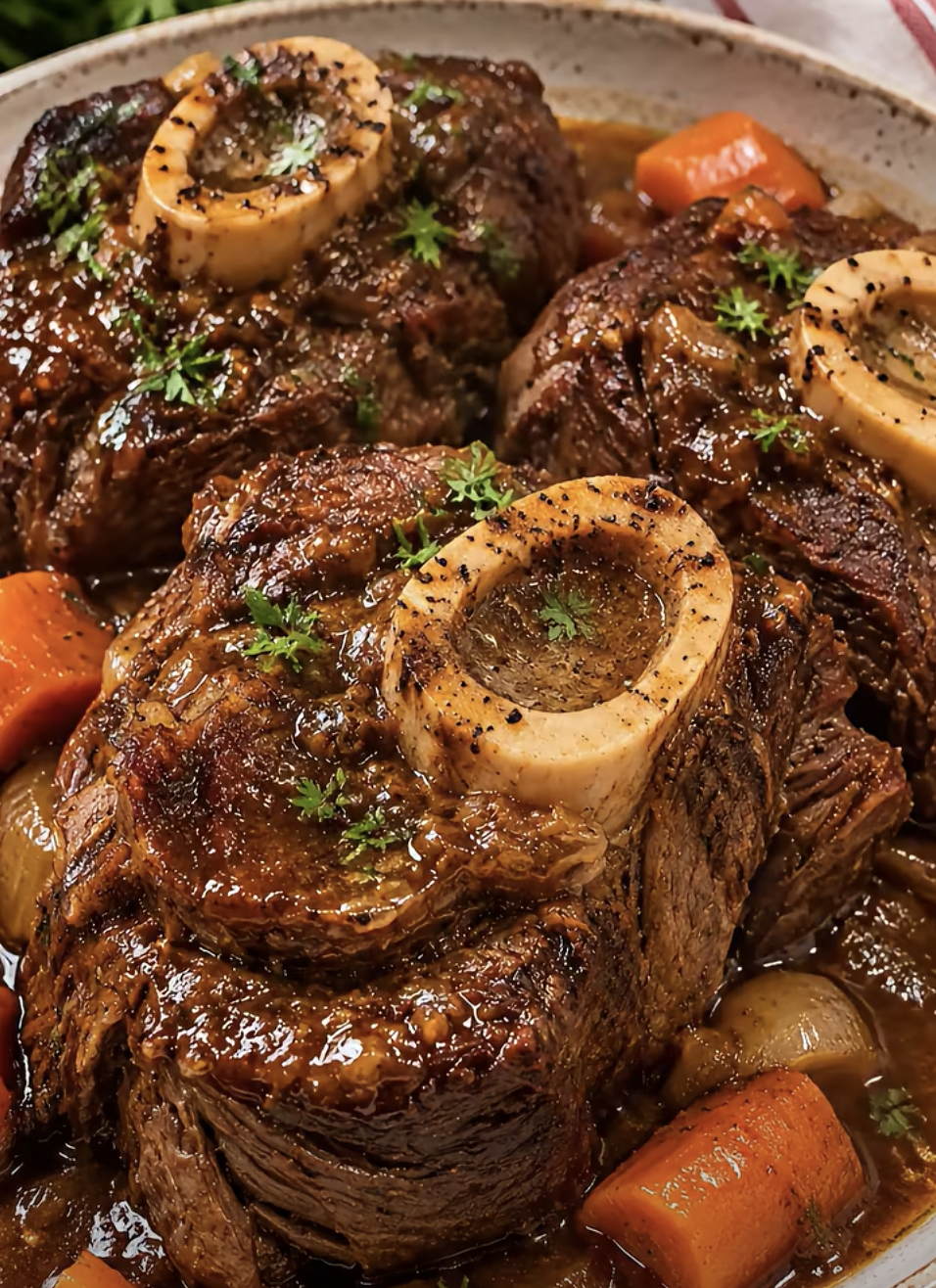
Slow-Cooked Tender Osso Buco & Bone: Rich and Irresistible Recipe
Ingredients
Equipment
Method
- Preheat the oven to 300°F (150°C). Pat the shanks dry, season with salt and black pepper, and lightly coat with flour. Shake off excess flour.
- Heat olive oil in a large Dutch oven over medium-high heat. Sear the shanks for approximately 4–5 minutes per side until deeply browned. Remove and set aside.
- Add the onion, carrots, and celery to the same pot. Sauté for 6–8 minutes until they begin to soften. Add minced garlic and cook for 1 minute.
- Stir in the tomato paste and cook for another 1–2 minutes, stirring frequently.
- Pour in the optional white wine and scrape up the browned bits from the bottom of the pot. Simmer for 2 minutes. If omitting wine, use an additional 1/2 cup of beef broth. Add the remaining beef broth, crushed tomatoes, thyme, rosemary, paprika, and bay leaves.
- Return the shanks to the Dutch oven. The liquid should reach approximately three-quarters of the way up the meat. Add additional broth if necessary. Cover and transfer to the preheated oven.
- Braise for approximately 4 hours, turning the shanks halfway through cooking. Check occasionally and add broth if needed. Continue cooking until the meat separates easily with a fork.
- Carefully remove the shanks and discard the bay leaves. Simmer the sauce uncovered for 5–10 minutes until slightly thickened. Remove from the heat, stir in the butter, and adjust the seasoning.
- Cook the long-grain rice according to package directions, usually approximately 15–18 minutes for white long-grain rice.
- Spoon fluffy rice onto serving plates. Top each portion with a tender shank, ladle the rich gravy and vegetables over the meat, and garnish with fresh chopped parsley.
Notes
Why You’ll Love Slow-Cooked Tender Osso Buco & Bone
Deep, Savory Flavor From Slow-Braised Shanks
One of the biggest reasons to love Slow-Cooked Tender Osso Buco & Bone is its remarkable depth of flavor.
Beef and veal shanks contain connective tissue that responds beautifully to slow, moist cooking.
As the shanks braise, collagen gradually transforms into gelatin.
This process helps create the dish’s tender texture and gives the sauce a rich mouthfeel.
Meanwhile, the marrow inside the bones contributes additional flavor.
The vegetables also play an important role.
Onions provide a savory foundation.
Carrots add natural sweetness.
Celery brings a subtle earthy flavor.
Garlic contributes a warm, aromatic note that complements the meat.
Next, tomato paste and crushed tomatoes create a rich sauce.
The tomatoes add acidity, which balances the richness of the shanks.
Beef broth provides additional savory depth.
Rosemary and thyme contribute familiar herbal aromas.
Paprika adds warmth and color.
Finally, butter gives the finished gravy a smooth, glossy texture.
Together, these ingredients create a satisfying meal with layers of flavor.
The finished meat should separate easily with a fork, while the sauce should taste rich without becoming excessively heavy.
A Comforting Dinner Worth the Cooking Time
Slow-Cooked Tender Osso Buco & Bone makes an excellent choice when you want a special dinner without complicated preparation.
The recipe requires several hours of cooking, but most of that time doesn’t demand constant attention.
First, you season and sear the shanks.
Next, you sauté the vegetables and build the sauce.
Then you return the meat to the pot and allow it to braise gently.
This process makes the recipe ideal for weekends, family gatherings, and special occasions.
The oven maintains steady heat, which helps the meat cook evenly.
Meanwhile, the sauce develops deeper flavor as the ingredients simmer together.
Another advantage is the recipe’s flexibility.
You can use either beef or veal shanks.
Beef shanks usually offer a stronger, heartier flavor.
Veal shanks tend to have a milder taste and a more delicate texture.
Both work beautifully with the tomato and herb sauce.
The recipe also serves four people, making it suitable for a family dinner.
If you need additional servings, you can increase the ingredients and use a larger Dutch oven.
Because the dish tastes rich and satisfying, you only need a few simple side dishes to complete the meal.
Choosing the Best Ingredients for Osso Buco
Bone-In Shanks and Fresh Aromatic Vegetables
The quality of the meat makes a noticeable difference in Slow-Cooked Tender Osso Buco & Bone.
Start with four beef or veal shanks.
Choose pieces approximately one and a half inches thick.
Bone-in shanks are essential for the traditional character of this dish.
The central bone contains marrow, while the surrounding meat provides rich flavor.
Look for shanks with a fresh appearance and a reasonable amount of meat around the bone.
Try to select pieces of similar thickness.
This helps them cook at approximately the same rate.
Next, use two tablespoons of olive oil.
Olive oil helps create a browned crust when you sear the meat.
Browning develops flavor through the Maillard reaction.
Therefore, avoid skipping this step.
Next, prepare one large onion, three carrots, and two celery stalks.
Chop the vegetables into pieces that can withstand several hours of cooking.
Large carrot chunks work especially well because they maintain some structure.
Then mince three garlic cloves.
Garlic adds aroma, but it cooks quickly.
For that reason, add it after the onion, carrots, and celery have softened.
Finally, use two tablespoons of all-purpose flour.
A light coating helps the shanks brown and contributes some thickness to the sauce.
Shake off any excess flour before searing.
Broth, Tomatoes, Herbs, and Rich Finishing Ingredients
The braising liquid gives Slow-Cooked Tender Osso Buco & Bone its signature savory flavor.
Start with two cups of beef broth.
Beef broth provides a rich foundation and helps keep the meat moist during cooking.
Next, add one cup of crushed tomatoes.
The tomatoes contribute acidity, sweetness, and body.
Then use two tablespoons of tomato paste.
Tomato paste intensifies the sauce’s flavor.
Cooking it briefly with the vegetables helps develop a deeper taste.
For additional complexity, add half a cup of dry white wine.
The wine is optional.
If you prefer to skip it, replace it with half a cup of additional beef broth.
Next, use one teaspoon of dried thyme and one teaspoon of dried rosemary.
These herbs complement the beef and tomato sauce beautifully.
Add two bay leaves for extra aroma.
Then use one teaspoon of paprika.
Paprika provides warmth and a subtle earthy flavor.
Season the meat with salt and black pepper.
Because broth can contain sodium, taste the finished sauce before adding extra salt.
Finally, use two tablespoons of butter to finish the gravy.
Butter adds richness and creates a smoother texture.
Fresh chopped parsley provides color and freshness.
For serving, prepare two cups of uncooked long-grain rice.
The fluffy rice absorbs the savory gravy and creates a satisfying complete meal.
How to Make Slow-Cooked Tender Osso Buco & Bone
Seasoning, Searing, and Building the Sauce
Making Slow-Cooked Tender Osso Buco & Bone begins with preparing the meat.
First, preheat the oven to 300°F (150°C).
Pat the shanks dry with paper towels.
Season both sides with salt and black pepper.
Next, sprinkle the flour over the meat.
Turn the shanks to coat them lightly.
Shake off excess flour.
Then heat the olive oil in a large Dutch oven over medium-high heat.
Once the oil becomes hot, add the shanks.
Sear for approximately four to five minutes per side.
The meat should develop a deep golden-brown crust.
Avoid crowding the pot.
If necessary, brown the shanks in batches.
Once browned, transfer them to a plate.
Next, add the chopped onion, carrots, and celery to the same pot.
Cook for approximately six to eight minutes, stirring occasionally.
The vegetables should begin to soften.
Then add the minced garlic.
Cook for one minute.
Next, stir in the tomato paste.
Cook for another one to two minutes.
This helps deepen the tomato flavor.
If using white wine, pour it into the pot.
Scrape the bottom with a wooden spoon to release the browned bits.
Simmer for approximately two minutes.
Then add the beef broth, crushed tomatoes, thyme, rosemary, paprika, and bay leaves.
Stir until combined.
Slow Braising and Finishing the Rich Gravy
Once the sauce is ready, return the browned shanks to the Dutch oven.
Arrange them in a single layer whenever possible.
The braising liquid should reach approximately three-quarters of the way up the meat.
If necessary, add a little additional broth or water.
Bring the liquid to a gentle simmer.
Then cover the Dutch oven with its lid.
Transfer the pot to the preheated oven.
Braise for approximately four hours.
Turn the shanks carefully halfway through cooking.
Check the liquid level occasionally.
Add a small amount of broth if the sauce reduces too much.
The meat should become very tender and separate easily with a fork.
However, the exact cooking time may vary according to the size and type of shanks.
Once the meat becomes tender, carefully remove it from the pot.
Discard the bay leaves.
Next, place the Dutch oven over medium heat.
Simmer the sauce uncovered for approximately five to ten minutes.
This helps concentrate the flavor and thicken the gravy.
Remove the pot from the heat.
Stir in the butter until melted.
Taste the sauce and adjust the salt and pepper.
Meanwhile, prepare the long-grain rice according to the package directions.
Finally, spoon the rice onto serving plates.
Place one tender shank over each portion.
Ladle the rich tomato gravy and vegetables over the meat.
Sprinkle with fresh parsley and serve warm.
Serving, Storing, and Customizing Your Osso Buco
Delicious Side Dishes and Beautiful Presentation
Slow-Cooked Tender Osso Buco & Bone makes an impressive main course for family dinners and special occasions.
The rich tomato gravy pairs beautifully with several side dishes.
Fluffy long-grain rice is an excellent choice.
Its mild flavor allows the savory sauce to stand out.
The rice also absorbs the gravy, making every bite satisfying.
For a more traditional Italian-inspired presentation, serve the shanks with creamy risotto.
Mashed potatoes also work beautifully.
Their smooth texture complements the tender meat.
You can also serve osso buco with creamy polenta.
Polenta provides a comforting base for the rich sauce.
For vegetables, choose roasted green beans or sautéed spinach.
These lighter sides help balance the richness of the meal.
Roasted asparagus also makes a delicious addition.
For a beautiful presentation, place one shank in the center of each plate.
Arrange the rice or other side dish nearby.
Then spoon the vegetables and sauce over the meat.
Sprinkle fresh chopped parsley on top.
You can also add a little lemon zest for brightness.
Serve immediately while the gravy is warm.
Storage Tips, Reheating, and Easy Variations
Slow-Cooked Tender Osso Buco & Bone stores well and often develops even deeper flavor after refrigeration.
After serving, allow the leftovers to cool briefly.
Transfer the meat and sauce to shallow, airtight containers.
Refrigerate within two hours.
Enjoy refrigerated leftovers within three to four days.
For the best texture, store the shanks with some of the gravy.
This helps keep the meat moist.
To reheat, place the shanks and sauce in a covered saucepan or Dutch oven.
Warm gently over low heat until thoroughly heated.
Add a splash of broth if the sauce becomes too thick.
You can also freeze cooked osso buco.
Place the cooled meat and gravy in freezer-safe containers.
For the best quality, enjoy frozen portions within two to three months.
Thaw overnight in the refrigerator before reheating.
The recipe also offers several variations.
For a stronger tomato flavor, add another tablespoon of tomato paste.
If you prefer a more herb-forward sauce, add a little extra thyme.
For a richer finish, stir in a small additional piece of butter.
You can also replace the white wine with beef broth.
If you prefer a traditional Italian garnish, combine chopped parsley, lemon zest, and minced garlic to create a simple gremolata.
Sprinkle it over the finished dish just before serving.
Ingredients
Servings: 4 | Prep time: 20 minutes | Cook time: approximately 4 hours | Total time: approximately 4 hours 20 minutes, plus rice preparation if needed
- 4 beef or veal shanks, bone-in, approximately 1½ inches thick
- 2 tablespoons olive oil
- 1 large onion, chopped
- 3 carrots, cut into chunks
- 3 garlic cloves, minced
- 2 celery stalks, chopped
- 2 cups beef broth, plus additional broth if needed
- 1 cup crushed tomatoes
- ½ cup dry white wine, optional
- 2 tablespoons tomato paste
- 1 teaspoon dried thyme
- 1 teaspoon dried rosemary
- 2 bay leaves
- 1 teaspoon paprika
- 1 teaspoon salt, or to taste
- ½ teaspoon black pepper, or to taste
- 2 tablespoons all-purpose flour
- 2 tablespoons butter
- 2 tablespoons fresh parsley, chopped
- 2 cups uncooked long-grain rice, for serving
- ½ cup additional beef broth, if omitting the wine
Instructions
- Preheat the oven. Set the oven to 300°F (150°C). Pat the shanks dry with paper towels, season with salt and pepper, and lightly coat with flour. Shake off excess flour.
- Sear the meat. Heat olive oil in a large Dutch oven over medium-high heat. Sear the shanks for approximately 4–5 minutes per side until deeply browned. Remove and set aside.
- Cook the vegetables. Add the onion, carrots, and celery to the same pot. Sauté for 6–8 minutes until they begin to soften. Add the garlic and cook for 1 minute.
- Develop the tomato flavor. Stir in the tomato paste and cook for another 1–2 minutes, stirring frequently.
- Build the sauce. Add the optional white wine and scrape up the browned bits from the bottom of the pot. Simmer for 2 minutes. If omitting wine, use an additional ½ cup of beef broth. Add the remaining beef broth, crushed tomatoes, thyme, rosemary, paprika, and bay leaves.
- Braise the shanks. Return the meat to the Dutch oven. The liquid should reach approximately three-quarters of the way up the shanks. Add a little extra broth if necessary. Cover and transfer to the oven.
- Slow cook until tender. Braise for approximately 4 hours, turning the shanks halfway through. Check occasionally and add broth if needed. Cook until the meat separates easily with a fork.
- Finish the gravy. Carefully remove the shanks and discard the bay leaves. Simmer the sauce uncovered for 5–10 minutes until slightly thickened. Remove from the heat, stir in the butter, and adjust the seasoning.
- Prepare the rice. Cook the long-grain rice according to the package directions, usually approximately 15–18 minutes for white long-grain rice.
- Serve. Spoon the fluffy rice onto plates. Top each portion with a tender shank, ladle the rich gravy and vegetables over the meat, and garnish with fresh chopped parsley.
Frequently Asked Questions
1. What is osso buco?
Osso buco is an Italian dish traditionally made with cross-cut veal shanks. The name refers to the bone with marrow in the center. The meat cooks slowly in a flavorful braising liquid until tender. Beef shanks also work well and create a heartier variation.
2. Can I use beef shanks instead of veal shanks?
Yes. Beef shanks make an excellent alternative to veal. They usually have a stronger flavor and may require a little more cooking time. Braise them gently until the meat becomes fork-tender.
3. Why is my osso buco tough after several hours?
Shanks contain connective tissue that needs enough time to soften. If the meat remains tough, continue braising at a gentle temperature and check it periodically. Also, make sure the pot contains enough liquid to prevent drying.
4. Can I make osso buco without white wine?
Absolutely. Replace the half cup of white wine with an equal amount of beef broth. The sauce will still develop rich flavor from the browned meat, vegetables, tomatoes, and herbs.
5. Can I make osso buco ahead of time?
Yes. Osso buco works beautifully as a make-ahead dish. Prepare the meat and sauce, cool them promptly, and refrigerate in airtight containers. Reheat gently with a little additional broth if needed. The flavors often become even richer after resting overnight.
Conclusion
Slow-Cooked Tender Osso Buco & Bone is a rich, comforting dish that transforms beef or veal shanks into a tender, flavorful dinner.
The combination of browned meat, aromatic vegetables, beef broth, tomatoes, herbs, and butter creates a savory gravy that complements every bite.
Meanwhile, the slow braising process softens the connective tissue and allows the meat to become wonderfully tender.
Although this recipe requires approximately four hours of cooking, the preparation remains straightforward.
For the best results, sear the shanks thoroughly, sauté the vegetables, and maintain a gentle braise.
Then allow the meat enough time to become fork-tender.
Finish the gravy with butter and serve the shanks over fluffy rice.
Whether you’re preparing a cozy family dinner or a special weekend meal, this Italian-inspired comfort-food recipe delivers deep flavor, tender meat, and a delicious homemade sauce.