Introduction
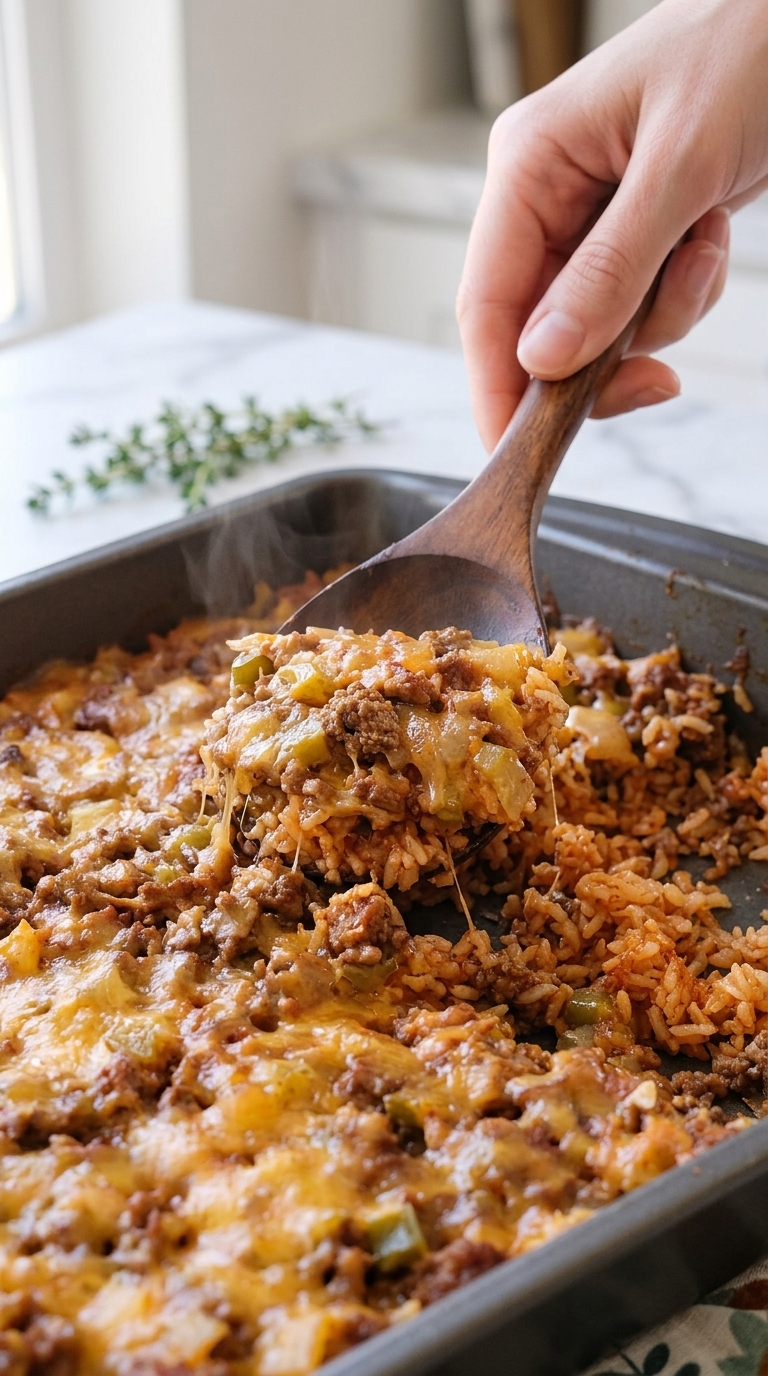
Porcupine Casserole is a hearty, old-fashioned baked dish made with ground beef, rice, tomato sauce, and simple pantry spices that come together into a cozy, filling meal. It takes inspiration from the classic porcupine meatballs, where rice pokes out of the beef as it cooks, giving the dish its playful name. In this casserole version, everything bakes together in one dish, making it easier, faster, and perfect for busy weeknights.
This recipe delivers deep comfort with minimal effort. The rice cooks directly in a savory tomato-beef broth, absorbing every bit of flavor as it bakes. Then it is finished with a layer of melted cheddar cheese that ties everything together into a rich, satisfying meal. It is the kind of dish that feels nostalgic even if you did not grow up eating it.
I still remember the first time I heard about porcupine meatballs. I was a kid sitting in a warm kitchen while someone told stories about “meatballs with rice spikes.” That image stuck in my mind for years. Later in life, I found myself craving those same flavors but wanting something easier than shaping meatballs. That is how this casserole was born in my own kitchen. I wanted the same comfort but in a simpler form that did not require extra steps or fuss. The result quickly became a family favorite, especially on nights when everyone wants something warm, filling, and familiar.
The Story Behind This Comfort Bake
A nostalgic idea turned into a casserole
Porcupine Casserole started with a memory. The original porcupine meatballs were known for their quirky look and comforting flavor. However, shaping meatballs and simmering them can take time. Turning it into a casserole keeps all the flavor but removes the extra work. Everything cooks in one dish, which makes cleanup easier and the process more forgiving.
Instead of forming individual meatballs, the ground beef is cooked and mixed directly with rice and a rich tomato broth. As it bakes, the rice softens and expands, creating the same signature texture without any shaping. The oven does all the work, and the result is just as satisfying as the original version.
Why this version works so well
This dish succeeds because every ingredient has a purpose. The beef brings richness, while the rice absorbs flavor and adds body. Tomato sauce creates a gentle acidity that balances everything, and Worcestershire sauce deepens the savory notes. Even a small amount of sugar smooths the tomato base, creating a rounded flavor.
The celery and onion add subtle texture and freshness, preventing the casserole from feeling too heavy. Finally, cheddar cheese melts over the top, creating a creamy, slightly sharp finish that pulls everything together. It is simple, but every bite feels complete and comforting.
Building Layers of Flavor in Every Bite
Browning beef for a rich base
The first step in making Porcupine Casserole is browning the ground beef. This step is important because it creates the foundation of flavor. As the beef cooks, it develops browned bits that later dissolve into the broth, enriching the entire dish.
Adding salt, pepper, garlic powder, and onion powder early helps season the meat deeply. Once the onions and celery are added, they soften and release moisture, blending into the beef. This creates a savory base that carries through the entire casserole.
The goal is not just to cook the meat but to build flavor in layers. Each step adds depth, which is why the final dish tastes slow-cooked even though it comes together fairly quickly.
Creating the tomato broth mixture
Once the beef is ready, the tomato sauce, beef broth, Worcestershire sauce, and sugar are added. This mixture becomes the cooking liquid for the rice. As it heats, it transforms into a rich, savory broth that infuses every grain of rice.
The rice absorbs this liquid during baking, which is why it is important to stir everything well before it goes into the oven. The oven then slowly cooks the rice until tender while allowing the flavors to concentrate.
The result is a casserole that is moist but not soupy, flavorful but not overly complicated. Every bite carries the taste of seasoned beef, tomato richness, and gentle sweetness.
Baking and Finishing the Casserole
Slow baking for perfect texture
Once assembled, the casserole is tightly covered and baked until the rice is fully cooked. This step is where the transformation happens. The rice expands and softens, the broth thickens, and the flavors blend into a cohesive dish.
Keeping the dish covered during baking is essential because it traps steam. That steam is what cooks the rice evenly and prevents it from drying out. After about 45 minutes, the casserole becomes tender and aromatic, ready for its final touch.
Letting it rest briefly after baking also helps everything settle. The liquid thickens slightly, making it easier to serve without falling apart.
The finishing layer of cheese
Cheddar cheese is added at the end, while the casserole is still hot. The residual heat melts it into a creamy topping that spreads across the surface. This layer adds richness and a slight sharpness that balances the tomato base.
Although cheese is not part of the traditional porcupine meatball recipe, it works beautifully here. It adds comfort and makes the dish feel even more complete. For those who prefer a lighter version, it can be reduced or skipped, but it definitely enhances the final result.
Serving Ideas and Variations
How to serve Porcupine Casserole
This casserole is filling enough to serve on its own, but it also pairs well with simple sides. A crisp green salad adds freshness, while steamed vegetables balance the richness. It also works well with warm bread or rolls for soaking up the sauce.
For a heartier meal, it can be served alongside roasted vegetables or a simple soup. It is also great for meal prep because the flavors deepen after resting, making leftovers even better the next day.
Easy variations to try
One of the best things about Porcupine Casserole is how flexible it is. Ground turkey can replace beef for a lighter version. Different cheeses, such as Monterey Jack or mozzarella, can change the flavor profile slightly.
Some cooks add bell peppers for sweetness or mushrooms for earthiness. Others spice it up with chili flakes or smoked paprika for a bolder taste. Even the rice can be adjusted slightly, although long-grain white rice works best for texture and consistency.
No matter how it is customized, the core idea remains the same: simple ingredients coming together into a comforting, satisfying bake.
FAQ
What is Porcupine Casserole?
It is a baked dish made with ground beef, rice, tomato sauce, and seasonings inspired by porcupine meatballs.
Why is it called porcupine?
The rice in the original meatballs sticks out during cooking, resembling porcupine quills.
Can I use brown rice instead?
Brown rice requires longer cooking and more liquid, so adjustments would be needed for best results.
Can this be made ahead of time?
Yes, it can be assembled ahead and baked when ready. It also reheats well.
Can I freeze it?
Yes, it freezes well after baking. Store in airtight containers for best results.
Ingredients
Equipment
Method
- Preheat oven to 375°F. Add uncooked rice to a greased 13×9 baking dish.
- Cook ground beef in a skillet with salt, garlic powder, pepper, and onion powder until partially browned.
- Add onion and celery and continue cooking until beef is fully browned and vegetables soften.
- Stir in beef broth, tomato sauce, Worcestershire sauce, and sugar. Bring to a boil.
- Pour mixture over rice in baking dish and stir well to combine.
- Cover tightly with foil and bake for 45 minutes until rice is tender.
- Top with cheddar cheese, cover, and let rest 5–10 minutes before serving.
Notes
Conclusion
Porcupine Casserole is a simple, comforting dish that transforms basic pantry ingredients into something warm, filling, and deeply satisfying. It takes inspiration from a classic recipe but simplifies the process into an easy baked meal that fits modern kitchens.
With its savory beef, tender rice, rich tomato flavor, and melted cheese topping, it delivers comfort in every bite. It is the kind of recipe that brings people back to the table and keeps them coming back for seconds.