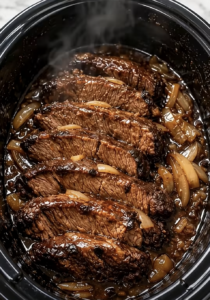
Oven-Roasted Brown Sugar Garlic Pork Shoulder combines incredibly tender pork with a rich, caramelized brown sugar and garlic crust. Slow roasting allows the meat to develop a wonderfully juicy texture, while Dijon mustard, smoked paprika, Worcestershire sauce, and aromatic herbs create layers of sweet and savory flavor.
The pork cooks over sliced onions and chicken broth, producing delicious pan juices that complement every tender bite. Additionally, a final roasting stage at a higher temperature creates a beautifully caramelized exterior.
This comforting recipe makes an excellent choice for Sunday dinners, holiday gatherings, and satisfying family meals.
Recipe Overview
- Prep Time: 15 minutes
- Cook Time: 4–5½ hours
- Resting Time: 15 minutes
- Total Time: Approximately 4½–6 hours
- Servings: 8
- Cooking Method: Oven-roasted
Imagine a relaxing Sunday afternoon with the comforting aroma of roasted garlic, brown sugar, and savory pork drifting through the kitchen. A large pork shoulder slowly cooks in the oven while buttery mashed potatoes and roasted vegetables wait nearby. As the afternoon progresses, the meat becomes increasingly tender, and the onions soften into the flavorful cooking juices. During the final roasting stage, the brown sugar coating develops a beautiful caramelized finish. Everyone gathers around the dinner table, ready to enjoy generous portions of tender pork. Meals like this capture the simple pleasure of slow-cooked comfort food and spending time together.
Whether you’re preparing a special family dinner or looking for a delicious make-ahead meal, Oven-Roasted Brown Sugar Garlic Pork Shoulder delivers plenty of comforting homemade flavor.
Why You’ll Love Oven-Roasted Brown Sugar Garlic Pork Shoulder
Incredibly Tender Pork with a Caramelized Garlic Crust
Oven-Roasted Brown Sugar Garlic Pork Shoulder delivers a wonderful combination of tender meat and a deeply flavorful exterior.
Pork shoulder contains natural fat and connective tissue that respond particularly well to slow cooking. As the meat roasts at a low temperature, the connective tissue gradually softens and creates a succulent texture.
Meanwhile, brown sugar introduces a rich caramel-like sweetness that complements the savory pork.
Freshly minced garlic provides aromatic depth, while Dijon mustard contributes a pleasant tanginess.
Additionally, Worcestershire sauce enhances the savory character of the seasoning mixture.
Smoked paprika adds gentle smokiness without requiring a smoker or outdoor grill. Onion powder, garlic powder, thyme, and black pepper further enhance the flavor.
During the final roasting stage, the brown sugar seasoning develops a dark golden-brown crust.
This caramelized exterior contrasts beautifully with the tender meat underneath.
Furthermore, the flavorful cooking juices help maintain moisture when you serve the pork.
Each bite delivers a satisfying combination of sweet, smoky, buttery, and savory flavors.
An Easy Slow-Roasted Dinner for the Whole Family
One of the greatest advantages of Oven-Roasted Brown Sugar Garlic Pork Shoulder involves its straightforward preparation.
Although the recipe requires several hours of roasting, the hands-on preparation takes approximately 15 minutes.
Simply combine the seasonings, coat the pork, arrange the onions and broth in a roasting pan, and let the oven handle most of the cooking.
Additionally, covering the roasting pan helps retain moisture throughout the long cooking process.
You don’t need specialized cooking equipment beyond a roasting pan and a reliable meat thermometer.
Furthermore, one four-pound pork shoulder provides approximately eight satisfying servings.
This makes the recipe particularly useful for family gatherings, holiday dinners, and weekend meal preparation.
Leftover pork also offers plenty of delicious possibilities. You can incorporate it into sandwiches, tacos, rice bowls, or loaded baked potatoes.
The sweet and savory seasoning complements a wide variety of side dishes.
Whether you serve it with creamy mashed potatoes or simple homemade dinner rolls, Oven-Roasted Brown Sugar Garlic Pork Shoulder creates a satisfying meal without complicated preparation.
Choosing the Best Ingredients for Oven-Roasted Brown Sugar Garlic Pork Shoulder
Boneless Pork Shoulder, Brown Sugar, and Fresh Garlic
Delicious Oven-Roasted Brown Sugar Garlic Pork Shoulder begins with selecting the right cut of meat.
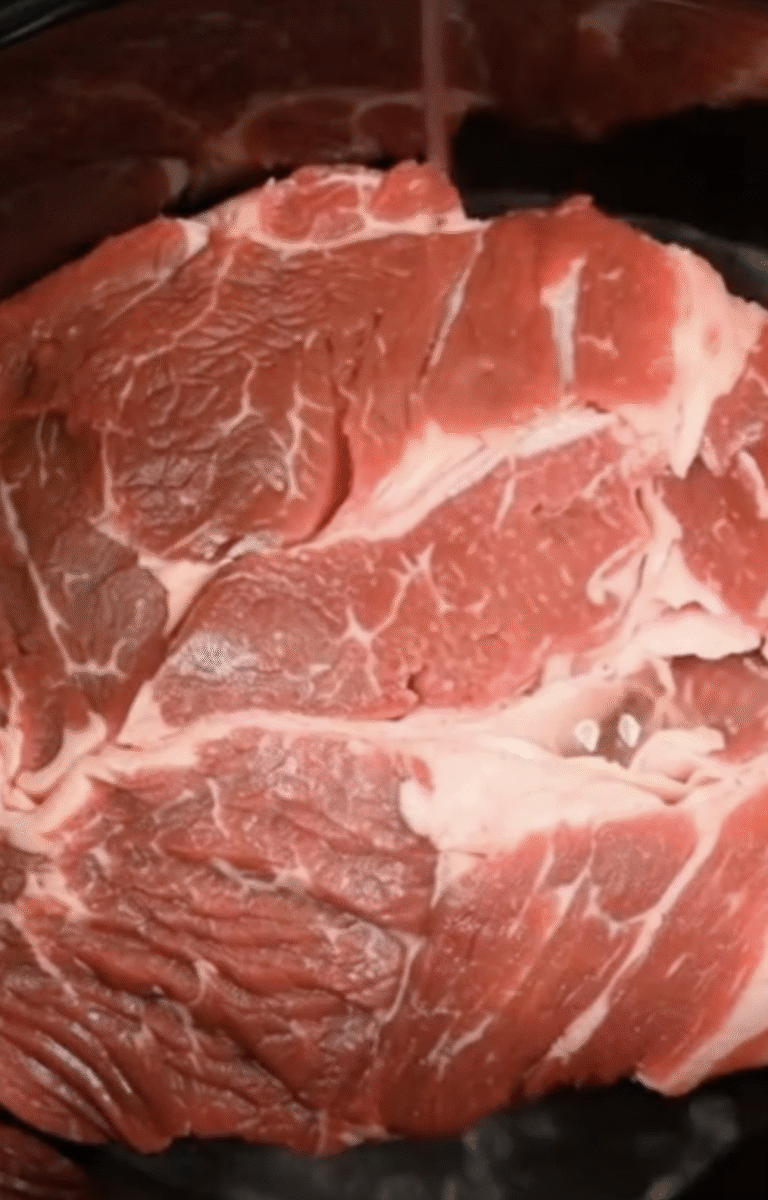
For this recipe, use a four-pound boneless pork shoulder.
Many grocery stores sell this cut under the names Boston butt or pork butt. Despite its name, Boston butt comes from the upper shoulder of the pig.
Choose a roast with visible marbling and a moderate layer of fat. The natural fat contributes flavor and helps maintain moisture during slow roasting.
If the roast contains an excessively thick exterior fat layer, trim it to approximately one-quarter inch.
Next, you’ll need half a cup of packed brown sugar.
Light brown sugar provides a gentle caramel flavor, while dark brown sugar introduces deeper molasses notes. Either variety works well.
Six cloves of freshly minced garlic contribute a wonderfully aromatic flavor.
Additionally, three tablespoons of olive oil help transform the dry seasonings into a spreadable paste.
Two tablespoons of Dijon mustard introduce tanginess and complement the sweetness of the brown sugar.
Meanwhile, Worcestershire sauce and apple cider vinegar provide additional savory depth and acidity.
Together, these ingredients create a flavorful coating that develops a beautiful caramelized finish during roasting.
Aromatic Seasonings, Onions, and Chicken Broth
The seasoning mixture gives Oven-Roasted Brown Sugar Garlic Pork Shoulder its distinctive flavor.
Two teaspoons of smoked paprika provide gentle smokiness and enhance the exterior’s rich color.
One teaspoon each of onion powder and garlic powder introduces additional savory flavor.
Meanwhile, dried thyme contributes a subtle herbal aroma that complements the pork.
Salt and freshly ground black pepper balance the sweetness of the brown sugar.
For the roasting pan, use one large sliced onion.
Yellow onions work particularly well because they develop a naturally sweet flavor during prolonged cooking.
Arrange the onion slices across the bottom of the roasting pan to create a flavorful bed for the pork.
Next, add one cup of chicken broth.
The broth provides moisture and combines with the rendered pork juices, softened onions, and seasonings to create a rich cooking liquid.
Low-sodium chicken broth allows you to control the overall saltiness more effectively.
Finally, two tablespoons of unsalted butter introduce additional richness.
As the butter melts, it combines with the seasonings and natural pork juices.
These simple ingredients create a wonderfully flavorful roasting environment that complements the tender pork beautifully.
How to Make Oven-Roasted Brown Sugar Garlic Pork Shoulder
Preparing the Brown Sugar Garlic Seasoning
Making Oven-Roasted Brown Sugar Garlic Pork Shoulder begins with preparing the meat and seasoning mixture.
First, preheat the oven to 300°F (150°C).
Remove the pork shoulder from its packaging and pat the entire surface dry using paper towels.
Removing excess surface moisture helps the seasoning mixture adhere more effectively.
Next, combine the packed brown sugar, minced garlic, olive oil, Dijon mustard, Worcestershire sauce, apple cider vinegar, smoked paprika, onion powder, garlic powder, salt, black pepper, and dried thyme in a small mixing bowl.
Stir until the ingredients form a thick, evenly combined seasoning paste.
Generously rub the mixture over the entire pork shoulder.
Make sure you coat the top, bottom, sides, and any natural crevices in the meat.
For additional convenience, you can prepare and season the pork up to one day ahead. Keep it covered in the refrigerator until you’re ready to roast it.
Next, arrange the sliced onion across the bottom of a deep roasting pan.
Pour the chicken broth around the onions.
Place the seasoned pork shoulder directly over the onion slices with the fat side facing upward.
Cut the butter into small pieces and distribute them over the pork.
Finally, cover the roasting pan tightly with aluminum foil to help retain moisture.
Slow Roasting and Creating the Caramelized Exterior
Transfer the covered roasting pan into the preheated oven.
Roast the pork shoulder at 300°F for approximately four to five hours.
During this time, the gentle heat gradually softens the connective tissue and develops a tender texture.
Avoid removing the foil frequently because doing so allows heat and moisture to escape.
Toward the end of cooking, insert an instant-read thermometer into the thickest portion of the pork.
Aim for an internal temperature of approximately 195–205°F (90–96°C) for a pull-apart texture.
Additionally, check whether a fork or thermometer probe slides into the meat with very little resistance.
Once the pork becomes tender, carefully remove the aluminum foil and increase the oven temperature to 425°F (220°C).
Spoon some of the flavorful pan juices over the pork shoulder.
Return the uncovered roasting pan to the oven for another 10–15 minutes.
Watch the roast carefully during this stage because the brown sugar can burn quickly at higher temperatures.
Once the exterior develops a rich, caramelized finish, remove the roasting pan from the oven.
Allow the pork to rest for approximately 15 minutes.
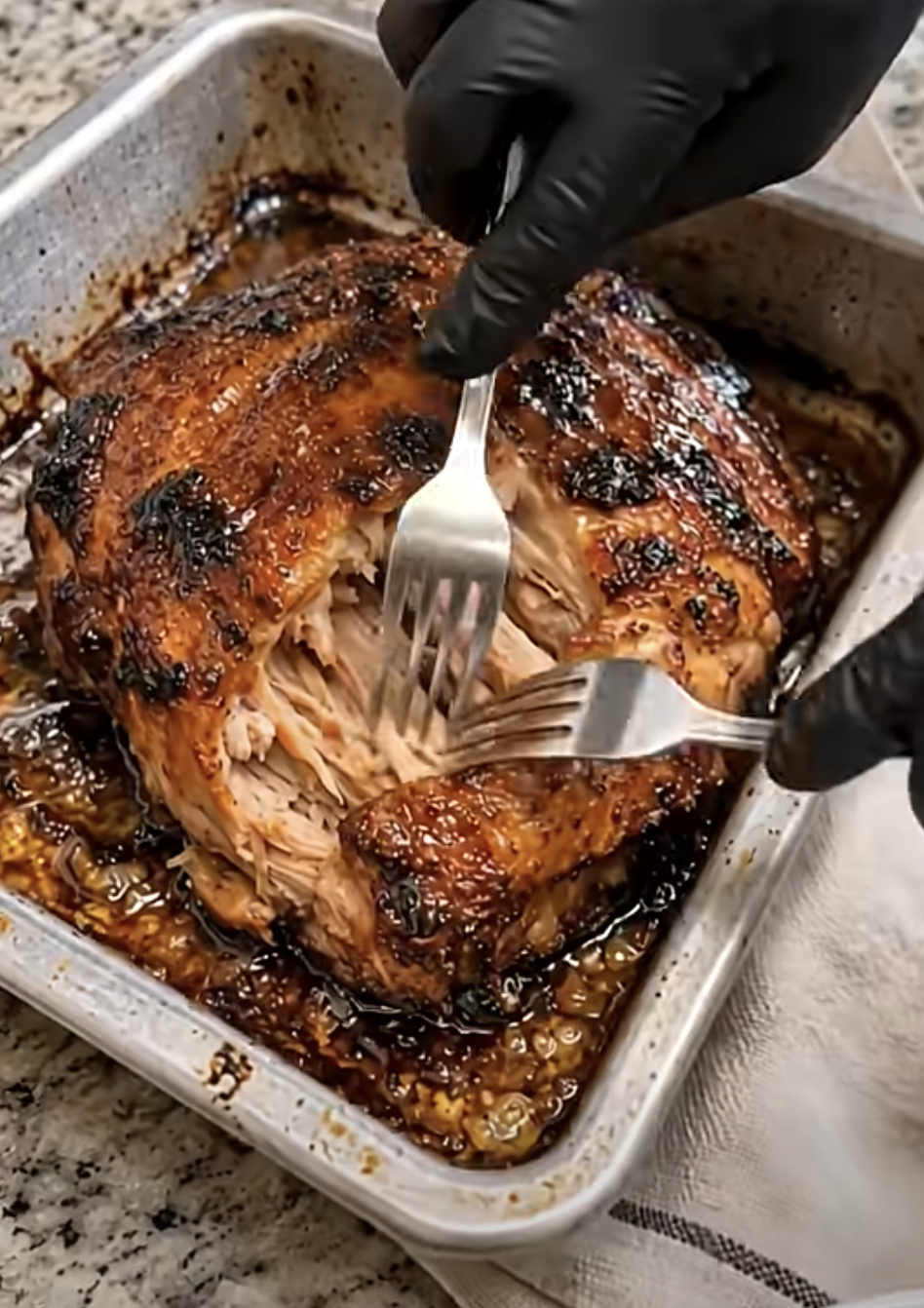
Finally, pull the meat apart into generous tender chunks and spoon the flavorful pan juices over each serving.
Expert Tips, Delicious Variations, and Storage
Seven Tips for Perfect Oven-Roasted Brown Sugar Garlic Pork Shoulder
Several straightforward techniques can help you achieve delicious results with Oven-Roasted Brown Sugar Garlic Pork Shoulder.
Choose pork with good marbling. Natural fat contributes flavor and helps maintain moisture during prolonged roasting.
Pat the pork dry. Removing excess surface moisture allows the brown sugar garlic seasoning to adhere more effectively.
Coat the entire roast. Spread the seasoning mixture generously over every surface to distribute the flavor evenly.
Roast slowly at a low temperature. Gentle heat gives the connective tissue sufficient time to soften and develop a tender texture.
Cover the roasting pan tightly. Aluminum foil helps retain moisture and prevents the sugary coating from darkening too early.
Check both temperature and tenderness. An internal temperature of approximately 195–205°F provides a useful guide, but the meat should also feel exceptionally tender when you insert a fork.
Watch the final caramelization stage. Brown sugar and minced garlic can burn quickly at 425°F, so monitor the exterior closely.
Additionally, check the cooking liquid if the roasting pan appears unusually dry. Add a small splash of warm chicken broth if necessary.
Allow the meat to rest before pulling it apart.
Furthermore, skim excess fat from the cooking juices if you prefer a lighter sauce.
These simple techniques help create a beautifully caramelized pork shoulder with a moist, flavorful interior.
Creative Variations, Serving Ideas, and Storage
Although Oven-Roasted Brown Sugar Garlic Pork Shoulder tastes wonderful with its original ingredients, you can customize the recipe in several delicious ways.
For a spicy variation, add half a teaspoon of crushed red pepper flakes or a small pinch of cayenne pepper.
Alternatively, replace part of the brown sugar with pure maple syrup for a different caramel-like flavor.
Fresh rosemary or sage also makes a delicious addition to the seasoning mixture.
For a barbecue-inspired variation, brush a small amount of smoky barbecue sauce over the pork during the final roasting stage.
Oven-Roasted Brown Sugar Garlic Pork Shoulder pairs beautifully with creamy mashed potatoes, roasted carrots, green beans, macaroni and cheese, buttery rice, coleslaw, and homemade dinner rolls.
Additionally, use leftover pork to prepare pulled pork sandwiches, quesadillas, tacos, or hearty rice bowls.
When storing leftovers, refrigerate the pork within two hours of cooking.
Transfer the meat and some of its cooking juices into shallow airtight containers.
Refrigerate at 40°F or below for up to three to four days.
To reheat, place the pork in a covered oven-safe dish with a small amount of broth or reserved cooking juices.
Reheat at 325°F until the meat reaches an internal temperature of 165°F.
For longer storage, freeze the cooked pork for up to three months for the best quality.
Thaw overnight in the refrigerator before reheating.
Ingredients
Servings: 8 | Prep Time: 15 minutes | Cook Time: 4–5½ hours | Resting Time: 15 minutes
For the Pork Shoulder:
- 4 pounds boneless pork shoulder
- ½ cup packed brown sugar
- 6 cloves garlic, minced
- 3 tablespoons olive oil
- 2 tablespoons Dijon mustard
- 2 tablespoons Worcestershire sauce
- 1 tablespoon apple cider vinegar
- 2 teaspoons smoked paprika
- 1 teaspoon onion powder
- 1 teaspoon garlic powder
- 1½ teaspoons salt
- 1 teaspoon ground black pepper
- ½ teaspoon dried thyme
For the Roasting Pan:
- 1 large yellow onion, sliced
- 1 cup chicken broth
- 2 tablespoons unsalted butter
Instructions
1. Preheat the oven. Preheat your oven to 300°F (150°C). Prepare a deep roasting pan large enough to accommodate the pork shoulder.
2. Prepare the pork. Pat the pork shoulder dry with paper towels. Trim excessive exterior fat if necessary.
3. Make the seasoning paste. Combine the brown sugar, minced garlic, olive oil, Dijon mustard, Worcestershire sauce, apple cider vinegar, smoked paprika, onion powder, garlic powder, salt, black pepper, and thyme in a small bowl.
4. Season the pork. Rub the brown sugar garlic mixture generously over the entire pork shoulder, coating all sides evenly.
5. Prepare the roasting pan. Arrange the sliced onion across the bottom of the roasting pan and pour in the chicken broth.
6. Assemble the roast. Place the seasoned pork shoulder over the onions, fat side up. Dot the surface with unsalted butter and cover the pan tightly with aluminum foil.
7. Slow roast. Roast for approximately 4–5 hours, until the pork becomes fork-tender and reaches an internal temperature of approximately 195–205°F (90–96°C). Allow additional time if necessary.
8. Caramelize the exterior. Remove the foil and increase the oven temperature to 425°F (220°C). Spoon the cooking juices over the pork and roast uncovered for another 10–15 minutes, watching carefully to prevent burning.
9. Rest the pork. Remove the roasting pan from the oven and allow the pork shoulder to rest for 15 minutes.
10. Pull apart and serve. Pull the pork into tender chunks using two forks. Spoon the flavorful pan juices and softened onions over the meat. Serve warm with your favorite side dishes.
Frequently Asked Questions
1. Why is my Oven-Roasted Brown Sugar Garlic Pork Shoulder still tough?
Pork shoulder requires sufficient cooking time to soften its connective tissue. If the meat remains tough after the recommended roasting time, cover it again and continue cooking at 300°F. Check the tenderness every 20–30 minutes until a fork slides into the meat easily.
2. Can I use a bone-in pork shoulder instead of boneless?
Yes. Bone-in pork shoulder works well for this recipe and provides plenty of rich flavor. However, cooking times may vary depending on the roast’s size and thickness. Insert your thermometer into the thickest portion of the meat without touching the bone.
3. Can I prepare the brown sugar garlic pork shoulder ahead of time?
Absolutely. Apply the seasoning mixture to the pork up to 24 hours before cooking. Cover the seasoned meat and refrigerate it until you’re ready to roast. You can also cook the entire dish ahead of time and reheat it gently with the reserved pan juices.
4. What is the best internal temperature for tender pulled pork?
Although whole cuts of pork reach a safe minimum internal temperature at 145°F with a three-minute rest, pork shoulder generally needs a much higher temperature to develop a pull-apart texture. Aim for approximately 195–205°F and confirm tenderness with a fork or thermometer probe.
5. How can I prevent the brown sugar coating from burning?
Keep the roasting pan tightly covered during the low-temperature cooking stage. Only remove the foil and increase the oven temperature after the pork becomes tender. Monitor the roast closely during the final 10–15 minutes, and remove it as soon as the exterior develops your preferred caramelized color.
Conclusion
Oven-Roasted Brown Sugar Garlic Pork Shoulder brings together succulent slow-roasted pork, caramelized brown sugar, fragrant garlic, and savory seasonings into one irresistible homemade dinner.
Its wonderful combination of tender meat, rich cooking juices, and a beautifully caramelized exterior makes it an excellent choice for Sunday dinners, holiday celebrations, and family gatherings.
Furthermore, the straightforward preparation allows you to create an impressive meal without spending hours actively cooking.
For the best results, choose a well-marbled pork shoulder, generously apply the seasoning mixture, and allow sufficient time for slow roasting.
Additionally, monitor the final caramelization stage carefully and let the pork rest before pulling it apart.
Whether you serve it with creamy mashed potatoes, roasted vegetables, or buttery dinner rolls, Oven-Roasted Brown Sugar Garlic Pork Shoulder offers plenty of rich, sweet, and savory comfort food goodness.