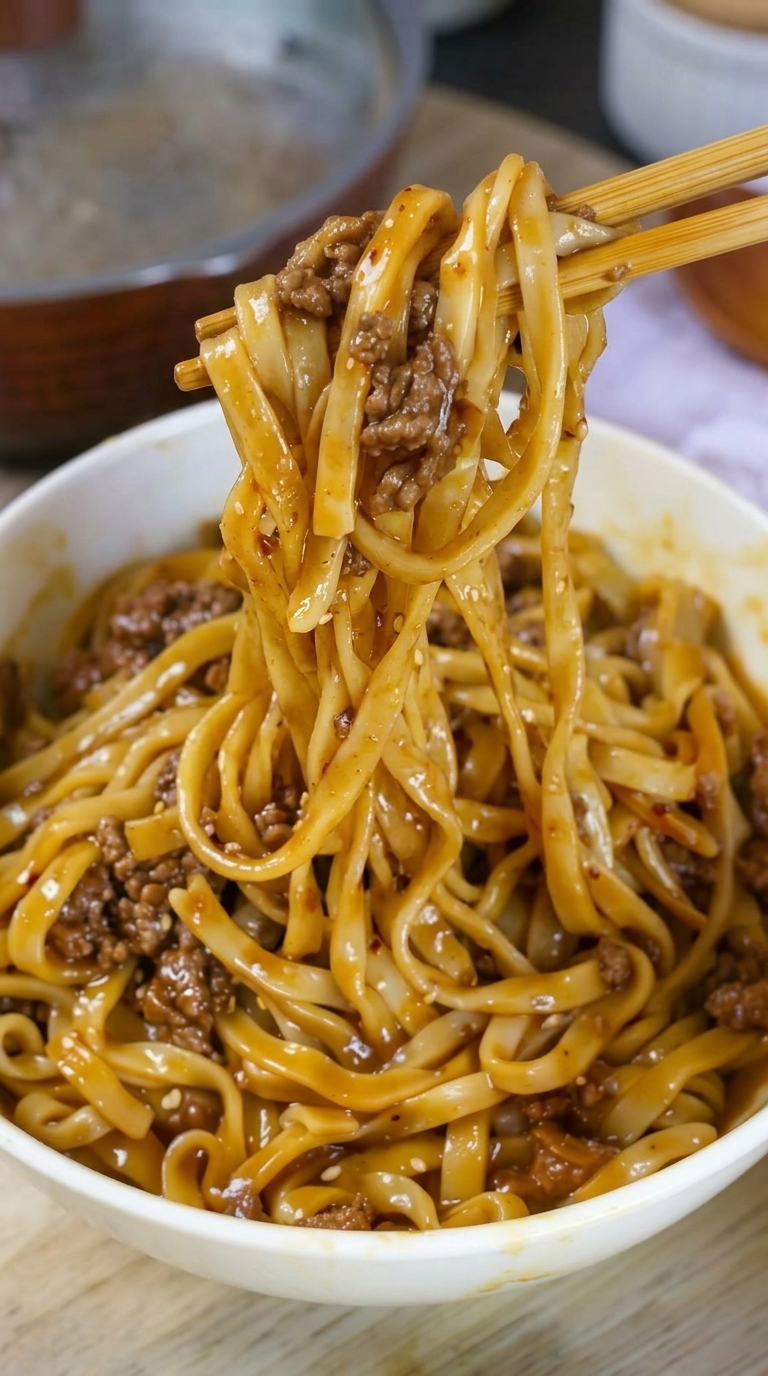
Mongolian Ground Beef Noodles are the kind of dinner that saves busy nights without sacrificing flavor. Tender noodles coated in a rich, glossy sauce combine perfectly with savory ground beef for a meal that feels comforting, satisfying, and surprisingly indulgent. The balance of sweet, salty, garlicky, and slightly spicy flavors makes every bite irresistible.
If you have ever wanted a dinner that tastes like takeout but comes together faster and cheaper at home, this recipe is exactly what you need. With simple pantry ingredients and one skillet, you can create a restaurant-style meal in about 20 minutes.
I first made this recipe on a hectic weeknight when I had almost nothing planned for dinner. I found a package of noodles, some ground beef, and a few basic sauces sitting in the pantry. What started as a quick experiment turned into one of the most requested meals in my kitchen. The sauce clung perfectly to the noodles, the beef stayed juicy and flavorful, and the entire dish disappeared in minutes.
Why This Recipe Works So Well
Quick Cooking with Big Flavor
One of the best things about Mongolian Ground Beef Noodles is how quickly everything comes together. Ground beef cooks fast, and the sauce uses simple ingredients that build flavor almost instantly.
Soy sauce adds savory depth, brown sugar brings sweetness, garlic provides warmth, and ginger gives the dish a slightly spicy kick. Together, they create a sauce that tastes complex even though it takes only minutes to prepare.
Because the noodles absorb the sauce so well, every bite is packed with flavor from start to finish.
Budget-Friendly and Family Approved
Ground beef is one of the most affordable proteins, making this meal practical for feeding a family. A small amount stretches beautifully when combined with noodles and sauce.
Kids love the sweet-savory balance, while adults appreciate the rich flavor and satisfying texture. Since the spice level is easy to adjust, the recipe works for a wide range of tastes.
It is also highly customizable, which makes it ideal for using whatever vegetables or noodles you already have at home.
Ingredients and Preparation Essentials
What You’ll Need
To make Mongolian Ground Beef Noodles, gather:
- 1 pound ground beef
- 8 ounces noodles
- 4 cloves garlic, minced
- 1 teaspoon fresh ginger, grated
- 1/4 cup soy sauce
- 1/4 cup brown sugar
- 1 cup beef broth
- 1 tablespoon cornstarch
- 1 teaspoon red pepper flakes (optional)
- 2 green onions, sliced
These ingredients create a rich sauce that perfectly coats the noodles and beef.
Choosing the Best Noodles
You can use several types of noodles for this recipe. Lo mein noodles work especially well because they hold sauce beautifully and stay tender.
However, spaghetti, ramen noodles, or rice noodles also work well if that is what you have available. The sauce is versatile enough to pair with almost any noodle style.
Cook the noodles just until tender so they do not become too soft once mixed with the sauce.
Step-by-Step Cooking Instructions
Cooking the Beef and Sauce
Start by browning the ground beef in a large skillet over medium-high heat. Break it apart as it cooks until fully browned and no longer pink. Drain excess grease if necessary.
Add garlic and ginger, then cook briefly until fragrant. This step builds the foundation of the dish’s flavor.
In a small bowl, whisk together soy sauce, brown sugar, beef broth, cornstarch, and red pepper flakes. Pour the mixture into the skillet and stir well.
As the sauce simmers, it will thicken into a glossy coating.
Combining Everything Together
Add the cooked noodles directly into the skillet. Toss everything together until the noodles are evenly coated in the sauce.
Allow the mixture to cook for another minute or two so the noodles absorb the flavor. Finish with sliced green onions for freshness and a slight crunch.
Serve immediately while hot for the best texture and flavor.
Tips, Variations, and Serving Ideas
Helpful Tips for Success
Do not overcook the noodles, as they continue softening slightly in the sauce. Keeping them slightly firm ensures the final texture stays balanced.
If you prefer a thicker sauce, add a little more cornstarch mixed with cold water. For a thinner consistency, stir in a splash of broth.
Taste the sauce before serving and adjust sweetness or saltiness as needed.
Easy Variations to Try
This recipe is easy to customize based on your preferences. Add broccoli, carrots, bell peppers, or snap peas for extra vegetables and color.
You can also swap the ground beef for ground turkey, chicken, or pork. If you enjoy more heat, increase the red pepper flakes or drizzle with sriracha.
For a fresher finish, garnish with sesame seeds or chopped cilantro.
Frequently Asked Questions
Can I make this recipe ahead of time?
Yes, but the noodles absorb sauce as they sit. Add a splash of broth when reheating.
What noodles work best?
Lo mein noodles, ramen noodles, or spaghetti all work well.
Can I freeze leftovers?
Yes, although the noodles may soften slightly after thawing.
How spicy is this dish?
It is mild by default, but you can easily increase the spice level.
Can I add vegetables?
Absolutely. Broccoli, carrots, peppers, and snap peas all work well.
Ingredients
Equipment
Method
- Cook noodles according to package directions and drain.
- Brown ground beef in a large skillet over medium-high heat.
- Add garlic and ginger and cook until fragrant.
- Whisk together soy sauce, brown sugar, beef broth, cornstarch, and red pepper flakes.
- Pour sauce into skillet and simmer until thickened.
- Add noodles and toss until fully coated.
- Top with green onions and serve hot.
Notes
Conclusion
Mongolian Ground Beef Noodles prove that quick meals do not have to be boring. With savory beef, tender noodles, and a glossy sauce packed with flavor, this dish delivers everything you want from comfort food in just 20 minutes.
Whether you are feeding a family or simply trying to get dinner on the table fast, this recipe offers a satisfying solution that tastes far more impressive than the effort required. Once you try it, it is likely to become part of your regular dinner rotation.