A large egg recall announced in July 2026 has brought food safety back into the national spotlight. Midwest Poultry Services voluntarily recalled 1,589,577 dozen shell eggs because they may have been contaminated with Salmonella Enteritidis. That total equals more than 19 million individual eggs.
The recall immediately generated concern among shoppers, especially as reports spread across news sites and social media. Some commentators treated the incident as evidence of weakening government oversight. Others argued that the recall showed the food-monitoring system working as intended.
However, consumers should separate the confirmed facts from the political speculation. The immediate priority remains identifying the recalled cartons, removing them from kitchens, cleaning surfaces they may have touched, and watching for symptoms of infection.
What Consumers Need to Know About the Recall
Which eggs were recalled?
Midwest Poultry Services announced the voluntary recall on July 22, 2026. It covered white shell eggs and brown cage-free shell eggs produced at two farms in Texas.
The company distributed the affected products between June 6 and July 3, 2026, to retail stores and food-service customers. Distribution involved Texas, Oklahoma and Louisiana, while some recalled products reached stores serving Arkansas, Mississippi and New Mexico.
The recalled cartons include eggs sold under several labels and through retailers such as Kroger and Brookshire Grocery. Because brand names alone may not identify every affected carton, consumers should examine the codes printed on the package.
Affected cartons display one of the following plant codes:
- P-1950
- 0840962
They also carry a Julian date between 157 and 184. Depending on the product, the sell-by or best-by date falls between July 20 and August 17, 2026.
Anyone with a matching carton should not eat the eggs, even when the shells look clean and intact. Consumers may discard the product safely or return it to the place of purchase for a refund.
Why did the company initiate the recall?
The company announced the recall because environmental monitoring at the Texas farms raised concerns about possible Salmonella Enteritidis contamination. It stopped distributing eggs from the affected operations and redirected production to a pasteurization facility while investigators examined the source.
No illnesses had been linked to the recalled products when the initial announcement appeared. Nevertheless, companies do not need to wait for confirmed illnesses before removing a potentially unsafe product. Acting before an outbreak develops can reduce exposure and prevent avoidable infections.
That distinction matters. A recall can arise from a confirmed outbreak, laboratory testing, environmental sampling, a packaging problem or another identified hazard. Therefore, the existence of a recall does not automatically mean that large numbers of people became sick.
Understanding the Salmonella Risk
How Salmonella can affect the body
Salmonella bacteria can cause an illness known as salmonellosis. People commonly develop diarrhea, fever and abdominal cramps. Nausea, vomiting, chills and headaches may also occur.
Symptoms often begin between six hours and six days after exposure. Many healthy adults recover without specific medical treatment, although the illness can still cause several uncomfortable days of digestive symptoms.
Some people face a higher risk of severe illness. Young children, adults over 65 and individuals with weakened immune systems can develop more serious complications. In uncommon cases, the bacteria may spread beyond the intestines and require hospital treatment.
A person should contact a healthcare professional when symptoms become severe, persist, or involve signs of dehydration. Warning signs can include very little urination, dizziness, an unusually dry mouth or an inability to keep fluids down. Bloody diarrhea, a high fever or worsening weakness also deserve prompt medical attention.
Why normal-looking eggs may still pose a risk
Consumers cannot reliably identify Salmonella by looking at, smelling or tasting an egg. A contaminated egg may appear completely normal.
The bacteria can exist on the shell, and certain forms of Salmonella can also contaminate the interior before the shell forms. Therefore, rinsing an egg does not guarantee safety. Washing eggs at home may even spread bacteria through splashing or move germs onto hands, counters and utensils.
Cooking usually reduces the risk from ordinary, non-recalled eggs. Still, consumers should never try to make a recalled product safe by cooking it. A recall notice means the product should leave the household food supply entirely.
What to Do With Recalled Eggs
Check, isolate and remove the product
First, inspect every egg carton in the refrigerator. Look beyond the front label and find the plant code, Julian date and expiration information printed on the carton.
When the package matches the recall, avoid opening or using it. Place the carton inside a sealed bag before discarding it, or follow the retailer’s instructions for returning it.
Do not donate recalled eggs, feed them to animals or give them to another household. Moreover, do not keep them for baking or another recipe that involves high heat. The safest response is complete removal.
Consumers who transferred eggs into another container may no longer have access to the identifying codes. In that situation, purchase history, retailer notices and receipts may help determine whether the eggs came from an affected shipment. When uncertainty remains, discarding them provides the more cautious option.
Clean anything the eggs may have touched
After removing the eggs, wash your hands thoroughly with soap and water.
Next, clean refrigerator shelves, storage bins, bowls and countertops that may have touched the carton or eggs. Use hot, soapy water or a dishwasher where appropriate. Wash reusable shopping bags when leakage may have occurred.
Keep raw food away from ready-to-eat items during cleaning. Also, avoid using the same cloth on multiple surfaces without washing it, since that can move bacteria around the kitchen.
These steps matter even when none of the eggs broke. Cartons and shells may transfer microorganisms to hands and surrounding surfaces. Federal health guidance similarly recommends washing items and surfaces that contacted recalled eggs.
Why Food Recalls Occur
A recall does not always mean the system failed
News of millions of recalled eggs can understandably reduce public confidence. Nevertheless, recalls form an essential part of food-safety protection.
Testing programs, company monitoring, inspections and illness investigations can reveal hazards after products enter distribution. Once officials or producers identify a concern, a recall helps remove those products before additional people consume them.
Therefore, a large recall can reveal two realities at the same time. First, a potentially dangerous product reached the market. Second, a monitoring process detected the concern and triggered corrective action.
The number of recalled units alone cannot show whether oversight has improved or declined. A large number may reflect broad distribution, cautious decision-making or the discovery of a problem before confirmed illnesses occur.
Transparency determines whether a recall succeeds
A recall protects consumers only when accurate information reaches them quickly.
Notices should clearly identify affected products, locations, package sizes, codes and dates. Retailers should remove matching goods promptly. Meanwhile, consumers need direct instructions that explain what to discard, how to clean affected areas and when to seek medical care.
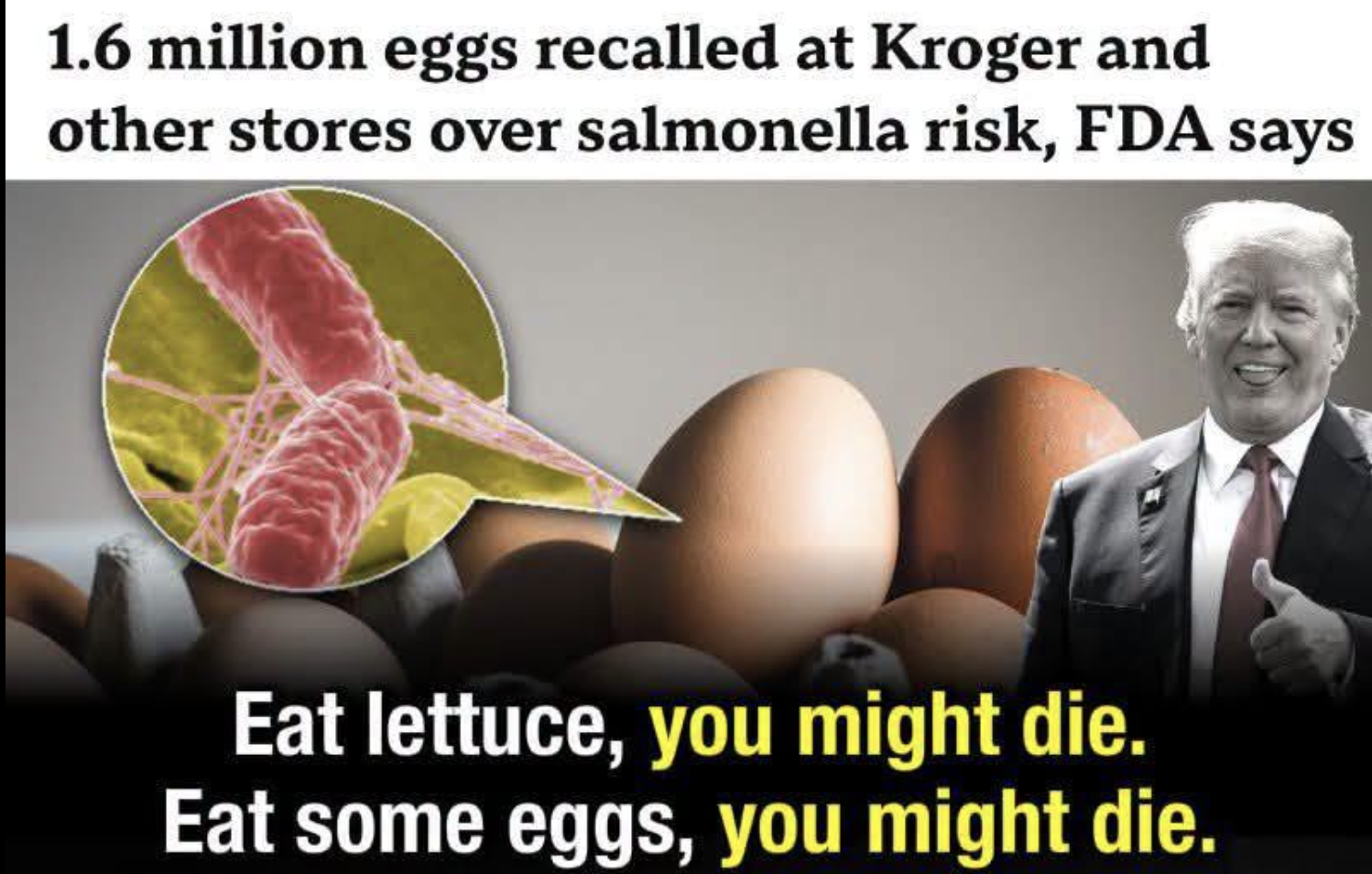
Vague reporting can create unnecessary panic. For example, describing this event as a recall of “1.6 million eggs” significantly understates its size. The official quantity was nearly 1.6 million dozen eggs.
Accuracy also prevents shoppers from discarding unrelated products. Not every egg sold by the named retailers formed part of the recall, and eggs currently on shelves may come from other suppliers. Product codes provide a more reliable guide than fear or guesswork.
How the Recall Became a Political Debate
Social media moved beyond the safety notice
Soon after the recall became public, social media users connected it to wider debates about regulatory funding, agency staffing and political leadership.
These concerns deserve serious public discussion. Effective food regulation depends on trained inspectors, laboratory capacity, communication systems, cooperation with state agencies and the ability to investigate outbreaks rapidly.
However, the available recall notice does not establish that a particular budget cut, election result or recent political decision caused the contamination. Claims making that direct connection require additional evidence.
The confirmed account states that environmental monitoring prompted the company to recall the eggs. It does not identify a change in federal funding as the source of the contamination or as the reason the products entered commerce.
Food safety should remain a public priority
Although one recall cannot prove every political claim circulating online, the broader discussion still matters.
Government agencies establish safety standards, inspect facilities, analyze samples, track illnesses and communicate hazards. Food producers also carry a direct responsibility to maintain sanitary operations, monitor their environments and act quickly when testing reveals a problem.
Strong food protection depends on both public oversight and responsible industry practices. It also depends on transparency. Consumers cannot protect themselves when companies, retailers or regulators delay information.
Rather than turning a recall notice into an unsupported partisan conclusion, the public can ask practical questions. How quickly did monitoring detect the hazard? Did the company identify every affected shipment? Did stores remove the cartons promptly? Were vulnerable communities informed? What corrective measures will prevent another occurrence?
Those questions focus attention on measurable performance rather than speculation.
Everyday Egg-Safety Practices
Handle ordinary eggs carefully
The recall applies only to identified products. Still, every household can reduce the usual risk associated with raw eggs.
Keep eggs refrigerated and return them to the refrigerator soon after shopping. Avoid buying cracked or visibly leaking eggs. Wash hands, utensils and preparation surfaces after contact with raw egg.
Cook egg dishes thoroughly, particularly when serving older adults, young children, pregnant people or anyone with a weakened immune system. Recipes that remain raw or lightly cooked should use pasteurized eggs or pasteurized egg products.
Furthermore, never place cooked food on a plate or surface that held raw eggs without washing it first. Simple separation prevents cross-contamination.
Pay attention to official notices
Recall details can change as companies identify additional products or clarify distribution. Therefore, consumers should rely on current notices from the Food and Drug Administration, the Centers for Disease Control and Prevention, state health departments and the retailer that sold the product.
Screenshots and viral graphics may omit essential information. Some remain online long after officials update or close an investigation. Others misstate the number of products, the affected locations or whether illnesses occurred.
An official notice provides the most useful details: exact codes, relevant dates, package descriptions and instructions for consumers.
Frequently Asked Questions
Were 1.6 million individual eggs recalled?
No. The recall involved 1,589,577 dozen eggs. That equals approximately 19 million individual eggs.
Did the recalled eggs cause a confirmed outbreak?
No illnesses had been connected to the products when the recall was announced. The company acted after environmental monitoring raised concern about possible contamination.
Can recalled eggs become safe after thorough cooking?
Consumers should not eat recalled eggs. They should discard them or return them to the retailer, regardless of how they planned to cook them.
What symptoms can Salmonella cause?
Typical symptoms include diarrhea, fever and stomach cramps. Some people also experience nausea, vomiting, chills or headaches.
Does a recall prove that food regulation has failed?
Not by itself. A recall confirms that a potential hazard entered production or distribution, but it also shows that monitoring or investigation identified the concern and prompted removal. Evaluating the wider system requires evidence about inspections, response speed, resources and corrective action.
Conclusion
The July 2026 egg recall represents a serious consumer-safety event, but clear information offers the best defense against both illness and misinformation.
Consumers should check cartons for the affected plant codes and dates, avoid eating matching products, clean any surfaces the eggs touched and monitor themselves for symptoms. Those actions provide more protection than panic or political arguments shared without supporting evidence.
At the same time, the recall raises legitimate questions about how the United States prevents contamination, monitors producers and communicates risk. Public agencies and food companies must maintain strong safeguards, respond transparently and learn from every incident.
Food recalls can feel alarming because they reveal a breakdown somewhere in the production chain. However, they also create an opportunity to remove hazardous products before further harm occurs. When officials, businesses, retailers and consumers respond quickly, the recall system performs its most important function: protecting public health.