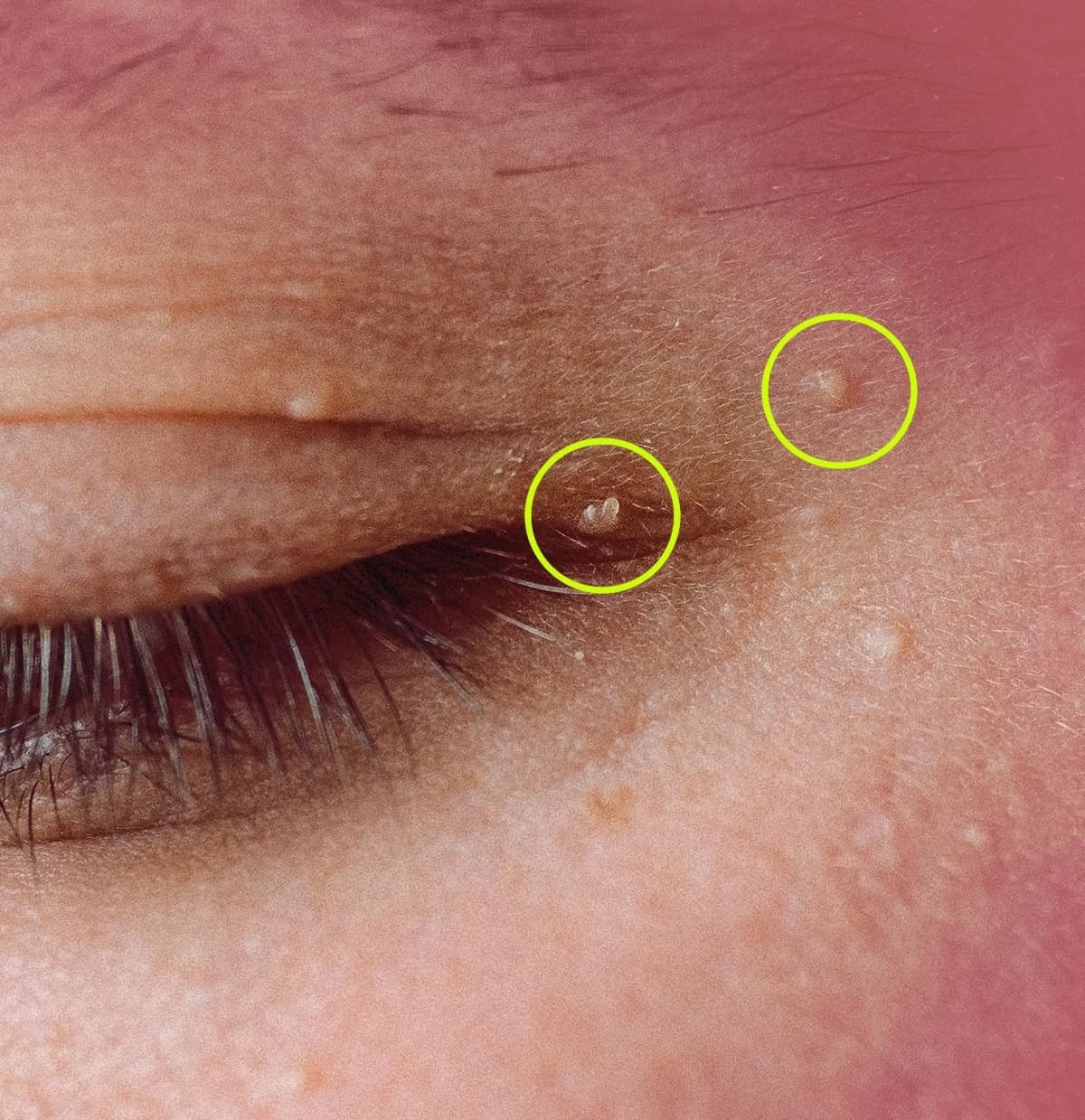
Milia are small white or yellowish bumps that commonly appear around the eyes, cheeks, nose, or forehead. Although many people call them “fat bumps” or “fat cysts,” milia are actually tiny keratin-filled cysts trapped beneath the surface of the skin.
They are extremely common, harmless, and usually painless. However, because they sit under the skin and don’t behave like regular pimples, they can feel frustratingly stubborn.
The good news is that milia are treatable—and most cases improve with gentle skincare and patience.
What Exactly Are Milia?
Milia form when dead skin cells become trapped beneath the skin instead of naturally exfoliating away.
Unlike acne:
- milia do not contain oil or pus
- they usually do not become red or inflamed
- they do not have a pore opening
- they cannot be safely “popped”
They often appear:
- around the eyelids
- under the eyes
- on the cheeks
- around the nose
- on the forehead
Milia are especially common in:
- newborn babies
- adults with sun-damaged skin
- people using heavy skincare products
- individuals with sensitive skin
What Causes Milia?
Several factors may contribute to milia formation.
Dead Skin Cells Getting Trapped
This is the most common cause. Skin naturally sheds dead cells every day. When those cells become trapped beneath the surface, small cysts can form.
Heavy Skincare Products
Very thick creams or oily products around the eyes may increase buildup and clog delicate skin.
Common triggers include:
- petroleum-heavy ointments
- thick eye creams
- heavy makeup
- greasy sunscreens
Sun Damage
Long-term sun exposure thickens the outer layer of skin, making it harder for dead skin cells to shed naturally.
Skin Injury Or Irritation
Milia can sometimes appear after:
- burns
- rashes
- laser treatments
- harsh exfoliation
- blistering skin conditions
This type is sometimes called “secondary milia.”
What Milia Are NOT
Many viral posts online incorrectly label milia as:
- fat cysts
- cholesterol bumps
- acne
- infections
In reality:
- milia are not dangerous
- they are not caused by poor hygiene
- they are not contagious
- they are not signs of serious illness
However, other skin conditions can sometimes resemble milia, which is why persistent bumps should occasionally be evaluated by a dermatologist.
What NOT To Do
Many people accidentally worsen milia by trying aggressive home treatments.
Do Not Squeeze Or Pop Them
Unlike pimples, milia have no pore opening.
Trying to squeeze them can cause:
- scarring
- inflammation
- infection
- broken capillaries
- skin discoloration
This is especially risky near the delicate eye area.
Avoid Harsh Scrubs
Rough exfoliants may irritate the skin without actually removing the trapped keratin.
Over-scrubbing can damage the skin barrier and worsen sensitivity.
Avoid Sharp DIY Tools
Using needles, tweezers, pins, or extraction tools at home near the eyes is dangerous and may injure the skin or eye itself.
Safe Ways To Treat Milia
Fortunately, several gentle treatments may help improve or prevent milia safely.
1. Give Them Time
Some milia disappear naturally over weeks or months.
This is especially common in:
- infants
- younger adults
- mild cases
Patience is often the safest first approach.
2. Use Gentle Chemical Exfoliation
Mild exfoliation can encourage healthy skin turnover.
Helpful ingredients include:
- lactic acid
- glycolic acid
- mandelic acid
These ingredients help loosen dead skin cells gradually.
For sensitive areas around the eyes:
- use very low strengths
- avoid overuse
- choose products specifically labeled safe for delicate skin
3. Retinoids Can Help
Retinoids encourage faster skin-cell turnover and may help prevent new milia from forming.
Options include:
- adapalene
- prescription tretinoin
- retinaldehyde products
Important:
- introduce slowly
- use only a small amount
- avoid getting too close to the eyes
- always wear sunscreen
Retinoids may initially cause dryness or irritation.
4. Professional Extraction
Dermatologists and licensed estheticians can safely remove persistent milia using sterile tools.
The procedure typically involves:
- creating a tiny opening
- gently lifting out the keratin plug
- minimal discomfort
- very little downtime
Professional extraction is often the fastest solution for stubborn bumps.
5. Laser Or Electrocautery Treatments
For widespread or recurrent milia, specialists may recommend:
- laser therapy
- electrocautery
- radiofrequency treatment
These procedures destroy the cyst wall and help prevent recurrence.
How To Prevent Milia
Although not all milia can be prevented, certain habits may reduce the risk.
Choose Lightweight Skincare
Look for:
- non-comedogenic moisturizers
- lightweight eye creams
- oil-free products
Avoid applying thick ointments around the eyes unless medically necessary.
Wear Sunscreen Daily
Sun damage thickens skin and interferes with natural exfoliation.
Daily sunscreen helps:
- protect skin texture
- support healthy turnover
- reduce irritation
Avoid Overloading The Eye Area
The skin around the eyes is extremely thin and delicate.
Using too many products may increase buildup and irritation.
Often, less is more.
Exfoliate Gently
Consistent mild exfoliation is usually safer and more effective than aggressive treatments.
Over-exfoliating may:
- damage the skin barrier
- increase sensitivity
- trigger inflammation
When To See A Dermatologist
Although milia are harmless, medical evaluation is worthwhile if:
- bumps spread rapidly
- they become inflamed
- they persist for months
- you are unsure of the diagnosis
- the bumps change appearance
Some conditions that resemble milia include:
- syringomas
- xanthelasma
- closed comedones
- sebaceous hyperplasia
A dermatologist can confirm the cause safely.
Are Milia Dangerous?
In almost all cases, no.
Milia are considered:
- benign
- cosmetic
- non-cancerous
They rarely lead to complications unless the skin becomes damaged from picking or aggressive treatment attempts.
The Emotional Side Of Skin Concerns
Tiny skin changes can still affect confidence and self-esteem, especially when they appear around the eyes or face.
Many people feel frustrated because:
- milia are difficult to cover with makeup
- they do not behave like acne
- they often resist quick fixes
It’s important to remember:
- milia are extremely common
- they do not reflect poor hygiene
- they are not signs of unhealthy skin
Healthy skin is not perfectly smooth skin.
Final Thoughts
Milia may be annoying, but they are harmless and highly manageable with gentle care and patience.
The safest approach includes:
- avoiding squeezing
- using mild exfoliation
- choosing lightweight skincare
- seeking professional removal when necessary
Most importantly, treat your skin gently.
Force and aggressive treatments usually create more problems than they solve. Consistent, calm skincare habits are often the most effective long-term solution.