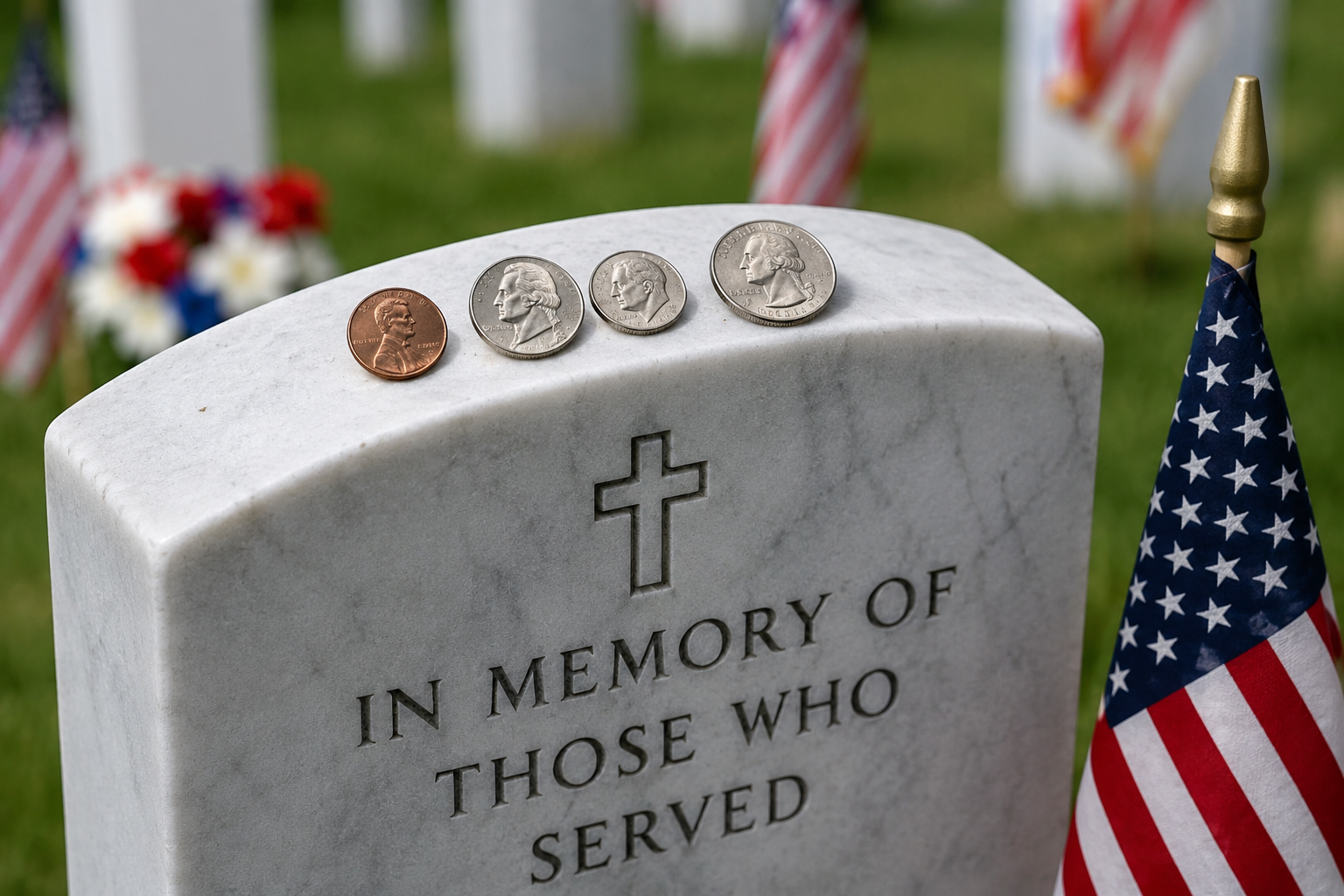
A coin resting on a military gravestone may seem like a small detail, but for many families and visitors, it carries a message of respect, gratitude, and remembrance. Across military cemeteries and veterans’ memorials, people often leave coins as a quiet tribute to those who served their country. Although the meanings associated with different coins vary by community and tradition, the gesture itself reflects a shared desire to honor military service and preserve the memory of those who have passed away.
This custom has been passed down through generations and continues to be practiced in many places today. Whether left by fellow service members, family, friends, or visitors, a simple coin can symbolize that someone took a moment to remember a veteran’s life and sacrifice. While there is no official rule governing the practice, it remains a meaningful tradition that connects people through respect and remembrance.
The Origins of the Coin Tradition
The exact origin of leaving coins on military graves is not fully documented, but the practice has become a widely recognized symbol of remembrance in many military communities.
Why People Leave Coins
Visitors leave coins for a variety of personal reasons, including:
- Paying tribute to a veteran’s service
- Showing gratitude for military sacrifice
- Remembering a family member or friend
- Honoring fellow service members
- Reflecting quietly at a gravesite
- Expressing respect without disturbing the site
Unlike flowers or written messages, coins offer a simple and lasting symbol that can be placed respectfully on a headstone.
For many families, discovering a coin on a loved one’s grave provides comfort by showing that others continue to remember and appreciate the individual’s service.
A Tradition Passed Through Generations
Over time, the practice has become part of military remembrance in many communities.
Veterans often share the tradition with younger generations, while families explain its significance during visits to military cemeteries. Although interpretations differ, the central message remains consistent: honoring those who served and ensuring that their contributions are not forgotten.
The custom also encourages quiet reflection. Visitors may pause to think about a veteran’s life, their commitment to service, and the sacrifices made by military members and their families.
In this way, a small coin becomes more than currency—it becomes a symbol of remembrance that continues to carry meaning across generations.
What Different Coins Traditionally Represent
Over the years, people have associated different coins with symbolic meanings. While these interpretations are widely shared, it is important to remember that they are traditions rather than official military guidelines. Their significance can vary between military branches, families, veterans’ organizations, and local communities.
Traditional Meanings of Common Coins
Although interpretations differ, many people recognize the following symbolic meanings:
- Penny: Indicates that someone visited the grave and wanted to pay their respects.
- Nickel: Traditionally suggests that the visitor and the deceased may have attended military training together or shared a military connection.
- Dime: Often symbolizes a closer relationship, such as serving together in the same unit or sharing important experiences during military service.
- Quarter: In some traditions, a quarter carries especially deep meaning, suggesting the visitor was present during a significant moment in the service member’s military career or was with them during their final days of service.
These meanings are not standardized, and visitors may leave any coin simply as a personal expression of remembrance and gratitude.
More Than a Symbol
For many families, discovering a coin on a loved one’s headstone can be deeply comforting.
It serves as a quiet reminder that others continue to remember the individual’s service and sacrifice, even years after their passing. Unlike elaborate ceremonies, this small gesture communicates respect through simplicity.
The tradition also encourages visitors to pause, reflect, and acknowledge the dedication of those who served. In this way, a simple coin becomes a lasting symbol of appreciation rather than an object of monetary value.
Preserving a Meaningful Tradition
As generations pass, traditions like leaving coins on military graves help preserve the memory of veterans and educate others about the importance of remembrance.
Why Acts of Remembrance Matter
Small acts of respect can have a lasting impact.
Visiting a military cemetery, reading the names on headstones, or placing a coin on a grave encourages reflection on the lives of those who served and the sacrifices made by military families.
These quiet gestures also help younger generations understand the value of honoring those who dedicated part of their lives to military service.
Whether performed on national holidays such as Memorial Day and Veterans Day or during a personal visit, acts of remembrance strengthen the connection between past and present.
A Legacy of Gratitude
The tradition of leaving coins demonstrates that meaningful tributes do not need to be elaborate. A simple gesture can express gratitude, preserve memories, and remind families that their loved one’s service continues to be appreciated.
Although the specific symbolism of each coin may vary, the underlying message remains the same: respect, remembrance, and appreciation.
By continuing traditions like this, communities help ensure that the stories of veterans are remembered for generations to come. These thoughtful acts reinforce the idea that honoring military service extends beyond ceremonies and monuments—it also lives in the quiet moments when individuals pause to remember those who served with courage and dedication.
Frequently Asked Questions
Is leaving coins on military graves an official military tradition?
No. Leaving coins on military graves is not an official military policy. Instead, it is a long-standing custom observed by many veterans, families, and visitors as a respectful way to honor those who served. The practice varies between communities and organizations.
What do the different coins traditionally symbolize?
Many people associate specific meanings with different coins:
- Penny: A visitor stopped to pay their respects.
- Nickel: The visitor may have shared military training or a service connection with the veteran.
- Dime: Often represents serving together in some capacity.
- Quarter: In some traditions, it symbolizes being present during a significant moment in the veteran’s military service.
These interpretations are symbolic rather than official and may differ depending on local customs.
Why do families appreciate finding coins on a gravestone?
For many families, a coin serves as a quiet reminder that others continue to remember and honor their loved one’s service. It can provide comfort by showing that the veteran’s legacy is still recognized and appreciated by visitors.
Can anyone participate in this tradition?
Yes. Anyone wishing to respectfully honor a veteran may choose to leave a coin while visiting a military cemetery or memorial, provided they follow the cemetery’s rules and treat the site with care and respect.
Why are simple acts of remembrance important?
Small gestures, such as placing a coin on a gravestone or taking a moment of silence, help preserve the memory of those who served. These traditions encourage reflection, express gratitude, and ensure that future generations continue to recognize the dedication and sacrifices of military personnel.
Conclusion
The tradition of leaving coins on military graves demonstrates how a simple gesture can carry profound meaning. Although the specific symbolism associated with different coins varies among communities, the practice consistently reflects gratitude, remembrance, and respect for those who served in the armed forces.
For families, discovering a coin on a loved one’s gravestone can be a touching reminder that others continue to honor that person’s life and service. For visitors, placing a coin offers a quiet opportunity to reflect on the sacrifices made by military members and the lasting impact of their dedication.
Whether accompanied by a silent prayer, a moment of reflection, or simply a respectful pause, this enduring custom reminds us that honoring veterans does not always require grand ceremonies. Sometimes, the smallest acts of kindness and remembrance leave the most lasting impression, helping preserve the stories and legacies of those who served for generations to come.