
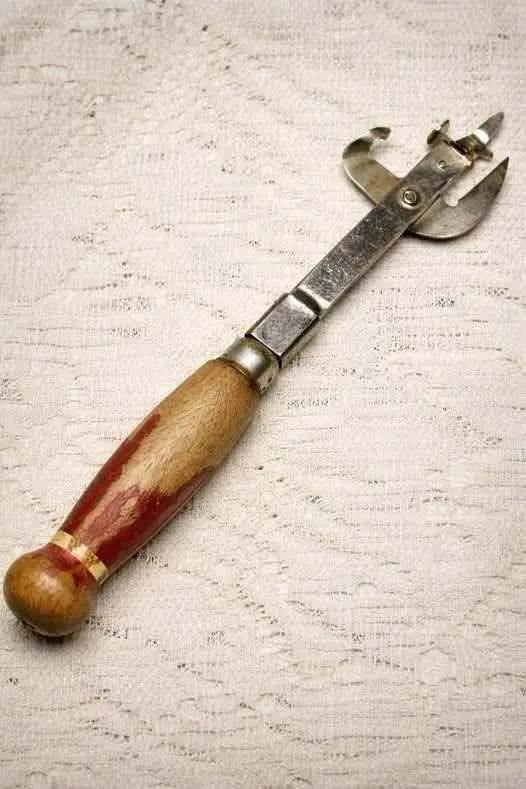
Sometimes, an ordinary object tucked away in an old kitchen drawer can spark thousands of memories. That is exactly what happened when a photograph of an unfamiliar metal tool began circulating online. Its sharp edges and unusual design immediately caught people’s attention, leading many to wonder whether it was a forgotten kitchen gadget, an antique workshop tool, or something else entirely.
As the image spread across social media, countless users shared stories of similar tools they remembered from childhood kitchens. For many, the object represented more than a simple utensil—it became a reminder of how much everyday life and household safety have evolved over the decades.
An Unusual Discovery Sparks Curiosity
The discussion began after someone discovered an old metal tool among belongings that had been stored for many years.
Its pointed shape and rugged construction made it look unfamiliar to younger generations, while older users immediately recognized it from decades past.
Many recalled seeing similar tools in their parents’ or grandparents’ kitchens, where they were commonly used before modern kitchen gadgets became standard.
Although some online comments jokingly compared the object to a weapon because of its appearance, its true purpose was far more practical.
A Classic Puncture-Style Can Opener
The mystery tool was identified as a traditional puncture-style can opener.
Unlike today’s rotary can openers that smoothly cut around a can’s lid, older models required users to manually pierce the metal lid and work around the edge one puncture at a time.
Using these tools demanded considerably more force and careful hand control.
Opening a single can often required:
- Piercing the lid repeatedly.
- Levering the blade through thick metal.
- Maintaining a firm grip throughout the process.
- Avoiding the sharp edges created while opening the can.
Although effective, the design required patience and caution.
A Glimpse Into Everyday Life Decades Ago
For many older adults, seeing the tool brought back vivid memories of family kitchens.
Long before modern safety features became common, household equipment often reflected practicality more than convenience.
Simple kitchen tasks sometimes involved tools that would be considered less user-friendly by today’s standards.
Many people remembered learning to use these can openers while preparing meals with parents or grandparents, making the object a symbol of both nostalgia and changing times.
More Than Just an Old Kitchen Gadget
As online discussions continued, many people shared personal stories about using puncture-style can openers years ago.
Some remembered small cuts on their fingers after slipping while opening cans. Others recalled parents or grandparents skillfully using the tool with ease, despite its intimidating appearance.
These shared memories highlighted how everyday household routines once involved a greater level of manual effort and caution.
Unlike many modern kitchen tools, older utensils often prioritized durability over comfort or convenience.
How Kitchen Safety Has Evolved
The popularity of the online discussion also encouraged people to reflect on how much kitchen safety has improved over the years.
Decades ago, homes commonly contained tools and appliances that required extra care during everyday use.
Examples included:
- Puncture-style can openers with exposed blades.
- Mandoline slicers without hand guards.
- Large carving knives stored without protective covers.
- Gas stoves with open flames.
- Heavy cast-iron cookware that demanded careful handling.
Although these tools served their purpose well, they required experience and attention to avoid accidents.
Today’s kitchen equipment often includes ergonomic handles, protective guards, smoother cutting mechanisms, and improved safety designs that reduce the risk of injury.
Why the Image Resonated With So Many People
The photograph attracted attention not simply because of the tool itself but because it represented a different era.
For older generations, it sparked memories of family dinners, home cooking, and learning practical skills from parents or grandparents.
For younger viewers, it offered a glimpse into how household tasks were once completed before modern conveniences became widely available.
The conversation became less about the object and more about the changing nature of everyday life.
Remembering the Past With Perspective
While nostalgia often focuses on pleasant memories, objects like this remind us that daily routines were sometimes more physically demanding than they are today.
Simple activities such as opening a can required strength, patience, and careful technique.
Modern kitchen innovations have simplified many of these tasks, making food preparation faster, safer, and more accessible for people of all ages.
The old puncture-style can opener stands as a small but meaningful example of how design has evolved to improve everyday living.
Appreciating the History Behind Everyday Objects
Today, most people rarely think about the design of a can opener. Modern versions are easy to use, require minimal effort, and often leave smooth edges that reduce the chance of cuts. However, antique kitchen tools like the puncture-style can opener serve as reminders of how household technology has steadily improved over time.
Many vintage utensils were built to last for decades, and while they lacked the comfort and safety features available today, they reflected the practical needs of their era. Looking back at these tools offers an appreciation for both the craftsmanship of the past and the innovations that have made everyday cooking more convenient.
What We Can Learn From Vintage Kitchen Tools
The renewed interest in this forgotten can opener highlights several broader lessons:
- Household tools have evolved significantly through improved engineering.
- Modern safety features are often the result of decades of experience and design improvements.
- Everyday objects can preserve family memories across generations.
- Older kitchen equipment offers valuable insight into daily life in the past.
- Simple discoveries can inspire meaningful conversations about history and innovation.
Sometimes, even a single utensil hidden in a drawer can tell a story about changing lifestyles and technological progress.
Why Nostalgia Resonates
The online reaction to the old can opener demonstrated how familiar household items can evoke powerful memories.
For many people, the tool represented childhood kitchens, family meals, and time spent helping parents or grandparents prepare dinner. Although some remembered the occasional scraped knuckle or cut finger, they also remembered the lessons learned through experience and the routines that brought families together.
For younger generations, the discussion provided an opportunity to discover how everyday cooking tasks were once completed before modern appliances simplified the process.
Final Thoughts
What initially appeared to be a mysterious and intimidating metal object turned out to be a classic puncture-style can opener—a practical kitchen tool that served millions of households for generations. While its rugged design may seem unusual today, it reflects a time when durability and function often took priority over convenience and safety.
The widespread online discussion showed that ordinary objects can carry extraordinary stories. Beyond its practical purpose, the vintage can opener became a symbol of changing technology, family traditions, and the steady evolution of household life.
As kitchens have become safer and more efficient, many of these once-common tools have disappeared from everyday use. Yet they remain meaningful reminders of the resourcefulness and resilience of earlier generations. Looking back at these familiar objects not only preserves history but also helps us appreciate the innovations that make modern cooking easier, safer, and more accessible for everyone.