Crispy Oven-Baked Black Pepper Bacon is a simple and convenient way to prepare golden, crunchy bacon without standing over a hot skillet. Using a rimmed baking sheet, freshly cracked black pepper, and a cold oven, you can cook a generous batch of bacon with minimal effort.
Whether you are preparing a weekend breakfast, hosting a holiday brunch, or making bacon for sandwiches and salads, this oven-baked method makes the process much easier.
The secret is starting with a cold oven. As the temperature gradually increases, the bacon fat begins to render before the exterior becomes deeply browned.
A light sprinkle of freshly cracked black pepper adds a delicious savory kick, while optional brown sugar or maple syrup creates a sweet-and-savory variation.
With only a few ingredients and straightforward preparation, this recipe is an excellent addition to your collection of easy breakfast favorites.
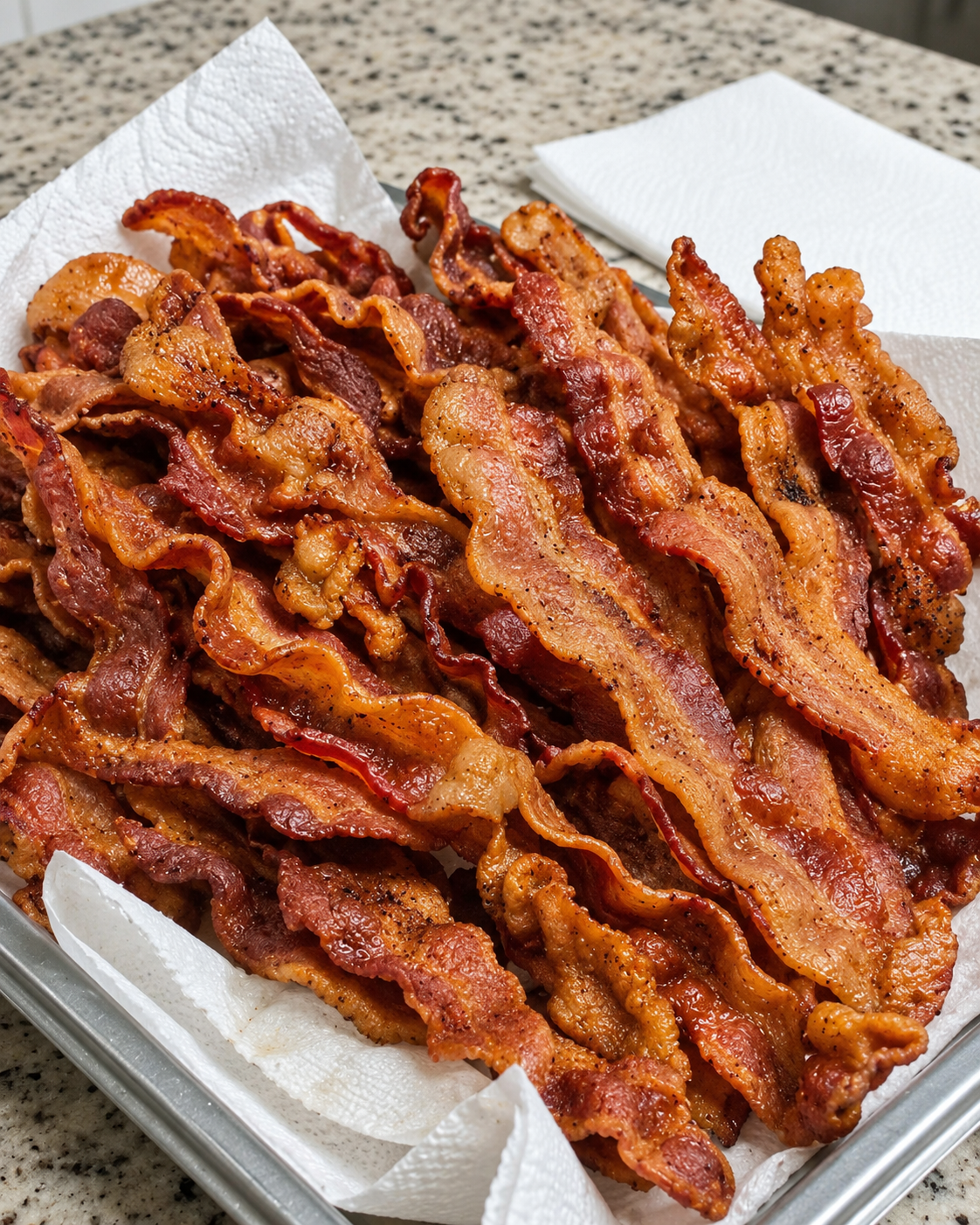
“Crispy Oven-Baked Black Pepper Bacon”
Ingredients
Equipment
Method
- Line a large rimmed baking sheet completely with aluminum foil or oven-safe parchment paper. If desired, place an oven-safe wire rack over the lined baking sheet.
- Arrange the bacon slices flat in a single layer without overlapping. Sprinkle lightly with freshly cracked black pepper.
- Place the baking sheet on the middle rack of a cold oven, then set the temperature to 400°F (200°C).
- Bake for 18–22 minutes for regular-cut bacon or 22–26 minutes for thick-cut bacon, rotating the baking sheet halfway through. Monitor closely during the final few minutes.
- For optional candied bacon, brush the strips with maple syrup or sprinkle with brown sugar during the final 5 minutes of cooking.
- Once the bacon reaches the desired golden-brown color and crispness, carefully transfer the strips to a paper towel-lined plate or tray using kitchen tongs.
- Allow the bacon to rest for 2–3 minutes before serving. The strips will become slightly crispier as they cool.
Notes
Why You Will Love Crispy Oven-Baked Black Pepper Bacon
Golden, crispy bacon without constant frying
Cooking bacon in a skillet often requires standing nearby, turning individual slices, and managing hot grease.
Oven baking offers a more convenient alternative, especially when preparing several servings.
The bacon slices are arranged in a single layer on a large baking sheet, allowing them to cook together.
As the oven heats, the fat gradually renders and the bacon develops its characteristic golden-brown color.
The circulating heat helps cook the strips without requiring constant attention.
Although the bacon may still curl slightly depending on its thickness and fat content, arranging it flat on the baking sheet encourages more even cooking.
You can choose your preferred level of crispness by adjusting the cooking time during the final few minutes.
Once the bacon is transferred to paper towels, excess surface grease drains away and the strips become slightly firmer as they cool.
The result is delicious bacon with crisp edges, rich savory flavor, and a satisfying crunch.
A convenient method for preparing large batches
One of the biggest advantages of baking bacon is the ability to cook multiple slices at once.
Instead of preparing several small batches in a frying pan, you can arrange a generous amount of bacon on one or two large baking sheets.
This is especially useful when preparing breakfast for several people.
While the bacon cooks, you can prepare eggs, pancakes, toast, or other breakfast dishes without needing to constantly monitor a skillet.
Oven baking also helps reduce grease splatters on the stovetop.
Lining the baking sheet with aluminum foil or parchment paper makes cleanup more manageable.
If you prefer to cook the bacon on an oven-safe wire rack, the rendered fat can collect underneath while the strips remain elevated.
This method is particularly useful for thick-cut bacon.
Whether you are cooking a few slices for sandwiches or preparing a large breakfast platter, the basic method remains the same.
Choosing the Best Ingredients
Regular-cut versus thick-cut bacon
Both regular-cut and thick-cut bacon work well in this recipe.
Regular-cut bacon generally cooks more quickly and develops a delicate, crispy texture.
It is particularly suitable for breakfast sandwiches, burgers, and recipes that call for crumbled bacon.
Thick-cut bacon takes slightly longer to cook and provides a more substantial texture.
Depending on how long you bake it, thick-cut bacon can have crispy edges with a slightly chewy center or become crisp throughout.
Choose slices that are relatively uniform in thickness so they cook at a similar rate.
If your package contains slices of different thicknesses, check the thinner pieces toward the end of cooking and remove them as they become ready.
Smoked bacon adds a deeper savory flavor, while milder varieties allow the black pepper seasoning to stand out.
There is no need to add cooking oil or butter to the baking sheet.
Bacon naturally releases fat during cooking, which helps prevent sticking and contributes to browning.
The amount of rendered fat will depend on the particular bacon you use.
Adding black pepper and optional sweet seasonings
Freshly cracked black pepper is a simple addition that enhances the flavor of oven-baked bacon.
Its gentle heat and aromatic flavor complement the natural saltiness and richness of the meat.
Freshly cracked pepper generally provides a more pronounced flavor than finely ground pepper.
Sprinkle it lightly over the bacon before placing the baking sheet in the oven.
The recipe uses approximately half a teaspoon for one to one and a half pounds of bacon, but you can adjust the amount according to your preference.
For a sweet-and-savory variation, brown sugar or maple syrup can be added during the final five minutes of baking.
Brown sugar creates a rich caramel-like coating that becomes slightly sticky as it heats.
Maple syrup provides a distinctive sweetness that pairs particularly well with smoky bacon.
Adding these ingredients toward the end of cooking helps prevent the sugars from burning before the bacon becomes crispy.
If you prefer classic savory bacon, simply omit the sweetener.
The original combination of bacon and freshly cracked black pepper already provides plenty of flavor.
How to Make Perfect Crispy Oven-Baked Bacon
Preparing the baking sheet and starting with a cold oven
Begin by choosing a large rimmed baking sheet.
The raised edges are important because bacon releases a considerable amount of hot fat during cooking.
Line the baking sheet completely with aluminum foil or oven-safe parchment paper.
Make sure the lining fits securely inside the pan and does not extend toward the oven’s heating elements.
If desired, place an oven-safe wire rack over the lined baking sheet.
The rack elevates the bacon and allows some of the rendered fat to drip away during cooking.
Make sure the rack is specifically suitable for oven use.
Arrange the bacon slices in a single layer.
The slices can sit close together, but they should not overlap.
Overlapping strips can cook unevenly because the covered areas are less exposed to the oven’s heat.
If necessary, use additional baking sheets or cook the bacon in separate batches.
Sprinkle the strips lightly with freshly cracked black pepper.
Place the prepared baking sheet on the middle rack of a cold oven.
Set the oven temperature to 400°F (200°C).
Unlike recipes that begin with a preheated oven, this method allows the bacon to warm gradually as the oven reaches its cooking temperature.
This gradual heating encourages the fat to render as the bacon cooks.
Keep in mind that ovens heat at different rates, so the exact cooking time may vary.
Baking, draining, and achieving the perfect crunch
For regular-cut bacon, begin checking for doneness after approximately eighteen minutes.
Regular slices generally take between eighteen and twenty-two minutes.
Thick-cut bacon typically requires twenty-two to twenty-six minutes.
Rotate the baking sheet halfway through cooking to encourage more even browning, especially if your oven has areas that heat more intensely than others.
You generally do not need to flip the individual strips.
Keep an eye on the bacon during the final few minutes because it can progress from golden and crispy to overcooked quite quickly.
If you are preparing candied bacon, carefully brush the slices with maple syrup or sprinkle them with brown sugar during the final five minutes of cooking.
The sweetener should become glossy and lightly caramelized.
Avoid allowing the sugar to darken excessively.
When the bacon reaches your preferred level of crispness, carefully remove the baking sheet from the oven.
Use oven mitts and keep the pan level to avoid spilling hot rendered fat.
Transfer the bacon strips to a paper towel-lined plate or tray using kitchen tongs.
Allow the bacon to rest for approximately two to three minutes.
The strips will become slightly firmer as they cool and excess grease drains away.
If you prefer particularly crispy bacon, allow it to develop a deep golden color before removing it from the oven, without letting the edges burn.
Serving, Storage, and Delicious Variations
The best ways to serve crispy black pepper bacon
Oven-baked bacon is a versatile ingredient that works with many different meals.
For a classic breakfast, serve it alongside scrambled eggs, toast, breakfast potatoes, or pancakes.
The savory black pepper seasoning also pairs nicely with sweet breakfast foods such as French toast and waffles.
Crispy bacon is particularly useful for sandwiches.
Layer it with lettuce, tomatoes, and mayonnaise for a classic BLT, or add it to breakfast sandwiches with eggs and melted cheese.
You can also crumble the cooled bacon over baked potatoes, creamy soups, macaroni and cheese, or fresh salads.
Its crunchy texture adds a pleasant contrast to soft and creamy dishes.
For a brunch buffet, arrange the strips on a large serving platter lined with paper towels to absorb any remaining grease.
Serve the bacon shortly after cooking for the best texture.
Candied bacon makes an especially appealing addition to brunch spreads and appetizer platters.
Its combination of sweet maple flavor, savory meat, and cracked black pepper offers a delicious contrast.
You can also cut fully cooked bacon into smaller pieces and use it as a topping for homemade appetizers.
Storage tips and creative flavor variations
Although oven-baked bacon is best served freshly cooked, leftovers can be stored for later use.
Refrigerate cooked bacon within two hours of preparation.
Place the cooled strips in an airtight container and refrigerate for up to four to five days.
Separate layers with parchment paper if necessary.
To restore some of the original crispness, reheat the bacon briefly in an oven, air fryer, or skillet.
A microwave can also be used for convenience, although the texture may differ from freshly baked bacon.
Cooked bacon can be frozen for longer storage.
Wrap the cooled strips securely or place them in a freezer-safe container.
Freeze for up to one month for best quality.
There are also several easy ways to customize the seasoning.
For spicy black pepper bacon, add a small pinch of cayenne pepper or crushed red pepper flakes.
For a smoky variation, sprinkle the strips lightly with smoked paprika.
For maple pepper bacon, brush the strips with maple syrup during the final five minutes of baking.
Brown sugar and black pepper create another delicious sweet-and-savory combination.
These variations are entirely optional and can be adjusted according to your taste.
If you decide to prepare multiple flavors, divide the baking sheet into separate sections and season each group of bacon differently.
Ingredients
- 1 to 1 1/2 pounds (450–680 grams) thick-cut or regular sliced bacon
- 1/2 teaspoon freshly cracked black pepper, optional
- 1–2 tablespoons brown sugar or maple syrup, optional, for a candied finish
Instructions
- Line a large rimmed baking sheet completely with aluminum foil or oven-safe parchment paper.
- If desired, place an oven-safe wire cooling rack over the lined baking sheet to allow the rendered fat to drip away.
- Arrange the bacon slices flat in a single layer without overlapping.
- Sprinkle the bacon lightly with freshly cracked black pepper.
- Place the baking sheet on the middle rack of a cold oven.
- Set the oven temperature to 400°F (200°C).
- Bake regular-cut bacon for approximately 18–22 minutes or thick-cut bacon for approximately 22–26 minutes.
- Rotate the baking sheet halfway through cooking to encourage even browning.
- If making candied bacon, brush the slices with maple syrup or sprinkle them with brown sugar during the final 5 minutes of baking.
- Watch closely during the final few minutes and remove the bacon when it reaches your preferred level of crispness.
- Carefully transfer the cooked bacon to a paper towel-lined plate or tray using kitchen tongs.
- Allow the bacon to rest for 2–3 minutes before serving. It will become slightly crispier as it cools.
Frequently Asked Questions
Why should I start bacon in a cold oven?
Starting with a cold oven allows the bacon to heat gradually as the oven reaches its cooking temperature.
This encourages the fat to render during cooking and can help produce evenly browned strips.
Because ovens warm at different rates, monitor the bacon rather than relying entirely on the suggested cooking time.
Do I need to flip bacon when cooking it in the oven?
Generally, no.
The oven provides heat around the bacon, allowing the strips to cook without constant flipping.
Rotating the baking sheet halfway through can help compensate for uneven oven temperatures.
Is it better to bake bacon on a wire rack or directly on the baking sheet?
Both methods work well.
An oven-safe wire rack allows rendered fat to drip underneath the bacon.
Cooking directly on a lined baking sheet is simpler and requires fewer dishes to wash.
Choose whichever method you prefer.
When should I add maple syrup or brown sugar to bacon?
Add maple syrup or brown sugar during the final five minutes of baking.
Adding sweeteners too early can cause the sugars to burn before the bacon finishes cooking.
Watch carefully once the sweetener has been added.
Why is my oven-baked bacon not crispy?
The bacon may need additional cooking time, or the slices may have been arranged too closely together.
Make sure the strips do not overlap and continue baking until they reach your desired golden-brown color.
Transfer the cooked bacon to paper towels and allow it to rest for two to three minutes, as it will become slightly firmer while cooling.
Conclusion
Crispy Oven-Baked Black Pepper Bacon is an easy and convenient way to prepare delicious, golden bacon without standing over a frying pan.
Starting with a cold oven, arranging the strips in a single layer, and monitoring the final few minutes of cooking can help you achieve your preferred level of crispness.
The addition of freshly cracked black pepper creates a wonderful savory flavor, while optional maple syrup or brown sugar offers a delicious candied variation.
Whether you are preparing a family breakfast, hosting a brunch, or making crispy bacon for sandwiches and salads, this simple oven method is a practical choice.
Serve the bacon warm and enjoy every golden, crunchy bite.