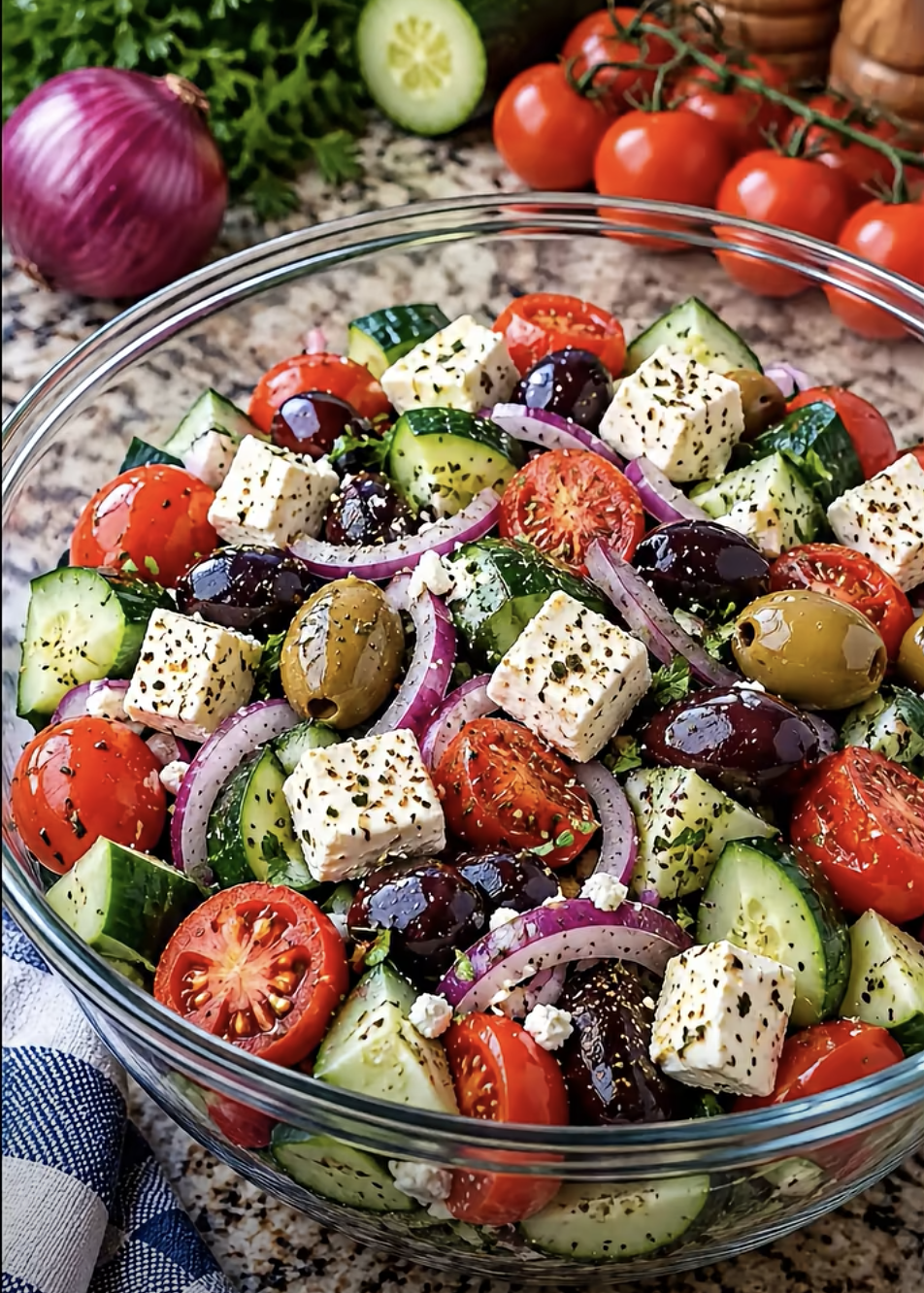
Classic Greek Salad brings together juicy tomatoes, crisp cucumbers, tangy feta cheese, Kalamata olives, and thinly sliced red onion in a simple olive oil dressing. Fresh, colorful, and full of Mediterranean flavor, this easy salad makes a delicious addition to almost any meal.
Unlike many leafy green salads, Classic Greek Salad focuses on fresh vegetables, quality feta, and a bright dressing made with extra-virgin olive oil, red wine vinegar, and oregano.
Every bite delivers a wonderful combination of textures. The cucumbers add crunch, the tomatoes provide sweetness, the olives contribute a savory flavor, and the feta creates a rich, creamy contrast.
Best of all, you can prepare this refreshing salad in just 15 minutes. You don’t need to cook anything, and the recipe uses simple ingredients that are easy to find.
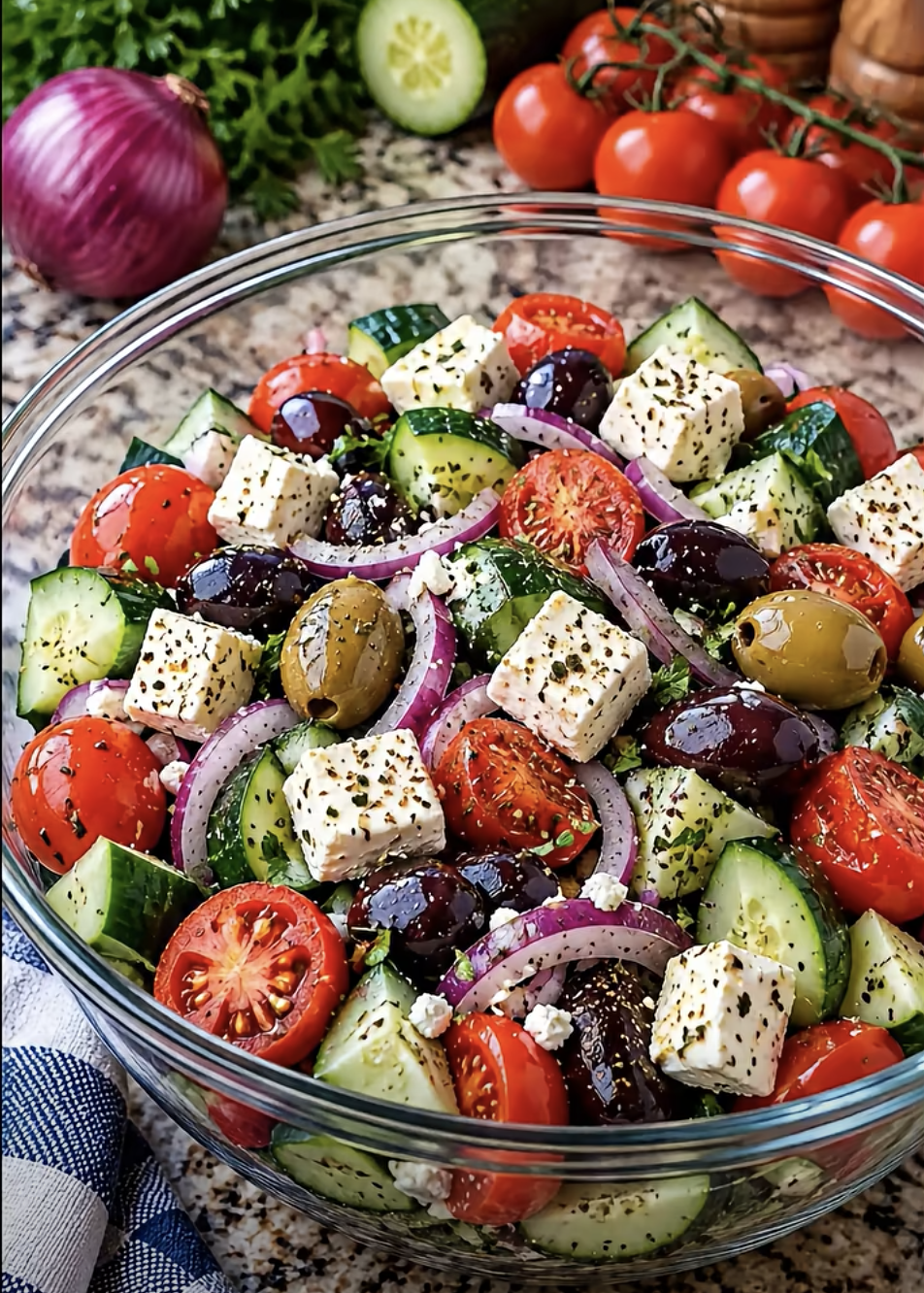
Classic Greek Salad: Fresh, Easy, and Authentic Mediterranean Flavor
Equipment
- Large salad bowl
- small mixing bowl
- Whisk
- Sharp kitchen knife
- Cutting board
- Measuring cups and spoons
- Salad tongs or large serving spoon
Ingredients
- 2 cups cherry tomatoes, halved
- 2 whole English cucumbers, sliced
- 7 oz feta cheese, cubed (approximately 200 grams)
- 0.5 cup Kalamata olives, preferably pitted
- 0.5 small red onion, thinly sliced
- 2 tbsp fresh parsley, chopped
- 1 tsp dried oregano for the salad
- 0.25 tsp salt for the salad, or to taste
- 0.25 tsp freshly ground black pepper for the salad, or to taste
- 0.25 cup extra-virgin olive oil
- 1.5 tbsp red wine vinegar or fresh lemon juice
- 1 clove garlic, minced, optional
- 0.5 tsp dried oregano for the dressing
- 0.125 tsp salt for the dressing, or a pinch to taste
- 0.125 tsp freshly ground black pepper for the dressing, or a pinch to taste
Instructions
- Wash and dry the cherry tomatoes, English cucumbers, and fresh parsley. Halve the tomatoes and slice the cucumbers into rounds or half-moons.
- Peel the red onion and slice it thinly. For a milder flavor, soak the slices in cold water for five minutes, then drain thoroughly.
- Cut the feta cheese into cubes or larger pieces. Drain the Kalamata olives if necessary.
- In a small mixing bowl, whisk together extra-virgin olive oil, red wine vinegar or fresh lemon juice, optional minced garlic, 1/2 teaspoon dried oregano, 1/8 teaspoon salt, and 1/8 teaspoon black pepper until combined.
- Add the cherry tomatoes, sliced cucumbers, red onion, and Kalamata olives to a large salad bowl.
- Pour the dressing over the vegetables and toss gently until evenly coated.
- Gently fold in the feta cubes or arrange larger pieces over the top of the salad.
- Sprinkle with chopped fresh parsley, 1 teaspoon dried oregano, and additional salt and black pepper to taste.
- Serve immediately for the freshest flavor and texture, or refrigerate briefly before serving.
Notes
Nutrition
I started making this Greek salad during the summer when I wanted a refreshing side dish that didn’t require turning on the stove. I had ripe tomatoes, fresh cucumbers, a block of feta, and some olives in the refrigerator. Instead of preparing my usual lettuce salad, I chopped everything into generous pieces and tossed it with olive oil, vinegar, and oregano. The result tasted incredibly fresh and satisfying. I served it with grilled chicken and warm bread, and everyone enjoyed the combination of juicy vegetables and salty feta. Since then, this colorful salad has become one of my favorite recipes for quick lunches, family dinners, and outdoor gatherings.
Why You’ll Love This Classic Greek Salad Recipe
Fresh Mediterranean Ingredients With Incredible Flavor
The secret to a delicious Classic Greek Salad lies in its simplicity.
Rather than relying on complicated seasonings or heavy dressings, this recipe highlights the natural flavors of fresh vegetables and traditional Mediterranean ingredients.
Cherry tomatoes provide juicy sweetness and a slightly tangy flavor.
English cucumbers add a refreshing crunch. Their thin skins and relatively small seeds make them especially convenient for salads.
Red onion contributes a mild sharpness that balances the sweetness of the tomatoes.
Meanwhile, Kalamata olives introduce a rich, savory flavor.
Their slightly fruity taste pairs beautifully with feta cheese and olive oil.
Feta gives the salad its signature salty, tangy character.
Its creamy yet crumbly texture contrasts with the crisp vegetables.
Fresh parsley adds a light herbal note, while dried oregano provides the familiar Mediterranean aroma.
The dressing brings everything together.
Extra-virgin olive oil adds richness and a smooth finish.
Red wine vinegar provides acidity, helping balance the saltiness of the feta and olives.
A little garlic adds extra flavor if you enjoy a stronger dressing.
Finally, black pepper enhances the overall taste without overpowering the ingredients.
Together, these simple components create a salad that tastes bright, refreshing, savory, and satisfying.
A Quick and Versatile Salad for Any Occasion
One of the biggest advantages of Classic Greek Salad is its convenience.
You can prepare the entire dish in approximately 15 minutes.
Additionally, the recipe requires no cooking, making it especially appealing during warm weather.
Here are several reasons this salad deserves a place in your regular meal rotation:
- Quick preparation: Ready in about 15 minutes.
- No cooking required: Simply chop, whisk, and toss.
- Fresh ingredients: Uses colorful vegetables, olives, and feta cheese.
- Naturally gluten-free: Contains no wheat-based ingredients.
- Easy customization: Adjust the vegetables, herbs, and dressing.
- Versatile serving options: Pair it with grilled meats, seafood, or vegetarian meals.
- Beautiful presentation: Red tomatoes, green cucumbers, purple onions, and white feta create an attractive combination.
Furthermore, the salad works beautifully for casual lunches, family dinners, summer barbecues, and holiday gatherings.
You can serve it as a refreshing side dish or pair it with bread and protein for a more substantial meal.
Because the ingredients require minimal preparation, this recipe also makes a convenient option for busy weekdays.
Choosing the Best Ingredients for Classic Greek Salad
Selecting Fresh Vegetables, Feta, and Kalamata Olives
Fresh ingredients make a noticeable difference in the flavor of Classic Greek Salad.
Start with ripe tomatoes.
Cherry tomatoes work particularly well because they offer a sweet flavor and hold their shape after slicing.
However, you can also use ripe Roma tomatoes, vine-ripened tomatoes, or other flavorful varieties.
If you use larger tomatoes, cut them into generous bite-sized wedges.
Next, choose English cucumbers.
Their thin skins and small seeds make them easy to prepare without peeling.
For the best texture, slice them into moderately thick rounds or half-moons.
Avoid cutting the cucumbers too thinly because they may release excess moisture after dressing.
Red onion adds a pleasant sharpness.
Slice it thinly so the flavor distributes evenly throughout the salad.
If you prefer a milder onion taste, soak the slices in cold water for five minutes, then drain them thoroughly.
For the olives, choose Kalamata olives.
Their deep purple color and rich flavor complement the fresh vegetables beautifully.
Pitted olives make the salad easier to eat.
Feta cheese is another essential ingredient.
Choose a good-quality block of feta whenever possible.
Block feta generally maintains its texture better than very finely crumbled varieties.
Cut it into cubes or place larger pieces over the vegetables.
Finally, use fresh parsley and dried oregano to complete the Mediterranean flavor.
Making a Simple Olive Oil and Red Wine Vinegar Dressing
The dressing gives Classic Greek Salad its bright, tangy finish.
Unlike creamy salad dressings, this version uses only a few ingredients.
Extra-virgin olive oil forms the base.
Choose an olive oil with a flavor you enjoy because its taste will come through clearly.
Red wine vinegar provides acidity and balances the richness of the feta and olives.
If you prefer a brighter citrus flavor, substitute fresh lemon juice.
Dried oregano adds an earthy, aromatic note that complements the vegetables.
Fresh garlic makes an excellent optional addition.
Finely mince one small clove so its flavor spreads evenly throughout the dressing.
A pinch of salt and freshly ground black pepper completes the mixture.
However, remember that feta and Kalamata olives already contain salt.
Start with a small amount and adjust only after tasting the finished salad.
To prepare the dressing, combine the olive oil, vinegar, garlic, oregano, salt, and pepper in a small bowl.
Whisk until the ingredients combine.
Alternatively, place everything in a small jar with a tight-fitting lid and shake vigorously.
The oil and vinegar may separate after standing, so whisk or shake the dressing again before using it.
For the freshest flavor, add the dressing shortly before serving.
How to Make Perfect Classic Greek Salad
Preparing the Vegetables and Homemade Dressing
Making Classic Greek Salad starts with properly preparing the fresh ingredients.
First, wash the cherry tomatoes, cucumbers, and parsley under cool running water.
Dry the vegetables gently with a clean kitchen towel or paper towels.
Next, slice the cherry tomatoes in half.
If you use larger tomatoes, cut them into bite-sized wedges.
Slice the English cucumbers into rounds or half-moons.
You can leave the skins on because English cucumbers have tender skins.
Next, peel the red onion and slice it thinly.
For a milder flavor, briefly soak the onion slices in cold water, then drain them thoroughly.
Cut the feta cheese into cubes.
Alternatively, keep the feta in larger pieces for a more traditional presentation.
Drain the Kalamata olives if they come packed in brine.
Then, chop the fresh parsley.
Place the tomatoes, cucumbers, red onion, and olives into a large salad bowl.
Now, prepare the dressing.
In a separate small bowl, whisk together extra-virgin olive oil, red wine vinegar or lemon juice, optional minced garlic, dried oregano, salt, and black pepper.
Continue whisking until the mixture combines.
Taste the dressing and adjust the seasoning if necessary.
Combining, Dressing, and Serving the Salad
Once the ingredients are ready, assemble the Classic Greek Salad.
Start by gently tossing the tomatoes, cucumbers, red onion, and Kalamata olives together.
This step distributes the vegetables evenly before you add the feta.
Next, pour the dressing over the vegetable mixture.
Use a large spoon or salad tongs to toss everything gently.
Make sure the olive oil and vinegar lightly coat the vegetables.
Avoid excessive stirring because the tomatoes can release juice and the feta may break apart.
Next, add the cubed feta cheese.
Gently fold it into the salad or arrange it over the top.
For a more traditional Greek-style presentation, place larger pieces of feta over the vegetables rather than mixing small cubes throughout.
Sprinkle the salad with fresh parsley and dried oregano.
Finish with freshly ground black pepper.
Taste the salad before adding more salt.
The feta and olives contribute plenty of savory flavor, so you may not need additional seasoning.
Serve immediately for the freshest texture.
Alternatively, refrigerate the prepared vegetables briefly and add the dressing and feta just before serving.
This method helps maintain the cucumbers’ crunch and prevents excess liquid from collecting in the bowl.
Serving Ideas, Storage Tips, and Delicious Variations
What to Serve With Classic Greek Salad
Classic Greek Salad pairs beautifully with many Mediterranean-inspired meals.
Its fresh vegetables and tangy dressing provide a refreshing contrast to rich, savory dishes.
For a simple dinner, serve it alongside grilled chicken, roasted chicken thighs, or lemon-garlic chicken.
The bright olive oil dressing complements grilled meats particularly well.
You can also pair the salad with seafood.
Try serving it alongside baked salmon, grilled shrimp, or lemon-seasoned fish.
For a vegetarian meal, enjoy the salad with warm pita bread, hummus, or roasted chickpeas.
You can also serve it with rice, couscous, or quinoa.
These grains help create a more filling meal while allowing the salad’s fresh flavors to shine.
For lunch, pair the salad with a sandwich or wrap.
It also works well alongside grilled vegetable skewers.
If you’re planning a summer barbecue, serve the salad with burgers, kebabs, or grilled vegetables.
The cool cucumbers and juicy tomatoes provide a refreshing balance to smoky flavors.
For an attractive presentation, arrange the vegetables in a shallow serving bowl.
Place the feta over the top and sprinkle with oregano and parsley.
Finally, drizzle a little extra olive oil over the cheese just before serving.
Storage Tips and Easy Greek Salad Variations
Classic Greek Salad tastes best immediately after preparation.
Fresh tomatoes and cucumbers gradually release moisture after you add salt and dressing.
However, you can prepare the ingredients ahead of time.
Wash and slice the vegetables, then store them in an airtight container in the refrigerator.
Keep the dressing separate until shortly before serving.
You can also cube the feta in advance and refrigerate it separately.
When you’re ready to eat, combine the ingredients and add the dressing.
For the best texture, enjoy the assembled salad the same day.
If you have leftovers, refrigerate them promptly in an airtight container at 40°F or below.
Aim to enjoy leftovers within 1–2 days for the freshest flavor and texture.
You can also customize the recipe with several delicious variations:
- Add bell peppers: Include sliced green bell peppers for extra crunch and a more traditional Greek-style combination.
- Use lemon dressing: Replace red wine vinegar with fresh lemon juice.
- Add chickpeas: Stir in drained chickpeas for extra fiber and protein.
- Include avocado: Add diced avocado for a creamier variation.
- Try fresh mint: Sprinkle chopped mint over the salad for a refreshing herbal note.
- Make it heartier: Add cooked quinoa or grilled chicken.
- Increase the herbs: Add extra oregano or parsley for a stronger Mediterranean flavor.
Although these variations create delicious salads, the simplest combination of tomatoes, cucumbers, onions, olives, feta, and olive oil remains a favorite for good reason.
Ingredients
Prep Time: 15 minutes Cook Time: 0 minutes Total Time: 15 minutes Servings: 4–6
For the Salad
- 2 cups cherry tomatoes, halved
- 2 English cucumbers, sliced
- 7 ounces (200 grams) feta cheese, cubed
- ½ cup Kalamata olives, preferably pitted
- ½ small red onion, thinly sliced
- 2 tablespoons fresh parsley, chopped
- 1 teaspoon dried oregano
- ¼ teaspoon salt, or to taste
- ¼ teaspoon freshly ground black pepper, or to taste
For the Dressing
- ¼ cup extra-virgin olive oil
- 1½ tablespoons red wine vinegar or fresh lemon juice
- 1 garlic clove, minced, optional
- ½ teaspoon dried oregano
- ⅛ teaspoon salt, or a pinch to taste
- ⅛ teaspoon freshly ground black pepper, or a pinch to taste
Instructions
- Prepare the vegetables: Wash and dry the cherry tomatoes, cucumbers, and parsley. Halve the tomatoes and slice the cucumbers into rounds or half-moons.
- Slice the onion: Peel the red onion and cut it into thin slices. If desired, soak the onion in cold water for five minutes to soften its sharp flavor, then drain.
- Prepare the feta and olives: Cut the feta cheese into cubes or larger pieces. Drain the Kalamata olives if necessary.
- Make the dressing: In a small bowl, whisk together extra-virgin olive oil, red wine vinegar or lemon juice, optional minced garlic, ½ teaspoon dried oregano, and a pinch each of salt and black pepper.
- Combine the vegetables: Add the tomatoes, cucumbers, red onion, and Kalamata olives to a large salad bowl.
- Add the dressing: Pour the dressing over the vegetables and toss gently until evenly coated.
- Add the feta: Gently fold in the feta cubes or arrange larger pieces over the top of the salad.
- Season and garnish: Sprinkle with chopped parsley, 1 teaspoon dried oregano, and additional salt and black pepper to taste.
- Serve: Enjoy immediately or refrigerate briefly before serving. For the best texture, add the dressing shortly before eating.
Helpful tip: Use ripe tomatoes, crisp cucumbers, good-quality feta, and flavorful extra-virgin olive oil. These simple ingredients make the biggest difference in the finished salad.
Frequently Asked Questions
1. What makes Classic Greek Salad different from other salads?
Classic Greek Salad focuses on fresh tomatoes, cucumbers, red onion, olives, feta cheese, and olive oil rather than leafy greens. The combination creates a refreshing salad with bold Mediterranean flavors. Traditional Greek village salad often includes green bell pepper and serves feta in a larger piece over the vegetables.
2. Can I make Classic Greek Salad ahead of time?
Yes. You can wash and chop the vegetables several hours in advance. However, store the dressing and feta separately until shortly before serving. This approach helps prevent the vegetables from releasing too much liquid and keeps the salad fresh.
3. What type of feta cheese works best for Greek salad?
A block of feta cheese packed in brine usually offers excellent flavor and texture. Traditional Greek feta uses sheep’s milk or a combination of sheep’s and goat’s milk. Choose a firm, tangy feta that holds its shape when you cut it.
4. Can I use lemon juice instead of red wine vinegar?
Absolutely. Fresh lemon juice creates a bright, citrusy dressing that pairs beautifully with tomatoes, cucumbers, olives, and feta. Use the same quantity as the red wine vinegar. You can also combine a little lemon juice with vinegar for a more complex flavor.
5. How long does Classic Greek Salad last in the refrigerator?
For the best flavor and texture, enjoy the salad immediately or within 1–2 days. Store leftovers in an airtight container at 40°F or below. Tomatoes and cucumbers may release liquid during storage, so the salad tastes freshest when you add the dressing shortly before serving.
Conclusion
Classic Greek Salad proves that simple ingredients can create an incredibly flavorful dish.
The combination of juicy tomatoes, crisp cucumbers, tangy feta, Kalamata olives, and fresh herbs delivers a refreshing balance of sweetness, saltiness, and acidity.
Meanwhile, the homemade olive oil and red wine vinegar dressing enhances the natural flavors without overpowering them.
With just 15 minutes of preparation, this easy recipe works beautifully for busy weekdays, summer gatherings, family dinners, and casual lunches.
You can serve it alongside grilled chicken, seafood, warm pita bread, or Mediterranean-inspired meals.
You can also customize it with bell peppers, chickpeas, fresh mint, or additional vegetables.
Best of all, Classic Greek Salad requires no cooking and relies on fresh, accessible ingredients.
Prepare it with ripe tomatoes, crisp cucumbers, quality feta, and flavorful olive oil, and enjoy a colorful Mediterranean salad that’s fresh, satisfying, and easy to make.