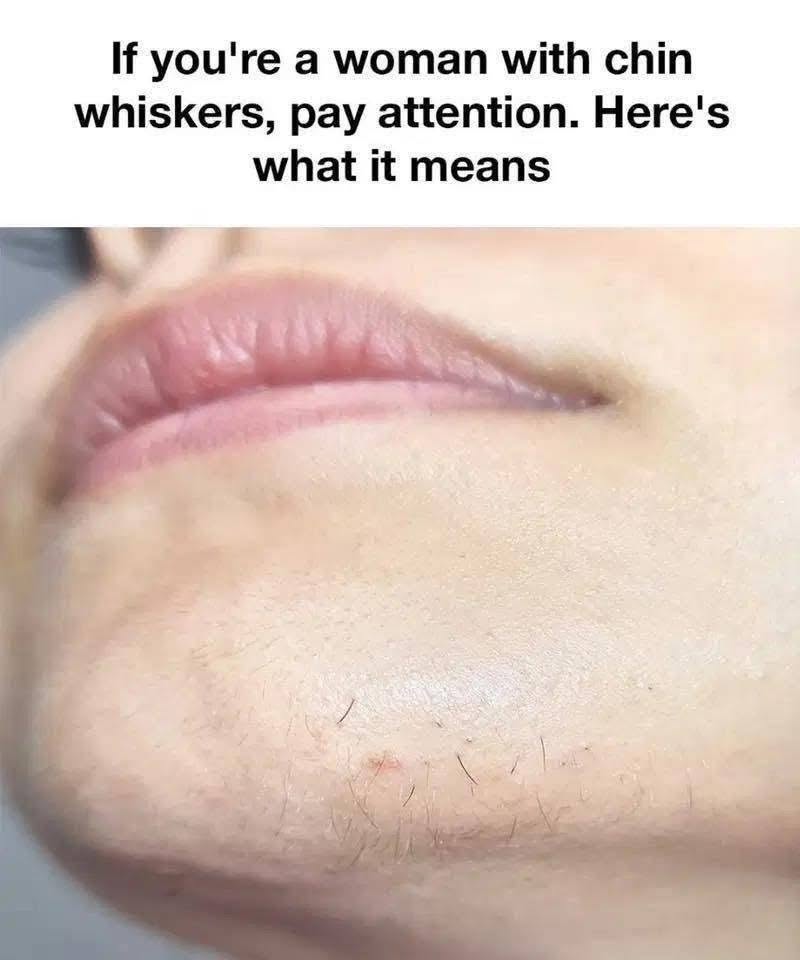
Chin Whiskers in Women can trigger a surprising amount of worry. You notice one coarse hair in the mirror, remove it, and then discover another a few days later. Suddenly, you may wonder whether your hormones have changed or whether the hair signals an underlying health problem.
In reality, women naturally grow facial hair. Some hairs remain fine and barely visible, while others become darker, longer, or coarser. Genetics, age, hormonal activity, medications, and individual hair-follicle sensitivity can all influence the pattern.
However, the way facial hair changes matters. A few isolated chin hairs that develop gradually usually tell a very different story from rapidly increasing coarse hair accompanied by irregular periods, severe acne, scalp hair thinning, or other physical changes.
Understanding those differences can help you decide whether to simply manage the hair according to your preference or discuss the change with a healthcare professional.
I remember hearing a woman describe finding her first coarse chin hair while getting ready for work. She immediately plucked it, but what bothered her most was not the hair itself. She worried that it meant something had suddenly gone wrong with her body. Over time, a few more appeared, particularly as she got older. After learning how hormones, genetics, and follicle sensitivity influence facial hair, the experience felt far less alarming. She still removed the hairs because she preferred smooth skin, but the routine stopped carrying the same anxiety. That small change in understanding turned an embarrassing secret into ordinary personal grooming.
Understanding Why Chin Whiskers in Women Develop
Hormones and Hair Follicles Work Together
Hair growth depends partly on hormones called androgens. Women naturally produce androgens, including testosterone, so their presence does not automatically indicate a hormonal disorder.
Instead, individual hair follicles respond differently to these hormones.
Some follicles show greater sensitivity to androgen activity. Consequently, two women with similar hormone levels can develop very different facial-hair patterns.
Fine, lightly pigmented hair covers much of the face. However, hormonal influence can encourage some follicles to produce thicker, darker terminal hairs. These coarse hairs may become particularly noticeable around the chin, jawline, or upper lip.
Therefore, Chin Whiskers in Women do not automatically mean testosterone levels have become abnormally high.
Hormonal changes can still affect growth, though. Puberty, pregnancy, the transition toward menopause, and menopause can alter the hormonal environment and change hair patterns.
Meanwhile, some medical conditions can increase androgen production or change the body’s response to hormones. Polycystic ovary syndrome, commonly called PCOS, represents one well-known cause of excessive androgen-related hair growth in women.
However, facial hair alone cannot diagnose PCOS or another endocrine condition. Healthcare professionals consider the broader pattern of symptoms and may order appropriate testing when necessary.
Genetics and Aging Can Change the Pattern
Family characteristics strongly influence hair distribution, thickness, texture, and pigmentation.
If women in your family commonly develop coarse chin hairs, you may notice a similar pattern. That inherited tendency does not necessarily indicate disease.
Furthermore, facial hair patterns can change with age.
During and after menopause, hormonal shifts can make some facial hairs more noticeable. At the same time, scalp hair may become thinner for some women.
Because these changes happen gradually, someone may suddenly notice a hair that actually developed over several weeks.
Hair also grows in cycles. Therefore, plucking one chin hair does not necessarily mean another hair that appears shortly afterward represents explosive new growth. Different follicles enter active growth at different times.
Additionally, contrast matters. A dark, coarse hair against lighter skin may appear much more prominent than fine facial hair, even when only a few follicles produce it.
For these reasons, counting individual hairs rarely provides enough information to determine whether something is medically unusual.
Instead, focus on the overall pattern. Has facial hair increased gradually over several years, or has thick hair appeared rapidly over a few months? Have other symptoms developed at the same time?
Those questions provide much more useful information.
When Chin Hair May Deserve Medical Attention
Look for Changes Beyond a Few Hairs
A few isolated Chin Whiskers in Women generally differ from hirsutism, which describes excessive coarse, dark hair growth in women in areas where androgen-related terminal hair commonly develops.
Those areas can include the face, chest, abdomen, and back.
Hirsutism itself has several possible causes. PCOS represents a common one, but medications, endocrine disorders, and other conditions can also contribute. In some cases, clinicians do not identify a specific underlying disorder.
Rather than trying to diagnose yourself from the number of hairs on your chin, consider whether additional changes have appeared.
For example, increasing facial hair accompanied by irregular or absent menstrual periods may justify a medical conversation. Persistent acne, unexplained scalp hair thinning, or increasing coarse body hair may also provide useful clues.
Rapid development deserves particular attention.
If previously minimal facial hair becomes significantly coarser or more widespread over a relatively short period, a healthcare professional can evaluate why the change occurred.
Similarly, seek medical assessment for facial-hair growth accompanied by deeper voice changes, increased muscularity without an obvious explanation, or other significant signs of increased androgen activity.
These symptoms do not automatically indicate a dangerous condition. However, they provide a good reason for professional evaluation rather than guessing.
What a Medical Evaluation May Include
If you discuss new or excessive facial hair with a healthcare professional, expect questions about more than your chin.
The clinician may ask when you first noticed the change, how quickly it progressed, and whether your menstrual cycle has changed. They may also ask about acne, scalp hair loss, weight changes, medications, supplements, pregnancy history, and family patterns.
Therefore, consider writing down relevant changes before your appointment.
Depending on the situation, a clinician may perform a physical examination and order blood tests to evaluate hormone levels or investigate other possible causes.
However, not everyone with chin hair needs laboratory testing.
A woman with a few stable coarse hairs, predictable menstrual cycles, and no additional concerning symptoms may receive different recommendations from someone who develops rapid facial and body hair growth alongside significant menstrual changes.
That individualized approach matters.
Furthermore, avoid trying to “balance hormones” with unverified supplements simply because facial hair appears. Products marketed for hormone correction can make broad promises without addressing the actual cause, and some supplements can interact with medications or produce unwanted effects.
Professional evaluation provides a clearer path when symptoms suggest something more than ordinary variation.
Safe Ways to Remove Chin Whiskers in Women
Temporary Hair Removal Options
You do not have to remove facial hair. However, if you prefer to remove Chin Whiskers in Women, several familiar methods can help.
Tweezing works particularly well for a few isolated hairs. Use clean tweezers, avoid digging into the skin, and stop if repeated attempts cause significant irritation.
Shaving offers another straightforward option, especially when several hairs need removal. Contrary to a persistent myth, shaving does not change a hair follicle so that it produces inherently thicker or darker hair.
A shaved hair can initially feel coarse because the razor cuts the shaft bluntly. As it grows, that blunt tip may feel more noticeable than the naturally tapered end of an untouched hair. Nevertheless, shaving does not create additional follicles.
Waxing and threading can remove several hairs from the root. However, sensitive skin may become temporarily red or irritated afterward.
Depilatory creams can dissolve hair near the skin surface. Because facial skin can react strongly to chemicals, use only products intended for the face and follow their instructions carefully. Patch testing can also help identify irritation before applying a product to a larger area.
Whichever method you choose, gentle technique matters.
Longer-Term Options
Some women prefer longer-lasting reduction rather than frequent plucking, shaving, or threading.
Laser hair reduction targets pigment in hair follicles. Consequently, treatment effectiveness can depend on hair color, skin tone, laser type, and the professional performing the procedure.
Multiple sessions usually become necessary because individual hairs cycle through different growth phases.
Additionally, laser treatment generally aims for long-term hair reduction rather than guaranteeing that every hair will disappear permanently.
Electrolysis provides another option. During treatment, a trained professional treats individual hair follicles. Because each follicle requires attention, the process can take considerable time when treating larger areas.
Before choosing either method, consult a properly qualified professional who can evaluate your skin and hair characteristics.
Meanwhile, women with an underlying hormonal condition may notice continued development of new facial hairs even after cosmetic treatment. In those cases, addressing the medical cause and managing existing hair can become separate parts of the same plan.
A clinician may also discuss prescription treatments when facial hair relates to hirsutism or another diagnosed condition.
Ultimately, no removal method determines whether facial hair is acceptable. Treatment remains a personal choice unless an underlying medical condition requires attention.
Navigating Facial Hair Without Shame or Panic
Separate Grooming Choices From Health Concerns
Chin Whiskers in Women occupy an unusual space between normal biology, personal grooming, and medical symptoms.
That combination can create unnecessary anxiety.
Finding a coarse hair does not mean you have become less feminine, and removing it does not mean you have failed to accept your natural appearance. Likewise, choosing to leave facial hair alone requires no justification.
Grooming preferences remain personal.
The useful distinction involves separating appearance from health. You can dislike a chin hair without assuming it signals disease. Conversely, you can feel completely comfortable with facial hair while still seeking medical advice if it suddenly changes alongside other symptoms.
Therefore, observe your body without turning every variation into a diagnosis.
If you notice a change, consider taking occasional photographs rather than repeatedly checking the mirror. Photos can help you determine whether the pattern actually progresses over several months.
Also, track associated symptoms when relevant. Menstrual changes, new acne, scalp hair thinning, and rapidly increasing body hair provide more useful information than worrying about one stubborn follicle.
This practical approach keeps attention focused on meaningful changes.
Ignore Common Facial-Hair Myths
Several myths make ordinary facial hair more stressful than necessary.
First, plucking one hair does not cause several new follicles to appear around it. Each follicle functions independently.
Second, shaving does not transform fine hair into biologically thicker hair. The blunt cut can temporarily change how regrowth looks and feels, but shaving does not increase the number of follicles.
Third, one coarse chin hair does not prove that you have PCOS.
PCOS involves a broader clinical picture, and healthcare professionals use symptoms, medical history, examination findings, and appropriate testing to evaluate it.
Finally, facial hair does not measure femininity, cleanliness, or personal care.
Human bodies grow hair. The amount, location, color, and texture vary considerably.
Once you remove those myths, the decision becomes simpler. If the hair does not bother you and no concerning changes accompany it, you may choose to do nothing. If you dislike it, choose a safe removal method. If the growth becomes rapid or arrives with other significant symptoms, talk with a healthcare professional.
Frequently Asked Questions
Is it normal for women to have chin whiskers?
Yes. Women naturally have facial hair, and some develop coarse or dark hairs on the chin. A few isolated hairs can occur without an underlying medical problem. However, rapidly increasing coarse facial or body hair may deserve evaluation.
Does plucking chin hair make more hairs grow?
No. Plucking a hair does not create additional hair follicles. However, other follicles may enter their growth phase while the plucked hair grows back, which can create the impression that more hairs suddenly appeared.
Does shaving make women’s facial hair thicker?
No. Shaving cuts the hair shaft at the skin’s surface but does not change the follicle underneath. Regrowth may temporarily look or feel coarser because shaving leaves a blunt tip.
Can PCOS cause chin hair?
Yes. PCOS can contribute to excessive coarse facial and body hair because androgen activity often plays a role in the condition. However, chin hair alone does not establish a PCOS diagnosis. Menstrual changes and other symptoms can help determine whether medical evaluation makes sense.
When should I see a doctor about facial hair?
Consider medical evaluation when coarse facial or body hair increases rapidly, particularly when it appears alongside irregular periods, significant acne, scalp hair thinning, voice changes, or other noticeable physical changes. A clinician can evaluate the complete pattern and decide whether testing is appropriate.
Conclusion
Chin Whiskers in Women often represent an ordinary part of human hair growth. Hormones influence facial hair, but so do genetics, age, individual follicle sensitivity, and natural variation.
Therefore, finding several coarse hairs does not automatically mean something has gone wrong.
You can pluck, shave, thread, wax, or leave the hair untouched according to your preference. Longer-term options such as laser hair reduction and electrolysis may also appeal to people who want less frequent maintenance.
At the same time, pay attention to patterns rather than individual hairs. Rapidly increasing coarse facial or body hair accompanied by menstrual changes, significant acne, scalp hair thinning, voice changes, or other new symptoms deserves professional evaluation.
Most importantly, separate a cosmetic preference from a judgment about your body. Facial hair does not determine femininity or cleanliness.
Understand the change, choose the grooming approach that suits you, and seek medical guidance when the overall pattern—not simply one stubborn whisker—gives you a reason to investigate further.