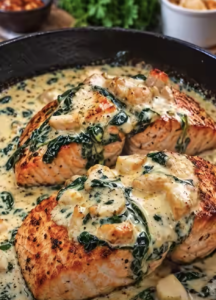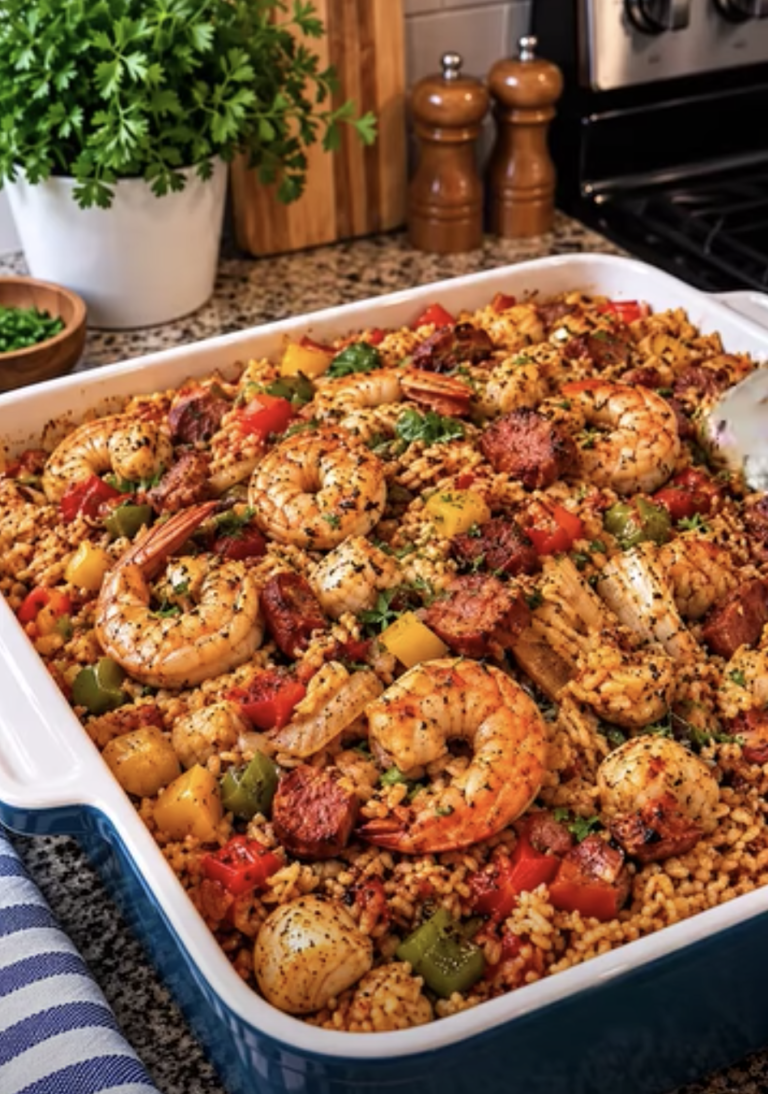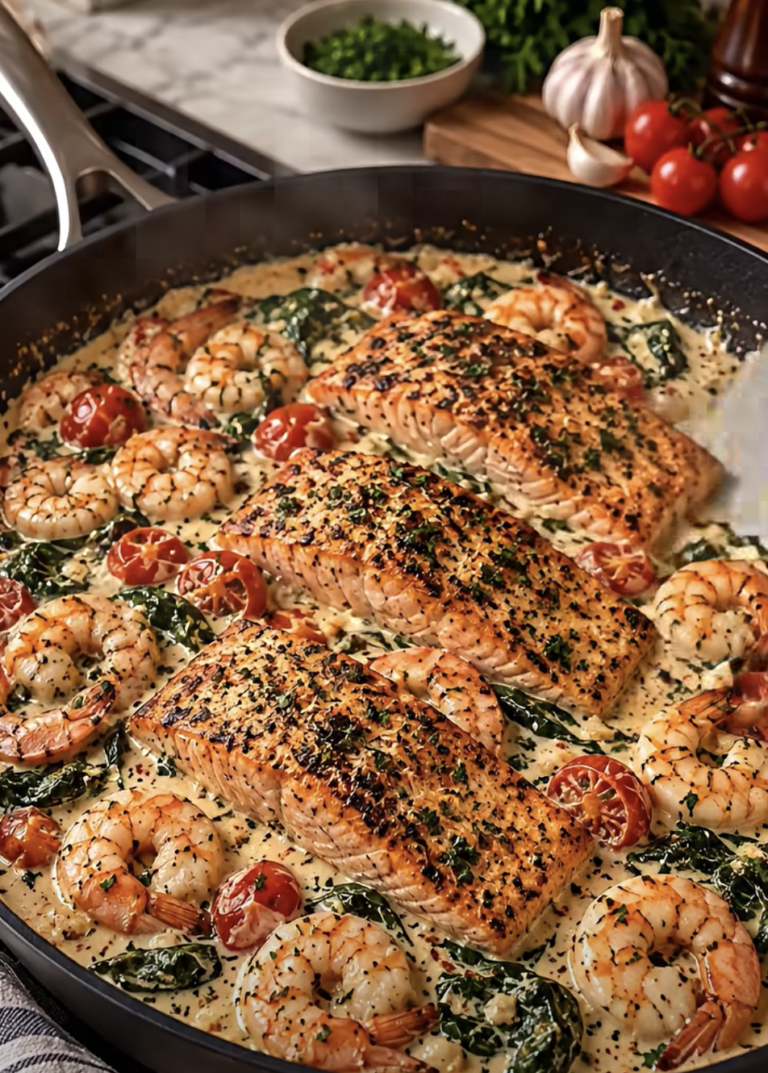
Baked Lemon Garlic Butter Salmon is an easy, flavorful dinner featuring tender salmon fillets baked in a rich butter sauce with fresh lemon, fragrant garlic, and savory herbs. Each fillet develops a beautifully golden surface while staying moist, flaky, and full of flavor. Best of all, this simple oven-baked recipe requires minimal preparation and makes cleanup easy.
Whether you’re planning a quick weeknight meal or preparing an elegant dinner for family and friends, Baked Lemon Garlic Butter Salmon delivers impressive results without complicated cooking techniques. The combination of melted butter, fresh lemon juice, minced garlic, and parsley creates a delicious sauce that complements the salmon’s naturally rich flavor.
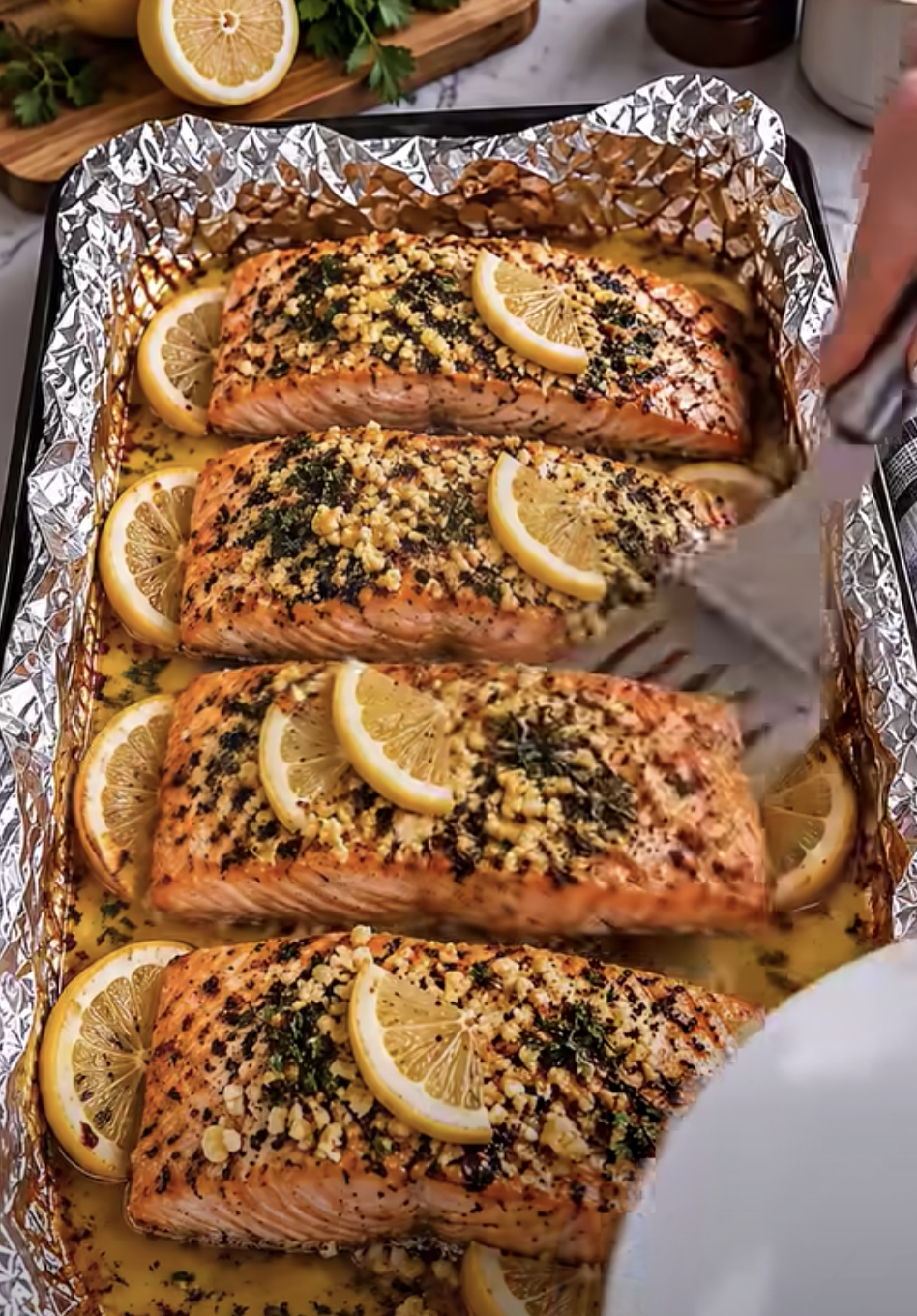
Baked Lemon Garlic Butter Salmon
Ingredients
Equipment
Method
- Preheat the oven to 400°F. Line a rimmed baking sheet with aluminum foil and lightly grease it with olive oil if needed.
- Pat the salmon fillets dry with paper towels. Check for pin bones and arrange the fillets skin-side down on the prepared baking tray.
- Melt the butter in a small bowl. Stir in the minced garlic, lemon juice, chopped parsley, paprika if using, salt, and black pepper.
- Spoon the garlic butter mixture evenly over the salmon fillets, coating the tops and sides.
- Arrange lemon slices over the salmon and around the fillets.
- Bake at 400°F for approximately 12–18 minutes, depending on the thickness of the salmon.
- Check the thickest part of each fillet with an instant-read thermometer. Continue baking as needed until the salmon reaches 145°F.
- Remove the salmon from the oven and let it rest for 2–3 minutes. Spoon the garlic butter pan sauce over the fillets and garnish with additional parsley if desired. Serve hot.
Notes
The first time you prepare salmon this way, the aroma alone makes the meal feel special. As the butter melts around the fish, the garlic releases its savory fragrance, while the lemon adds a fresh citrus note. Once the salmon comes out of the oven, the fillets look gorgeous with their golden edges, flecks of herbs, and bright lemon slices. I love serving this kind of meal with fluffy rice and roasted vegetables because the sides soak up the flavorful sauce. Even better, the entire dinner comes together with everyday ingredients and very little fuss.
Why You’ll Love Baked Lemon Garlic Butter Salmon
Fresh Lemon and Garlic Create Incredible Flavor
The best part of Baked Lemon Garlic Butter Salmon is its simple yet delicious combination of ingredients. Butter adds richness, garlic brings a savory aroma, and fresh lemon juice balances everything with bright citrus flavor.
As the salmon bakes, the butter melts into the seasonings and coats the fish with a flavorful sauce. Meanwhile, the garlic softens and releases its natural sweetness. Lemon slices add another layer of freshness while making the finished dish look beautiful.
Fresh garlic delivers the strongest flavor, so mince it just before cooking if possible. You can use garlic powder in a pinch, but fresh cloves create a more aromatic sauce.
Fresh lemon juice also makes a difference. Bottled juice works when necessary, but freshly squeezed lemon provides a brighter taste. In addition, thin lemon slices release their citrus oils as they bake, adding subtle fragrance to the surrounding butter.
Fresh parsley complements these ingredients beautifully. Its mild, herbaceous flavor adds color and freshness without overpowering the salmon. You can also add a little fresh dill or thyme if you prefer a different herbal note.
For the best flavor, distribute the garlic butter evenly over every fillet. Then spoon a little extra sauce over the fish before serving. This simple step helps keep each bite moist and flavorful.
An Easy Oven-Baked Dinner for Any Occasion
Another reason to love Baked Lemon Garlic Butter Salmon is its convenience. Unlike recipes that require several pans and complicated preparation, this dish comes together in one baking tray.
First, line your baking sheet with aluminum foil for easier cleanup. Next, arrange the seasoned salmon fillets in a single layer, add the garlic butter mixture, and place lemon slices around or on top of the fish.
Once the tray enters the oven, you can prepare your side dishes while the salmon cooks. Roasted vegetables, steamed rice, and mashed potatoes all work wonderfully.
This recipe also suits a variety of occasions. For a busy weeknight, serve the salmon with microwave-steamed vegetables and quick-cooking rice. For a family dinner, add roasted potatoes and a fresh salad. If you’re entertaining guests, arrange the cooked fillets on a serving platter and garnish them with parsley and fresh lemon wedges.
You can also adjust the portions easily. Four individual fillets work well for a family meal, but larger fillets can serve several people when you cut them into portions after baking.
Most importantly, the recipe doesn’t require advanced cooking skills. With a few simple steps and careful attention to cooking time, even beginners can prepare tender, flavorful salmon at home.
How to Prepare Perfectly Tender Salmon
Choose the Right Salmon and Prepare It Properly
Good salmon starts with selecting fresh, high-quality fish. Look for fillets with a fresh, mild smell and moist flesh. Avoid fish with a strong unpleasant odor or dry, discolored edges.
You can use Atlantic salmon, sockeye salmon, coho salmon, or another variety available at your local grocery store. Atlantic salmon often has a rich flavor and a relatively high fat content, while sockeye salmon tends to have a deeper color and a more pronounced taste.
Both fresh and frozen salmon work well in this recipe. However, thaw frozen fillets completely in the refrigerator before baking for more predictable cooking.
Next, check the fillets for any remaining pin bones. Run your fingers gently over the flesh and remove any bones with clean kitchen tweezers. Pat the salmon dry with paper towels to help the seasonings stick.
If your fillets have skin, you can leave it on. The skin helps hold the fish together during baking and makes serving easier. Place the fillets skin-side down on the prepared tray.
Try to select fillets of similar thickness so they cook at roughly the same rate. If one piece is much thinner than the others, check it earlier and remove it from the oven when it reaches the correct temperature.
Finally, season the salmon with salt, black pepper, and a little paprika if desired. These simple seasonings complement the garlic butter without distracting from the fresh lemon flavor.
Make the Garlic Butter Sauce and Bake
The garlic butter sauce requires only a few minutes to prepare. Melt the butter in a small saucepan or microwave-safe bowl. Stir in the minced garlic, lemon juice, chopped parsley, salt, and black pepper.
You can also add a little lemon zest for a more pronounced citrus aroma. Just avoid adding too much zest because the white pith beneath the peel can taste bitter.
Preheat the oven to 400°F. Line a rimmed baking sheet with aluminum foil, then lightly grease the foil to help prevent sticking.
Arrange four salmon fillets on the tray with space between them. Spoon the garlic butter mixture evenly over the fish, making sure each piece receives some garlic and herbs.
Place lemon slices on top of the fillets and around them. Bake for approximately 12–18 minutes, depending on the thickness of the salmon. Thicker pieces may require additional time, while thinner fillets can finish sooner.
Check the thickest part of the fish with an instant-read thermometer. The FDA recommends cooking fish to an internal temperature of 145°F.
Once the salmon reaches the proper temperature, remove it from the oven and let it rest for a few minutes. The flesh should separate easily with a fork while remaining moist and tender.
Before serving, spoon the warm garlic butter sauce over the salmon. Add fresh parsley and an extra squeeze of lemon if desired.
Serving Ideas, Variations, and Storage Tips
Delicious Side Dishes and Easy Flavor Variations
Baked Lemon Garlic Butter Salmon pairs well with a wide range of side dishes. Because the sauce tastes rich and buttery, vegetables and simple starches provide a satisfying balance.
Steamed white rice, brown rice, or rice pilaf absorbs the lemon garlic butter beautifully. For a heartier dinner, serve the salmon with roasted baby potatoes, creamy mashed potatoes, or buttered pasta.
Roasted asparagus, broccoli, green beans, and Brussels sprouts also make excellent choices. Toss the vegetables with a little olive oil, salt, and pepper before roasting them. If you want everything ready together, cook the vegetables on a separate tray while the salmon bakes.
For a lighter option, prepare a fresh salad with mixed greens, cucumber, cherry tomatoes, and a simple lemon vinaigrette. The crisp vegetables contrast nicely with the tender fish.
You can also customize the garlic butter mixture. Add a pinch of red pepper flakes for gentle heat, or stir in Dijon mustard for a slightly tangy flavor. Fresh dill creates a classic seafood pairing, while thyme adds a subtle earthy note.
If you enjoy extra garlic, add another clove or two. For a richer sauce, increase the butter slightly, but remember that the salmon already contains natural fats.
You can even prepare the salmon in individual foil packets. Place each fillet on a piece of foil, spoon the garlic butter over it, and add a lemon slice. Fold the foil loosely around the fish and bake until cooked through. This method keeps the juices close to the salmon and makes serving especially convenient.
How to Store and Reheat Leftover Salmon
If you have leftover Baked Lemon Garlic Butter Salmon, proper storage helps preserve its flavor and texture.
Allow the salmon to cool slightly, then transfer it to an airtight container. Refrigerate it within two hours of cooking and use it within three to four days.
For longer storage, freeze the cooked salmon in a freezer-safe container. Separate individual portions with parchment paper if needed, and use them within two to three months for the best quality.
When you’re ready to reheat the salmon, use gentle heat to avoid drying it out. Preheat the oven to 275°F, place the fish in an oven-safe dish, and add a small spoonful of water or leftover garlic butter. Cover the dish loosely with foil and warm until the center reaches 165°F.
You can also reheat individual portions in the microwave. Cover the salmon loosely and heat it in short intervals at reduced power, checking the temperature between intervals.
For meal preparation, you can mix the garlic butter sauce and slice the lemons a day ahead. Store the sauce in the refrigerator and melt it again before using it. Keep raw salmon refrigerated until you’re ready to bake it.
Although you can season the salmon in advance, avoid leaving it in lemon juice for an extended period. Acid can change the texture of the fish before cooking. Instead, add the lemon butter shortly before the salmon goes into the oven.
With a little planning, this recipe makes an excellent addition to a weekly meal plan without sacrificing its fresh, buttery flavor.
Ingredients
- 4 salmon fillets, about 6 ounces each
- 4 tablespoons unsalted butter, melted
- 4 garlic cloves, minced
- 2 tablespoons fresh lemon juice
- 1 lemon, thinly sliced
- 1 tablespoon fresh parsley, chopped
- 1/2 teaspoon paprika, optional
- 1/2 teaspoon salt, or to taste
- 1/4 teaspoon black pepper, or to taste
- 1 teaspoon olive oil, for greasing the foil if needed
Instructions
- Preheat the oven. Heat the oven to 400°F. Line a rimmed baking sheet with aluminum foil and lightly grease it.
- Prepare the salmon. Pat the salmon fillets dry with paper towels. Check for pin bones and place the fillets skin-side down on the prepared tray.
- Make the garlic butter. Melt the butter in a small bowl. Stir in the minced garlic, lemon juice, parsley, paprika if using, salt, and black pepper.
- Season the fillets. Spoon the garlic butter mixture evenly over the salmon, coating the tops and sides.
- Add the lemon. Arrange lemon slices on top of the fillets and around the salmon.
- Bake the salmon. Bake for 12–18 minutes, depending on the thickness of the fillets. Check the thickest part with an instant-read thermometer.
- Check for doneness. Remove the salmon when it reaches an internal temperature of 145°F. The flesh should look opaque and flake easily with a fork.
- Rest and serve. Let the salmon rest for 2–3 minutes. Spoon the pan sauce over the fillets, garnish with additional parsley if desired, and serve with your favorite sides.
Expert Tips for the Best Baked Lemon Garlic Butter Salmon
Prevent Dry Salmon and Get the Best Texture
The key to tender Baked Lemon Garlic Butter Salmon is controlling the cooking time. Salmon continues to cook slightly after you remove it from the oven, so start checking the temperature before you expect it to finish.
Fillet thickness matters more than weight alone. Thin pieces may cook in about 10–12 minutes, while thicker pieces often need 15–18 minutes or longer. Treat these times as guidelines rather than guarantees, and use a thermometer to check the thickest part.
Avoid baking the salmon until it looks dry or begins to release large amounts of white protein onto the surface. A small amount of albumin, a natural protein, can appear during cooking and doesn’t necessarily mean the fish has overcooked. However, excessive white deposits can indicate that the salmon has cooked too quickly or too long.
For better results, coat the fish evenly with garlic butter before baking. The butter adds richness and helps carry the garlic and herb flavors across the surface. Then spoon some of the pan juices over the fillets just before serving.
You don’t need to flip the salmon during baking. Leaving the fillets undisturbed helps them hold their shape and makes serving easier.
If you use skinless fillets, lightly grease the foil or use parchment paper rated for oven temperatures. This helps prevent sticking and keeps the delicate fish intact.
Make the Recipe Work for Your Kitchen
You can adapt this recipe to suit your ingredients, equipment, and preferred flavors without changing the basic method.
If you don’t have fresh parsley, use about one teaspoon of dried parsley in the butter mixture. Fresh herbs provide a brighter finish, but dried herbs still add flavor. You can also substitute fresh dill or thyme.
For a dairy-free variation, use a suitable plant-based butter alternative. Choose one that works well for cooking and baking, and check the package instructions. The flavor and richness may differ slightly from traditional butter.
If you prefer a stronger garlic flavor, add another minced clove. For a milder taste, briefly warm the garlic in the melted butter before mixing in the lemon juice and herbs. Avoid browning it too deeply because burnt garlic can taste bitter.
You can prepare the dish without aluminum foil by using a lightly greased baking dish. The salmon will still cook beautifully, although cleanup may take a little longer.
Finally, remember that salmon varieties differ in fat content and flavor. Richer salmon often stays moist more easily, while leaner varieties may require closer attention. Regardless of the type you choose, fresh lemon, garlic, and butter create a dependable combination that complements the fish naturally.
Frequently Asked Questions
1. How long should I bake salmon at 400°F?
Bake salmon at 400°F for approximately 12–18 minutes, depending on the thickness of the fillets. Thin pieces may finish sooner, while thicker pieces need more time. Check the thickest part with an instant-read thermometer and cook until it reaches 145°F.
2. Should I cover salmon with foil when baking?
You don’t need to cover salmon with foil for this recipe. Leaving it uncovered allows the surface to develop some color while the garlic butter keeps it flavorful. However, you can loosely cover the dish if the surface browns too quickly or you prefer a softer finish.
3. Can I use frozen salmon fillets?
Yes, but thawing the salmon in the refrigerator before baking generally produces more even results. Pat the thawed fillets dry before adding the garlic butter. If you bake salmon directly from frozen, expect a longer cooking time and check the internal temperature carefully.
4. How do I know when baked salmon is done?
The most reliable method is to check the thickest part of the fish with an instant-read thermometer. The FDA recommends an internal temperature of 145°F. Properly cooked salmon looks opaque and separates into flakes when gently pressed with a fork.
5. Can I prepare lemon garlic butter salmon ahead of time?
Yes. You can mix the garlic butter, chop the parsley, and slice the lemon a day ahead. Refrigerate the prepared ingredients separately, then assemble and bake the salmon shortly before serving. For the freshest texture, avoid fully cooking the salmon far in advance.
Conclusion
Baked Lemon Garlic Butter Salmon is a delicious way to enjoy a flavorful seafood dinner without spending hours in the kitchen. Tender salmon, rich melted butter, fresh garlic, bright lemon, and fragrant herbs create a combination that feels both comforting and elegant.
Best of all, this recipe requires only a handful of everyday ingredients and a single baking tray. While the salmon cooks, you can prepare rice, roast vegetables, or toss together a fresh salad to complete the meal.
For the best results, choose salmon fillets of similar thickness, spread the garlic butter evenly, and check the internal temperature to avoid overcooking. Then finish the dish with fresh parsley, lemon slices, and a generous spoonful of the flavorful pan sauce.
Whether you’re making a quick family dinner or planning a special meal, this Baked Lemon Garlic Butter Salmon recipe deserves a place in your regular rotation. Serve it hot, enjoy every buttery, citrusy bite, and save the recipe for your next seafood night.