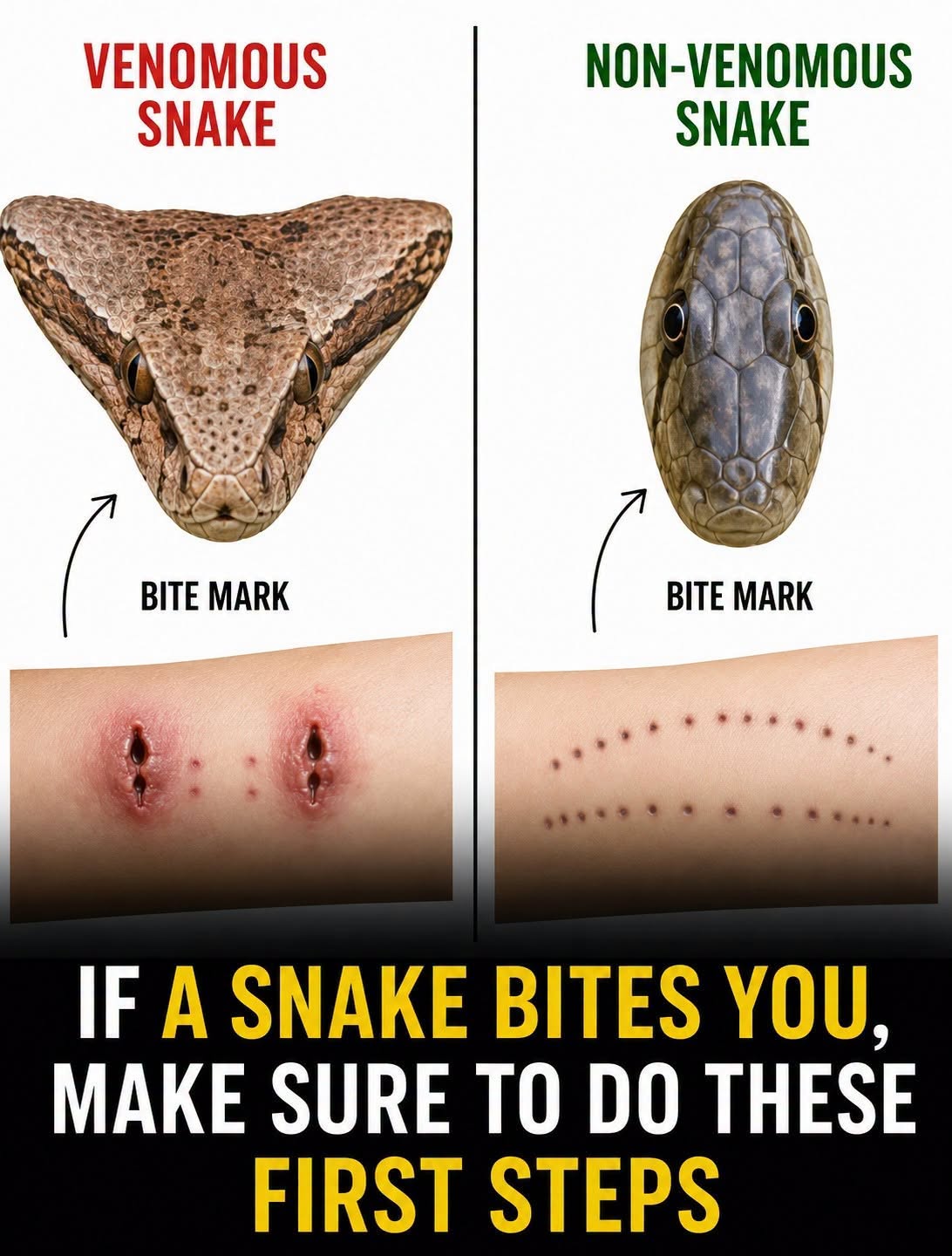
A Gentle, Science-Backed Guide to Snake Bite First Aid can make an enormous difference when an unexpected encounter with a snake turns into a medical emergency. Snake bites can happen while gardening, hiking, farming, camping, moving firewood, or simply walking through areas where snakes naturally live. Although many snake bites do not involve dangerous envenomation, you should treat every suspected venomous snake bite as an emergency and seek professional medical care immediately.
The most important first steps stay surprisingly simple: move away from the snake, call emergency medical services, keep the person as still as possible, remove rings or other tight items before swelling begins, and avoid harmful remedies such as cutting the wound, sucking out venom, applying ice, or using a tourniquet. CDC and World Health Organization guidance both emphasize rapid medical evaluation and minimizing unnecessary movement.
I learned the value of preparation during a summer walk when a snake suddenly crossed the trail only a few feet ahead of me. Nothing happened, but the encounter made me realize how little I actually remembered about snake bite first aid. I knew enough to avoid the snake, yet several old ideas from movies still floated around in my mind, including cutting a bite or tying something tightly above it. Later, I reviewed modern first-aid guidance and discovered that many familiar “survival tricks” can cause additional injury. Since then, I have kept one rule firmly in mind: create distance, reduce movement, call for help, and let trained medical professionals handle the venom.
What to Do Immediately After a Snake Bite
A Gentle, Science-Backed Guide to Snake Bite First Aid starts with one priority: get the bitten person to medical care as quickly and safely as possible. Antivenom can prevent or reverse many serious effects of snake envenomation, but appropriate antivenom belongs in a medical setting where clinicians can monitor the patient and manage complications.
Move Away, Call for Help, and Keep Still
First, move away from the snake’s striking range. Do not attempt to catch, kill, handle, or closely photograph the snake. Even a dead or severely injured venomous snake can remain dangerous to handle. If you can take a photograph from a safe distance without delaying care or approaching the animal, the image may help professionals with identification. Otherwise, simply remember the snake’s approximate color, pattern, size, and shape.
Next, call emergency medical services. In the United States, call 911. In another country, use the local emergency number. Do not wait for swelling, pain, weakness, or other symptoms to appear before seeking help. A venomous bite may initially look minor, while serious effects can develop later.
Have the bitten person sit or lie down and keep movement to a minimum. If possible, have someone else arrange transportation rather than letting the bitten person walk or drive. CDC guidance specifically warns people not to drive themselves because snake envenomation may cause dizziness, weakness, or loss of consciousness.
Keep the bitten arm or leg comfortably still. Splinting can reduce unnecessary movement during transport when done without delaying emergency care.
Most importantly, focus on practical calm rather than trying to control every heartbeat. Reassurance can help the person cooperate with immobilization and emergency transport. The goal is not to suggest that fear alone determines the outcome. Instead, the goal is simply to prevent unnecessary physical activity while getting appropriate care quickly.
Remove Tight Items Before Swelling Starts
Snake venom can cause significant swelling around a bitten hand, arm, foot, or leg. Therefore, remove rings, watches, bracelets, anklets, tight shoes, and other constricting items as early as possible.
Do this gently and without making the person move unnecessarily.
A ring that fits comfortably immediately after the bite can become painfully tight as swelling develops. Consequently, early removal can prevent additional pressure on swollen tissues.
If clothing fits tightly around the affected area, loosen it when practical. However, avoid unnecessary manipulation of the limb.
CDC guidance recommends placing the person in a comfortable position and covering the bite with a clean, dry dressing after gentle washing when appropriate.
First-aid guidance can differ somewhat by country and snake species, especially regarding wound washing and limb position. For example, some regions may preserve venom residue for identification techniques, while U.S. CDC guidance recommends soap-and-water cleansing. Therefore, follow local emergency-dispatch instructions whenever they differ from general advice.
This regional variation becomes especially important with compression bandaging. Do not automatically wrap every snake-bitten limb tightly. Different venom types require different approaches, and incorrect compression may worsen tissue injury.
Snake Bite First Aid Myths You Should Avoid
A Gentle, Science-Backed Guide to Snake Bite First Aid becomes especially valuable when it replaces outdated techniques with safer actions. Movies and old survival guides have repeated several practices that modern medical organizations now advise against.
Never Cut, Suck, Freeze, or Electrically Shock the Bite
Do not cut the bite with a knife or razor.
Cutting cannot reliably remove injected venom. Instead, it creates additional tissue damage, bleeding, and infection risk. Some snake venoms can also interfere with normal blood clotting, which makes unnecessary cuts particularly hazardous. WHO guidance specifically warns against incision and other traditional wound manipulation.
Likewise, do not suck venom from the wound with your mouth or a suction device. You cannot reliably remove a meaningful amount of venom this way, and suction may injure tissue or waste critical time.
Do not apply ice or immerse the bitten limb in ice water. Cold treatment does not neutralize venom and may contribute to local tissue injury. CDC guidance explicitly advises against both ice and water immersion.
Electric shock also provides no accepted first-aid benefit and can harm the bitten person.
Avoid herbal pastes, chemicals, “snake stones,” oils, or other traditional remedies. WHO notes that many unproven interventions either do nothing useful or actively increase harm while delaying medical treatment.
The best use of those first few minutes is not experimentation.
Call for help, reduce movement, remove constricting items, and prepare for medical transport.
Do Not Use a Tight Tourniquet
A tight tourniquet may seem logical because it appears to trap venom in one area. However, cutting off arterial blood flow can seriously damage tissue and nerves.
WHO guidance strongly advises against tight arterial tourniquets because they can contribute to ischemia, gangrene, nerve damage, swelling, and other severe complications.
A tourniquet is not the same thing as a properly applied pressure-immobilization bandage.
However, that distinction creates another important warning: do not improvise pressure immobilization unless regional medical guidance recommends it for the suspected snake and you know how to apply it correctly.
In the United States, the American Red Cross advises against pressure immobilization following bites from pit vipers such as rattlesnakes, copperheads, and cottonmouths because those venoms can cause substantial local tissue injury. Pressure immobilization may sometimes be considered for suspected coral-snake bites by trained people when transport will be prolonged.
Similarly, WHO notes that pressure immobilization suits only selected primarily neurotoxic snake bites that do not cause significant local swelling.
Therefore, do not apply a pressure bandage simply because you have seen one in an infographic.
Follow local emergency guidance.
Recognizing Symptoms and Helping Until Care Arrives
Not every venomous snake bite produces the same symptoms. Venoms differ between species, and the amount of venom delivered can also vary considerably.
A Gentle, Science-Backed Guide to Snake Bite First Aid therefore focuses on monitoring rather than trying to judge severity from the appearance of the bite alone.
Signs That Envenomation May Be Developing
Local symptoms can include pain, tenderness, swelling, bruising, redness, blistering, or tissue changes around the bite.
However, some dangerous bites may initially cause relatively little local swelling.
Systemic symptoms can include nausea, vomiting, weakness, tingling, sweating, dizziness, abnormal bleeding, breathing difficulty, paralysis, confusion, or signs of shock. WHO notes that different toxins may affect blood clotting, muscles, nerves, breathing, and local tissues in very different ways.
Do not rely on visible fang marks either. A bite can matter even when you cannot clearly see two punctures.
Likewise, do not decide that someone is safe because they feel well ten minutes after the bite.
Medical professionals may need to observe symptoms, perform blood testing, monitor swelling, assess clotting, evaluate breathing, and decide whether antivenom is appropriate.
While waiting for emergency care, continue monitoring the person’s breathing and responsiveness.
If the person becomes unresponsive and does not breathe normally, begin CPR if you know how and follow emergency-dispatch instructions.
If vomiting occurs and the person cannot sit safely, place them in a recovery position when possible while protecting the bitten limb from unnecessary movement. WHO recommends airway monitoring because some venoms can impair breathing.
Document Changes Without Delaying Treatment
If swelling develops while you wait for medical care, you can note how quickly it progresses.
CDC occupational guidance suggests marking the leading edge of swelling or tenderness and writing the time beside the mark. This information can help medical professionals assess progression.
However, do not delay transport to create a detailed record.
A quick photograph of the swelling may also help document changes, but emergency care remains the priority.
Do not repeatedly squeeze or manipulate the bite.
Do not give alcohol.
CDC also advises avoiding aspirin, ibuprofen, and naproxen after suspected venomous snake bites because some venoms can affect bleeding.
If emergency services give different instructions based on local snake species or the person’s condition, follow those instructions.
This point matters because snake-bite first aid is not identical everywhere in the world.
Australia, Africa, Asia, Europe, and the Americas have different medically important snake species. Consequently, regional protocols may differ in pressure immobilization, wound handling, and transport recommendations.
The universal principles remain rapid medical care, minimal movement, avoidance of harmful traditional remedies, and protection from another bite.
How to Reduce Your Risk Before a Bite Happens
A Gentle, Science-Backed Guide to Snake Bite First Aid should also help prevent the emergency in the first place. Snakes generally bite defensively when people surprise, corner, handle, or step near them.
Simple outdoor habits can substantially reduce unnecessary encounters.
Safer Habits for Hiking, Gardening, and Yard Work
Wear sturdy boots and long pants when working in snake habitat.
CDC recommends protective footwear and long clothing for outdoor workers, along with gloves when handling brush or debris.
Watch where you place your hands and feet.
Avoid reaching blindly into wood piles, thick brush, rock crevices, tall grass, or dark storage spaces.
When hiking, step onto rather than directly over large logs when practical, so you can see where your next foot will land.
Use a flashlight outdoors after dark.
Additionally, shake out shoes, gloves, bedding, and clothing that have remained outside or in sheds before putting them on.
If you see a snake, give it space.
Do not poke it with a stick, attempt to move it, or try to kill it. CDC notes that people often receive bites when they handle or disturb snakes.
If a snake enters your home, contact local animal-control or wildlife professionals rather than trying to remove it yourself.
Children and pets also need supervision in areas where snakes may hide.
Prepare Before Visiting Remote Areas
If you hike, camp, farm, or travel in a region with venomous snakes, learn which medically important species live there.
You do not need to become an expert herpetologist.
However, knowing that venomous snakes occur locally can help you take sensible precautions.
When traveling remotely, know how you will contact emergency services and where the nearest capable medical facility is located.
CDC travel guidance notes that access to antivenom can become difficult in remote areas, so travelers in higher-risk regions should understand transportation options before an emergency occurs.
Carry a basic first-aid kit, communication device, and sufficient water.
However, avoid filling a kit with snakebite suction pumps or other gadgets that encourage ineffective treatment.
Preparation should improve access to care rather than replace it.
Frequently Asked Questions
Should I call emergency services for every snake bite?
Yes. Treat a suspected snake bite as a medical emergency, particularly when you cannot confidently identify the snake as harmless. CDC guidance advises seeking immediate medical attention and not waiting for symptoms to appear.
Should I try to catch the snake for identification?
No. Do not chase, trap, kill, or handle the snake. A second bite creates another emergency. If you can safely photograph the animal from a distance without approaching it or delaying care, a picture may help, but treatment should never depend on capturing the snake.
Should I suck venom out of a snake bite?
No. Medical organizations advise against suction. It does not reliably remove injected venom and can cause additional injury or delay emergency treatment. Cutting the bite first makes the situation even more dangerous.
Should I put a tourniquet or pressure bandage above the bite?
Do not use a tight arterial tourniquet. Pressure immobilization requires more nuance and depends on the snake species and regional medical protocol. In the United States, the Red Cross advises against pressure immobilization for pit-viper bites and limits consideration mainly to suspected coral-snake bites in specific circumstances and by trained responders.
What treatment actually works for dangerous snake envenomation?
Appropriate antivenom provides the specific medical treatment that can prevent or reverse many serious venom effects. Patients may also require breathing support, fluids, wound care, clotting management, pain control, tetanus protection, and other hospital treatment depending on the venom and symptoms.
Conclusion
A Gentle, Science-Backed Guide to Snake Bite First Aid replaces dramatic survival myths with actions that genuinely matter.
Move away from the snake.
Call emergency medical services immediately.
Keep the bitten person as still as possible.
Remove rings, watches, and other constricting items before swelling develops.
Avoid cutting the bite, sucking venom, applying ice, using electric shock, or tying a tight tourniquet.
Most importantly, do not waste valuable time trying to identify or capture the snake.
Medical evaluation matters because symptoms can develop after an initially mild-looking bite, and appropriate antivenom may prevent serious complications.
Also remember that pressure-immobilization advice varies by snake species and region. Do not improvise compression based on generic online instructions. Follow your local emergency service or medical authority.
Snake encounters can feel frightening, but preparation gives you something much more useful than panic: a clear plan.
Create distance, minimize movement, call for help, and get to professional medical care as quickly as possible.