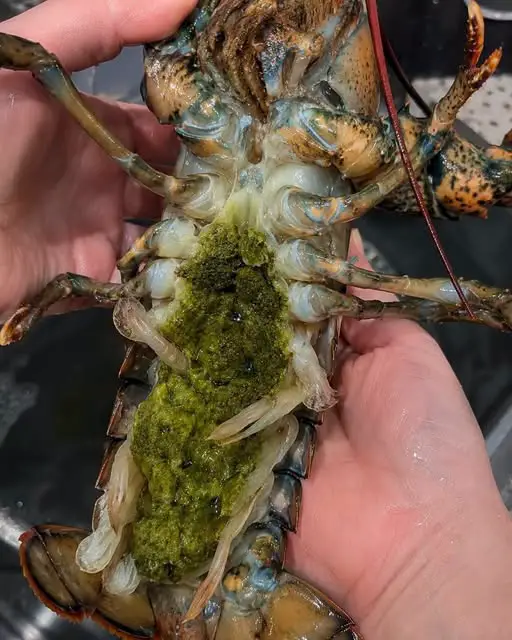
The first time you crack open a whole lobster and discover a bright green, creamy substance inside, it’s hard not to pause.
For many people, the reaction is immediate.
“Has the lobster gone bad?”
“Is it mold?”
“Is it safe to eat?”
That surprising green paste has puzzled seafood lovers for generations. Some diners scrape it away without a second thought, while others consider it the most flavorful part of the entire lobster.
So who’s right?
The answer is more interesting than you might expect.
That mysterious green substance is called tomalley, and although it may not look particularly appetizing at first glance, it has long been regarded as a delicacy in many coastal communities. At the same time, food safety experts advise enjoying it with caution because of the unique role it plays inside the lobster’s body.
Understanding exactly what tomalley is—and why opinions about it differ so dramatically—can help you make an informed decision the next time lobster appears on your dinner table.
What Exactly Is the Green Stuff?
The green material isn’t spoiled meat.
It isn’t algae.
And it certainly isn’t something that accidentally got inside the shell during cooking.
Tomalley is actually one of the lobster’s internal organs.
More specifically, it functions as both the liver and pancreas.
Scientists sometimes refer to it as the hepatopancreas, because it performs many of the same jobs that the liver and pancreas perform in humans.
Inside the lobster, tomalley is responsible for:
- Digesting food
- Producing digestive enzymes
- Storing energy reserves
- Processing nutrients
- Filtering waste products
Because it serves as the lobster’s natural filtration system, it also collects substances the animal encounters throughout its life.
That fact explains why this small green organ has become the center of an ongoing debate.
Why Some People Consider It a Delicacy
For experienced seafood lovers, tomalley is often viewed as a culinary treasure.
Its flavor is rich, intensely savory, and unmistakably oceanic.
Rather than tasting like lobster meat, it delivers a concentrated seafood flavor that’s creamy, buttery, and slightly mineral.
Professional chefs sometimes incorporate small amounts into recipes to enhance dishes such as:
- Lobster bisque
- Seafood sauces
- Pasta dishes
- Compound butter
- Chowders
- Seafood spreads
Some diners even spread it onto toasted bread or stir it into melted butter before dipping lobster meat.
For those who appreciate strong seafood flavors, tomalley provides a depth that ordinary lobster meat simply doesn’t offer.
However, not everyone enjoys its taste or texture.
Many people find it earthy, slightly bitter, or simply too intense.
And personal preference is only part of the story.
Why Food Safety Experts Recommend Caution
The same organ that gives tomalley its rich flavor is also the reason health experts advise moderation.
Unlike the white tail and claw meat, tomalley acts as the lobster’s filtration and digestive organ. Throughout the lobster’s life, it processes nutrients from everything the animal eats while also filtering certain naturally occurring substances found in its environment.
Because of this, tomalley may accumulate higher concentrations of contaminants than the edible muscle meat.
That doesn’t automatically make it dangerous, but it does explain why many public health agencies recommend limiting consumption, particularly if the source of the lobster is unknown.
The Concern About Marine Toxins
One of the primary concerns isn’t the lobster itself—it’s the water where it lived.
Occasionally, certain microscopic algae multiply rapidly in what are commonly called harmful algal blooms or “red tides.” Some species of these algae produce natural toxins that shellfish and other marine animals can accumulate.
While lobster meat generally contains very low levels of these substances, the tomalley can concentrate them because of its role in digestion and filtration.
This is why seafood authorities sometimes advise people not to eat tomalley from areas experiencing harmful algal blooms.
These advisories are precautionary measures designed to reduce exposure to naturally occurring marine toxins.
Heavy Metals and Environmental Pollutants
Another reason for moderation involves environmental contamination.
Like many marine animals, lobsters live on the ocean floor, where they may encounter small amounts of pollutants that enter waterways over many years.
Because tomalley functions similarly to a liver, it can contain higher levels of certain contaminants than the lobster’s muscle meat.
These may include:
- Trace heavy metals
- Industrial pollutants
- Environmental chemicals
For most healthy adults, occasional consumption of tomalley from reputable seafood sources is unlikely to cause problems. However, frequent consumption—especially from unknown or unregulated waters—is generally discouraged.
Who Should Avoid Eating Tomalley?
Certain people may want to skip the green organ altogether.
These include:
- Pregnant women
- Young children
- People with weakened immune systems
- Individuals with chronic liver or kidney disease
- Anyone advised by their healthcare provider to limit exposure to environmental contaminants
If you’re unsure where your lobster was harvested, avoiding the tomalley is the simplest choice.
The white meat from the claws, tail, and knuckles remains the safest and most commonly enjoyed part of the lobster.
How Can You Tell If Tomalley Is Fresh?
Fresh tomalley typically appears:
- Green to olive green in color
- Smooth and creamy
- Moist but not watery
- Mildly ocean-scented
If it develops a strong sour odor, unusual discoloration, or signs of spoilage, it’s best to discard the entire lobster.
Freshness matters just as much as understanding what you’re eating.
Purchasing lobster from trusted seafood markets and reputable suppliers greatly reduces the risk of foodborne illness.
Does Cooking Remove the Risk?
This is a common misconception.
Cooking destroys many bacteria and parasites, but it does not eliminate marine toxins or heavy metals that may be present in tomalley.
Whether the lobster is boiled, steamed, grilled, or baked, those substances can remain.
That’s why food safety recommendations focus on moderation rather than cooking method.
The decision ultimately comes down to personal preference, individual health considerations, and confidence in the seafood’s source.
The Best Way to Enjoy Lobster Safely
If you’re preparing lobster at home or ordering it at a restaurant, a few simple guidelines can help you enjoy it with confidence.
Choose Lobster from Trusted Sources
Where your seafood comes from matters.
Buy lobster from reputable seafood markets, grocery stores, or restaurants that follow proper food safety practices. Commercial suppliers are generally monitored more closely for water quality and harvesting regulations than unknown or recreational sources.
Fresh lobster should have:
- A clean ocean smell
- Firm, translucent meat before cooking
- No sour or ammonia-like odor
- A hard shell with no obvious damage
If you’re harvesting lobster yourself, always check local advisories regarding water quality and harmful algal blooms before consuming any part of the animal.
Should You Eat the Green Stuff?
There’s no universal answer.
Some seafood enthusiasts consider tomalley a prized delicacy with an intense, buttery seafood flavor. Others avoid it entirely because of food safety recommendations.
Both choices are perfectly reasonable.
If you decide to eat it:
- Enjoy it only occasionally.
- Eat small amounts.
- Make sure the lobster comes from clean, regulated waters.
If you’d rather skip it, you’re not missing the primary edible portion of the lobster. The tail, claws, knuckles, and legs provide the sweet, tender meat that makes lobster famous around the world.
Common Myths About Lobster Tomalley
Myth: Green means the lobster is spoiled.
Fact: Healthy tomalley is naturally green because of pigments in the lobster’s digestive system.
Myth: It’s lobster poop.
Fact: No. Tomalley is an internal organ that functions like a liver and pancreas. Waste is expelled separately.
Myth: Cooking makes it completely safe.
Fact: Cooking destroys harmful microbes but does not remove naturally occurring marine toxins or environmental contaminants.
Myth: Everyone should avoid it.
Fact: Many people eat tomalley without issue. Health authorities simply recommend moderation, especially for vulnerable groups or when seafood comes from uncertain sources.
Frequently Asked Questions
Is the green stuff poisonous?
Not inherently. However, because it can accumulate marine toxins and environmental contaminants, health agencies often recommend limiting consumption.
Can children eat it?
Many experts advise serving children only the white lobster meat rather than the tomalley.
Is tomalley nutritious?
It contains fats, vitamins, and minerals, but those nutritional benefits should be weighed against the possibility of concentrated contaminants.
Does every lobster have green tomalley?
Yes. Every lobster has this digestive organ, although the amount and appearance may vary depending on the lobster’s diet and condition.
Why do chefs sometimes use it in recipes?
Its rich, concentrated seafood flavor can enhance sauces, soups, bisques, and spreads, making it popular in some traditional cuisines.
Final Thoughts
The mysterious green substance inside a lobster has sparked curiosity for generations. While it may look unusual, it isn’t a sign that your lobster has gone bad. It’s simply the lobster’s tomalley—an organ that plays an important role in digestion.
For some diners, it’s a sought-after delicacy prized for its bold, ocean-rich flavor. For others, it’s something to leave on the plate because of recommendations to limit exposure to naturally occurring marine toxins and environmental contaminants.
The good news is that you don’t have to choose one side or the other. Understanding what tomalley is allows you to make an informed decision based on your own comfort level, your health, and where the lobster came from.
Whether you savor every part of the lobster or stick to the sweet white meat, knowledge is the best ingredient at the table.
The next time you crack open a lobster and spot that bright green surprise, you won’t have to wonder what it is—you’ll know exactly why it’s there and how to decide whether it’s right for you.