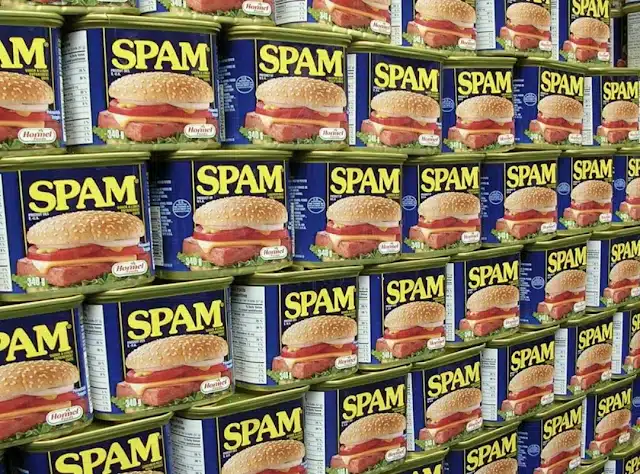
Few foods have achieved the level of recognition that Spam enjoys. For decades, this iconic canned meat has occupied pantry shelves around the world, earning a loyal following thanks to its long shelf life, versatility, and distinctive flavor. Whether fried for breakfast, diced into fried rice, added to sandwiches, or served alongside eggs, Spam remains a staple in countless kitchens.
Yet even longtime Spam fans occasionally experience a moment of concern when opening a fresh can.
You slide the meat out, prepare to slice it, and suddenly notice small white lumps or specks scattered throughout the pink meat. Instantly, questions begin to form.
Is it mold?
Has the product gone bad?
Is it safe to eat?
Should it be thrown away?
If you’ve ever had this experience, you’re certainly not alone. Thousands of people search online every year after spotting these mysterious white bits. Fortunately, the answer is far less alarming than many expect.
In most cases, those white specks are completely normal and entirely harmless. Understanding what they are, why they appear, and how to distinguish them from actual signs of spoilage can save you unnecessary worry—and possibly save your lunch.
Let’s take a deeper look at what’s really happening inside that can of Spam.
Understanding What Spam Actually Is
Before discussing the white specks themselves, it helps to understand how Spam is made.
Many people assume canned meats contain a long list of mysterious ingredients. In reality, the ingredient list for classic Spam is surprisingly straightforward.
Traditional Spam contains:
- Pork with ham
- Salt
- Water
- Modified potato starch
- Sugar
- Sodium nitrite
That’s it.
While some flavored varieties contain additional seasonings, the basic formula remains relatively simple.
The combination of pork and ham provides the meat base, while modified potato starch helps bind everything together and maintain texture. Salt enhances flavor and contributes to preservation. Sodium nitrite serves as a curing agent that helps prevent bacterial growth and maintain the product’s familiar pink color.
What many people overlook is that pork naturally contains fat.
That fat plays a critical role in the final product.
Without it, Spam would be dry, crumbly, and much less flavorful.
The Manufacturing Process Explained
Spam undergoes a carefully controlled production process.
The pork and ham are ground and mixed with the remaining ingredients. The mixture is then packed into cans and sealed.
Next comes one of the most important steps.
The sealed cans are cooked under high heat and pressure.
This process serves several purposes:
- It cooks the meat completely.
- It kills harmful bacteria.
- It creates a sterile environment inside the can.
- It extends shelf life dramatically.
Because the food is cooked after sealing, the contents remain protected from outside contamination as long as the can remains intact.
This is one reason why Spam can safely remain on store shelves for years.
The sealed environment also helps explain why internal mold growth is extremely uncommon.
So What Are Those White Bits?
The answer is surprisingly simple.
Those white lumps are usually solidified pork fat.
Sometimes they may also include tiny amounts of connective tissue naturally present in the meat. Both are completely normal.
When pork fat cools, it changes appearance and texture.
Warm fat appears soft and translucent.
Cold fat becomes firm and white.
Because Spam often spends time in cool storage conditions before reaching your kitchen, the fat solidifies and becomes more visible against the pink meat.
The result is the appearance of small white specks, streaks, or lumps throughout the product.
These are not foreign objects.
They are not contaminants.
They are simply part of the pork itself.
Why Fat Appears White
Many people assume fat should look yellow or transparent.
However, animal fat often appears white when solid.
This occurs because solid fat scatters light differently than liquid fat.
When the fat molecules are tightly packed together, they reflect light in a way that creates a white or creamy appearance.
The same phenomenon occurs in:
- Bacon fat
- Pork chops
- Sausage
- Ham
- Ground pork
If you’ve ever cooked bacon and watched the white fat slowly melt into clear liquid, you’ve already seen this process in action.
Spam behaves exactly the same way.
Why the White Bits Become More Noticeable
Several factors can make the white specks stand out.
Refrigeration
Cold temperatures cause fat to harden.
If Spam has been refrigerated, the fat becomes more visible and easier to distinguish from the surrounding meat.
Product Variation
Different batches may contain slightly different amounts of visible fat.
Since meat is a natural product, no two batches are completely identical.
Lighting
Bright kitchen lighting can exaggerate color differences between fat and meat.
What looks alarming under direct light often appears completely normal during cooking.
Slicing
Freshly cut surfaces reveal internal fat deposits more clearly than the exterior surface.
This often causes concern immediately after opening a can.
Why Fat Is Important in Spam
Some consumers view fat as an undesirable ingredient.
In reality, fat performs several essential functions.
Flavor Enhancement
Much of meat’s flavor comes from fat.
Without it, Spam would taste significantly less rich and satisfying.
Moisture Retention
Fat helps prevent dryness.
During cooking, it melts and distributes moisture throughout the meat.
Texture Improvement
The smooth, sliceable texture that Spam is known for depends heavily on its fat content.
Without adequate fat, the product would become crumbly and difficult to cook.
Browning During Cooking
When Spam is fried, rendered fat contributes to the crispy, golden crust many people enjoy.
In other words, those white specks help create the flavor and texture that fans love.
Fat vs. Mold: How to Tell the Difference
The biggest concern most people have is whether the white bits might actually be mold.
Fortunately, distinguishing between the two is usually easy.
Characteristics of Normal Fat
Normal fat:
- Appears smooth
- Feels firm
- Is embedded within the meat
- Has a white or creamy color
- Appears evenly distributed
- Has no unusual odor
Fat blends naturally into the structure of the meat.
It looks like part of the product because it is.
Characteristics of Mold
Mold behaves very differently.
Mold typically:
- Appears fuzzy or powdery
- Grows on surfaces
- Forms isolated patches
- Displays green, blue, black, or gray colors
- Produces unpleasant odors
- May create slimy areas
Mold rarely distributes itself evenly throughout a sealed canned product.
Instead, it grows in localized colonies.
This difference provides one of the easiest ways to distinguish normal fat from spoilage.
Is Mold Inside Spam Even Possible?
Technically, yes.
Practically, it’s very rare.
Spam undergoes commercial sterilization after sealing.
As long as the can remains intact, bacteria and mold cannot enter.
This means internal mold growth generally requires a compromised container.
Possible causes include:
- Deep dents
- Damaged seams
- Severe rust
- Manufacturing defects
- Improper storage after opening
When a can remains properly sealed, the risk of internal mold is extremely low.
Warning Signs That Spam Should Be Discarded
While white fat specks are harmless, certain signs should never be ignored.
Discard Spam immediately if you notice:
A Bulging Can
Swollen cans often indicate bacterial activity producing gas inside the container.
This is a serious warning sign.
Leaking Contents
Any leakage suggests the seal has failed.
Severe Rust
Surface rust may not always be problematic, but extensive corrosion can weaken the can.
Deep Dents Along Seams
Damaged seams compromise food safety.
Foul Odor
Fresh Spam has a distinctive salty, meaty smell.
Sour, rotten, or rancid odors indicate spoilage.
Slimy Texture
A slippery or sticky surface may signal bacterial growth.
Unusual Colors
Green, black, gray, or rainbow-like discoloration should not be ignored.
When any of these symptoms appear, discard the product.
What Happens to the White Bits During Cooking?
This is where the mystery truly disappears.
Heat transforms the fat completely.
As Spam cooks:
- The fat softens.
- The fat melts.
- The liquid fat disperses through the meat.
- Moisture increases.
- Flavor intensifies.
Those visible white specks gradually disappear.
Instead of remaining as lumps, they become part of the rich, savory flavor profile.
This transformation explains why fried Spam develops such a juicy interior while maintaining a crispy exterior.
The white bits aren’t ruining the food.
They’re improving it.
Why Some Cans Contain More Visible Fat Than Others
Consumers sometimes notice that one can contains more white specks than another.
This variation is perfectly normal.
Factors include:
- Natural differences in pork cuts
- Fat distribution within the meat
- Production batch variations
- Storage temperature
Because Spam uses real meat, some variation is inevitable.
The presence of more visible fat does not indicate lower quality.
Common Myths About White Specks in Spam
Myth #1: It’s Mold
In nearly all cases, it is simply solidified fat.
Myth #2: It Means the Product Is Old
Fat visibility does not indicate age.
Fresh cans often contain visible white specks.
Myth #3: The Product Has Gone Bad
Visible fat is not a spoilage indicator.
Myth #4: The White Bits Are Artificial Fillers
The white portions are naturally occurring fat and connective tissue from pork.
Myth #5: You Should Cut Them Out
Removing them isn’t necessary and may reduce flavor.
Why Understanding Food Matters
Many food concerns arise because modern consumers are disconnected from how products are made.
When something looks unfamiliar, it can appear suspicious.
Yet many foods contain natural variations.
Eggs vary in color.
Fruit develops spots.
Cheese forms crystals.
Meat contains fat.
Understanding these characteristics helps people make informed decisions rather than reacting out of fear.
Knowledge often turns confusion into confidence.
Final Thoughts
If you’ve ever opened a can of Spam and noticed white lumps scattered throughout the meat, there’s usually no reason for concern.
Those mysterious white bits are almost always solidified pork fat and occasionally small amounts of connective tissue. They are a natural part of the product and play an important role in its flavor, moisture, and texture.
Before worrying, examine the can itself. Check for swelling, leaks, severe rust, or damaged seams. After opening, pay attention to the smell and overall appearance.
If the can is intact, the aroma is normal, and the white specks appear smooth and evenly distributed, your Spam is almost certainly safe to enjoy.
In fact, once the meat hits a hot skillet, those white bits melt away and contribute to the rich flavor that has made Spam a pantry favorite for generations.
So the next time you spot those white specks, you can skip the panic. They aren’t mold. They aren’t contamination. They’re simply a natural part of the pork—doing exactly what they’re supposed to do.
And sometimes, understanding what’s on your plate is the best way to enjoy it with confidence.