
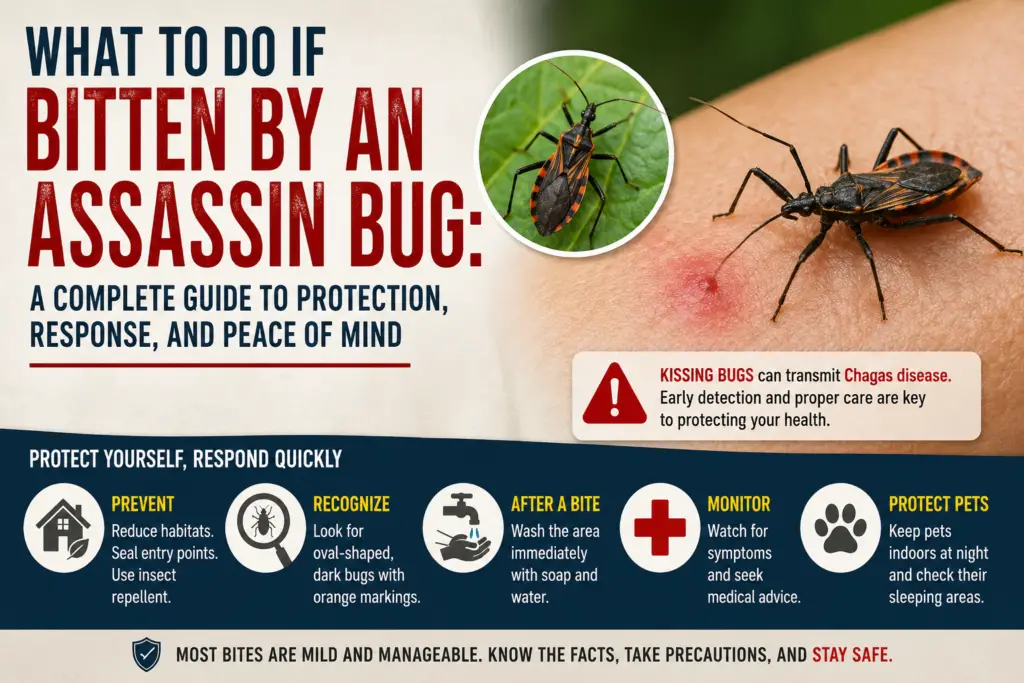
Summer evenings invite us outdoors. Whether you’re gardening, enjoying a barbecue, camping under the stars, or simply relaxing on your porch, warmer weather brings opportunities to reconnect with nature. Unfortunately, it also brings insects. Most people know how to avoid mosquitoes, ticks, and wasps, but far fewer are familiar with a lesser-known insect that has recently gained attention: the assassin bug.
The name alone sounds alarming.
While most assassin bugs are actually beneficial insects that help control garden pests, certain species—commonly known as kissing bugs—can pose health risks to humans and animals. These insects have been linked to Chagas disease, a parasitic infection that affects millions of people worldwide.
The good news is that knowledge is one of your best forms of protection. By understanding what assassin bugs are, where they live, how they behave, and what to do if you encounter one, you can significantly reduce your risk and respond calmly if a bite occurs.
This guide covers everything you need to know about assassin bugs, including prevention strategies, symptoms to watch for, treatment options, and practical steps to protect your family and pets.
Understanding Assassin Bugs: Separating Fact from Fear
When people first hear the term “assassin bug,” they often imagine a dangerous insect lurking around every corner. The reality is far less dramatic.
Assassin bugs belong to the insect family Reduviidae, which contains thousands of species found throughout North and South America, Europe, Africa, and Asia.
Most assassin bugs are predators.
They feed on:
- Aphids
- Caterpillars
- Beetles
- Flies
- Other garden pests
In fact, many gardeners consider them beneficial because they naturally help control pest populations.
However, one specific group within this family deserves special attention.
The Kissing Bug Connection
Certain assassin bugs belong to a subfamily called Triatominae.
These insects are commonly known as kissing bugs.
Unlike other assassin bugs that prey on insects, kissing bugs feed on the blood of mammals, birds, and reptiles.
They earned their nickname because they often bite near the face, especially around:
- Lips
- Eyes
- Cheeks
- Nose
While the bite itself is usually painless, the potential health concern comes from what happens afterward.
Some kissing bugs carry a parasite known as Trypanosoma cruzi, the organism responsible for Chagas disease.
Why Chagas Disease Matters
The biggest health concern associated with kissing bugs is Chagas disease.
Unlike mosquito-borne illnesses that spread through saliva, Chagas disease is transmitted differently.
After feeding, infected kissing bugs may defecate near the bite site.
The parasite is present in the insect’s feces.
If a person scratches the bite or rubs the contaminated area, the parasite may enter the body through:
- The bite wound
- Broken skin
- The eyes
- The nose
- The mouth
This unusual method of transmission explains why prompt cleaning of the bite area is so important.
How Common Is Chagas Disease?
Globally, experts estimate that six to seven million people live with Chagas disease.
Most cases occur in:
- Central America
- South America
- Mexico
However, kissing bugs have also been found throughout the southern United States, and locally acquired cases occasionally occur.
While the risk remains relatively low, awareness is essential because early treatment dramatically improves outcomes.
Identifying an Assassin Bug
Knowing how to recognize these insects can help you avoid unnecessary panic while remaining vigilant.
Most assassin bugs have:
- Long oval-shaped bodies
- Brown, black, or dark gray coloration
- Long legs
- A narrow head
- A distinctive curved mouthpart used for feeding
Adult insects typically range from one-half inch to one and a half inches long.
Kissing bugs often have:
- Flattened bodies
- Orange or red markings along the sides
- Cone-shaped heads
- Long antennae
Because many harmless insects resemble kissing bugs, proper identification is important.
If you find a suspicious insect in your home, capture it safely in a container if possible.
This can help local health departments or healthcare providers determine whether it poses any risk.
Where Assassin Bugs Live
Understanding their preferred habitats is one of the best ways to prevent encounters.
Assassin bugs seek shelter in quiet, protected environments during the day.
Common hiding places include:
Woodpiles
Stacks of firewood provide ideal daytime shelter.
Keep firewood elevated and stored away from your home whenever possible.
Rock Piles and Debris
Unmoved stones, brush piles, and yard debris create perfect hiding places.
Regular yard maintenance helps reduce habitat opportunities.
Animal Shelters
Kennels, chicken coops, barns, and pet sleeping areas can attract kissing bugs because they provide access to blood meals.
Dense Vegetation
Overgrown shrubs and thick ground cover may provide protection and hunting grounds.
Attics and Wall Spaces
During cooler weather, bugs may enter homes through cracks and openings in search of warmth.
Practical Prevention Strategies
Prevention is always easier than treatment.
Fortunately, several simple measures can dramatically reduce exposure.
Seal Entry Points
Inspect your home for:
- Cracks around windows
- Gaps around doors
- Openings near utility lines
- Damaged screens
Repairing these entry points can significantly reduce insect access.
Reduce Outdoor Lighting
Many insects are attracted to bright lights.
Consider:
- Yellow bug lights
- Motion-sensor lighting
- Turning off unnecessary lights
Maintain Your Yard
Regular yard care helps eliminate hiding places.
Important steps include:
- Trimming shrubs
- Removing brush piles
- Clearing debris
- Keeping grass short
Protect Sleeping Areas
If you camp or stay in rustic accommodations:
- Use screens
- Inspect bedding
- Seal sleeping areas
- Use bed nets when appropriate
Wear Protective Clothing
When spending time outdoors:
- Wear long sleeves
- Wear long pants
- Use insect repellent
- Avoid walking barefoot in brushy areas
Protecting Pets from Kissing Bugs
Dogs can also contract Chagas disease.
Because pets spend more time outdoors and often sleep near potential bug habitats, they may face increased exposure.
Pet owners should:
- Keep kennels clean
- Bring pets indoors at night when possible
- Inspect sleeping areas regularly
- Watch for unusual fatigue or illness
Veterinary consultation is especially important in areas where kissing bugs are known to occur.
What To Do Immediately After a Bite
If you suspect you’ve been bitten by an assassin bug or kissing bug, stay calm.
Most bites do not result in serious illness.
Follow these steps:
Step 1: Wash the Area Thoroughly
Use soap and warm water immediately.
This may help remove contaminated material before it enters the body.
Step 2: Avoid Scratching
Scratching increases the risk of introducing parasites or bacteria into the skin.
Step 3: Apply Antiseptic
Use:
- Hydrogen peroxide
- Antiseptic solution
- Antibiotic ointment
This helps reduce secondary infection risk.
Step 4: Monitor Symptoms
Pay attention to:
- Swelling
- Redness
- Fever
- Fatigue
- Rash
- Unusual reactions
Step 5: Save the Insect If Possible
A captured specimen may assist healthcare providers in determining appropriate testing.
Step 6: Contact a Healthcare Professional
Medical advice is especially important if:
- You live in a high-risk area
- Symptoms develop
- The insect is confirmed as a kissing bug
Symptoms of Chagas Disease
One challenge with Chagas disease is that symptoms are often mild or absent during the early stages.
Acute Phase Symptoms
The initial phase may include:
- Fever
- Fatigue
- Headache
- Body aches
- Swollen lymph nodes
- Rash
- Swelling near the bite site
Many people mistake these symptoms for a routine viral illness.
Chronic Phase Symptoms
Years or even decades later, untreated infections may contribute to:
- Heart rhythm abnormalities
- Enlarged heart
- Heart failure
- Digestive disorders
- Swallowing difficulties
- Colon enlargement
Because symptoms can remain hidden for years, early testing matters.
When to Seek Emergency Care
Most bites are minor.
However, emergency medical attention is necessary if you experience:
- Difficulty breathing
- Facial swelling
- Lip swelling
- Tongue swelling
- Severe dizziness
- Rapid heartbeat
- Signs of anaphylaxis
These symptoms may indicate a serious allergic reaction requiring immediate treatment.
Medical Evaluation and Testing
If your healthcare provider suspects possible exposure, several tests may be recommended.
These can include:
- Blood antibody testing
- PCR testing
- Physical examination
- Follow-up monitoring
If results are initially negative, repeat testing may be advised because antibodies take time to develop.
Treatment Options
When diagnosed early, Chagas disease is treatable.
The two primary medications are:
- Benznidazole
- Nifurtimox
These medications work best during the acute phase.
Treatment decisions depend on:
- Age
- Overall health
- Stage of infection
- Individual risk factors
Early diagnosis offers the greatest chance of successful treatment.
Frequently Asked Questions
Are all assassin bugs dangerous?
No. Most assassin bugs are beneficial predators that help control garden pests.
Can every kissing bug transmit Chagas disease?
No. Only infected bugs carrying the parasite pose a transmission risk.
Is the bite itself dangerous?
Most bites cause only mild irritation. The concern comes from possible parasite transmission.
Can pets get Chagas disease?
Yes. Dogs are particularly susceptible and should be protected in high-risk areas.
Should I kill assassin bugs in my garden?
Not necessarily. Many species are beneficial and help reduce harmful insect populations.
Final Thoughts
The name “assassin bug” sounds frightening, but understanding these insects removes much of the fear.
Most assassin bugs are helpful members of the ecosystem. The species that deserve special attention are kissing bugs because of their association with Chagas disease.
Fortunately, simple preventive measures—such as sealing entry points, reducing outdoor insect habitats, protecting pets, and practicing good bite care—can dramatically reduce your risk.
If a bite does occur, remember the most important steps:
Stay calm.
Wash the area thoroughly.
Avoid scratching.
Monitor symptoms.
Seek medical guidance when appropriate.
Knowledge transforms uncertainty into action. By learning how assassin bugs behave and understanding how to respond, you can enjoy the outdoors with greater confidence, awareness, and peace of mind.
A little preparation goes a long way toward keeping both you and your loved ones safe.