If you’re anything like me, the dishwasher feels like one of the greatest inventions ever created. After cooking dinner, loading everything into a machine and walking away feels like a small luxury. However, while dishwashers are incredibly convenient, they aren’t suitable for every kitchen item.
Many homeowners unknowingly damage expensive cookware, family heirlooms, and everyday utensils simply because they assume everything can survive a dishwasher cycle. The combination of high heat, powerful water jets, and strong detergents can be surprisingly destructive.
I learned this lesson the hard way after placing a favorite wooden spoon and a high-quality chef’s knife into the dishwasher. Within weeks, the spoon began to crack and the knife lost its razor-sharp edge. What seemed like a harmless shortcut ended up costing money and shortening the life of tools I used every day.
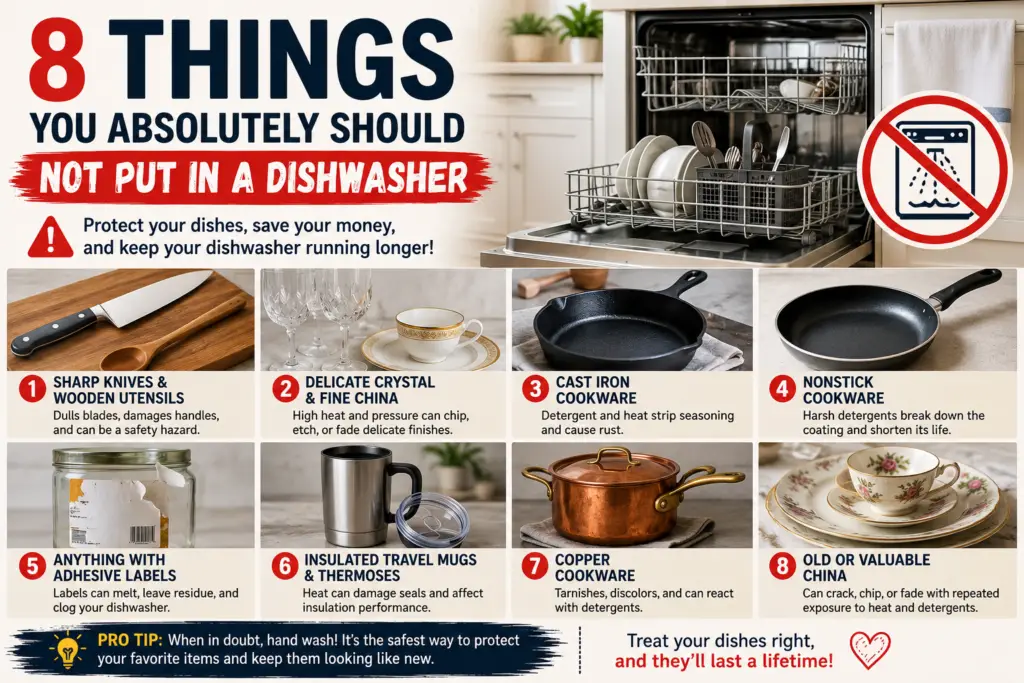
The good news is that avoiding these mistakes is easy once you know what to watch for. By understanding which items belong in the dishwasher and which deserve hand washing, you can protect your kitchen investments and keep your dishwasher operating efficiently for years to come. The source article highlights several commonly damaged items and explains why extra care matters.
Why Some Items Don’t Belong in the Dishwasher
Dishwashers clean using a combination of hot water, detergent, and pressure. While this works wonderfully for most plates, bowls, and stainless-steel utensils, it creates problems for delicate materials.
Common dishwasher hazards include:
- High temperatures that warp or crack materials
- Strong detergents that strip protective coatings
- Water pressure that chips fragile items
- Moisture that causes rust and corrosion
- Extended exposure to water that damages wood and adhesives
Understanding these risks helps explain why some kitchen favorites should always be washed by hand.
1. Sharp Knives and Wooden Utensils
Professional chefs often agree on one thing: good knives should never go in the dishwasher.
Why Knives Suffer
When knives bounce against other dishes during a wash cycle, their cutting edges become dull. The detergent can also damage certain blade materials, while prolonged moisture encourages corrosion on some steels.
There is also a safety concern. Reaching into a dishwasher full of hidden sharp objects increases the risk of cuts.
Why Wooden Utensils Need Special Care
Wood absorbs moisture. Repeated dishwasher cycles cause expansion and contraction, which can lead to:
- Cracking
- Splitting
- Warping
- Loose handles
Better Alternative
Wash knives and wooden utensils immediately after use with warm water and mild soap. Dry them thoroughly before storing.
2. Delicate Crystal and Fine China
Fine crystal and china often hold sentimental or monetary value, making dishwasher damage especially disappointing.
The Problem With Heat and Pressure
Crystal is vulnerable to:
- Chipping
- Scratching
- Clouding
- Permanent etching
Fine china decorated with metallic accents can lose its decorative finish after repeated exposure to harsh detergents and hot water.
Hand-Washing Tips
Use lukewarm water and a gentle dish soap. Place a towel in the sink to cushion fragile pieces and prevent accidental damage.
3. Cast Iron Cookware
Cast iron skillets are beloved because of their durability and natural nonstick surface. Ironically, the dishwasher can destroy the very feature that makes them special.
What Happens in the Dishwasher?
The seasoning layer on cast iron consists of polymerized oils that protect the metal and create a naturally nonstick surface.
Dishwasher detergent strips away this seasoning, leaving bare metal vulnerable to rust.
Proper Cast Iron Care
- Wash with hot water
- Use a brush or scraper
- Dry immediately
- Apply a light coat of oil afterward
This simple routine keeps cast iron performing beautifully for decades.
4. Nonstick Cookware
Nonstick cookware makes cooking and cleanup easier, but dishwasher use can shorten its lifespan dramatically.
Why Nonstick Coatings Break Down
Dishwasher detergents contain chemicals designed to remove grease and food residue. Unfortunately, these same chemicals gradually wear down nonstick coatings.
Over time, you may notice:
- Reduced nonstick performance
- Peeling surfaces
- Flaking coatings
- Uneven cooking
Best Practice
Use a soft sponge and mild dish soap. Avoid abrasive scrubbers that can scratch the surface.
5. Items With Adhesive Labels
This one surprises many people.
Why Labels Cause Problems
When exposed to hot water and detergent, adhesive labels often:
- Peel apart
- Leave sticky residue
- Clog filters
- Reduce dishwasher efficiency
Even a small sticker can create a frustrating mess inside your appliance.
Easy Solution
Remove labels before placing items in the dishwasher. Soaking containers in warm water usually loosens stubborn adhesives.
6. Insulated Travel Mugs and Thermoses
Travel mugs rely on a vacuum seal between their walls to maintain temperature.
How Dishwashers Damage Insulation
The intense heat inside a dishwasher can weaken or destroy that vacuum seal.
Once compromised, your mug may no longer:
- Keep drinks hot
- Keep beverages cold
- Prevent condensation
Rubber gaskets and lids can also warp over time.
Better Cleaning Method
Hand wash using warm water and a bottle brush. Leave lids off while drying to prevent trapped moisture.
7. Copper Cookware
Copper cookware is beautiful, but it requires gentle treatment.
Dishwasher Risks
Copper reacts poorly to dishwasher conditions.
Common issues include:
- Tarnishing
- Discoloration
- Pitting
- Loss of shine
The finish that makes copper cookware attractive can quickly become dull and uneven.
Maintaining the Shine
Wash copper by hand using mild soap and warm water. Dry immediately and polish periodically to maintain its appearance.
8. Antique or Valuable China
Family heirlooms deserve special attention.
Why Older Pieces Are Vulnerable
Antique china is often more fragile than modern dinnerware. Years of use and age make it susceptible to:
- Cracks
- Chips
- Fading patterns
- Structural weakening
Rapid temperature changes inside a dishwasher can create stress fractures that aren’t immediately visible.
Protecting Family Treasures
Always hand wash antique dishes using a soft cloth and mild soap. Store them carefully to prevent accidental damage.
Common Dishwasher Mistakes That Damage Results
Even when washing dishwasher-safe items, many people unknowingly reduce cleaning performance.
Overloading
Crowding dishes prevents water from reaching every surface.
Excessive Pre-Rinsing
Modern detergents actually work better when some food residue remains.
Neglecting the Filter
A dirty filter reduces cleaning power and can create unpleasant odors.
Forgetting Rinse Aid
Rinse aid helps prevent spots and improves drying performance.
How to Keep Your Dishwasher Running Efficiently
A few maintenance habits can significantly improve performance.
Monthly Maintenance Checklist
- Clean the filter
- Inspect spray arms
- Refill rinse aid
- Run an empty hot cycle with vinegar
- Check door seals
Smart Loading Habits
- Place large items on the bottom rack
- Keep spray paths clear
- Separate utensils
- Avoid nesting bowls
These small adjustments can make a noticeable difference in cleaning quality.
Frequently Asked Questions
Can stainless steel go in the dishwasher?
Yes. Most stainless-steel cookware and utensils are dishwasher safe. High-end knives should still be hand washed.
Are plastic containers safe?
Most are if labeled dishwasher safe. Place them on the top rack whenever possible.
Can wooden cutting boards go in the dishwasher?
No. Wood can warp, split, and crack due to moisture and heat exposure.
Why does my dishwasher smell bad?
Food particles trapped in the filter, spray arms, or seals are usually responsible.
Is aluminum dishwasher safe?
Generally, no. Aluminum can discolor and react negatively with detergents.
Final Thoughts
The dishwasher is one of the most useful appliances in the modern kitchen, but it isn’t designed to handle everything. Knowing which items require hand washing can save money, preserve valuable cookware, and help your favorite kitchen tools last for years.
A few extra minutes spent washing a chef’s knife, wooden spoon, cast iron skillet, or treasured china piece can prevent costly damage and keep these items looking and performing their best.
The simplest kitchen rule remains the most effective:
If you’re unsure whether an item belongs in the dishwasher, check the manufacturer’s instructions—or wash it by hand.
The original guidance identifies knives, wood, crystal, cast iron, nonstick cookware, adhesive-labeled items, insulated mugs, copper cookware, and valuable china as some of the most common items that should stay out of the dishwasher.