
For years, I treated sleep like a puzzle that needed solving.
I upgraded my mattress. I bought blackout curtains. I experimented with herbal teas, meditation apps, white noise machines, magnesium supplements, and expensive pillows that promised life-changing rest.
Some things helped a little.
Most made little difference.
Then one day, a friend mentioned something surprisingly simple.
“Try sleeping on your left side.”
I laughed.
Surely something so basic couldn’t matter that much.
But after struggling with occasional heartburn, restless nights, and waking up feeling less refreshed than I should, I figured there was nothing to lose.
A few weeks later, I understood why so many sleep experts, doctors, and researchers talk about sleep position.
It wasn’t a miracle cure.
But it was one of the simplest changes I had ever made—and one of the most effective.
Let’s explore why sleeping on your left side may benefit your body and how you can determine whether it might work for you too.
Why Sleep Position Matters More Than Most People Realize
Most people focus on how long they sleep.
Far fewer think about how they sleep.
Yet your sleeping position influences several important bodily functions throughout the night, including:
- Digestion
- Breathing
- Circulation
- Spinal alignment
- Acid reflux
- Snoring
- Pressure on joints and muscles
Since we spend roughly one-third of our lives sleeping, even small improvements can add up over time.
And because your internal organs aren’t arranged symmetrically, the side you sleep on can affect how efficiently certain systems function while you’re resting.
The Digestive Advantage of Sleeping on Your Left Side
One of the most researched benefits of left-side sleeping involves digestion and acid reflux.
Understanding Your Stomach’s Position
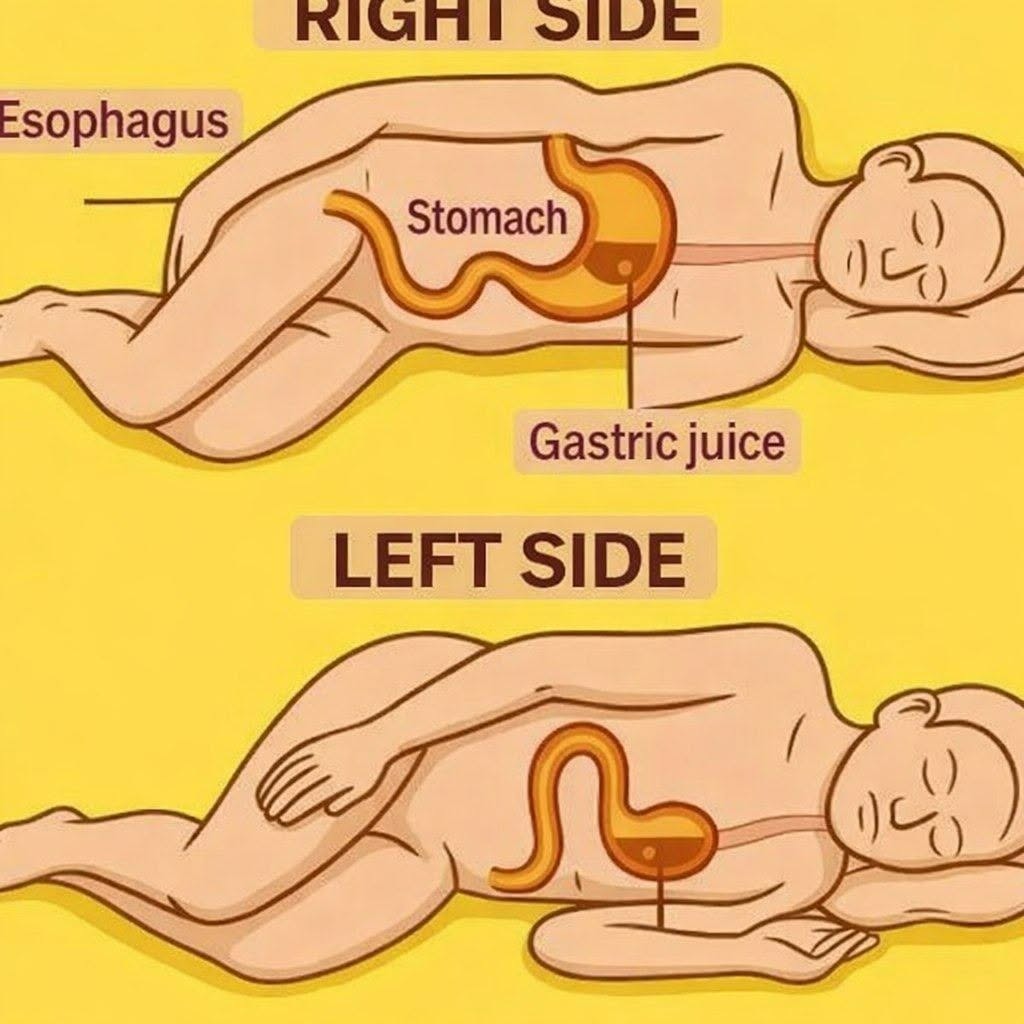
Your stomach naturally sits slightly toward the left side of your abdomen.
When you sleep on your left side, gravity helps keep stomach contents where they belong.
This positioning helps prevent acid from flowing back into the esophagus.
By contrast, sleeping on the right side may allow stomach acid to move upward more easily in some people.
Relief for Heartburn and GERD
People who suffer from:
- Acid reflux
- GERD (Gastroesophageal Reflux Disease)
- Nighttime heartburn
- Indigestion
often report noticeable improvement when sleeping on their left side.
Research has consistently shown that left-side sleeping can reduce acid exposure in the esophagus and decrease nighttime reflux symptoms.
For anyone who frequently wakes up with a burning sensation in the chest or a sour taste in the mouth, this simple adjustment may be worth trying.
Improved Circulation Throughout the Night
Another significant benefit involves blood flow.
The Role of the Inferior Vena Cava
The inferior vena cava is one of the body’s largest veins.
It carries blood from the lower body back to the heart.
This major vein sits slightly to the right side of the spine.
When you sleep on your left side, pressure on this vessel may be reduced, allowing blood to return more efficiently to the heart.
Why This Matters
Better circulation can contribute to:
- Reduced swelling in the legs
- Improved blood flow
- Less pressure on the cardiovascular system
- Better oxygen delivery throughout the body
Although healthy individuals may not immediately notice dramatic changes, maintaining efficient circulation during sleep supports overall cardiovascular health.
Why Pregnant Women Are Often Encouraged to Sleep on Their Left Side
Pregnancy places unique demands on the body.
As the uterus grows, it can place pressure on major blood vessels.
Healthcare providers often recommend left-side sleeping during pregnancy because it may:
- Improve blood flow to the placenta
- Support fetal circulation
- Reduce swelling in the legs and feet
- Ease pressure on internal organs
- Improve kidney function
For these reasons, left-side sleeping has become one of the most commonly recommended sleep positions during pregnancy.
Potential Benefits for the Lymphatic System
The lymphatic system acts as one of the body’s cleanup crews.
It helps:
- Remove waste products
- Filter toxins
- Support immune function
- Transport fluids
Some experts believe that sleeping on the left side may support lymphatic drainage because the thoracic duct—the body’s largest lymphatic vessel—drains into the left side of the circulatory system.
While more research is needed to fully understand the relationship, many practitioners believe gravity may assist lymph movement during sleep.
Although this shouldn’t be viewed as a detox miracle, efficient lymphatic function plays an important role in overall health.
Can Left-Side Sleeping Reduce Snoring?
In many cases, yes.
Why Back Sleeping Causes Problems
When sleeping flat on your back, the tongue and soft tissues in the throat can fall backward.
This narrows the airway and increases the likelihood of:
- Snoring
- Interrupted breathing
- Sleep disturbances
Side Sleeping Helps Keep Airways Open
Sleeping on either side generally improves airway alignment compared to back sleeping.
However, people who experience reflux-related coughing or throat irritation may notice additional benefits from sleeping on their left side.
Reduced acid reflux often means:
- Less throat irritation
- Fewer nighttime awakenings
- Better breathing comfort
- Reduced coughing
All of which contribute to quieter, higher-quality sleep.
Who Might Not Benefit from Left-Side Sleeping?
Although left-side sleeping offers advantages for many people, it isn’t ideal for everyone.
Certain Heart Conditions
Some individuals with advanced heart disease or heart failure report discomfort when sleeping on their left side.
Researchers believe this may be related to subtle changes in heart positioning within the chest.
Anyone with a significant cardiac condition should discuss sleep positioning with their healthcare provider.
Shoulder Pain
Sleeping on an injured or painful shoulder can worsen symptoms.
If your left shoulder is affected by:
- Arthritis
- Rotator cuff injuries
- Chronic pain
left-side sleeping may not be comfortable.
Jaw Problems
People with TMJ disorders may experience increased pressure when sleeping on one side consistently.
Proper pillow support becomes especially important in these situations.
How to Successfully Transition to Left-Side Sleeping
Changing sleep habits isn’t always easy.
Most people unconsciously return to familiar positions throughout the night.
The good news is that a few simple adjustments can make the transition much easier.
Use the Right Pillow
A supportive pillow should keep your head aligned with your spine.
Your neck should remain neutral—not bent upward or downward.
Place a Pillow Between Your Knees
This simple trick makes a huge difference.
Benefits include:
- Better hip alignment
- Reduced lower back strain
- Less pressure on joints
- Improved spinal positioning
Many side sleepers consider this the key to long-term comfort.
Try a Body Pillow
A body pillow can help:
- Support your upper arm
- Prevent rolling onto your stomach
- Improve comfort
- Reduce shoulder strain
It also creates a more stable sleeping position throughout the night.
Upgrade Your Mattress if Necessary
Side sleepers generally do best on mattresses that provide:
- Shoulder cushioning
- Hip support
- Proper spinal alignment
A mattress that is too firm can create painful pressure points.
One that is too soft may allow the spine to sink out of alignment.
Many experts recommend medium-firm mattresses as a good compromise.
What Changes Might You Notice?
Everyone responds differently.
Some people notice improvements within days.
Others need several weeks before seeing benefits.
Commonly reported changes include:
Less Heartburn
Many individuals experience fewer nighttime reflux symptoms.
Reduced Morning Bloating
Improved digestion may contribute to feeling lighter upon waking.
Better Sleep Continuity
Fewer interruptions often lead to deeper sleep.
Reduced Snoring
Partners may notice this benefit before you do.
Improved Comfort
Proper side sleeping can decrease pressure on certain joints and muscles.
The Importance of Patience
Sleep habits develop over years.
Changing them takes time.
Most sleep specialists suggest allowing at least two to three weeks for your body to adapt to a new sleeping position.
You don’t need to be perfect.
Simply begin by falling asleep on your left side each night.
Over time, your body often adjusts naturally.
Other Healthy Sleep Habits to Combine With Left-Side Sleeping
For best results, combine sleep positioning with other proven sleep practices:
- Maintain a consistent bedtime
- Keep your bedroom cool
- Limit caffeine late in the day
- Reduce screen exposure before bed
- Exercise regularly
- Avoid large meals before sleep
- Manage stress through relaxation techniques
Together, these habits create an environment that supports restorative rest.
Final Thoughts
Sometimes the most effective health improvements aren’t expensive, complicated, or trendy.
Sleeping on your left side won’t solve every sleep problem.
It won’t cure insomnia.
It won’t replace good sleep hygiene.
But for many people, it can improve digestion, reduce reflux, support circulation, and contribute to more comfortable, restorative sleep.
And best of all?
It costs nothing.
Tonight, before you drift off to sleep, try rolling gently onto your left side.
Add a pillow between your knees.
Get comfortable.
Let gravity work in your favor.
You may wake up feeling surprisingly different—and wonder why nobody told you sooner.