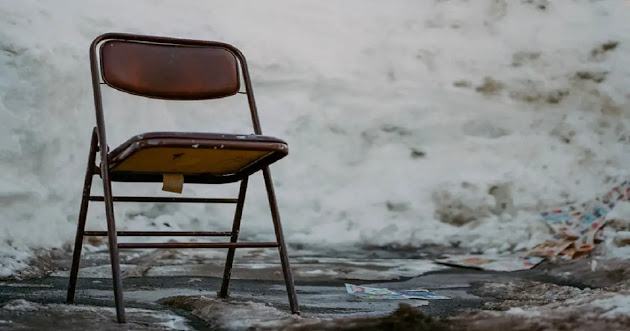
If you’ve ever visited Pittsburgh after a major snowstorm, you may have encountered one of the city’s most unusual sights.
Not the steel bridges.
Not the steep hills.
Not even the famous black-and-gold sports culture.
Instead, you might have noticed something seemingly out of place sitting in the middle of a snow-cleared parking space.
A lawn chair.
Perhaps a folding chair.
Maybe a traffic cone.
Sometimes even a worn-out recliner, a plastic crate, a trash can, or something even stranger.
To outsiders, the sight often raises immediate questions.
Did someone leave furniture on the street?
Is it trash waiting for collection?
Did it fall from a moving truck?
Ask a Pittsburgh resident, however, and you’ll likely receive a simple answer:
“That spot’s taken.”
Welcome to one of Pittsburgh’s most beloved winter traditions—a custom that is equal parts practical solution, neighborhood agreement, cultural identity, and local folklore.
The chair on the corner isn’t merely a piece of furniture.
It’s a symbol.
And for many Pittsburghers, it’s a symbol worth respecting.
A Tradition Born From Winter Necessity
To understand the chair tradition, you first need to understand Pittsburgh winters.
While Pittsburgh doesn’t receive the extreme snowfall totals seen in some parts of the Northeast, the city regularly experiences significant winter storms.
Snow accumulates quickly on residential streets.
Many neighborhoods feature narrow roads lined with tightly packed homes.
Off-street parking can be limited.
Garages are often scarce.
As a result, street parking becomes an essential part of daily life.
When a major snowstorm hits, residents face a challenge.
Their vehicles become buried beneath snow.
Parking spaces disappear under drifts.
Before anyone can park, someone has to clear a spot.
And that work isn’t easy.
Digging out a parking space often requires:
- Heavy shoveling
- Ice removal
- Snow hauling
- Salting
- Repeated effort during ongoing storms
Depending on snowfall depth, the task may take anywhere from twenty minutes to over an hour.
After investing that kind of labor, many residents feel a natural sense of ownership over the space they’ve cleared.
That’s where the chair enters the story.
The Unspoken Social Contract
The logic behind the tradition is surprisingly simple.
Imagine spending forty-five minutes shoveling a space after a blizzard.
You finally free your car.
You leave for work or errands.
When you return, someone else has parked in the spot you worked so hard to create.
Most people would find that frustrating.
The chair acts as a message.
It says:
“I did the work. Please respect it.”
Technically, the space remains public property.
Legally, no individual owns it.
Yet socially, many Pittsburgh residents recognize the effort involved and honor the claim.
This creates an informal neighborhood agreement.
No paperwork.
No permits.
No official enforcement.
Just mutual understanding.
The system works because enough people participate.
Why Pittsburghers Respect the Chair
To outsiders, the practice may seem unreasonable.
After all, public parking is public parking.
Yet longtime residents often see the situation differently.
For them, the chair represents more than a parking space.
It represents labor.
It represents fairness.
It represents neighborhood respect.
Many residents describe the tradition as a form of community etiquette rather than territorial behavior.
The thinking goes something like this:
If someone invested substantial physical effort clearing a space, the least neighbors can do is allow them to enjoy the benefit for a short time.
In this way, the chair functions almost like a handshake agreement among strangers.
Nobody signs a contract.
Everyone simply understands the expectation.
Is It Legal?
Here’s where things become interesting.
Strictly speaking, no.
Most city ordinances do not allow individuals to reserve public parking spaces with chairs, cones, or furniture.
Public streets remain public property.
Parking generally operates on a first-come, first-served basis.
From a legal standpoint, the chair possesses no special authority.
However, reality often looks different from theory.
In practice, enforcement is rare.
City officials have long recognized the tradition’s cultural significance.
Police officers generally have larger priorities during winter storms than removing lawn chairs from residential neighborhoods.
As long as the objects do not create safety hazards, they are frequently tolerated.
This creates an unusual situation.
A tradition can be technically prohibited while remaining socially accepted.
Pittsburgh’s parking chairs exist comfortably within that gray area.
More Than Chairs
Although the tradition is known as “the parking chair,” the markers themselves can be remarkably creative.
Residents have used:
- Folding chairs
- Lawn chairs
- Traffic cones
- Trash cans
- Buckets
- Children’s toys
- Ladders
- Milk crates
- Sleds
- Patio furniture
Some stories describe entire couches appearing in parking spaces.
Others mention old toilets, mannequins, or holiday decorations.
The creativity often becomes part of the fun.
Neighborhood residents swap stories each winter about the most unusual marker they’ve encountered.
In some areas, the marker becomes almost a form of local art.
The Human Stories Behind the Tradition
Part of what makes the chair tradition endure is the collection of stories it generates.
Some stories involve conflict.
Many involve humor.
Others reveal surprising kindness.
One resident reportedly returned home after placing an old chair in a freshly cleared space only to discover it had vanished.
At first, frustration set in.
Then they noticed something unexpected.
Someone had replaced the worn-out chair with a newer, sturdier one.
The space remained protected.
A neighbor had simply upgraded the marker.
Another newcomer to the city once ignored a chair and parked in the reserved space.
Expecting confrontation, they later met the person who had shoveled the spot.
Instead of anger, they received a friendly explanation of the tradition and an invitation to chat.
The encounter turned into a neighborhood friendship.
Stories like these help transform a simple parking custom into part of the city’s identity.
Pittsburgh Isn’t Alone
Although Pittsburgh may be one of the most famous examples, it is not the only city with this tradition.
Similar practices appear throughout snow-prone regions.
In Chicago, residents call it “dibs.”
In Boston, people often reserve spaces using chairs, cones, or sawhorses.
Philadelphia has its own versions.
Buffalo, Cleveland, and several other northern cities display comparable customs.
The pattern tends to emerge in places with three characteristics:
- Significant snowfall
- Dense residential neighborhoods
- Limited parking availability
Wherever those conditions exist, residents often create informal systems to manage winter parking challenges.
Pittsburgh simply embraces the tradition more enthusiastically than most.
Why the Tradition Endures
In an era of smartphones, ride-sharing apps, and increasingly digital lives, it might seem surprising that a lawn chair remains such a powerful symbol.
Yet perhaps that’s exactly why it survives.
The chair represents something fundamentally human.
It acknowledges effort.
It encourages respect.
It reinforces neighborhood norms without requiring formal enforcement.
In many ways, it serves as a reminder that communities can solve practical problems through shared understanding.
Not every issue requires legislation.
Not every challenge demands bureaucracy.
Sometimes a chair communicates everything necessary.
The Debate Continues
Of course, not everyone loves the tradition.
Critics argue that public parking should remain available to everyone.
Some view spot-saving as unfair.
Others believe the practice encourages territorial behavior.
Supporters counter that snow removal requires effort deserving recognition.
They see the tradition as common courtesy rather than entitlement.
The debate resurfaces almost every winter.
Yet despite occasional disagreement, the chairs continue appearing after major storms.
That persistence suggests the custom fulfills a real social need.
A Symbol of Pittsburgh
Perhaps the most fascinating aspect of the parking-chair tradition is what it reveals about Pittsburgh itself.
This is a city built by workers.
A city shaped by steel mills, river commerce, and resilient neighborhoods.
Hard work remains an important part of local identity.
The chair reflects that value.
It says:
Effort matters.
Neighbors notice.
Communities function best when people respect one another.
What appears to outsiders as a random piece of furniture sitting in the snow actually tells a deeper story about local culture.
It’s a story of practicality.
It’s a story of cooperation.
It’s a story of people adapting creatively to difficult conditions.
Final Thoughts
At first glance, a chair in the middle of a snowy parking space seems absurd.
Look closer, however, and it becomes something more meaningful.
The chair represents labor transformed into tradition.
It symbolizes a neighborhood agreement passed from one generation to the next.
It reflects a community’s effort to balance fairness, practicality, and mutual respect.
Whether you view the practice as charming, outdated, clever, or controversial, one thing is certain:
It remains unmistakably Pittsburgh.
So the next time you find yourself driving through a snow-covered Pittsburgh neighborhood and spot a lonely chair standing guard over an empty parking space, remember that you’re witnessing more than an odd local custom.
You’re seeing a small but enduring piece of the city’s character.
And in a world where so many traditions fade away, that’s something worth appreciating.
More Blog
- A Persistent Mystery at Home: How to Track Down Strange Odors Before They Become Bigger Problems
- Son’s Living Liver Donation Followed by Serious Health Complications Highlights the Risks and Courage of Organ Donation
- My Daughter’s Innocent Question on Father’s Day Changed Everything (And Taught Me the True Meaning of Presence)
- Caught Red-Handed: A Shopping Trip Turns Into a Public Scandal That Sparked Debate