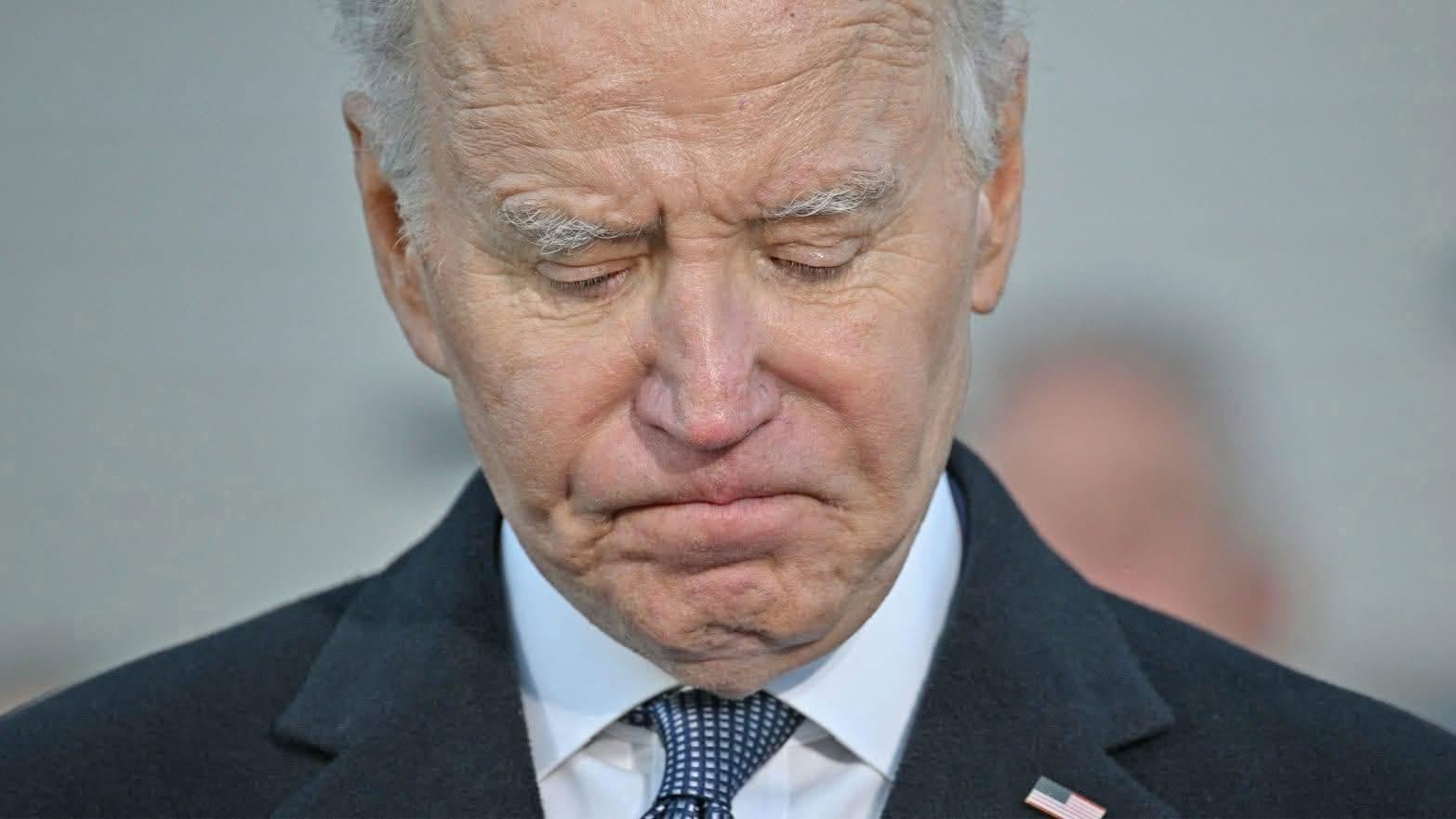
Few headlines have the power to stop a nation in its tracks like news that a sitting President of the United States has become seriously ill.
In an instant, questions arise across the country.
Who is making decisions?
Who has access to military command?
What happens if the president cannot perform official duties?
Can power be transferred temporarily?
And perhaps most importantly: Is there a plan?
The reassuring answer is yes.
The United States has spent more than two centuries developing constitutional safeguards designed to ensure that government continues functioning even during periods of extraordinary uncertainty. Wars, assassinations, medical emergencies, and national crises have all shaped the system that exists today.
While presidential health concerns naturally generate public anxiety, the legal framework governing presidential incapacity is remarkably detailed.
Understanding how it works provides valuable insight into one of the most important protections built into American democracy.
Why Presidential Health Matters
The presidency is unlike any other office in the United States.
The president serves simultaneously as:
- Head of state
- Head of government
- Commander in Chief of the armed forces
- Chief diplomat
- Leader of the executive branch
Every day, critical decisions may require presidential attention.
National security briefings arrive around the clock.
Military operations continue worldwide.
Economic issues demand constant monitoring.
International leaders expect communication and coordination.
Because the office carries enormous responsibilities, questions about a president’s ability to perform those duties become matters of national importance.
The challenge is balancing two principles that sometimes compete with one another:
First, presidents deserve medical privacy as individuals.
Second, the public deserves confidence that government functions remain stable and effective.
The constitutional system attempts to address both concerns.
The Problem That Troubled Earlier Generations
For much of American history, there was surprisingly little guidance about what should happen if a president became disabled but remained alive.
The Constitution originally addressed death, resignation, and removal from office.
However, temporary incapacity remained largely undefined.
What happens if a president falls into a coma?
What if a major surgery requires anesthesia?
What if a stroke limits decision-making abilities?
For decades, there were no clear answers.
As a result, several historical episodes exposed serious weaknesses in the system.
The Garfield Crisis
In 1881, James A. Garfield was shot by an assassin.
He survived for more than two months after the attack but was severely incapacitated.
Government officials struggled to determine how authority should function during his illness.
No formal transfer of power occurred.
The uncertainty revealed a significant constitutional gap.
The Wilson Situation
Perhaps an even more striking example occurred in 1919.
Woodrow Wilson suffered a devastating stroke that left him largely unable to perform many presidential responsibilities.
For months, the nation lacked a transparent process for addressing the situation.
Family members and close advisers played major roles in managing access to the president.
Yet no formal mechanism existed to transfer authority.
Many historians view this period as one of the strongest arguments for constitutional reform.
The Creation of the 25th Amendment
The assassination of John F. Kennedy in 1963 renewed concerns about presidential succession and incapacity.
Lawmakers recognized that modern government required clearer procedures.
After extensive debate, the nation ratified the Twenty-fifth Amendment to the United States Constitution in 1967.
The amendment established detailed rules for handling presidential vacancies and disabilities.
It remains the primary constitutional framework governing presidential health crises today.
When a President Dies, Resigns, or Is Removed
The simplest provision appears in Section 1 of the amendment.
If a president dies, resigns, or is removed from office, the vice president becomes president.
This seems obvious today, but historically there had been debate over whether a vice president merely acted as president or fully became president.
The amendment resolved that uncertainty.
The vice president assumes the office itself, not merely its responsibilities.
This principle has been applied multiple times throughout American history.
Examples include:
- Lyndon B. Johnson succeeding Kennedy
- Gerald Ford succeeding Richard Nixon after resignation
- Harry S. Truman succeeding Franklin D. Roosevelt
The transfer occurs immediately to ensure continuity.
Temporary Transfers of Power
Not every medical issue requires a permanent change in leadership.
Sometimes a president simply needs a temporary transfer of authority.
This is where Section 3 of the 25th Amendment becomes important.
Under this provision, a president may voluntarily declare an inability to perform official duties.
Once that written declaration is transmitted to congressional leaders, the vice president becomes Acting President.
The president later resumes authority by submitting another declaration stating readiness to serve.
This process has been used successfully.
Perhaps the best-known examples occurred when George W. Bush underwent routine medical procedures requiring anesthesia.
During those periods, power temporarily transferred to Dick Cheney.
The transitions were orderly, brief, and largely unnoticed by the public.
That quiet success illustrates the amendment’s effectiveness.
The Most Complex Scenario
The most discussed but least tested provision is Section 4.
This section addresses situations in which a president may be unable to recognize or declare their own incapacity.
Under Section 4, the vice president and a majority of cabinet officials can declare that the president cannot discharge the duties of office.
If they do so, the vice president immediately becomes Acting President.
However, the process contains significant safeguards.
A president may contest the declaration.
If disagreement occurs, Congress ultimately decides.
Maintaining the vice president as Acting President requires a two-thirds vote in both chambers of Congress.
This intentionally high threshold protects against political misuse.
Remarkably, Section 4 has never been invoked.
Its existence provides a constitutional safety net, but its practical application remains untested.
The Medical Side of Presidential Health
When a president experiences a significant medical issue, multiple layers of expertise become involved.
The public often imagines decisions occurring rapidly behind closed doors.
While some urgency is inevitable, the process typically involves careful coordination among medical, legal, and national-security professionals.
Participants may include:
- White House physicians
- Medical specialists
- White House counsel
- Senior advisers
- Cabinet members
- National Security Council officials
- Congressional leadership
The objective is straightforward:
Ensure that someone capable of exercising presidential authority is always available.
Even during uncertainty, government operations continue.
The Presidential Line of Succession
Many Americans know that the vice president stands next in line.
Fewer realize how extensive the succession structure becomes beyond that point.
After the vice president, the order generally continues through:
- Speaker of the House
- President pro tempore of the Senate
- Secretary of State
- Secretary of the Treasury
- Secretary of Defense
- Attorney General
- Other cabinet secretaries in order established by law
This framework ensures that leadership remains available even under extraordinary circumstances.
The system reflects a simple principle:
The government must never lack a constitutional successor.
Communication During a Health Crisis
One of the greatest challenges during any presidential health event involves public communication.
Citizens understandably want information.
Financial markets seek reassurance.
Foreign governments monitor developments closely.
Yet complete medical transparency is rarely possible.
Presidents retain privacy rights, and security considerations sometimes limit disclosures.
As a result, official statements generally focus on:
- The president’s condition
- Expected recovery timelines
- Government continuity
- Authority transfers if applicable
Responsible reporting becomes especially important during these periods.
Speculation can create unnecessary confusion.
Verified information helps maintain public confidence.
Why the System Matters
The constitutional framework surrounding presidential incapacity may seem technical.
Yet its purpose is deeply practical.
Democratic governments depend on predictability.
Citizens, allies, military leaders, and economic institutions all need confidence that authority remains clear even during emergencies.
The 25th Amendment and succession laws provide that certainty.
Rather than improvising during crises, officials follow established procedures.
That predictability reduces instability.
It also reinforces one of the central strengths of constitutional government:
No individual is indispensable.
The office matters more than the officeholder.
A System Built for Continuity
Perhaps the most important lesson is that the American system was intentionally designed to survive uncertainty.
Presidents are human beings.
They become ill.
They undergo medical procedures.
They age.
The Constitution acknowledges those realities.
Rather than assuming leaders will always remain healthy, it provides mechanisms for maintaining continuity when challenges arise.
The goal is not perfection.
The goal is stability.
For more than two centuries, the United States has refined institutions capable of functioning through war, tragedy, economic turmoil, and political transition.
Presidential succession represents one of the clearest examples of that resilience.
Final Thoughts
When news emerges about a president’s health, concern is natural.
The presidency carries enormous responsibility, and uncertainty can feel unsettling.
Yet the constitutional system exists precisely for those moments.
The 25th Amendment, presidential succession laws, medical protocols, and continuity-of-government plans work together to ensure that authority remains clear and governance continues.
While individuals matter, institutions endure.
That principle has guided the United States through some of its most challenging moments.
And if a future presidential health crisis occurs, the framework already exists to navigate it—lawfully, peacefully, and with continuity at every step.
In the end, that may be one of the most important safeguards any democracy can possess.
More Blog
- A Persistent Mystery at Home: How to Track Down Strange Odors Before They Become Bigger Problems
- Son’s Living Liver Donation Followed by Serious Health Complications Highlights the Risks and Courage of Organ Donation
- My Daughter’s Innocent Question on Father’s Day Changed Everything (And Taught Me the True Meaning of Presence)
- Caught Red-Handed: A Shopping Trip Turns Into a Public Scandal That Sparked Debate