Most people can recognize a bottle of Coca-Cola from across a room.
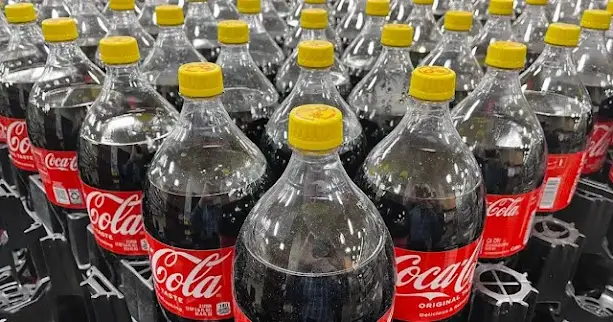
The iconic red label, the familiar script logo, and the bright red cap have become symbols recognized in nearly every corner of the world. That’s why some shoppers do a double take when they notice something unusual sitting on store shelves every spring: Coca-Cola bottles with bright yellow caps.
At first glance, it seems insignificant.
Perhaps it’s a limited-edition release. Maybe it’s a seasonal promotion. Some people assume it’s a new flavor or a special marketing campaign.
The truth, however, is far more interesting.
For decades, Coca-Cola has quietly produced a special version of its famous soft drink each year, and the yellow cap serves as a subtle signal that the bottle contains something different. What appears to be a simple packaging change actually represents a fascinating story involving faith, tradition, food laws, corporate accommodation, and one of the world’s most recognizable brands.
Once you understand the meaning behind the yellow cap, you’ll never look at it the same way again.
A Color That Sparks Curiosity
The yellow cap isn’t flashy.
Unlike many promotional products that arrive with colorful labels, celebrity endorsements, or major advertising campaigns, these bottles often appear quietly among regular Coca-Cola products.
Many shoppers never notice them.
Others notice but don’t think much about it.
Yet for those who know what the yellow cap represents, spotting one can be meaningful.
Every year, observant Jewish families begin looking for these bottles as Passover approaches. At the same time, soda enthusiasts and collectors often seek them out because they believe the taste is superior to regular Coca-Cola.
As a result, these bottles have developed a loyal following that extends far beyond the religious community they were originally designed to serve.
But why exactly does Coca-Cola create them?
The answer begins with one of Judaism’s most important holidays.
Understanding Passover
Passover is one of the most significant holidays in the Jewish calendar.
The holiday commemorates the biblical story of the Israelites’ liberation from slavery in ancient Egypt. It is a time of remembrance, family gatherings, special meals, and religious observance.
One important aspect of Passover involves dietary restrictions.
During the holiday, many Jewish families avoid consuming chametz, which refers to foods made from certain grains that have been allowed to ferment or rise.
In addition, many Ashkenazi Jewish communities also avoid foods classified as kitniyot. This category includes ingredients such as corn, rice, beans, lentils, and certain legumes.
While these restrictions may seem straightforward, they create unexpected challenges when it comes to modern processed foods.
Many products contain ingredients derived from corn.
That includes one ingredient commonly found in American soft drinks: high-fructose corn syrup.
And that’s where Coca-Cola enters the story.
Why Regular Coca-Cola Doesn’t Qualify
Most Coca-Cola sold in the United States is sweetened with high-fructose corn syrup, often abbreviated as HFCS.
The company switched from cane sugar to HFCS during the 1980s, largely because corn syrup became less expensive and more readily available due to agricultural policies and market conditions.
For most consumers, the change went unnoticed.
However, because HFCS is derived from corn, it presents a challenge for Passover observance among those who avoid corn-based ingredients during the holiday.
As Passover approaches, observant consumers need an alternative.
Rather than asking customers to go without their favorite beverage, Coca-Cola developed a special formulation specifically for the season.
The solution was surprisingly simple.
Replace the corn syrup with cane sugar.
The beverage remains essentially the same product people know and love, but it now meets the requirements necessary for Passover certification.
To make identification easy, Coca-Cola marks these bottles with yellow caps.
One small color change communicates everything shoppers need to know.
The Difference Inside the Bottle
The primary difference between regular Coca-Cola and the yellow-cap version comes down to the sweetener.
Regular Coca-Cola contains high-fructose corn syrup.
Yellow-cap Coca-Cola contains cane sugar.
That single substitution allows the product to receive Passover kosher certification.
Everything else remains largely unchanged.
The familiar branding stays the same.
The carbonation remains the same.
The overall recipe remains extremely close to the original formula.
Yet many consumers insist the flavor changes noticeably.
And that has created an entirely separate following for the yellow-cap bottles.
The Great Taste Debate
Few beverage discussions generate as much passion among soda fans as the debate between cane sugar and high-fructose corn syrup.
Ask ten Coca-Cola enthusiasts whether they can taste a difference and you’ll likely receive ten different answers.
Some insist the distinction is immediate.
They describe cane sugar Coca-Cola as cleaner, smoother, and more refreshing.
Others say it feels less syrupy and leaves less lingering sweetness after each sip.
Some compare it favorably to Mexican Coca-Cola, another version known for using cane sugar instead of corn syrup.
Meanwhile, skeptics argue that most people cannot reliably tell the difference in blind taste tests.
Scientific studies have produced mixed results.
Some research suggests many consumers struggle to distinguish between the sweeteners when they do not know which version they are drinking.
Other studies indicate that personal preference, expectation, nostalgia, and individual sensitivity can influence perception.
Regardless of the science, demand for yellow-cap Coca-Cola continues year after year.
Many buyers purchase it solely because they enjoy the taste.
The Connection to Mexican Coca-Cola
The yellow-cap phenomenon often leads consumers to another popular variation: Mexican Coca-Cola.
Unlike most Coca-Cola sold in the United States, Mexican Coke traditionally uses cane sugar as its primary sweetener.
Because of this similarity, many consumers compare the two products.
Fans often describe both beverages as having a cleaner sweetness and a slightly different mouthfeel than HFCS-sweetened versions.
Mexican Coca-Cola also enjoys an additional advantage in the minds of many enthusiasts: it is frequently sold in glass bottles.
Some consumers believe glass packaging preserves flavor and carbonation more effectively than plastic bottles.
Whether those differences are measurable or largely psychological remains a matter of debate.
Nevertheless, both products have developed loyal followings.
A Quiet Example of Inclusion
Perhaps the most remarkable aspect of the yellow-cap tradition is how understated it remains.
In an era when companies often launch elaborate marketing campaigns around special products, Coca-Cola has largely allowed this tradition to speak for itself.
There are no massive advertising pushes.
There are no flashy television commercials.
There is simply a different cap color and a modified recipe.
Yet the gesture carries significant meaning.
For observant Jewish consumers, it demonstrates recognition and accommodation of important religious practices.
For others, it serves as an example of how large corporations can adapt to the needs of diverse communities without making those accommodations feel unusual or burdensome.
The yellow cap represents a practical solution rather than a publicity stunt.
And perhaps that’s why it has endured for so many years.
Finding Yellow-Cap Coca-Cola
Yellow-cap Coca-Cola typically appears several weeks before Passover each year.
Availability varies depending on location.
Areas with larger Jewish populations often receive the greatest distribution.
Shoppers are most likely to find it in cities and regions such as:
- New York
- New Jersey
- South Florida
- Chicago
- Los Angeles
- Philadelphia
- Baltimore
Jewish grocery stores and kosher markets frequently stock it.
Many major supermarket chains also carry it in neighborhoods with substantial Jewish communities.
Because production is seasonal, supplies can disappear quickly once Passover begins.
As a result, many enthusiasts purchase several cases while they are available.
More Than a Bottle Cap
At first glance, a yellow cap seems insignificant.
It is easy to overlook.
Yet behind that small piece of plastic lies a story that touches on history, religion, food science, consumer behavior, and cultural respect.
For some consumers, the yellow cap signals a product that aligns with important religious traditions.
For others, it marks a version of Coca-Cola they believe tastes better.
For many, it serves as a reminder that thoughtful accommodations can have meaningful impacts.
In a world where businesses often focus on broad audiences and mass appeal, Coca-Cola’s annual yellow-cap tradition demonstrates that small adjustments can help ensure more people feel included.
The next time you spot a yellow-capped Coca-Cola bottle on a store shelf, you’ll know it isn’t a mistake, a promotional gimmick, or a random design choice.
It’s a decades-old tradition.
It’s a symbol of Passover observance.
It’s a subtle example of cultural awareness.
And for countless consumers every spring, it’s exactly the bottle they’ve been waiting to find.
More Comfort Food
- A Small Act of Kindness That Changed an Ordinary Day
- The Mystery of Lobster’s Green Goodies: What That Green Paste Really Is (And Whether You Should Eat It)
- Seniors: The Truth About the “Sad News” for Drivers Over 70 (And Why You Don’t Need to Panic)
- Why Walnuts Deserve a Place in Your Daily Diet: What Science Says About Their Benefits for Brain and Heart Health