
Few meals feel as comforting as a classic Slow Cooker Pot Roast. With tender beef, hearty vegetables, and a rich savory broth, this timeless dish transforms simple ingredients into a satisfying dinner that fills the house with incredible aromas. Because the slow cooker does most of the work, this recipe is perfect for busy weekdays, relaxing weekends, and family gatherings alike. The long cooking process allows the meat to become fork-tender while the vegetables absorb every bit of flavor from the cooking liquid.
A few years ago, a busy Sunday called for something simple that could cook while household chores piled up. A chuck roast, a handful of carrots, and a few pantry staples went into the slow cooker without much thought. Hours later, the lid lifted to reveal a beautifully tender roast surrounded by rich broth and vegetables. Everyone gathered around the table immediately. Since then, this meal has become a dependable favorite because it combines convenience, comfort, and incredible flavor in one pot. Every time it cooks, it brings back memories of relaxed family dinners and second helpings.
Ingredients
Equipment
Method
- Season the chuck roast with salt and pepper.
- Optional: Sear the roast in a hot skillet until browned.
- Place onions, carrots, and potatoes in the slow cooker.
- Place the roast on top of the vegetables.
- Add broth, garlic, thyme, rosemary, and bay leaf.
- Cover and cook on low for 8 to 10 hours.
- Remove bay leaf, shred beef, and serve with vegetables and gravy.
Notes
Why Slow Cooker Pot Roast Is a Family Favorite
Tender Meat Every Time
The biggest advantage of a Slow Cooker Pot Roast is the texture. Tougher cuts of beef contain connective tissue that breaks down slowly during cooking. As a result, the roast becomes exceptionally tender.
Unlike quick-cooking methods, slow cooking allows the meat to remain juicy while developing deeper flavor. Consequently, even economical cuts can become restaurant-quality meals.
Furthermore, the gentle heat helps prevent the meat from drying out. Therefore, the final result remains moist and succulent throughout the cooking process.
Many home cooks appreciate the reliability of this method. Even beginners can achieve excellent results because the slow cooker maintains a consistent cooking environment.
Simple Ingredients Create Rich Flavor
Another reason this recipe remains popular is its simplicity. Most ingredients are affordable and easy to find.
Beef roast, carrots, potatoes, onions, broth, and seasonings combine to create layers of flavor. Meanwhile, the vegetables release natural sweetness into the cooking liquid.
As the ingredients simmer together, they create a rich gravy-like broth. Consequently, every bite tastes comforting and satisfying.
Additionally, the recipe adapts easily to personal preferences. You can adjust vegetables, herbs, and seasonings while still maintaining the classic character of the dish.
Essential Ingredients for the Best Slow Cooker Pot Roast
Choosing the Right Cut of Beef
Selecting the correct cut makes a significant difference. Chuck roast remains the preferred choice because it contains enough marbling to stay moist during long cooking times.
While lean cuts may seem healthier, they often become dry and less flavorful. Therefore, a well-marbled chuck roast generally delivers superior results.
Brisket and bottom round can also work successfully. However, chuck roast consistently produces the most tender texture.
Before placing the roast into the slow cooker, seasoning it generously helps build flavor throughout the dish.
Vegetables and Aromatics
Traditional vegetables provide both flavor and substance.
Carrots contribute sweetness and color. Potatoes absorb the flavorful broth while becoming soft and satisfying. Onions melt into the cooking liquid and enrich the overall taste.
Garlic adds depth and complexity. Meanwhile, herbs such as thyme and rosemary provide a classic aroma that complements the beef beautifully.
Beef broth serves as the foundation of the cooking liquid. As the roast cooks, the juices combine with the broth to create a rich and flavorful base.
Together, these ingredients create a balanced meal that feels hearty without being complicated.
How to Make Slow Cooker Pot Roast
Step-by-Step Instructions
Begin by seasoning the chuck roast generously with salt and pepper. If time allows, sear the roast in a hot skillet to develop additional flavor.
Next, place chopped onions in the bottom of the slow cooker. Add carrots and potatoes around the edges.
Position the roast on top of the vegetables. Then pour beef broth around the meat rather than directly over it.
Add garlic, thyme, rosemary, and a bay leaf. Cover the slow cooker and cook on low for 8 to 10 hours or on high for 5 to 6 hours.
Once finished, the beef should pull apart easily with a fork. Remove the bay leaf before serving.
For a thicker gravy, whisk cornstarch with cold water and stir it into the cooking liquid during the final 20 minutes.
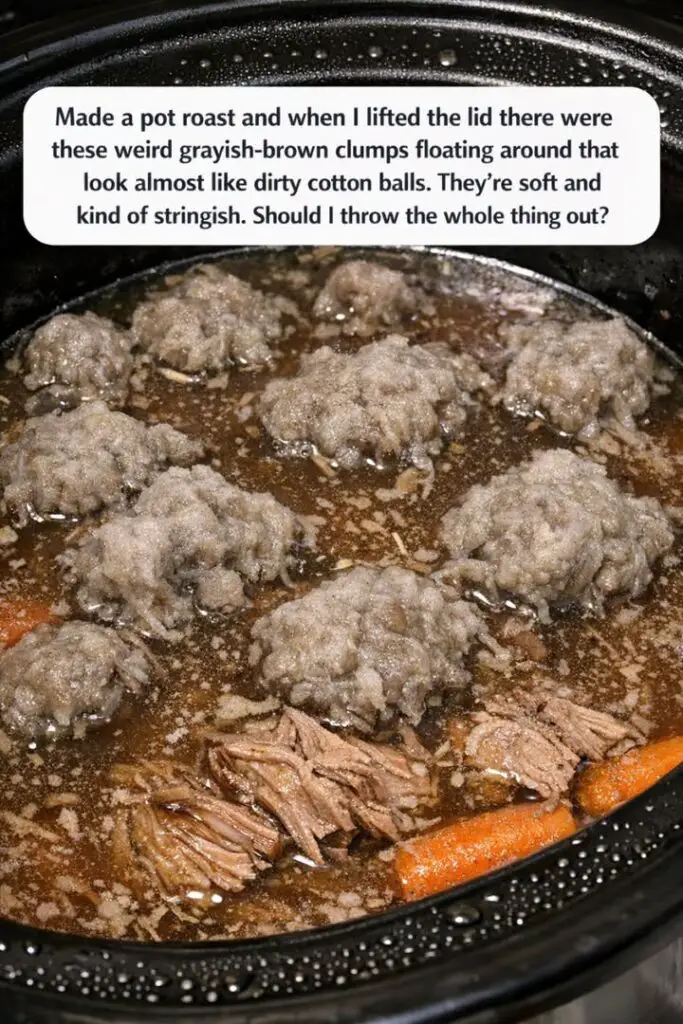
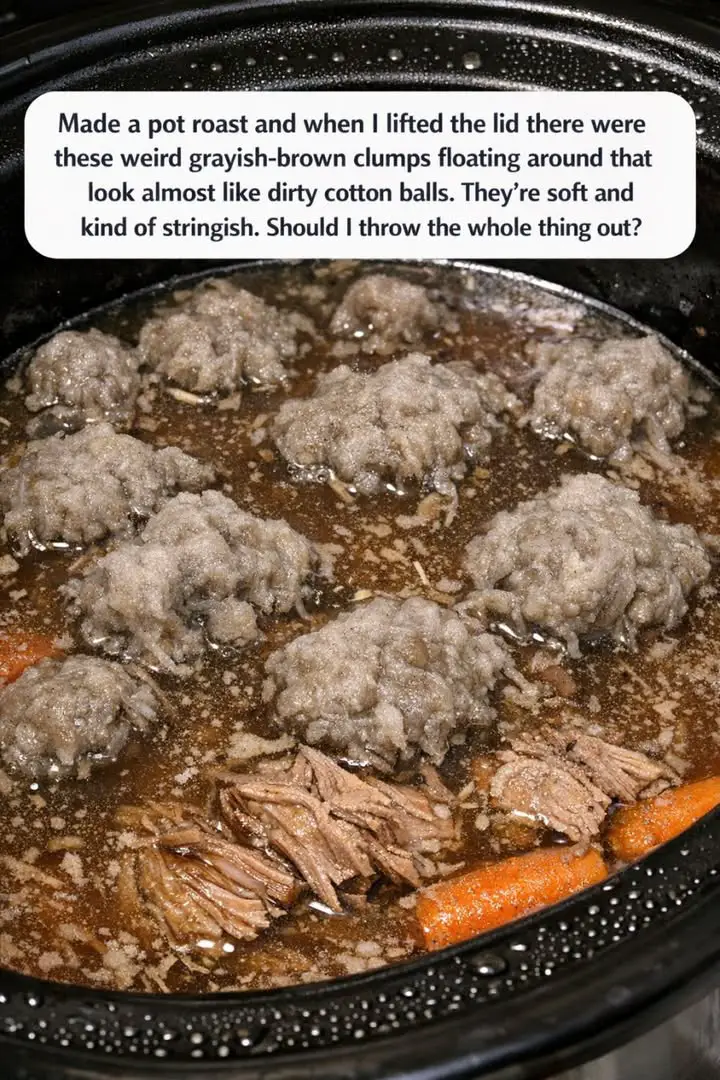
Understanding the Grayish Clumps in Pot Roast
Many people notice grayish-brown floating clumps during cooking and wonder whether something has gone wrong.
In most cases, these clumps are simply coagulated proteins and rendered fat released from the meat during the cooking process. As the roast cooks, proteins separate and rise to the surface where they gather into soft clusters.
Although they may look unusual, they are typically harmless and completely normal. Stirring the liquid or skimming the surface can improve appearance if desired.
Additionally, some roasts naturally release more protein than others. Therefore, the amount can vary from one roast to another.
As long as the ingredients were fresh and cooked properly, these floating particles generally do not indicate spoilage.
Serving Suggestions and Storage Tips
Delicious Ways to Serve Pot Roast
Slow Cooker Pot Roast works beautifully as a complete meal.
Serve the shredded beef alongside the cooked carrots and potatoes for a traditional presentation. Then spoon extra gravy over everything for maximum flavor.
Fresh green beans, roasted broccoli, or a crisp garden salad provide excellent contrast to the richness of the roast.
Dinner rolls also pair wonderfully with the savory broth. Because the sauce is so flavorful, many people enjoy soaking up every last drop.
For a different twist, use leftover beef for sandwiches, wraps, or hearty grain bowls.
Storing and Reheating Leftovers
Leftover pot roast stores exceptionally well.
Allow the food to cool before transferring it to airtight containers. Refrigerate for up to four days.
For longer storage, freeze portions for up to three months.
When reheating, warm the beef gently in its cooking liquid. This helps maintain moisture and tenderness.
If the gravy thickens too much during storage, simply add a splash of broth while reheating.
Because the flavors continue to develop overnight, leftovers often taste even better the next day.
Frequently Asked Questions
What is the best roast for slow cooking?
Chuck roast is generally considered the best option because its marbling creates exceptional tenderness and flavor.
Should I sear the roast first?
Searing is optional, but it adds depth and complexity to the final dish.
Why are there gray clumps floating in my pot roast?
They are usually coagulated proteins and fat released from the meat during cooking and are generally harmless.
Can I cook pot roast from frozen?
For food safety, it is best to thaw the roast before placing it in the slow cooker.
How do I make the gravy thicker?
Mix cornstarch with cold water and stir it into the cooking liquid near the end of cooking.
Conclusion
Slow Cooker Pot Roast remains one of the most dependable comfort-food meals you can make. The combination of tender beef, hearty vegetables, and rich broth creates a satisfying dinner with minimal effort. Whether you are preparing a family meal, planning leftovers for the week, or simply craving classic comfort food, this recipe delivers excellent results every time. With simple ingredients and reliable slow-cooker cooking, it is easy to see why this timeless favorite continues to earn a place on dinner tables everywhere.