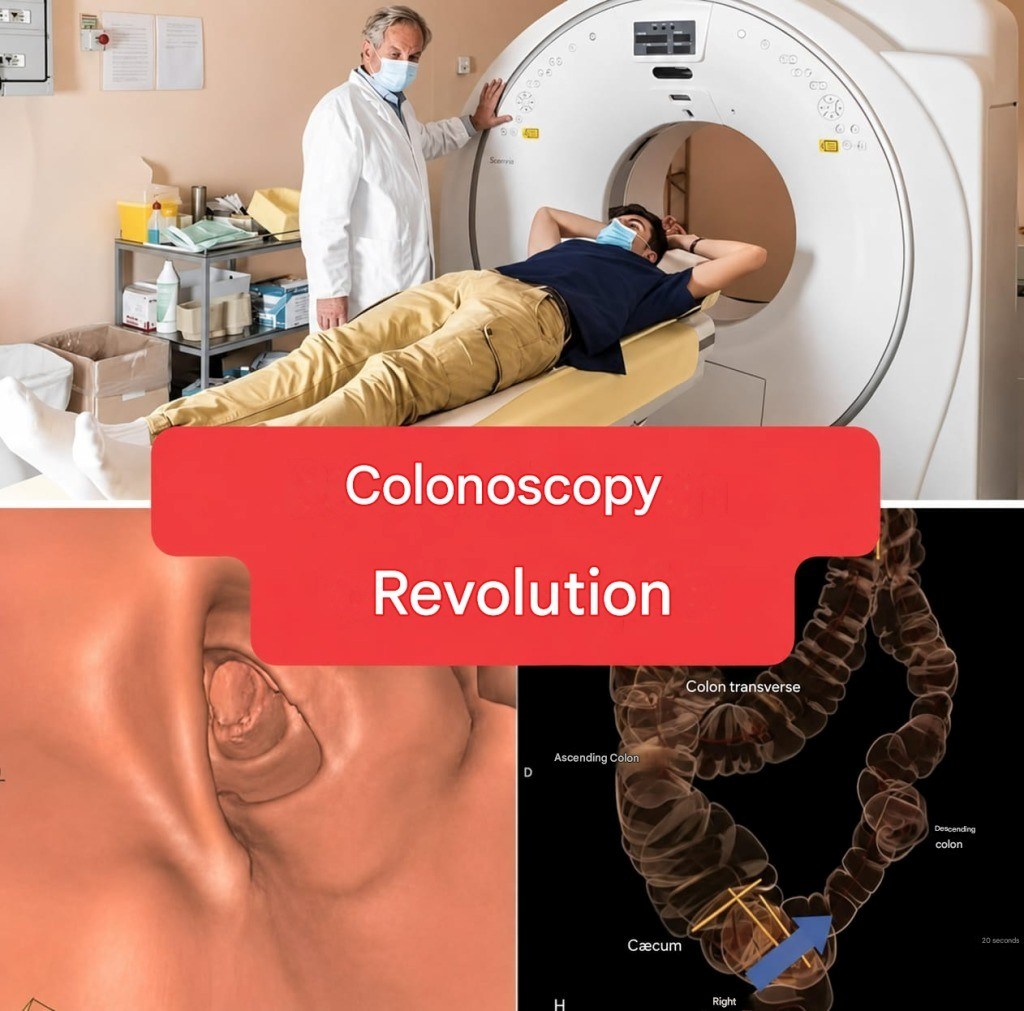
For many people, the idea of having a colonoscopy causes anxiety long before the appointment even begins. Although the procedure is one of the most important tools for detecting colorectal cancer early, fear of discomfort or embarrassment often leads patients to postpone potentially life-saving screenings.
Fortunately, medical technology is evolving rapidly. A newer approach known as virtual colonoscopy is changing how doctors examine the colon, offering patients a less invasive and more comfortable alternative while still providing highly detailed diagnostic images.
Why Colonoscopies Matter So Much
A traditional colonoscopy remains one of the most effective ways to detect abnormalities inside the colon. During the procedure, doctors use a long, flexible tube equipped with a tiny camera to inspect the intestinal lining for polyps, inflammation, ulcers, bleeding, or tumors.
This examination plays a major role in preventing colorectal cancer because doctors can identify and remove precancerous growths before they become dangerous. In many countries, colonoscopy screening programs are recommended beginning around age 45 to 50, especially for individuals with family history or other risk factors.
Many patients undergo colonoscopy after a positive fecal occult blood test, digestive symptoms, unexplained anemia, or persistent abdominal discomfort.
Early detection dramatically improves treatment outcomes. In fact, colorectal cancer is among the most preventable cancers when discovered at an early stage.
The Biggest Drawback of Traditional Colonoscopy
Despite its effectiveness, traditional colonoscopy still feels intimidating for many patients because it is invasive. The procedure involves inserting an endoscope through the rectum and advancing it through the colon while the patient is sedated or partially sedated.
Although modern sedation techniques make the process much more comfortable than in the past, some individuals still avoid screening due to fear, embarrassment, or concerns about discomfort.
Preparation can also be unpleasant. Patients typically must follow a strict liquid diet and use bowel-cleansing solutions before the procedure. In addition, recovery from sedation may require someone else to drive the patient home afterward.
For certain patients, traditional colonoscopy may also be technically difficult. Severe inflammation, intestinal narrowing, or physical obstructions can sometimes prevent the scope from moving safely through the entire colon.
These limitations helped drive the development of a less invasive alternative.
What Is a Virtual Colonoscopy?
Virtual colonoscopy, also called CT colonography, is a non-invasive imaging procedure that uses advanced CT scan technology to create detailed three-dimensional images of the colon.
Instead of inserting a long endoscope throughout the intestine, doctors use specialized imaging software to generate a virtual model of the colon’s interior. The result allows specialists to examine the intestinal lining with remarkable precision.
The process is significantly less invasive than a standard colonoscopy. During the exam, a small tube is placed briefly into the rectum to gently inflate the colon with air or carbon dioxide for better imaging. The patient then undergoes a CT scan that takes only a few minutes.
The computer reconstructs the images into a detailed visual map that doctors can analyze for polyps, tumors, or structural abnormalities.
Because no deep insertion of a scope occurs, many patients find virtual colonoscopy far less stressful and physically uncomfortable.
Benefits of Virtual Colonoscopy
One of the greatest advantages of virtual colonoscopy is patient comfort. The exam is fast, minimally invasive, and usually does not require sedation. Patients can often return to normal activities almost immediately afterward.
Additional benefits include:
- Shorter procedure time
- Lower risk of complications
- No anesthesia recovery period
- Ability to view areas beyond blockages
- Detailed 3D imaging of the colon
- Reduced discomfort during the examination
Virtual colonoscopy can be especially useful when a traditional colonoscopy cannot fully examine the colon due to narrowing, swelling, or obstruction.
Doctors may also recommend it for older adults or patients with certain medical conditions that make sedation riskier.
Because the exam relies on CT imaging, physicians can sometimes identify abnormalities outside the colon as well, including issues involving nearby organs.
The One Important Limitation
Although virtual colonoscopy offers many advantages, it does have one major limitation: it cannot remove polyps or collect tissue samples.
If doctors discover suspicious growths during the scan, the patient will still need a traditional colonoscopy afterward for biopsy or removal.
For this reason, traditional colonoscopy remains the gold standard for patients who are at high risk for colorectal cancer or who are likely to require immediate treatment during the same procedure.
Additionally, very small polyps may occasionally be harder to detect with imaging alone compared to direct visualization using an endoscope.
Doctors carefully evaluate each patient’s medical history, age, symptoms, and risk level before recommending the most appropriate screening method.
Who Should Consider Virtual Colonoscopy?
Virtual colonoscopy may be a good option for:
- Adults over age 50 needing routine screening
- Patients unable to tolerate sedation
- Individuals with incomplete traditional colonoscopy results
- Patients with physical obstructions or narrowed intestines
- People seeking a less invasive screening experience
However, anyone experiencing significant symptoms such as rectal bleeding, unexplained weight loss, severe abdominal pain, or strong family history of colorectal cancer should discuss screening options carefully with a specialist.
Medical recommendations continue to evolve as imaging technology improves and screening programs expand worldwide.
The Future of Colon Health Screening
Advancements in imaging technology are making colorectal cancer screening safer, faster, and more accessible than ever before. Virtual colonoscopy represents a major step forward for patients who delay screening because of fear or discomfort.
While traditional colonoscopy remains essential for biopsies and immediate treatment, virtual colonoscopy offers a highly effective alternative for many individuals seeking preventive care.
Experts hope that less invasive screening options will encourage more people to undergo regular examinations, ultimately helping detect colorectal cancer earlier and saving more lives.
As medical science continues to progress, patients can expect even more accurate, comfortable, and personalized approaches to digestive health in the years ahead.
Regular screening remains one of the most powerful tools in preventing colorectal cancer. Whether through traditional or virtual methods, early detection can make all the difference.
More Home Remedies
- California Mom Issues Urgent Fireworks Warning After Teen Suffers Devastating Hand Injuries
- This Is the Silent Disease That Can Strike Without Warning
- The Midnight Ache: Understanding Nighttime Leg Cramps and How to Find Relief
- My 8-Year-Old Has Been Experiencing This for Two Months—Understanding Hives in Children