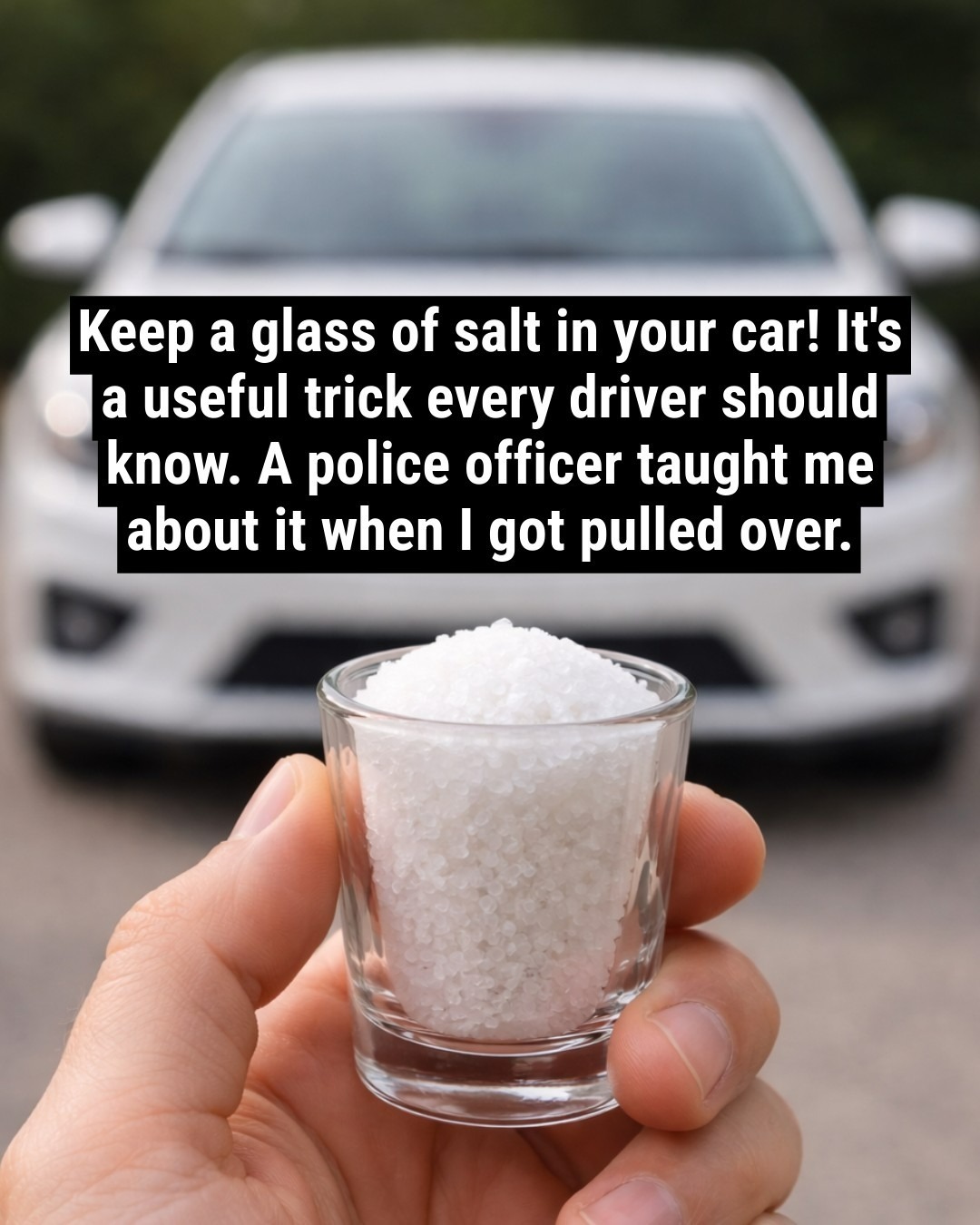
Social media loves a dramatic “life-saving” car hack, and one of the latest trends claims that keeping a glass of salt inside your vehicle can protect you from winter driving problems. According to viral posts, this simple trick supposedly prevents foggy windows, melts ice, keeps your car warm, absorbs carbon monoxide, and even helps you survive dangerous winter storms.
The idea sounds clever. It also sounds incredibly easy. That is exactly why so many people share it online without checking whether it is actually true.
The truth is far less exciting but far more important: while salt does have some practical uses in winter weather, most of the viral claims about placing a glass of salt in your car are exaggerated, misleading, or completely false.
Understanding what really works can help drivers stay safer during cold weather and avoid relying on myths that may create dangerous situations.
A friend once sent me one of those viral posts during a snowstorm. The headline claimed a police officer recommended keeping a cup of salt on the dashboard because it could “save your life.” At first glance, it sounded believable enough that I almost shared it myself. But after digging into the science behind the claims, I realized how quickly misinformation spreads online. Since then, I have become much more careful about viral safety advice, especially when it involves vehicles and winter emergencies.
Why the Salt-in-the-Car Myth Went Viral
The Psychology Behind Viral Car Hacks
Many viral driving hacks succeed because they target fear.
Winter driving already makes people anxious. Ice, snow, foggy windshields, and the possibility of getting stranded create real concerns. When people see a simple household item supposedly solving all these problems, they naturally want to believe it.
The posts often include emotional stories involving police officers, firefighters, or mechanics. That creates a false sense of authority even when no evidence exists.
Simple solutions spread quickly online because they feel accessible and comforting.
Why Salt Seems Believable
Part of the myth comes from the fact that salt does perform certain functions in cold weather.
Salt can:
- Lower the freezing point of water
- Absorb some moisture from air
- Help melt ice under specific conditions
Because these facts are partially true, people assume a glass of salt inside a vehicle must also provide major benefits.
However, the real science tells a very different story.
What Salt Actually Does
Salt Absorbs Some Moisture
Salt is hygroscopic, which means it can absorb moisture from surrounding air.
That sounds impressive until you consider the size of a vehicle interior. A tiny glass of salt cannot meaningfully reduce humidity throughout an entire car cabin.
Your vehicle contains far too much air volume for a small container of salt to make a noticeable difference in fogging.
If your windshield fogs up, the most effective solution remains:
- Using your vehicle’s defroster
- Running the air conditioner
- Slightly cracking a window
- Cleaning the inside of the windshield
These methods actively remove moisture instead of passively absorbing tiny amounts.
Salt Can Melt Ice — But With Major Limitations
Road crews use large quantities of salt during winter because salt lowers water’s freezing point.
However, the viral posts ignore important details.
Salt works best:
- Above about 15°F (-9°C)
- In large quantities
- With enough time to dissolve
A small glass of salt inside your vehicle will not magically melt snow around your tires or instantly clear icy roads.
Even worse, salt exposure contributes to:
- Rust
- Corrosion
- Paint damage
- Undercarriage deterioration
Excessive salt can actually shorten the lifespan of your vehicle over time.
Dangerous Claims You Should Never Believe
Salt Does NOT Absorb Carbon Monoxide
One of the most dangerous viral claims suggests salt can absorb deadly carbon monoxide gas.
This is completely false.
Carbon monoxide is a toxic gas produced by vehicle exhaust systems. Salt has absolutely no ability to filter or neutralize it.
Believing this myth could delay proper repairs or prevent someone from recognizing a dangerous exhaust leak.
Real carbon monoxide safety includes:
- Fixing exhaust problems immediately
- Never idling inside enclosed garages
- Clearing snow away from the exhaust pipe
- Installing portable carbon monoxide detectors
Salt Does NOT Keep Your Car Warm
Some viral posts claim salt creates heat by absorbing moisture.
Although minor chemical reactions can release extremely tiny amounts of heat, the effect is negligible.
A glass of salt will not:
- Warm your vehicle
- Prevent hypothermia
- Replace emergency blankets
- Protect stranded drivers
In real emergencies, proper cold-weather supplies matter far more.
What Drivers Should Actually Keep in Their Cars
Essential Winter Emergency Supplies
Instead of relying on viral myths, drivers should build practical emergency kits.
Recommended items include:
- Ice scraper
- Snow brush
- Blanket
- Flashlight
- Phone charger
- Jumper cables
- Bottled water
- Nonperishable snacks
- Gloves and extra socks
- Small shovel
- Sand or cat litter for traction
These supplies provide real help during winter emergencies.
Why Cat Litter Works Better Than Salt
If your tires lose traction on ice, cat litter or sand works much better than table salt.
These materials:
- Create grip immediately
- Do not require melting time
- Work in extremely cold temperatures
- Cause less corrosion
Many winter driving experts recommend keeping a small bag in the trunk.
How to Prevent Foggy Windows Properly
Use the Defroster Correctly
Your vehicle’s defroster exists specifically for moisture control.
The system:
- Uses air conditioning to remove humidity
- Warms the glass surface
- Improves visibility quickly
Many people do not realize that air conditioning helps dehumidify winter air even in cold temperatures.
Keep Windows Clean
Dirty glass traps moisture more easily.
Regularly cleaning interior windows reduces fogging and improves visibility.
Anti-fog sprays may also help during humid weather conditions.
Common Winter Driving Myths
Myth: Pour Hot Water on Frozen Windshields
This remains one of the worst winter car myths.
Sudden temperature changes can crack windshields instantly.
Instead:
- Use proper ice scrapers
- Warm the car gradually
- Apply approved de-icing sprays
Myth: Idle the Car Continuously for Warmth
Long idling periods increase carbon monoxide risk, especially if snow blocks the exhaust pipe.
If stranded:
- Run the engine only periodically
- Clear snow from the exhaust pipe frequently
- Crack a window slightly for ventilation
Myth: Heavy Speed Improves Snow Traction
Driving faster on snow increases stopping distance and loss of control.
Safe winter driving requires:
- Slow acceleration
- Gentle braking
- Increased following distance
- Smooth steering inputs
Why Misinformation Spreads So Fast
Emotional Headlines Get More Clicks
Many viral posts prioritize attention over accuracy.
Phrases like:
- “Police officer secret”
- “Life-saving trick”
- “What mechanics won’t tell you”
encourage people to share content emotionally instead of critically.
Real Safety Advice Often Sounds Less Exciting
Practical safety tips rarely sound dramatic.
Building emergency kits, maintaining tires, and servicing brakes may not attract millions of views online, but those steps genuinely improve winter safety.
Frequently Asked Questions
Is there any benefit to keeping salt in a car?
Small amounts of salt may help melt ice in emergencies, but it should not replace proper winter equipment.
Can salt damage vehicles?
Yes. Salt accelerates rust and corrosion on metal surfaces and undercarriages.
What works best for foggy windows?
Use your defroster, air conditioning, and clean windows regularly.
What should every winter car kit include?
Blankets, flashlights, jumper cables, traction material, food, water, gloves, and emergency supplies.
Can salt absorb dangerous gases?
No. Salt cannot absorb carbon monoxide or other harmful vehicle exhaust gases.
Conclusion
The viral “glass of salt in your car” trick may sound clever, but most of its claims collapse under basic science and real-world testing. Although salt can absorb limited moisture and help melt ice under certain conditions, it does not provide magical winter protection for drivers.
Relying on myths instead of proper emergency preparation can create real danger.
The safest approach includes:
- Maintaining your vehicle
- Carrying emergency supplies
- Understanding winter driving conditions
- Verifying viral claims before trusting them
Good information protects drivers far better than internet myths ever will.
More Home Remedies
- California Mom Issues Urgent Fireworks Warning After Teen Suffers Devastating Hand Injuries
- This Is the Silent Disease That Can Strike Without Warning
- The Midnight Ache: Understanding Nighttime Leg Cramps and How to Find Relief
- My 8-Year-Old Has Been Experiencing This for Two Months—Understanding Hives in Children