

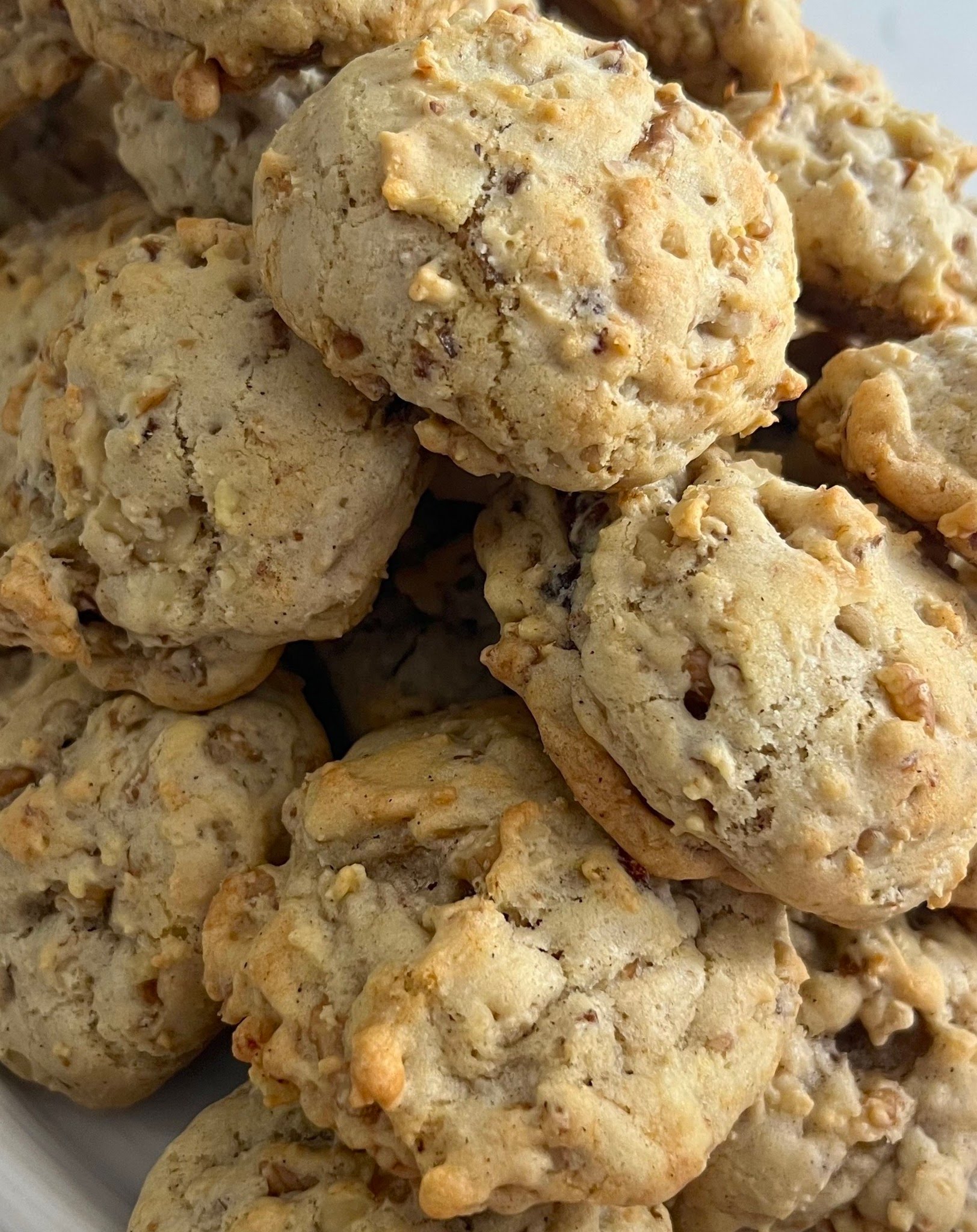
German Rocks cookies bring everything people love about old-fashioned bakery treats into one satisfying bite. They bake up thick, craggy, and full of cozy flavor. Unlike thin, crisp cookies, German Rocks cookies have a hearty texture that feels almost cake-like in the center while still holding a gently chewy edge. They also carry warm spice, deep brown sugar notes, and plenty of mix-ins, which makes them perfect for holiday trays, afternoon coffee, or a simple weekend baking project.
These cookies feel comforting from the first stir of the bowl to the last crumb on the plate. Because the dough comes together with pantry basics, you can make German Rocks cookies without much fuss. At the same time, the finished result tastes special enough to share.
I first baked a batch like this on a cool weekend when the kitchen felt too quiet and needed the smell of cinnamon, butter, and brown sugar. I wanted something more rustic than a standard drop cookie, so I leaned into a thick dough packed with oats, raisins, and chopped nuts. The cookies came out lumpy, golden, and beautifully uneven, which made them look straight from a small-town bakery case. Everyone reached for a second one before the tray even cooled, and that simple moment turned these cookies into a recipe I keep coming back to.
Ingredients
Equipment
Method
- Preheat the oven to 350°F and line two baking sheets with parchment paper.
- Cream the softened butter and brown sugar in a large bowl until the mixture looks light and fluffy.
- Beat in the eggs one at a time, then mix in the vanilla extract.
- Whisk the flour, baking soda, salt, and cinnamon in a separate bowl.
- Add the dry ingredients to the wet ingredients and mix just until combined.
- Fold in the oats, raisins, and chopped walnuts until they distribute evenly through the dough.
- Chill the dough for 20 to 30 minutes for thicker cookies.
- Scoop mounds of dough onto the prepared baking sheets, spacing them about 2 inches apart.
- Bake for 11 to 14 minutes, until the edges turn lightly golden and the tops look set.
- Cool the cookies on the baking sheet for 5 minutes, then transfer them to a wire rack to cool completely.
Notes
Why These Cookies Stand Out
A thick, bakery-style texture
German Rocks cookies stand out because they look and taste substantial. Instead of spreading into flat rounds, the dough holds its shape well, so every scoop bakes into a rugged little mound. That rustic appearance gives the cookies their charm. Even better, it helps create a layered texture. The outside turns lightly golden, while the center stays tender and dense.
That texture comes from a smart mix of butter, brown sugar, oats, flour, and eggs. Brown sugar adds moisture and softness. Oats add body and chew. Meanwhile, the flour gives the cookies enough structure to stay tall. As a result, each cookie feels hearty without becoming dry.
Many home bakers love recipes that feel forgiving, and this one absolutely fits. You do not need to shape each piece perfectly. In fact, a rough scoop works best. Those uneven edges brown beautifully, and the craggy tops make the cookies look homemade in the best possible way. Because of that, German Rocks cookies appeal to both beginner bakers and experienced ones.
If you enjoy desserts that feel old-fashioned and substantial, these cookies deserve a place in your regular baking rotation. They also travel well, which makes them a practical option for gatherings, lunch boxes, and care packages.
Warm flavor from simple ingredients
The flavor of German Rocks cookies feels rich and comforting, yet the ingredient list stays familiar. Butter builds a smooth base. Brown sugar gives the dough a caramel-like depth. Cinnamon adds warmth, while vanilla rounds everything out. Then the mix-ins bring texture and extra sweetness.
For this version, raisins add little pockets of chew, and chopped walnuts give the cookies a toasty crunch. Oats tie everything together and make each bite more satisfying. Even though the recipe uses pantry staples, the final flavor tastes layered and memorable.
That balance matters. Some dense cookies feel heavy, but German Rocks cookies keep a soft, pleasant crumb. Each ingredient plays a clear role, so the cookies taste full without feeling overwhelming. Because the dough handles mix-ins so well, you can also make small adjustments based on what you have at home.
Still, the classic combination remains hard to beat. Raisins, oats, spice, and nuts create that timeless bakery-style character people expect from German Rocks cookies. Therefore, if you want a cookie that feels both nostalgic and dependable, this one checks every box.
Ingredients That Build the Best Batch
Pantry basics that do the heavy lifting
You do not need specialty ingredients to make excellent German Rocks cookies. In fact, the strongest part of this recipe may be how accessible it is. Most kitchens already have the key items on hand, and each one supports the final texture and flavor in a very specific way.
All-purpose flour forms the base and gives the cookies structure. Baking soda helps them rise slightly and keeps the crumb from feeling too tight. Salt sharpens the sweetness and balances the warm spice. Ground cinnamon adds a familiar bakery note that suits the rustic style of the cookie.
Unsalted butter creates richness and supports a soft center. Brown sugar matters even more because it adds moisture along with a deeper sweetness than white sugar alone. Eggs bind the dough and give the cookies their sturdy, tender body. Vanilla extract fills in the flavor and makes the dough smell amazing before it even reaches the oven.
Old-fashioned rolled oats add one of the most important textures in German Rocks cookies. They make the dough feel substantial and give the finished cookies that hearty bite people love. Because the oats absorb some moisture, they also help the cookies stay thick.
When these ingredients work together, they produce cookies that look rugged but taste balanced. That combination gives the recipe a dependable bakery-style result every time.
Mix-ins that add character and crunch
Mix-ins turn a good dough into memorable German Rocks cookies. For this recipe, raisins and walnuts create the classic feel. Raisins bring sweetness and chew, which keeps the dense crumb from feeling too uniform. Chopped walnuts add contrast, so every bite includes a little crunch.
You can toast the walnuts first for extra depth. That step only takes a few minutes, yet it makes a noticeable difference. The nuts taste richer, and the cookies gain an even more inviting aroma. At the same time, the raisins soften as they bake, which helps them blend beautifully into the dough.
Some bakers like to add shredded coconut or a pinch of nutmeg, and both options fit the spirit of these cookies. However, the core idea stays the same. German Rocks cookies should feel full, textured, and rustic. That means the mix-ins should support the dough instead of overwhelming it.
Try to chop the walnuts into small, even pieces so they distribute well. Also, check the raisins before adding them. If they feel very dry, soak them in warm water for a few minutes and pat them dry. That small step helps them stay plump in the oven. Because of details like these, the finished cookies come out more flavorful and more consistent.
How to Make German Rocks Cookies Successfully
Mixing the dough without overworking it
A great batch of German Rocks cookies starts with proper mixing. First, cream the butter and brown sugar until the mixture looks light and fluffy. This step matters because it adds air and helps create a softer interior. Next, beat in the eggs one at a time, then stir in the vanilla.
In a separate bowl, whisk together the flour, baking soda, salt, and cinnamon. Then add the dry ingredients to the butter mixture gradually. Mix just until you no longer see dry streaks. Overmixing can make the cookies tough, so stop as soon as the dough comes together.
After that, fold in the oats, raisins, and walnuts. The dough will look thick, and that is exactly what you want. German Rocks cookies should not have a loose or glossy batter-like texture. Instead, the dough should feel scoopable and sturdy.
At this stage, chilling the dough for 20 to 30 minutes helps even more. Although you can bake it right away, a brief chill allows the oats to hydrate and makes the cookies hold their shape better. Consequently, the baked cookies rise into those signature rocky mounds.
Use a cookie scoop or two spoons to portion the dough onto lined baking sheets. Leave enough space between each scoop because they will spread slightly. Still, they should stay mostly thick and rounded.
Baking for a tender center and golden edge
Bake German Rocks cookies in a fully preheated oven so they set properly from the start. A temperature of 350°F works well because it allows the centers to cook through while the edges turn golden. Usually, the cookies need 11 to 14 minutes, depending on size.
Watch for visual cues instead of relying only on the clock. The tops should look set, and the edges should show light color. However, the centers should still appear slightly soft. That soft look matters because the cookies continue to firm up on the baking sheet after they leave the oven.
Let the cookies rest on the pan for about 5 minutes before moving them to a wire rack. This brief cooling time helps them finish setting without breaking apart. Since German Rocks cookies have a tender center, moving them too early can cause them to crumble.
Do not overbake them. Although these cookies are meant to feel dense and hearty, they should never taste dry. A properly baked batch stays moist in the middle and develops a pleasant chew as it cools. Therefore, pulling them from the oven at the right moment makes a big difference.
Once cool, the cookies store beautifully. In fact, many people think German Rocks cookies taste even better the next day because the spice, oats, and mix-ins settle into a richer flavor.
Serving, Storing, and Easy Variations
Best ways to serve and store them
German Rocks cookies fit almost any occasion. Because they feel sturdy and generous, they work especially well on holiday platters, dessert trays, and bake-sale tables. They also pair nicely with coffee, tea, or cold milk. Their hearty texture makes them more satisfying than a delicate tea cookie, so one or two usually feels just right.
Serve them at room temperature for the best texture. When they cool fully, the edges stay gently firm while the center remains soft and dense. If you like a warmer cookie, microwave one for about 8 seconds. That short burst softens the crumb and makes the raisins taste extra rich.
To store German Rocks cookies, place them in an airtight container at room temperature for up to 5 days. You can add a small piece of bread to the container to help preserve softness. Also, layer parchment paper between stacks if you want to protect the craggy tops.
For longer storage, freeze the baked cookies for up to 2 months. Wrap them well and thaw them at room temperature when needed. You can also freeze the portioned dough, which makes fresh baking much easier later. Because the dough holds its shape so well, it freezes especially nicely.
Simple variations that still keep the classic feel
Once you know the base recipe, you can adjust it in small ways while keeping the soul of German Rocks cookies intact. For example, swap walnuts for pecans if you prefer a softer nut flavor. You can also add a pinch of nutmeg or allspice for extra warmth.
If you want more texture, stir in a little shredded coconut. It bakes into the dough beautifully and adds another layer of chew. Some bakers like chopped dates in place of raisins, and that version works very well too. Dates create a slightly richer sweetness that matches the brown sugar base.
For a deeper flavor, use dark brown sugar instead of light brown sugar. That simple change gives the cookies stronger molasses notes. You can also soak the raisins in warm water or orange juice before mixing them in. As a result, they stay plump and bring even more moisture to the finished cookies.
Even with these changes, remember the goal. German Rocks cookies should stay thick, rustic, and packed with texture. Therefore, avoid turning them into a flat, plain drop cookie. Keep the dough hearty, keep the mix-ins generous, and let the rough shape show. That rugged look is part of what makes these cookies so appealing.
FAQ
What are German Rocks cookies?
German Rocks cookies are thick, rustic drop cookies with a dense, textured crumb. They often include oats, raisins, nuts, warm spice, and brown sugar for a hearty bakery-style result.
Why are my German Rocks cookies dry?
Dry cookies usually come from too much flour or too much baking time. Measure flour carefully, and remove the cookies when the centers still look slightly soft.
Can I make German Rocks cookies ahead of time?
Yes. You can refrigerate the dough for up to 24 hours before baking, or freeze portioned dough for up to 2 months.
Can I leave out the nuts?
Yes. The cookies will still bake well without nuts. You can replace them with extra raisins, chopped dates, or shredded coconut.
Do German Rocks cookies stay soft?
Yes, they stay soft for several days when stored in an airtight container. Their brown sugar base and hearty mix-ins help them keep a tender center.
Conclusion
German Rocks cookies offer everything a cozy homemade cookie should have: rich flavor, a thick crumb, rustic charm, and plenty of texture. They use familiar ingredients, yet they deliver a bakery-style result that feels a little special every time. Because the dough comes together easily and welcomes simple variations, this recipe works for both new bakers and longtime cookie lovers.
Whether you bake them for a holiday tray, a family gathering, or a quiet afternoon at home, German Rocks cookies bring warmth and comfort to the table. Keep the dough thick, bake them just until set, and enjoy every craggy, chewy, old-fashioned bite.