Introduction
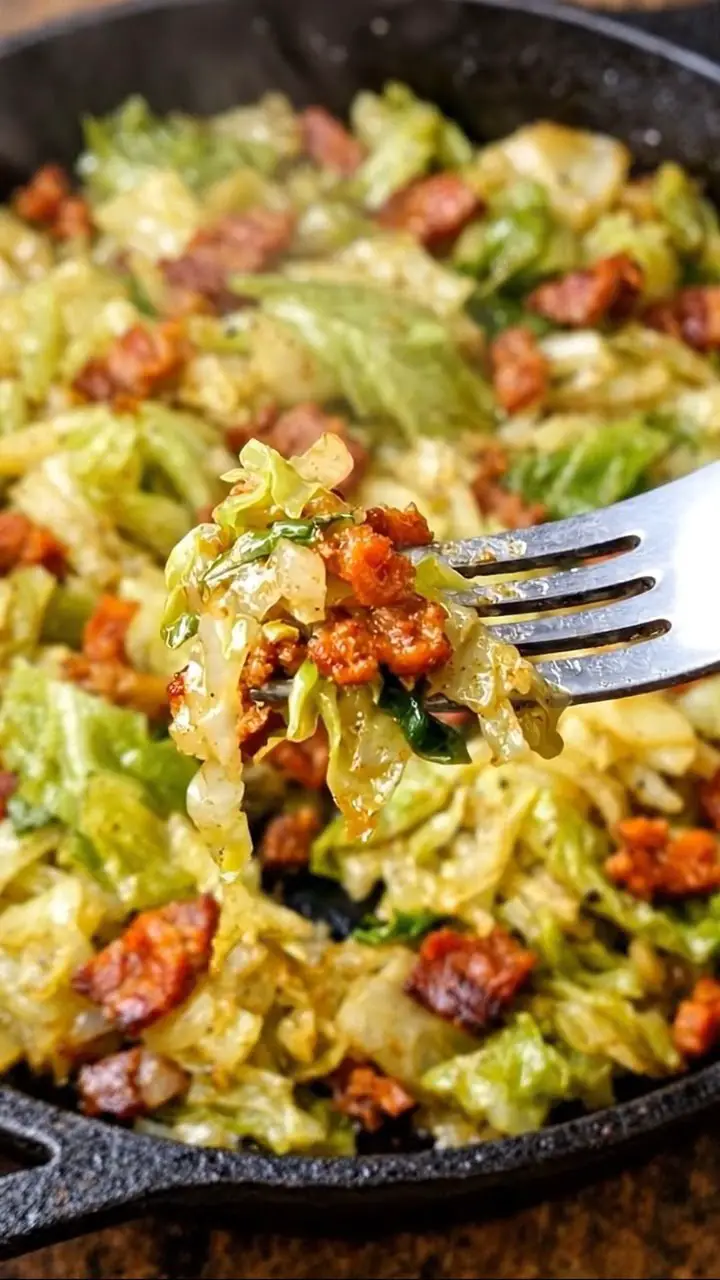
Southern 3-Ingredient Fried Cabbage: My grandma always serves this as a side. Only needs 3 ingredients to get that perfect flavor. is one of those recipes that proves the best comfort food doesn’t need a long shopping list. With just cabbage, bacon, and salt, this dish transforms into something deeply savory, tender, and full of rich Southern character.
Because it cooks in one skillet, the flavors concentrate as the cabbage softens and absorbs the bacon drippings. The result is a side dish that feels simple yet unforgettable, often stealing the spotlight from the main course.
This recipe has always been part of family gatherings, especially on slow Sundays when the kitchen filled with the smell of sizzling bacon. Even though it uses only a few ingredients, it carries a sense of tradition that makes every bite feel meaningful.
I still remember walking into my grandmother’s kitchen on cool afternoons when this dish was always waiting on the stove. The cast iron skillet sat heavy on the burner, and she would stir the cabbage slowly, never rushing it. She never measured anything. Instead, she cooked by instinct, adding cabbage until the skillet looked “right” and seasoning until it tasted “just enough.” As a child, I didn’t understand how something so simple could smell so good. But the moment I tasted it—soft cabbage coated in smoky bacon flavor—I understood why it always appeared on the table. Even now, whenever I make it, I think about how she turned everyday ingredients into something unforgettable.
Equipment
- cast iron skillet
- Knife
- Cutting board
- Spatula or spoon
Ingredients
- 6 slices thick-cut bacon, chopped
- 1 medium head (2–2.5 lbs) green cabbage, cored and chopped
- 1 teaspoon kosher salt
Instructions
- Cook chopped bacon in a cast iron skillet over medium heat until crispy. Remove bacon and reserve fat.
- Add chopped cabbage to bacon grease and toss to coat evenly.
- Season with salt and cook, stirring occasionally, until cabbage is tender and lightly browned.
- Return bacon to skillet and stir to combine.
- Cook 1–2 more minutes and serve hot.
Notes
Nutrition
The Heart of Southern Fried Cabbage Tradition
A humble skillet heritage
Southern 3-Ingredient Fried Cabbage has deep roots in home cooking traditions where nothing went to waste and everything had a purpose. Families often relied on simple ingredients that could stretch across meals, and cabbage was one of the most dependable vegetables in the kitchen.
Because it was affordable and available year-round, cabbage became a staple in many Southern homes. When paired with bacon, it transformed into something far more flavorful than expected. The bacon fat added richness, while the cabbage provided softness and natural sweetness as it cooked down.
Over time, this combination became more than just practical cooking. It became comfort food tied to memory, family, and gathering around the table. Even today, the dish remains a reminder of how resourceful cooking can still be deeply satisfying.
Why bacon makes everything better
Bacon is the backbone of flavor in this dish. As it cooks, it releases fat that becomes the cooking base for the cabbage. This process infuses every bite with smoky, savory depth.
The crispy bacon pieces added at the end bring texture contrast, making each spoonful more interesting. Without bacon, the dish would lose its signature richness, but with it, the cabbage becomes something completely different—soft, flavorful, and deeply satisfying.
Because the bacon is cooked first, it sets the tone for the entire recipe. Every step that follows builds on that foundation of flavor.
Choosing and Preparing the Three Simple Ingredients
Selecting the right cabbage
Cabbage is the main ingredient in Southern 3-Ingredient Fried Cabbage, so choosing a fresh, firm head matters. A good cabbage should feel heavy for its size, with tightly packed leaves and no soft spots.
Green cabbage works best because it becomes tender while still holding structure during cooking. When chopped, it may seem like too much for the skillet, but it quickly shrinks as it cooks. This transformation is part of what makes the dish so satisfying.
Cutting the cabbage into even pieces helps it cook uniformly. Larger chunks give a heartier texture, while smaller pieces create a softer, more delicate side dish.
Bacon and salt as flavor builders
Bacon does more than add taste—it creates the cooking medium. Thick-cut bacon works especially well because it produces enough fat to coat the cabbage properly. As it crisps, it builds layers of flavor that define the dish.
Salt plays a subtle but important role. It enhances both the cabbage and bacon without overpowering the natural flavors. Because bacon is already salty, seasoning should be added carefully and adjusted at the end.
Together, these three ingredients create balance. Nothing is complicated, but each element has a clear purpose in building flavor.
Cooking Southern Fried Cabbage in Cast Iron
Rendering bacon for maximum flavor
The cooking process begins with bacon in a cast iron skillet. As it heats, the fat slowly renders out, creating a flavorful base. Stirring occasionally ensures even cooking and prevents burning.
Once the bacon becomes crisp, it is removed and set aside, but the rendered fat stays in the pan. This step is essential because it becomes the foundation for cooking the cabbage.
Because cast iron retains heat so well, it helps maintain steady cooking temperature, allowing the bacon fat to fully develop its flavor before the next step begins.
Slow-cooking cabbage until tender
Once the cabbage is added, it may seem like too much for the skillet, but it quickly softens. As it cooks, it absorbs the bacon fat, becoming tender and flavorful.
Stirring occasionally helps prevent sticking and ensures even cooking. Over time, the cabbage develops golden edges while maintaining a soft texture.
If needed, a small splash of water can help loosen browned bits from the pan, which only adds more flavor. The goal is to cook until the cabbage is tender but still slightly textured, creating the perfect balance between softness and bite.
Serving, Variations, and Family Table Memories
What to serve with fried cabbage
Southern 3-Ingredient Fried Cabbage pairs beautifully with hearty main dishes. It complements meatloaf, baked chicken, pork chops, or sausage perfectly. Because it is rich and savory, lighter sides help balance the plate.
Cornbread, mashed potatoes, or buttered noodles make excellent companions. They soak up the bacon-infused juices and complete the meal. For a lighter option, a fresh green salad adds contrast and brightness.
This dish also works well for breakfast or brunch, especially alongside eggs and toast. Its versatility is part of what makes it such a reliable recipe.
Simple variations and storage tips
Although the classic version uses only three ingredients, small variations can adjust flavor and texture. Cooking the cabbage longer creates a softer, sweeter result, while shorter cooking keeps it slightly crisp.
For heat, crushed red pepper can be added at the table. For a lighter version, some bacon grease can be removed before cooking, though enough should remain for flavor.
Leftovers store well in the refrigerator and reheat easily in a skillet. The flavors often deepen overnight, making it just as enjoyable the next day.
FAQ
Can I use turkey bacon instead of regular bacon?
Yes, but it will produce less fat, so you may need a small amount of oil.
Does the cabbage need to be boiled first?
No, it cooks directly in the skillet and softens as it sautés.
Can I make this dish ahead of time?
Yes, it reheats well and can be stored in the refrigerator for several days.
What type of skillet works best?
A cast iron skillet is ideal because it distributes heat evenly and enhances flavor.
Can I add other vegetables?
Yes, onions or bell peppers can be added for extra flavor, though it will no longer be a strict 3-ingredient dish.
Conclusion
Southern 3-Ingredient Fried Cabbage: My grandma always serves this as a side. Only needs 3 ingredients to get that perfect flavor. remains a timeless example of how simple cooking can create lasting memories. Because it relies on just a few ingredients, every element matters, and together they create something deeply comforting.
This dish is more than a side—it is tradition, resourcefulness, and family history cooked into one skillet. Whether served at a holiday table or a quiet weeknight dinner, it always brings warmth and familiarity to the meal.