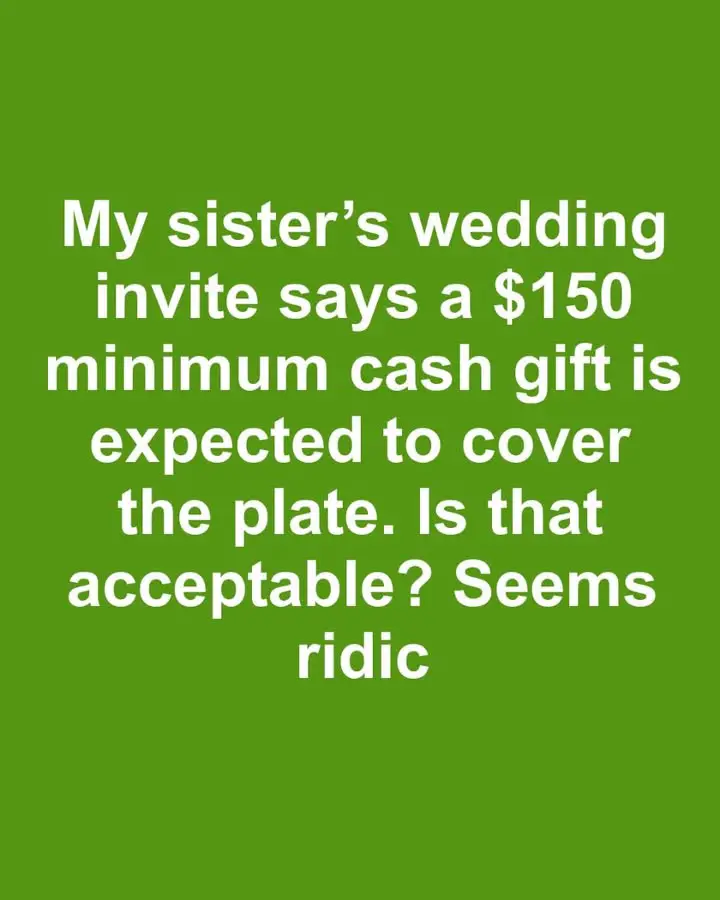
Weddings are supposed to celebrate love, family, and togetherness, but conversations about money can quickly create tension. Recently, more couples have started requesting cash gifts instead of traditional registry presents. However, some invitations now go further by specifying a minimum dollar amount guests are expected to give to “cover their plate.”
For many people, this trend feels uncomfortable because it changes the tone of the event from hospitality to obligation. Although weddings are expensive and financial stress is understandable, requiring guests to pay a certain amount often raises questions about etiquette, entitlement, and changing social expectations.
A friend once showed me a wedding invitation that included a note explaining the expected cash contribution per guest. Instead of feeling excited about attending, everyone immediately started discussing money, budgets, and whether the request seemed rude. Some guests worried about being judged if they gave less, while others felt offended by the idea altogether. That conversation made it clear how quickly financial expectations can overshadow the joy of a wedding celebration.
Why Some Couples Request Minimum Cash Gifts
Weddings Have Become More Expensive
Modern weddings can cost tens of thousands of dollars. Between venues, catering, photography, flowers, music, attire, and travel expenses, couples often face enormous financial pressure.
Because of these rising costs, some couples justify requesting cash gifts as a practical way to reduce debt or recover part of the event expenses.
Cash gifts also provide flexibility because couples can use the money for:
- Honeymoons
- Wedding debt
- Down payments
- Savings
- Household expenses
While practicality explains the reasoning, many guests still feel uncomfortable when requests become mandatory.
Social Media Has Changed Wedding Expectations
Social media has dramatically increased pressure surrounding weddings. Perfect venues, luxury decorations, designer clothing, and extravagant receptions constantly appear online.
As expectations rise, some couples feel pressure to host expensive celebrations beyond their actual budget. Consequently, they may begin viewing guest contributions as part of funding the event itself.
However, many etiquette experts argue that guests should never feel financially responsible for covering wedding costs.
Traditional Wedding Etiquette and Gifts
Gifts Are Traditionally Voluntary
Historically, wedding gifts have always been considered optional gestures of support and goodwill.
Guests give gifts because they want to celebrate the couple’s new life together—not because attendance requires payment. Traditional etiquette emphasizes generosity, appreciation, and personal choice.
The amount spent has always depended on:
- Financial ability
- Relationship closeness
- Cultural traditions
- Personal preference
No formal etiquette rule requires guests to “pay for their plate.”
Invitations Are Meant To Welcome Guests
One reason mandatory gift requests feel inappropriate to many people is because wedding invitations traditionally represent hospitality.
When someone invites guests to a wedding, they are offering food, entertainment, and celebration willingly. Guests are not purchasing tickets to attend.
As a result, adding minimum payment expectations can make the event feel transactional rather than heartfelt.
The “Cover Your Plate” Debate
What Does “Cover Your Plate” Mean?
The phrase “cover your plate” refers to the idea that guests should provide gifts equal to the estimated cost of hosting them at the wedding.
For example, if catering costs $150 per person, some believe guests should gift at least that amount.
This concept has become increasingly common in certain social circles, particularly where expensive weddings are viewed as major status events.
Why Many People Reject This Idea
Critics argue that guests never agreed to the couple’s spending decisions. If a couple chooses luxury catering or an expensive venue, guests should not be expected to reimburse those costs.
Additionally, many guests already spend significant money attending weddings through:
- Travel
- Hotels
- Clothing
- Childcare
- Transportation
- Time off work
Mandatory gift expectations can therefore create resentment and unnecessary pressure.
Cultural Differences Around Wedding Gifts
Cash Gifts Are Normal in Some Cultures
In many cultures, cash gifts are completely standard and widely accepted.
Examples include:
- Red envelopes at many Asian weddings
- Monetary gifts in some European traditions
- Family contribution customs in various communities
In these settings, guests may already understand approximate gift expectations through cultural norms.
Even Cultural Traditions Usually Avoid Demands
Although cash gifting itself is common, directly requiring minimum amounts on invitations still feels impolite to many people.
Most traditions emphasize generosity and appreciation rather than obligation or enforcement.
Guests generally prefer flexibility and discretion rather than formal financial requirements.
How Mandatory Gift Requests Affect Guests
Financial Pressure Can Create Stress
Not every guest has the same financial situation. A $150 minimum may feel manageable for some guests but extremely difficult for others.
Guests dealing with:
- Student loans
- Medical bills
- Family responsibilities
- Rising living costs
may feel embarrassed, excluded, or anxious about attending.
Instead of focusing on celebrating the couple, they may spend weeks worrying about finances.
It Can Change the Emotional Tone of the Wedding
Weddings are emotional events centered around relationships, family, and shared memories.
When invitations focus heavily on money, some guests begin feeling like customers rather than loved ones.
This shift can unintentionally damage relationships and create awkward conversations among family and friends.
Better Alternatives for Couples
Flexible Wedding Funds Feel More Welcoming
Instead of mandating minimum gifts, many couples now create:
- Honeymoon funds
- House funds
- Travel funds
- Charity contribution options
These approaches allow guests to contribute voluntarily based on comfort level.
Wedding websites also provide subtle ways to communicate preferences without sounding demanding.
Budgeting Within Realistic Means Matters
Financial experts often encourage couples to plan weddings they can comfortably afford without relying on guest reimbursement.
Smaller celebrations with less pressure frequently create warmer and more meaningful experiences overall.
Guests generally remember emotional moments and hospitality far more than luxury details.
What Guests Can Do If They Feel Uncomfortable
Give What Feels Reasonable
Etiquette experts consistently emphasize that gifts should reflect personal circumstances rather than outside pressure.
Guests can still choose to give:
- A smaller cash gift
- A thoughtful personal gift
- A meaningful handwritten message
The value of support and presence should never be measured purely financially.
Declining the Invitation Is Also Acceptable
If the financial expectations feel overwhelming or uncomfortable, politely declining remains completely acceptable.
People should never feel forced into financial hardship simply to attend a celebration.
Protecting personal finances does not make someone selfish or disrespectful.
What This Trend Says About Modern Weddings
Weddings Have Become Increasingly Commercialized
Luxury wedding culture and social media trends have changed how many people approach celebrations.
As weddings become larger and more expensive, financial expectations often become more visible and controversial.
At the same time, many people still strongly value traditional hospitality and generosity.
Society Continues Balancing Tradition and Modern Reality
Wedding customs constantly evolve, but most people still believe celebrations should focus on:
- Love
- Family
- Community
- Shared joy
rather than financial transactions.
Finding balance between practicality and hospitality remains one of the biggest modern wedding etiquette challenges.
FAQ
Is it rude to request a minimum wedding gift?
Most etiquette experts consider mandatory gift amounts inappropriate.
What does “cover your plate” mean?
It means guests are expected to give enough money to match the cost of hosting them.
Are cash gifts acceptable at weddings?
Yes. Cash gifts are very common and widely accepted.
Can guests give less than the requested amount?
Absolutely. Gifts should reflect personal comfort and financial ability.
Is declining the invitation acceptable?
Yes. Guests may politely decline invitations for any reason, including financial concerns.
Conclusion
Weddings are meant to celebrate love, commitment, and togetherness—not create financial stress for guests. While wedding expenses are undeniably high, requiring minimum cash gifts often changes the spirit of the celebration from welcoming to transactional.
Cash gifts themselves are not the problem. In fact, they remain practical and appreciated in many modern weddings and cultural traditions. The issue usually arises when generosity becomes obligation.
Most etiquette traditions still emphasize that guests are invited to celebrate, support, and share joy—not finance the event itself. By approaching gift expectations with gratitude, flexibility, and kindness, couples can create weddings that feel welcoming and meaningful for everyone involved.
More Home Remedies
- Wrinkled Fingers After Water Exposure: What Your Skin May Be Telling You
- Skin Rash With Breathing Trouble? It Could Be a Life-Threatening Allergic Reaction
- I Thought It Was a Piece of Trash on the Bathroom Floor—Until It Moved
- If You Are Getting White Pimples on Your Lips or Intimate Area, Here’s What They Could Mean