Cleaning floors is one of those chores that most people do regularly, yet few feel truly satisfied with the results. No matter how often you mop, sweep, or vacuum, it can sometimes feel like the floors still look dull or pick up dust again almost immediately. Many people simply accept this as part of daily life.
However, sometimes a small change in your cleaning routine can make a surprising difference. Recently, a simple floor-cleaning trick has been gaining attention because of how effective it is. At first, it may sound too simple to work, and many people admit they were skeptical. But after trying it once, they quickly realized how powerful such a small adjustment could be.
This method does not require expensive cleaning products or complicated equipment. In fact, it relies on common household ingredients and a slightly different cleaning approach that helps floors stay cleaner for longer.
If you have ever felt frustrated with streaks, dull surfaces, or floors that seem dirty again within hours, this trick might completely change the way you clean your home.
Why Most Floor Cleaning Methods Don’t Work as Well as We Think
Many people believe that the more cleaning product they use, the cleaner their floors will become. Unfortunately, this idea often leads to the opposite result.
When too much detergent or floor cleaner is used, it can leave behind a thin residue. At first, the floor may appear shiny, but that invisible layer actually attracts more dust and dirt. Over time, the residue builds up and creates a sticky surface that traps particles from shoes, pets, and the air.
Another common mistake involves using very wet mops. Excess water can push dirt around instead of removing it. In some cases, it can even damage certain floor materials like hardwood or laminate.
Additionally, traditional mopping sometimes spreads dirty water across the floor rather than lifting it away. This is why some floors still look streaky even after a full cleaning session.
Understanding these small mistakes can help explain why many people feel like they are constantly cleaning without seeing lasting results.
The Simple Floor Trick That Changes Everything
The trick that surprises many people is incredibly simple: clean the floor with a lightly damp microfiber mop using a small amount of vinegar and warm water.
While vinegar has long been used as a natural cleaner, the real difference comes from the combination of three factors:
- Microfiber material
- Minimal water
- A small amount of vinegar
Microfiber mops are designed to trap dust, grease, and tiny particles that traditional mops often push around. Because the fibers are extremely fine, they can pick up dirt more effectively.
When you add just a little vinegar to warm water, it helps break down grease and removes residue left behind by previous cleaning products. The result is a cleaner surface without sticky buildup.
The key is using only a slightly damp mop, not a soaking wet one.
How to Use This Floor Trick Step by Step
Trying this method is easy and only takes a few minutes to prepare.
Step 1: Remove Dust First
Before mopping, sweep or vacuum the floor thoroughly. Removing loose dust and crumbs prevents them from turning into muddy streaks during mopping.
Step 2: Prepare the Cleaning Solution
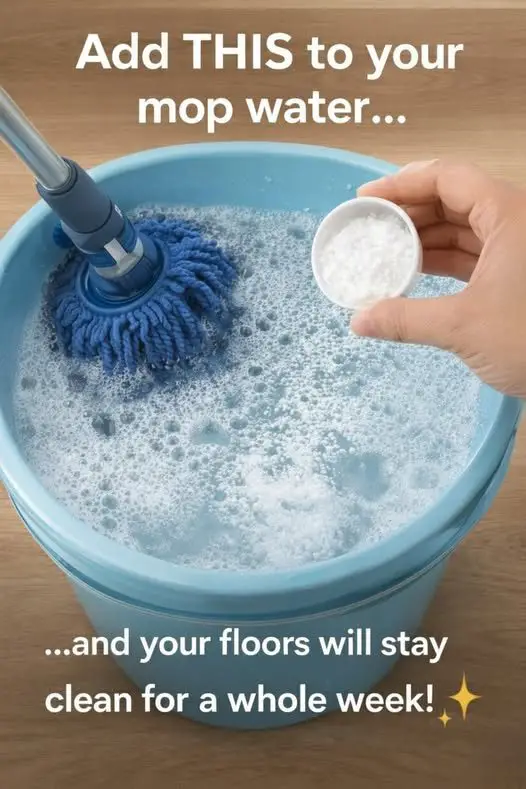
Fill a bucket with warm water and add a small amount of white vinegar. Usually one cup of vinegar for a bucket of water works well.
This mixture helps dissolve grease and eliminates residue without leaving strong chemicals behind.
Step 3: Use a Damp Microfiber Mop
Dip the microfiber mop into the solution and wring it out well. The mop should feel damp but not dripping.
This step is important because excess water can spread dirt and damage certain floors.
Step 4: Mop in Smooth, Even Motions
Work in small sections of the floor. Move the mop gently and rinse it regularly to avoid spreading dirt.
Because microfiber traps particles effectively, you will often notice that the water becomes dirty quickly. That means the mop is doing its job.
Step 5: Let the Floor Air Dry
One of the benefits of this method is that floors dry quickly. Since the mop is only damp, there is no need to rinse afterward.
Within minutes, the floor should look clean, streak-free, and refreshed.
Why This Trick Works So Well
The reason this method works better than many traditional techniques lies in how it removes residue.
Over time, commercial cleaners leave a thin layer of soap behind. That layer attracts dirt and dulls the appearance of floors. Vinegar helps dissolve that buildup and restore the natural finish.
Microfiber also plays an important role. Unlike cotton mops that simply push water across the surface, microfiber fibers grab and hold particles. This prevents dirt from spreading back onto the floor.
Finally, using less water keeps floors from becoming overly saturated. This protects wood and laminate while still allowing effective cleaning.
The combination of these small improvements leads to a noticeably cleaner result.
Floors That Benefit the Most
This trick works particularly well on several common floor types:
- Tile floors
- Laminate flooring
- Vinyl floors
- Sealed hardwood floors
- Kitchen and bathroom surfaces
However, it is important to avoid vinegar on natural stone floors like marble or granite because the acidity can damage the surface.
For those materials, plain warm water with a microfiber mop is usually a better option.
Extra Tips to Keep Floors Cleaner Longer
In addition to using the floor trick above, a few small habits can make a big difference in keeping floors looking fresh.
Remove shoes at the door.
Shoes bring in dirt, sand, and small debris that scratch surfaces and spread dust.
Use entry mats.
A good mat near the entrance can catch much of the dirt before it reaches the rest of the home.
Clean spills quickly.
Wiping up liquids right away prevents stains and sticky spots.
Wash mop heads regularly.
Dirty mop pads simply spread grime around. Keeping them clean ensures better results each time you mop.
These simple habits work together to keep floors cleaner between deep cleaning sessions.
Why Small Cleaning Changes Can Make a Big Difference
Many people assume that better cleaning requires stronger chemicals or expensive products. In reality, the most effective solutions are often the simplest.
A microfiber mop, warm water, and a small amount of vinegar can outperform many commercial cleaners when used correctly. By removing residue and trapping dirt more effectively, this method helps floors stay cleaner for longer.
It is no surprise that so many people who try this trick become loyal to it. What initially sounds like an ordinary cleaning method often produces surprisingly satisfying results.
Sometimes the best household tricks are the ones that feel almost too simple to believe—until you try them yourself.